 Fang Wang
I’ve been guiding independent travelers through China for over a decade. And every time, I hear the same panic: “I can’t book anything” or “My card doesn’t work”. Here is the truth: traveling China on your own is totally doable, but it’s not like backpacking through Europe. The systems here are different. But once you understand the quirks, you’ll have an incredible trip without the hefty tour-group price tag.
Why Travel China Independently?
Flexibility. You wake up when you want, eat where locals eat, and skip the forced silk factory stops. Independent travel also lets you dive deeper into culture—staying in a family-run guesthouse in a village, or eating street food that never makes it into tour brochures. The key is preparation.
The 5 Real Challenges (and How to Beat Them)
1. Visa: The First Hurdle
Most nationalities need a tourist (L) visa. Apply at a Chinese embassy or visa center in your home country at least a month before traveling. The standard single-entry visa costs around $140, but fees vary. You’ll need a confirmed flight and hotel bookings (use Trip.com for a refundable reservation). Pro tip: if you plan to visit Hong Kong or Macau, you can get a double-entry visa to go back into mainland China.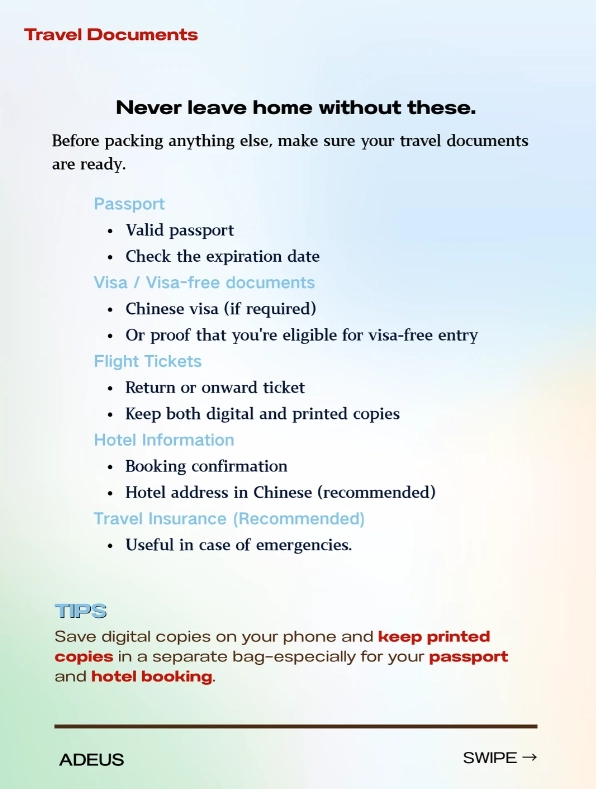
2. Payments: Cash Is King? No, Alipay/WeChat Are
Here is the biggest shock for most tourists: credit cards are rarely accepted outside luxury hotels and international shops. You need Alipay or WeChat Pay. Good news: you can now link your international Visa/Mastercard to Alipay through the Alipay Tour Pass feature (available in the app). WeChat Pay also supports foreign cards but with a limit. Always carry some cash (RMB) for small vendors, taxi drivers who don’t accept digital, and emergencies. ATMs in banks dispense cash but charge a fee. My rule: have at least 500 RMB in small bills on you.
3. Navigation: Goodbye Google Maps, Hello Apple Maps & DiDi
Google Maps is blocked in China and what little works is outdated. On iPhone, Apple Maps actually uses local Chinese data and is reliable for walking/driving. For transit, download Moovit or use the built-in maps in DiDi (the Uber of China). DiDi is a life-saver: it’s available in English, and you can pay with Alipay. When you plug in a destination, make sure to use the Chinese name or the exact address in Chinese characters. I always tell travelers: before you leave WiFi, screenshot the Chinese name of your hotel and nearby landmarks.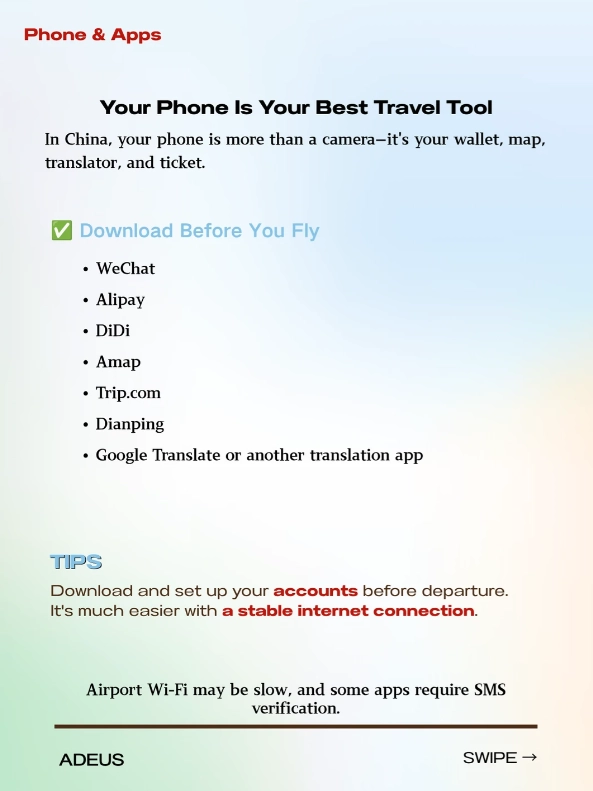
Don’t bother with Google Maps—it will lead you to closed roads or wrong spots.
4. Language: Don’t Panic, Use Translation Apps
English is not widely spoken outside major tourist areas. Download Baidu Translate or Apple Translate (works offline). The camera translation feature is gold: point it at menus, signs, and ingredient lists. Also download the Pleco dictionary. Every taxi driver will have the DiDi app, so use its built-in chat translator. And learn three phrases: xiè xiè (thank you), duō shao qián (how much?), and zhè ge (this one) while pointing.
5. Booking Attractions: Reservation Required, Passport Needed
Most popular attractions (Forbidden City, Great Wall, Terracotta Warriors) require advanced booking with your passport number. The official WeChat mini-programs are in Chinese only—a nightmare for foreigners. Use Trip.com or Klook to book these in English. They often charge a small fee but save you the headache. Pro tip: Book at least 3 days in advance, especially during holidays. Show up without a ticket and you’ll be turned away at the gate.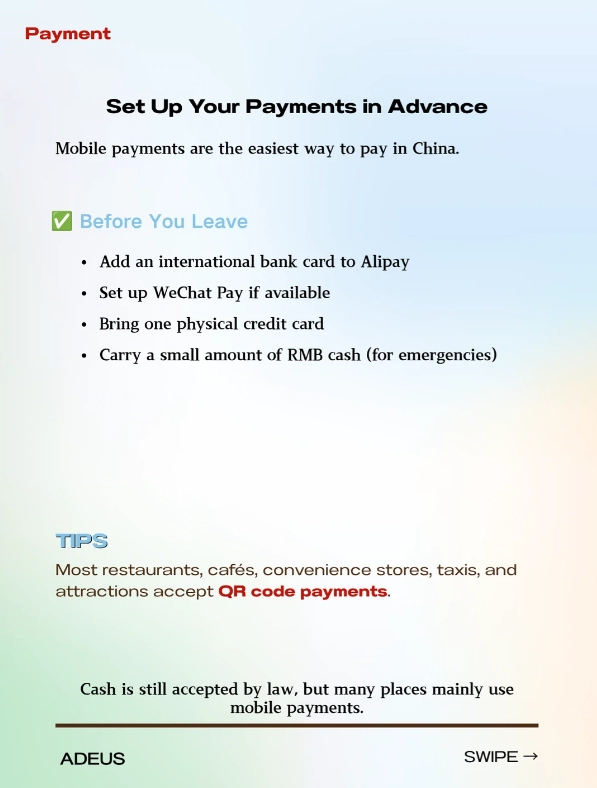
Essential Apps to Install Before You Arrive
| App | Purpose | VPN Needed? |
|---|---|---|
| Alipay | Payments, DiDi, booking | No (but set up pre-arrival) |
| Messaging, payments, mini-programs | No | |
| DiDi | Ride-hailing (English interface) | No |
| Trip.com | Flights, trains, hotels, attraction tickets | No |
| Apple Maps | Navigation (works best in China) | No |
| Baidu Translate | Camera translation, text | No |
| VPN (e.g., ExpressVPN) | Access Google, Instagram, WhatsApp | Yes (essential) |
How to Get Around: Trains, Flights & Ride-Hailing
China’s high-speed rail network is a dream. Book tickets on Trip.com or 12306.cn with your passport. For foreigners, the easier route is Trip.com—it adds a small service fee but you can pay with foreign card. At the station, use the manual ticket counter to collect paper tickets (show your passport). Never buy from touts outside the station. For flights, China’s domestic airlines are cheap and efficient; use Ctrip (Trip.com) or Fliggy. For intracity, DiDi is better than taxis—the fare is fixed, and you can pay via Alipay. Subway systems are modern but Chinese-only; use Apple Maps for route planning.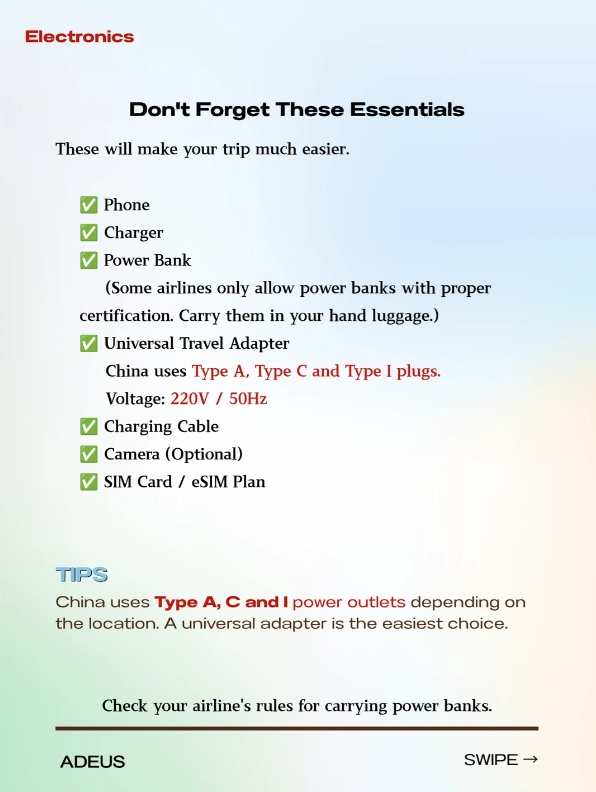
I once saw a family stranded because they waited until the day before—don’t be that person.
Sample 7-Day Itinerary for First-Timers
Day 1-2: Beijing
Arrive at Beijing Capital Airport (PEK) or Daxing (PKX). Take airport express to city center (30-50 min). Stay in Dongcheng district near subway line 2. Visit Forbidden City (book 3 days ahead via Trip.com, arrive at 8:30 AM to beat crowds). Afternoon: Jingshan Park for rooftop view. Day 2: Mutianyu Great Wall (less crowded than Badaling). Take bus 916 from Dongzhimen, or join a small group tour. Return for Peking duck at Sijie Minfu (reserve or go early at 5 PM).
Day 3-4: Xi’an
Morning flight to Xi’an (2h). Stay near Bell Tower. Afternoon: Muslim Quarter street food—try biang biang noodles and lamb skewers. Day 4: Terracotta Warriors (book online, 1h drive). Hire a DiDi for the day: about 300 RMB. Avoid the overpriced souvenir shops inside; buy at the official store near exit.
Day 5-7: Shanghai
High-speed train from Xi’an to Shanghai (5.5h, book earlier reclining seats). Stay in Jing’an or French Concession. Day 6: The Bund early morning (no crowds), then Yu Garden (small fee, buy at gate). Afternoon: Nanjing Road for shopping. Day 7: Shanghai Tower (book online, go at 4 PM for sunset). Final tip: exchange leftover RMB before leaving—many countries don’t accept Chinese yuan.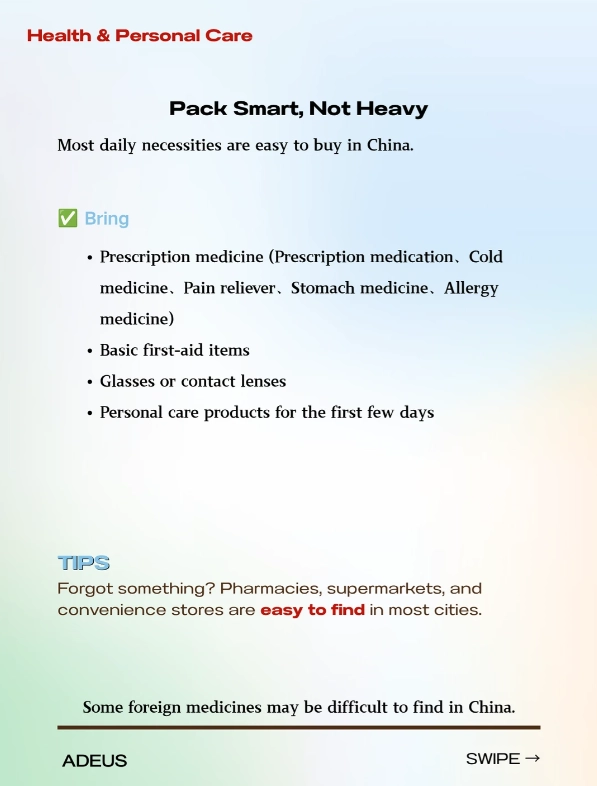
Money-Saving Tips & Common Scams
- Taxi scams: Always insist on the meter. If the driver refuses, get out. Or use DiDi for a fixed price.
- Fake ticket offices: Outside major attractions, touts sell overpriced tickets. Use official counters or book on Trip.com.
- Tea ceremony scam: If a friendly local invites you for tea near a tourist site, they will charge you hundreds for cheap leaves. Politely decline.
- ATM fees: Withdraw larger amounts once to minimize fees. Bank of China ATMs often have English.
- Student discounts: If you have an International Student Identity Card, you can get 50% off many attractions. Bring it.
Frequently Asked Questions
Verified and fact-checked by the editorial team.







No comments yet.