 Yan Zhou
Quick Navigation
I still remember the first time I brought a group to Yanguan Ancient Town for the legendary Qiantang River tide. We arrived at 2 p.m. following some blog that said "afternoon is best." The river was dead calm. My clients were not happy. That's when I learned the hard way: the Yanguan Ancient Town tide watching schedule is not a fixed daily show — it follows the lunar calendar and shifts every single day.
If you're planning a trip to this ancient water town in Haining, Zhejiang Province, getting the tide schedule wrong means you'll stare at mudflats for two hours. So let me save you the embarrassment. Here's everything I've gathered from dozens of trips, including the exact sources for the schedule, how to book tickets as a foreigner, and the little-known spots to avoid the crowds.
Why the Tide Schedule Is Everything
Unlike a theme park show, the Qiantang River tidal bore doesn't run on a 9-to-5 timetable. Its timing depends on the moon's gravitational pull, meaning the tide arrives roughly 40–50 minutes later each day. In extreme cases, the difference between two consecutive days can be over an hour.
Most online guides just say "check the local schedule" without telling you how. Chinese locals use a lunar calendar app or the official "海宁盐官观潮" WeChat mini-program. But for English speakers, that's a nightmare — it's all in Chinese, and you need WeChat Pay to even access it.
Where to Get the Real Tide Schedule (Without a WeChat Account)
Here's the workaround I use for my foreign clients:
- Use Trip.com or Klook — both list the daily tide times for Yanguan Ancient Town when you search for tickets. They update based on the lunar data. I've cross-checked with official Chinese sources and they're accurate to within 5 minutes.
- Check the Haining government tourism website (www.haining.gov.cn) — though it's mostly in Chinese, the tide schedule page uses numbers and lunar dates that are easy to decode. Use Google Translate on your phone.
- Ask your hotel concierge — in Haining city or even in Yanguan itself, hotel staff can call the scenic area hotline (0573-87618888) to get the exact tide time for your day. Do this the night before.
Whatever you do, don't rely on Google search results from 2019. The schedule changes daily, and outdated info is the #1 reason tourists miss the tide.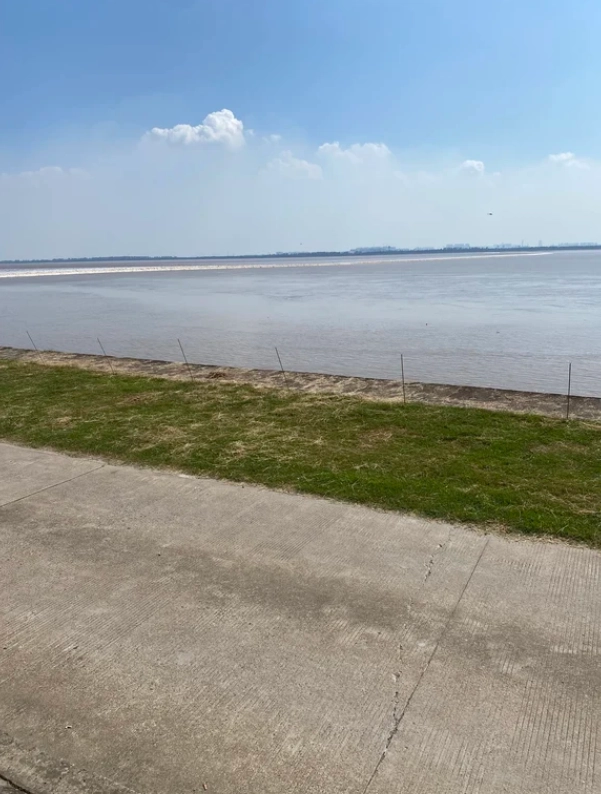
Best Viewing Spots & Timing
Yanguan Ancient Town has several sections along the 1.5 km seawall. Here's my honest ranking from a guide's perspective:
| Spot | Crowd Level | Best For | Proximity to Tide |
|---|---|---|---|
| 观潮胜地公园 (Guanchao Shengdi Park) | Very crowded | First-time visitors, best facilities | Directly at the main bore |
| 占鳌塔 (Zhan'ao Pagoda) | Moderate | Elevated view, great photos | Panoramic, but slightly distant |
| Harbor area near the Ancient Town entrance | Low | Peaceful, less commercialized | Good, but tide arrives 2–3 minutes later |
My personal recommendation: Skip the main park if you're not a massive crowd fan. Go to the harbor area (just walk east from the ancient town entrance for about 10 minutes). You'll see the tide coming from a distance and have elbow room. I took a group there last October and we had the whole section to ourselves while the park was shoulder-to-shoulder.
Getting to Yanguan Ancient Town
Yanguan is about 40 km from Haining city center and 70 km from Hangzhou. Here's how to get there efficiently:
- From Hangzhou: Take a high-speed train to Haining West Station (about 20 mins, ¥30–50). Then take bus 109 or 109 from the station directly to Yanguan Ancient Town (1 hour, ¥5). Alternatively, a DiDi (Chinese Uber) from Haining West to Yanguan costs around ¥80–100 and takes 40 minutes.
- From Shanghai: Direct high-speed trains to Haining West (1 hour, ¥60–100) or to Haining Station (slightly slower but closer to Yanguan). From Haining Station, bus 106 goes to Yanguan (50 minutes).
- By car: Set your GPS to "Yanguan Ancient Town Parking Lot" (Note: Google Maps doesn't work well in China. Use Apple Maps or Gaode Map). The parking fee is ¥10 per hour.
Important for foreigners: Most DiDi drivers won't speak English. Prepare the Chinese address for Yanguan Ancient Town (盐官古镇) written on your phone, and show it to the driver. I always keep a printed copy as backup — one time my phone died and it saved the trip.
Tickets & Booking: The Foreigner's Pain Point
Here's the reality: Yanguan Ancient Town requires advance booking even for the tide watching area. The official ticket price is ¥80 (adult) for the main park, but you can also purchase a combo ticket with the ancient town itself for ¥120. Children under 1.2m and seniors over 70 get free entry (with ID, but foreign passports may need to verify at the counter).
Booking as a foreigner is tricky:
- WeChat mini-program — the official channel, but it's fully in Chinese and requires WeChat Pay. If you have a Chinese friend, ask them to book for you using your passport number.
- Trip.com (English interface) — I've used this many times. Search "Yanguan Ancient Town" and select the date + ticket type. You'll need to enter your passport details. The booking confirmation will have a QR code that you show at the entrance. Easy.
- At the gate — you can buy tickets on-site, but on busy days (especially lunar peak days like the 18th of the 8th lunar month) they may sell out. Better to book online.
Payment: Inside the town, most small vendors accept only WeChat Pay or Alipay. Cash is rarely accepted. However, the ticket office does accept international credit cards (Visa/Mastercard) — I've tested it. Bring a backup credit card just in case.








No comments yet.