 Hua Sun
Quick Route Map — Tap What You Need
Nobody warns you about this. Jilin is bigger than Germany, and nearly every foreign traveler I guide sees exactly one thing here — Changbai Mountain — then gets on a train and leaves.
That is a waste of a province. I have booked the 6 a.m. departures to Ji'an, eaten my way through Yanji's morning market before sunrise, and once stood at a border checkpoint near Hunchun while a guard very slowly decided whether my registration was in order. The Jilin hidden gems I keep sending friends toward all sit on the edges of the province, where the signs stop being bilingual and nobody at the ticket window expects you.
Here is the conclusion before you scroll: the six spots worth rearranging a trip for are Ji'an, the Longwan crater lakes, Fangchuan at Hunchun, Yanji, Wangtian'e Canyon, and the far-west wetlands around Xianghai. Two sit on high-speed rail lines. Three need a hired car. And the best week of the whole year is the last week of September into the first week of October — after the National Day crowds go home, when the maples at Longwan turn red and the summit at Changbai finally clears.
That is the map. Everything else is detail.
What Counts as a Jilin Hidden Gem
Hidden is an abused word in travel writing. Distance alone does not make a place hidden — plenty of remote spots in China are wall-to-wall with domestic tour groups every weekend.
I use three tests. No English signage, and no English menu at the noodle shop beside the gate. A car is required for the final stretch — if a city bus drops you at the entrance, the place is unpopular, not hidden. And the local government has not built the giant parking lot yet.
By that standard Jilin holds maybe a dozen genuine ones. Six are worth the trouble. The rest are pretty drives with nothing at the end, and I will say so where it applies.
One expectation to set first. Outside Changchun and Yanji, Jilin's tourist infrastructure thins out fast. Squat toilets at the trailhead. A ticket window that closes for lunch. A bus station where nobody has ever met a foreigner. None of that is a reason to skip the province. It is the reason to go now.
Six Jilin Hidden Gems Worth the Detour
1. Ji'an — Koguryo Tombs on the Yalu River
Ji'an is the most underrated historical site in northeast China, and it carries a UNESCO World Heritage listing that almost no foreign visitor has heard of.
Sixteen centuries ago this small border town was a capital of the Koguryo kingdom. What is left: a granite step pyramid locals call the Tomb of the General, a six-meter stone stele covered in carved characters, and the stone walls of a mountain fortress on the ridge above town. Across the river sits Manpo, in North Korea — close enough that you can see laundry hanging on balconies.
Tickets are sold at each site rather than through one gate. Expect roughly ¥50 to ¥100 per location, occasionally bundled into a combined pass, and pay at the window with Alipay or cash. Advance booking is not usually required outside public holidays, but the riverside scenic areas register your passport, so carry it.
Getting there takes planning. There is no airport. You take the train to Tonghua and then either a slow regional train or a 1.5 to 2 hour drive to Ji'an — check the current schedule on China Railway 12306, because the high-speed line through Tonghua has been opening in stages and the fastest option keeps changing. In Tonghua I hire a car for the day, usually ¥400 to ¥600, and the driver waits.
Give Ji'an a full day, two nights if you can. The Tomb of the General faces east and opens around 8:30. Be there at opening, because the light is soft and the tour buses roll in at ten.
Pro Tip: The great stele sits behind glass, and by mid-morning the reflections make photography almost pointless. Go first, before the sun climbs. And do not pre-book the Yalu River cruise — it gets cancelled whenever the water is low, which happens often in spring. The view from the free riverside park is nearly as good.
For dinner, ask your hotel for the brazier street and order 高丽火盆 — a brass pan of tofu, vegetables and pork cooked at the table until the bottom scorches, which is the point. Ji'an also grows grapes and makes a rough local wine that pairs badly with everything. Try it anyway.
2. Longwan Crater Lakes — Seven Volcano Lakes, No Crowds
Seven crater lakes sit inside a forest park in Huinan County, and on a weekday in early October you may have an entire lake to yourself.
The lakes formed in ancient volcanic craters and are strung through pine and maple forest. Triangle Dragon Bay is the photogenic one, with a boat dock and a wooden boardwalk. Big Dragon Bay is the largest. Diaoshuihu is a waterfall that steps down over cooled lava — the least visited of the three, and my favorite, mostly because it is the only one where I have never heard a loudspeaker.
Tickets run roughly ¥50 to ¥80 per lake area, sometimes sold as a combined pass. Confirm at the gate, since pricing shifts by season and by which lakes are open that week. There is no online booking system worth fighting with, and no English signage anywhere.
There is no high-speed rail here either. From Changchun it is about 2.5 hours by car. By public transport, take a bus from Changchun to the Huinan county seat, Chaoyang Town, then a taxi for the final 40 to 60 minutes. A few regional trains stop at Chaoyang Town station — worth checking, but do not build your day around it.
Arrive before 9 a.m. The water is glassy, mist is still sitting on it, and the color photographs properly. By noon the light goes flat and the boardwalks fill up.
Insider Advice: The guesthouses inside the park are basic — thin mattresses, shared bathrooms in the cheaper rooms, and no English. They also sell out completely during foliage season. Book a week ahead, or sleep in Huinan town and drive in early. And bring mosquito repellent for July and August; the crater basins hold water, and the bugs know it.
Trails are wooden steps, steep in places, and not suitable for wheelchairs or strollers. My knees complain every single time.
3. Fangchuan at Hunchun — Three Countries in One Sweep
From the viewing pavilion at Fangchuan you can see China, Russia and North Korea at once — plus the sea you are not allowed to reach.
The Tumen River runs toward the Sea of Japan, but the final fifteen kilometers belong to Russia and North Korea, which is why northeast China has no outlet there. You climb Longhu Pavilion for the panorama: Russian railway bridges on one side, North Korean hills on the other, and on a clear morning the sea glinting on the horizon.
Admission is roughly ¥60 to ¥80 including the internal shuttle from the gate to the pavilion. Verify at the ticket office; it changes. Bring your passport, expect a registration checkpoint on the access road, and do not photograph military posts or guards. Rules for foreign passport holders at border viewpoints do shift, so ask your Hunchun hotel to phone the scenic area the day before you go.
The journey is easy until the last leg. High-speed rail from Changchun to Hunchun takes about 3.5 to 4 hours, or fly into Yanji and ride the train for 40 minutes. From Hunchun the site is about 70 kilometers out — 1.5 hours by car, with seasonal shuttle buses from the Hunchun bus station. A round-trip taxi runs ¥350 to ¥500 if you agree on the price before you get in.
Pro Tip: Skip the Fangchuan day tours that leave Yanji. You will spend eight hours on the road for forty minutes at the pavilion. Take the train to Hunchun, sleep one night, and be at the gate when it opens.
Hunchun itself is worth the night. It is a Russian border town in all but name — Cyrillic menus, Russian shoppers, and a seafood market selling king crab landed from Vladivostok at prices that would embarrass a Shanghai restaurant. Pick your crab, pay by weight, then walk it to one of the nearby kitchens that will steam it for a fee. Ask about the cooking charge before you commit.
4. Yanji — the Food Capital Nobody Outside China Talks About
Yanji is the best eating city in northeast China and the softest landing in Jilin for a foreigner — bilingual signs, cheap taxis, and cold noodles that ruin you for everywhere else.
This is the capital of the Yanbian Korean Autonomous Prefecture, where shopfronts are written in Chinese and Korean, and where a two-hour flight from Seoul Incheon explains why so many menus carry a Korean page.
Start at the Water Market on Xinxing Street. It opens around 5 a.m. and winds down by 9. By 6:30 it is in full swing — rice cakes sold by the slab, kimchi by the kilo, blood sausage, fresh tofu, and grandmothers who will absolutely make you taste something. Bring small notes and use the Alipay QR codes taped to the stalls.
What I actually do in Yanji:
- Cold noodles at 11 a.m., when the queue is mostly taxi drivers on break — that is your quality signal. ¥15 to ¥25 a bowl, icy beef broth, chewy buckwheat noodles, a slice of pear on top.
- Korean barbecue for dinner, ¥60 to ¥100 per person, cooked on the table. Order pork belly and a bottle of local makgeolli.
- The sign wall opposite Yanbian University, for photos. At six in the evening it is a scrum of tripods. At nine it is civil and the colors pop.
- The Chinese Korean Folk Village, where hanbok rental with photos runs ¥100 to ¥300. Go in the morning; by afternoon the good spots are queued.
- Mao'er Mountain, a free forest park with a 40-minute climb and a view over the whole basin.
Hotels near the university or the Buerhatong River put you within walking distance of all of it. High-speed rail from Changchun is 2.5 hours; check 12306 for times and book a few days out, because Friday afternoon trains sell out.
One honest complaint: Yanji's most famous sights are not sights at all, they are queues. The folk village at 2 p.m. on a Saturday is a hanbok traffic jam, and I have watched people burn an entire afternoon waiting for one photo. Split your visit — market at dawn, mountain at noon, sign wall at night.
5. Wangtian'e Canyon — Basalt Columns on the Korean Border
Wangtian'e is a volcanic canyon of hexagonal basalt columns and cold waterfalls, tucked into the corner of Jilin where the border feels like another country.
It sits in Changbai Korean Autonomous County, high enough that August still needs a jacket. The canyon walls are stacked hexagons — cooled lava that cracked into columns — with streams running between them and small falls dropping into green pools. A wooden walkway follows the water for a few kilometers.
Admission is around ¥100. Maintenance closures happen without much warning, so confirm with your hotel or the county tourism office before committing to a long drive. There is no rail link; the last stretch is mountain road, and I hire a local driver for ¥500 to ¥700 a day rather than rent a car myself.
Budget three to four hours on site, a full day with the drive. Most travelers base in Changbai County town, which sits on the Yalu River facing Hyesan in North Korea — the riverfront walk at dusk is its own small event.
Insider Advice: The walkway stones are polished by water and get genuinely slick after rain. Wear grippy shoes, not sandals. And the county's Korean-Chinese kitchens serve a cold-noodle-and-grilled-fish menu that beats anything in the tourist towns near the mountain.
6. Xianghai and the Far-West Wetlands — Cranes, Reeds and Grassland
Jilin's far west is reed marsh, sand dunes and grassland, and during migration it holds bird gatherings on a scale that surprises people who picture this province as mountains and factories.
Xianghai National Nature Reserve sits in Tongyu County out toward Baicheng. Momoge, further north in Zhenlai, is the other big one. Red-crowned cranes, white-naped cranes, swans and geese pass through in spring and again in autumn, and the watchtowers give you a wide view over the reeds at sunrise.
Admission runs roughly ¥50 to ¥90 depending on which zones and shuttles are operating. Verify on site — this is not a place with a tidy English booking page, and information is close to nonexistent outside Chinese. Getting there means flying or training to Baicheng and then driving two hours or more. Baicheng has an airport with limited routes; the train is more reliable.
Stay in Baicheng for comfort or in Xianghai town for proximity. Guesthouses are simple. Bring a long lens, mosquito repellent, and patience — the birds do not perform on schedule. The migration windows are roughly late April to May and September into October.
Getting Around Jilin Without Speaking Chinese
Jilin's public transport is better than its reputation, as long as you accept one rule: the trains take you almost everywhere, and a car takes you the rest of the way.
High-Speed Rail Is the Backbone
Every route in this article starts with a high-speed train, and your passport is your ticket. Changchun to Yanji runs about 2.5 hours. Changchun to Hunchun, continuing past Yanji, is 3.5 to 4. The Dunhua–Baihe line drops you at Changbai Mountain station for the mountain's north slope. Tonghua, the gateway to Ji'an, is 3 to 4 hours from Changchun by conventional rail.
Book on the official China Railway 12306 site, which has an English interface, or on Trip.com if you would rather deal with a foreign-card-friendly checkout. Then read this twice: arrive 40 minutes early, because passport lanes move slowly and the automated gates reject foreign passports more often than you would expect. If the gate flashes red, do not queue again — walk to the staffed counter beside it.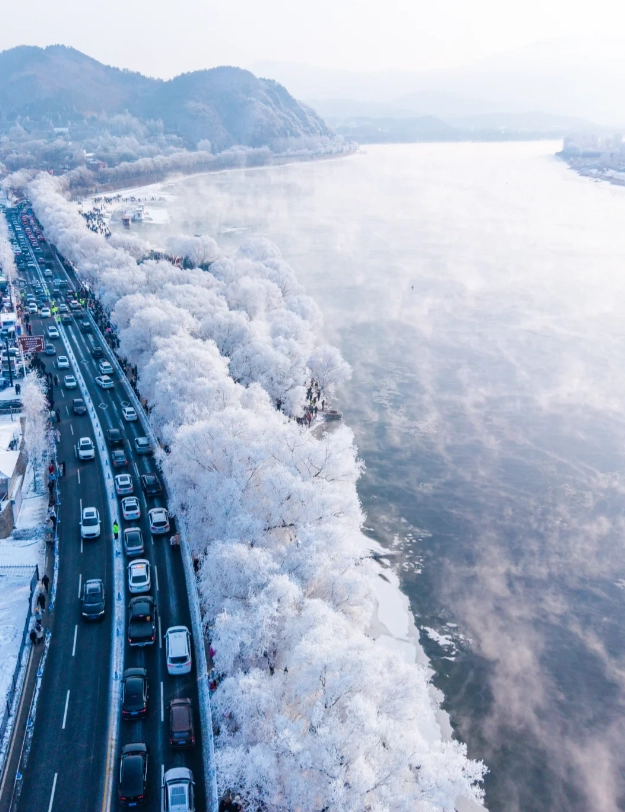
The Last Mile Is Always a Car
Didi works in Changchun, Yanji, Hunchun and Tonghua, and you can call it through the Alipay mini-program without installing anything. Outside those cities there is no ride-hailing at all.
So you negotiate. Ask your guesthouse or hotel to arrange a driver for the day — ¥400 to ¥700 is the normal range, fuel included, and the person they send usually knows which ticket window to use and where the decent bathroom is. Agree on a day rate rather than a per-kilometer price, and confirm whether tolls and parking come out of your pocket. Get the driver's WeChat before you set off; it solves every communication problem later.
| Route | Best Option | Time | Approx. Cost |
|---|---|---|---|
| Changchun to Yanji | High-speed rail | 2.5 hours | ¥130–¥170 second class |
| Changchun to Hunchun | High-speed rail | 3.5–4 hours | ¥200–¥260 second class |
| Yanji to Hunchun | High-speed rail | 40 minutes | ¥30–¥50 |
| Hunchun to Fangchuan | Hired car or seasonal shuttle | 1.5 hours each way | ¥350–¥500 round trip |
| Changchun to Huinan for Longwan | Hired car, or bus plus taxi | 2.5 hours by car | ¥600–¥900 per day |
| Tonghua to Ji'an | Hired car or regional train | 1.5–2 hours | ¥400–¥600 per day |
| Baicheng to Xianghai | Hired car only | 2 hours | ¥500–¥700 per day |
What These Jilin Hidden Gems Actually Cost
Jilin is cheap by any Western standard, and the hidden gems are cheaper than the famous ones — mostly because there is nothing to buy once you arrive. Here is what a mid-range day looks like.
| Item | Typical Range | Notes |
|---|---|---|
| Guesthouse double room | ¥150–¥350 | Rarely takes foreign cards; Alipay or cash |
| Mid-range city hotel | ¥300–¥600 | Yanji, Hunchun, Tonghua, Baicheng |
| Attraction tickets | ¥50–¥100 each | Rarely bookable online in English |
| Local meal, per person | ¥30–¥80 | Cold noodles ¥15–¥25; barbecue ¥60–¥100 |
| Hired car with driver | ¥400–¥700 per day | Fuel usually included, tolls sometimes not |
| Intercity high-speed rail | ¥130–¥260 | Second class; passport required |
| Hanbok rental in Yanji | ¥100–¥300 | Photos included at some shops, not all |
Two budget traps worth knowing. Ticket windows at small attractions sometimes cannot break a ¥100 note early in the morning, so carry small bills. And drivers who quote per kilometer will find reasons for extra kilometers; the day rate is the honest way to buy.
When to Go, Season by Season
Everyone tells you July and August. I would send you in the last week of September and the first week of October instead, once the National Day holiday traffic has cleared.
| Season | Best For | Watch Out For |
|---|---|---|
| Late December to February | Rime ice, snow, hot springs, empty attractions | Minus 20°C and colder; some rural guesthouses close |
| April to May | Bird migration at Xianghai and Momoge; wild pear blossom | Wind, dust, and gates shutting at 4:30 p.m. |
| June to August | Changbai greenery, cool crater lakes | Rainy season, mosquitoes, summit often clouded in |
| Late September to mid October | Maple color at Longwan, clear views, crisp air | National Day crush from October 1 to 7 — go after |
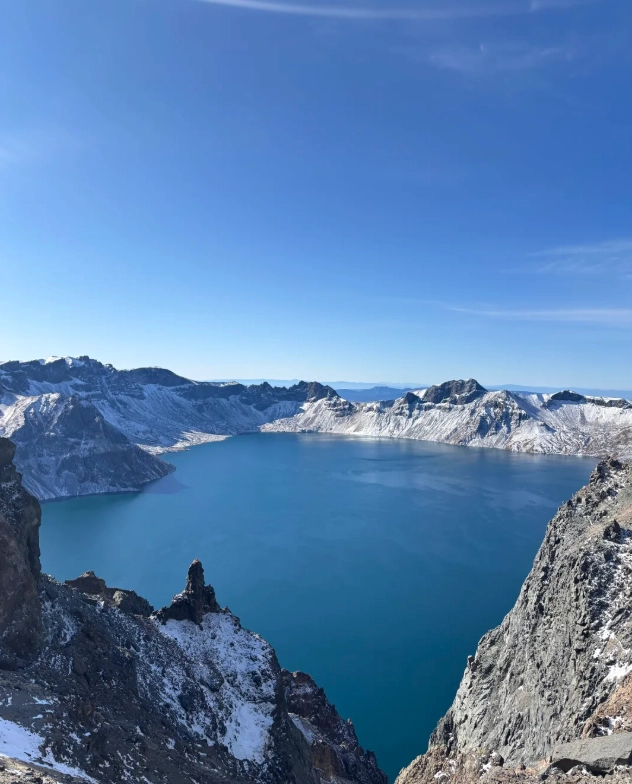
My non-consensus take: the Changbai Mountain summit is closed for wind and weather more often than any brochure admits, including plenty of days in peak summer. Build a trip around standing at the crater rim and you are gambling. Build it around the canyon, the lakes and the hot springs instead, and treat the summit as a bonus. The west slope's gorge is often clear when the north slope is socked in.
A 5-Day Route That Won't Wreck You
This loop runs east from Changchun along the high-speed line, mixes three hidden gems with one unavoidable classic, and works because you only unpack three times.
Day 1 — Changchun to Yanji. High-speed rail, 2.5 hours, take the morning departure. Check in near Yanbian University. Walk Mao'er Mountain in the late afternoon for the view, then eat cold noodles and barbecue. Finish at the sign wall around 9 p.m., when the crowd thins out.
Day 2 — Yanji to Hunchun to Fangchuan. Water Market at 6:30 a.m., back at the hotel by 8:30, then the 10 a.m. train to Hunchun, which takes 40 minutes. Drop your bags, eat skewers for lunch, and hire a car at 1:30 p.m. for the 1.5-hour run to Fangchuan. You will have the pavilion by mid-afternoon. Back in Hunchun for king crab by 7 p.m.
Day 3 — Hunchun to the Changbai Mountain area. Train back through Yanji and Dunhua to Changbai Mountain station, roughly 3 hours depending on connections, or hire a car for a 3.5-hour drive. Base in Erdaobaihe town. The afternoon is for hot springs and the pine park; you will want the early night.
Day 4 — Changbai Mountain north slope. Book the entry slot in advance. The official WeChat mini-program is Chinese-only and honestly a pain even for me, so use Trip.com or ask your hotel reception to handle it. Aim for the 7:30 to 8:00 window. Rain plan: if the summit road closes, the lower Grand Canyon and Green Deep Pool areas usually stay open, and the hot springs make a decent consolation.
Day 5 — Wangtian'e or home. Either drive to Changbai County for the basalt canyon — two and a half to three hours each way, so leave at dawn — or take the train back to Changchun. Short on time? Swap Wangtian'e for a 6 a.m. trip to the misty river at Mojie near Erdaobaihe, which costs almost nothing and photographs better than half the paid attractions.
If you would rather do the southwest instead — Longwan crater lakes plus Ji'an — that is a separate three-day loop out of Changchun and does not connect well with the east. Trying to combine both in one week means six hours of train time per day. I have watched people try. They go home needing a vacation.
Payments, Passports and Apps
Set up Alipay or WeChat Pay with your international card before you fly, because in Jilin's small towns that QR code is the only register in the building.
Alipay handles foreign cards now and is the friendlier of the two for visitors; WeChat Pay works the same way once you are verified. Physical Visa and Mastercard are accepted at big city hotels and essentially nowhere else — not at the Longwan ticket gate, not at the crab stall in Hunchun. Carry ¥300 to ¥500 in cash as a backstop, and keep small notes.
Navigation is the other trap. Google Maps is unreliable in mainland China — locations are offset and walking routes are fiction. Apple Maps works and reads in English; AMap has an English mode and better rural coverage. Download offline maps of Jilin before you leave the city. Google, Instagram and WhatsApp all need a VPN, which you must install and test before you land. Read the current entry rules on the National Immigration Administration site rather than trusting a forum post from three years ago.
For bookings, Trip.com and Klook are built for foreign passports and foreign cards. WeChat mini-programs are not — Chinese-only, and they want a mainland phone number. I have watched confident travelers spend twenty minutes on a scenic-area booking page before giving up. Hand your phone to the hotel receptionist instead. They will do it in ninety seconds and enjoy the break.
Hotels register your passport for you; that is routine and nothing to worry about. Bring the passport anyway — every attraction in this article, and every train, wants to see it.
One last thing. The UNESCO documentation on the Capital Cities and Tombs of the Ancient Koguryo Kingdom is worth skimming before Ji'an. Twenty minutes of reading turns a pile of granite into a story.
Questions I Get Every Single Week
Can I visit Jilin's hidden gems without a Chinese phone number?
You can, with friction. Trains are fine — 12306 and Trip.com both accept a passport number and an international card. Attractions are the problem, since most booking systems want a mainland mobile number. Trip.com usually sidesteps this, and when it does not, the hotel front desk is the workaround. A tourist SIM from China Unicom or China Mobile at Changchun airport gives you a local number, but an eSIM does not — so if you are relying on eSIM only, plan to lean on your hotel.
Is Fangchuan safe, and can foreign passport holders visit the border area?
It is a managed tourist site with shuttle buses and staff, not a frontier crossing, so personal risk is low. The paperwork is the variable. Bring your passport, expect a registration stop on the access road, and have your Hunchun hotel phone the scenic area the day before to confirm the current rule for foreign passports. Photograph from the pavilion, not at the checkpoint, and do not zoom in on guards or military installations. Border-zone rules change quietly, so treat any blog post older than a season as a rumor.
Do I really need a VPN in Jilin, and does Google Maps work there?
Install and test a VPN before departure, because you cannot download one after you arrive. Google Maps technically loads, but mainland China mapping data is offset, so addresses land in the wrong place. Use Apple Maps or AMap instead. What you actually need is a translation app with an offline Chinese pack, because menus in Huinan and Xianghai are handwritten and taped to the wall.
What is the best window for autumn color at the Longwan crater lakes?
The first ten days of October are usually peak, sometimes stretching into mid-month if the first frost comes late. Avoid October 1 through 7 entirely — that is the National Day holiday and every guesthouse in the park is full. Arrive before 9 a.m. for glassy water and no buses. Book lodging a week out; there is no walk-up option during foliage season.
How do I pay at small attractions and village guesthouses?
Alipay or WeChat Pay, set up before you fly. Physical foreign cards will not work at a ticket window in Huinan, and small vendors often cannot break a ¥100 note before mid-morning. Keep ¥300 to ¥500 in cash, mostly in ¥20s and ¥50s. If a guesthouse owner says the QR code is broken, it is not — they would simply rather take cash, and cash is perfectly acceptable there.
Verified and fact-checked by the editorial team. Ticket prices, transport times and border-area procedures change without notice — confirm current details through official channels before you travel.

No comments yet.