 Qiang Huang
What You'll Find in This Guide
I'll never forget the first time I led a group into Xitang. Everyone was exhausted from the two-hour bus ride from Shanghai, but the moment we stepped onto the first stone bridge, cameras flew out. Then came the midday sun — harsh, flat, all wrong for the canals. Half the group gave up. That day taught me something: Xitang rewards preparation. Get the light wrong, and you'll leave with postcard shots everyone has seen. Get it right, and you'll capture reflections that look like oil paintings.
Here's the real challenge: most foreign travelers I meet have booked their tickets online, but they arrive without knowing that Google Maps doesn't work here — you need Apple Maps or AMap Global. They also don't realise that Alipay is king, and cash often gets refused. After guiding over 50 groups through Xitang, I've boiled down the essential info to help you skip the mistakes and go straight to the money shots.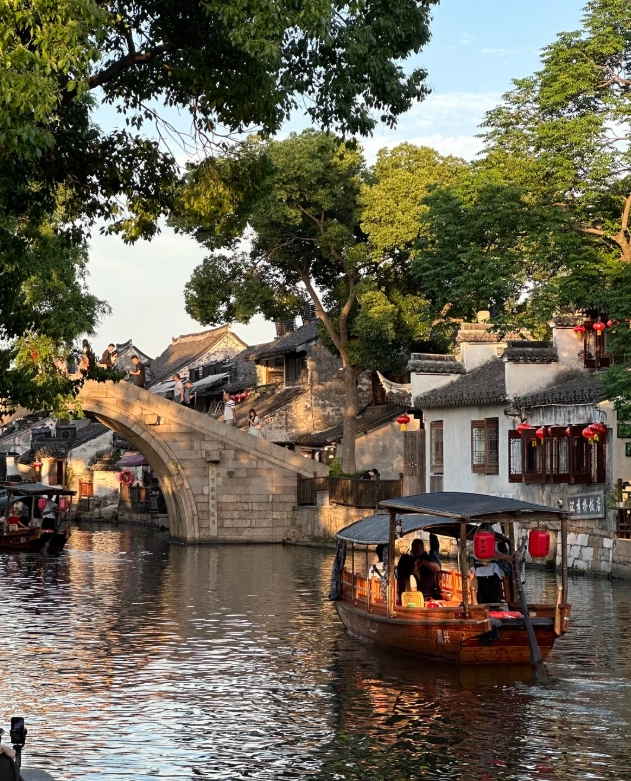
The one tip that transforms your Xitang photography: arrive before 7:00 AM. The town opens at 8:00 AM for day visitors, but if you stay overnight (highly recommended), you get the empty streets from 5:30 AM to 7:30 AM. That's when the mist rises from the canals and the locals start their day — washing vegetables, lighting stoves. Those are the photos that win competitions.
How to Get the Best Light for Xitang Photography
Golden Hour Magic: Sunrise vs Sunset
Sunrise is superior in Xitang — and I'm not just saying that because I'm a morning person. The town's layout means the main canals run east-west. At sunrise (around 5:30 AM in summer, 6:30 AM in winter), warm light floods directly along the water, illuminating the white walls and creating mirror-perfect reflections. Sunset, on the other hand, gets blocked by the taller buildings on the west side. You'll get some nice rim lighting on rooftops, but the canals stay in shadow.
Midday Photography: Embrace the Shadows
Absolutely avoid shooting wide shots between 11 AM and 2 PM — the light is too harsh and the crowds peak. But don't put your camera away. This is the perfect time for detail shots: carved wooden window frames, hanging lanterns, steamed buns in bamboo baskets. Use a shallow depth of field (f/2.8 or wider) to isolate subjects from the busy background. Also, the covered walkways (长廊) provide natural diffusers — set up near the North Gate area where the roof overhang creates striped shadows.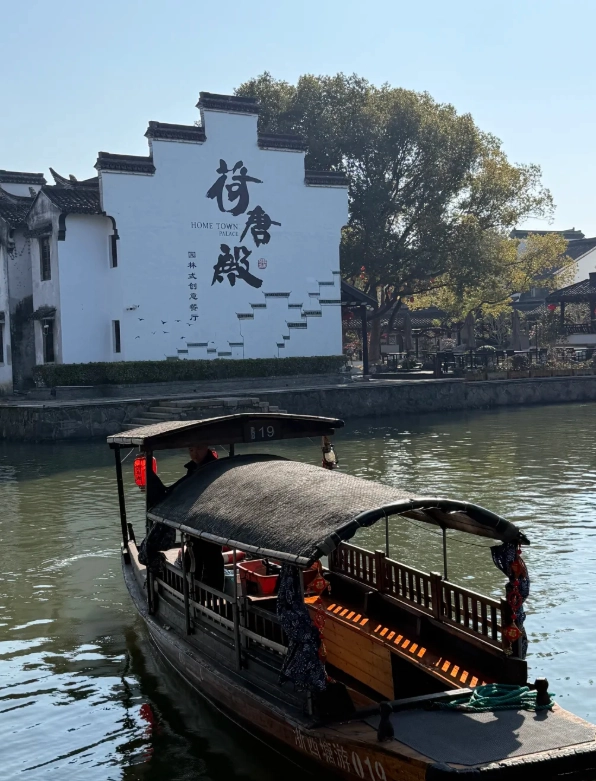
Top 5 Photography Spots in Xitang Ancient Town
1. The Twin Bridges (Shuang Qiao)
This is the iconic shot you see on all posters — and for good reason. Located at the intersection of two canals, the twin stone bridges (Wan'an Bridge and Laifeng Bridge) frame each other beautifully. Best time: sunrise, from the east bank. Stand at the railing near the small restaurant "Qing Qing Jiu Jia" (清清酒家) to get both bridges in one frame. A 24-70mm lens works perfectly. Insider trick: Wait for a wu peng boat (black-canopied boat) to pass under the arch — the contrast against the white stone is stunning.
Address: 塘东街与北栅街交叉口 (Intersection of Tangdong Street and Beizha Street). English for taxi: "Shuang Qiao, Xitang Ancient Town."
2. West Street (Xi Jie) – The Photographer's Alley
This narrow lane runs parallel to the main canal on the west side. Few tourists venture this far in the morning, so you can get clean shots of the traditional shopfronts. I love the bakery at No. 26 that makes green rice cake by hand — the steam rising at 7 AM is a gift. Use a 35mm or 50mm prime for street portraits. Be respectful: locals have been photographed endlessly, so a smile and a nod go a long way.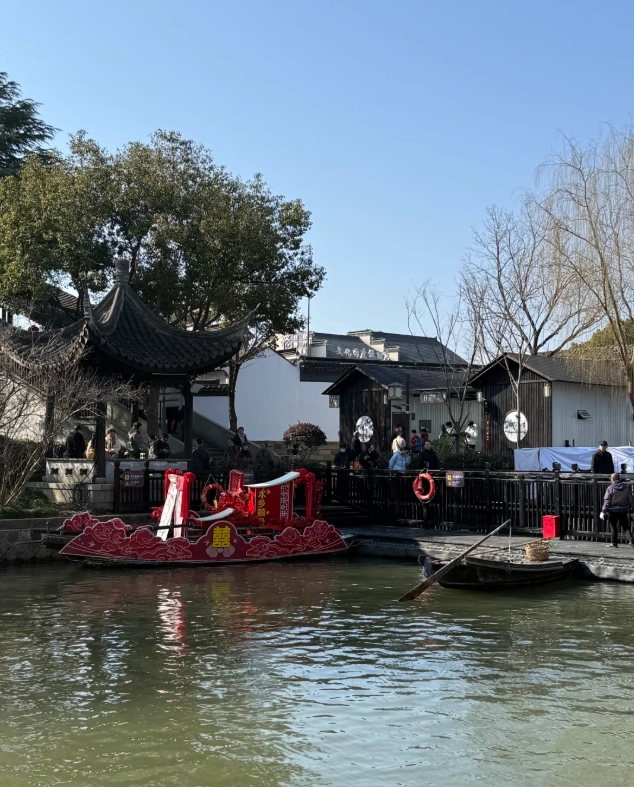
3. North Gate Pier – Evening Lights
Sunset here is a compromise — the sky glows pink, but the canals are dark. Where it excels: blue hour (30 minutes after sunset). The red lanterns along the pier reflect in the water creating a warm, romantic atmosphere. Set your white balance to "tungsten" (around 3200K) to deepen the blues and make the lanterns pop. A tripod is essential — you'll be shooting at 1/10s or slower.
Address: 北栅街尽头 (End of Beizha Street). Look for the boat dock next to the restaurant "Old Town Memory" (古镇记忆).
4. South Gate – Less Crowded Perspective
Most visitors enter through the main east gate, so the south gate area is relatively quiet. The canal here is wider, and there's a lovely old theatre stage (古戏台) across the water. Position yourself on the small bridge south of the stage — you'll get the reflection of the stage and the distant pagoda. This spot also works surprisingly well in midday because the stage roof provides shade on the water, reducing glare.
5. The Hidden Corner Near Yanqiao
Yanqiao (烟桥, "Smoke Bridge") is a tiny, unnamed bridge tucked between two residential alleys. I stumbled upon it after getting lost on my third visit. From the bridge, looking northwest, you see a perfect diagonal line of roof tiles leading to a distant bell tower. No tour groups go here. To find it: from West Street, turn into the alley beside the "Fragrant Tea House" (香茗茶楼), walk 50 meters, and cross the wooden plank. Use a telephoto lens (70-200mm) to compress the perspective.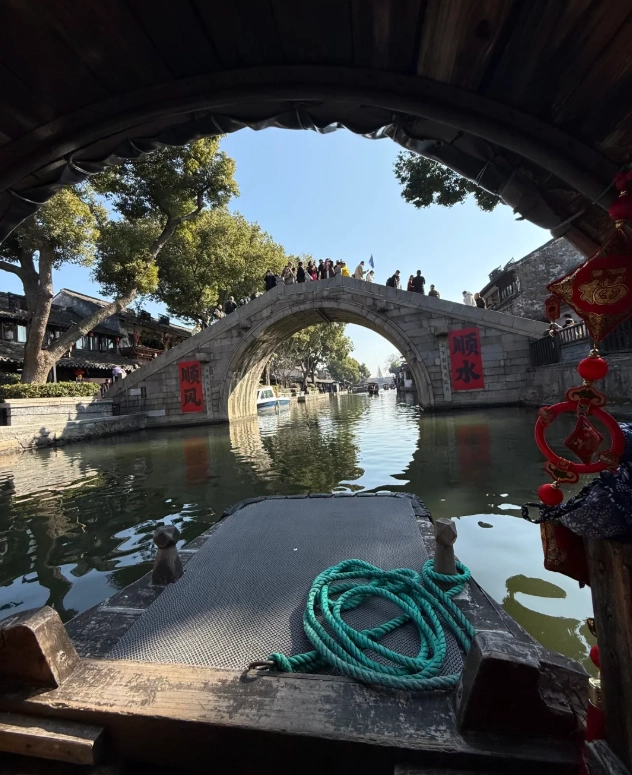
Essential Tips for Photographing in Xitang
Navigating Permits and Crowds
Yes, you need a ticket to enter Xitang — even for photography. Day ticket is 95 RMB (adult), includes all public areas. If you stay inside overnight (book a guesthouse within the old town), you can buy a combined ticket that includes evening access (95 RMB for single entry, or 150 RMB for a two-day pass). Important: you must use your passport to buy the ticket — no exceptions. I recommend booking via Trip.com in advance: they accept international credit cards and let you scan your passport at the gate. Avoid the official WeChat mini-program — it's Chinese-only and a nightmare to navigate.
To beat the crowds: arrive at the east gate by 7:30 AM (gate opens at 8:00). Or enter through the south gate (opens at 8:30 AM, but fewer people). Weekdays are significantly emptier than weekends — if your schedule allows, plan for Tuesday to Thursday.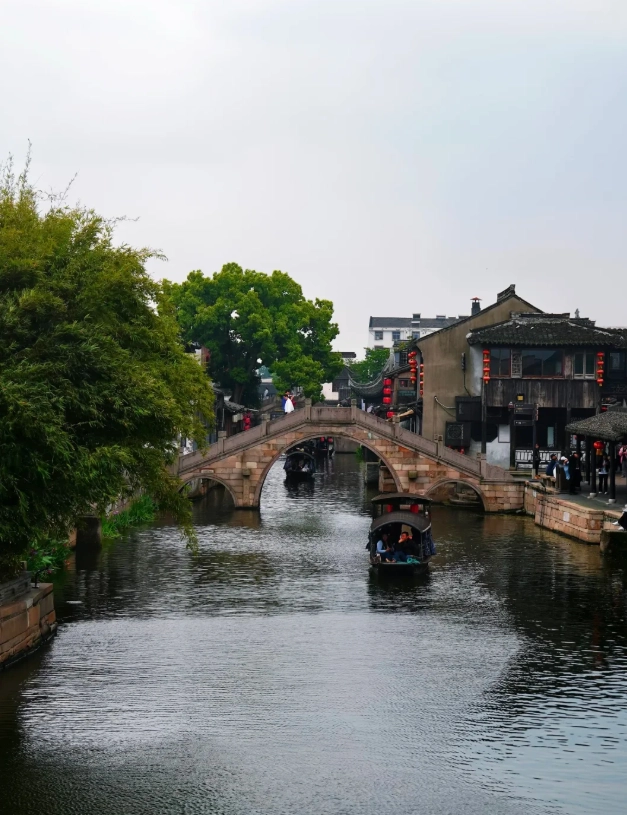
Gear Recommendations for Water Town
- Wide-angle lens (16-35mm): essential for canal shots and narrow alleys.
- Polarizing filter (CPL): cuts water glare and saturates the green moss on walls. A must-have.
- Tripod: light carbon fiber (1.2 kg or less) — you'll carry it for hours. Don't bother with a heavy one.
- Rain cover: sudden showers happen. A simple clear plastic bag with a rubber band works in a pinch.
- Spare batteries: cold morning mist drains batteries faster than you expect.
Dealing with Weather and Seasonal Changes
Spring (March–May) and autumn (September–November) are ideal. Summer is hot, humid, and crowded; winter can be foggy and cold (2-8°C) but the lack of leaves on trees gives a stark, atmospheric look. Rainy days are actually great for photography — the wet stones reflect light beautifully. Just avoid typhoon season (July–August) when heavy winds can damage gear.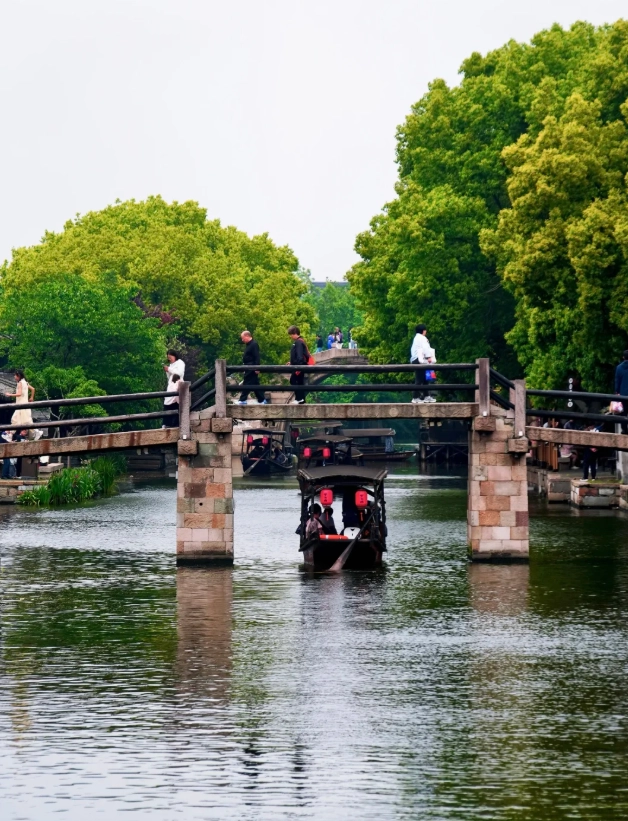
Sample One-Day Photography Itinerary
| Time | Activity | Location | Notes |
|---|---|---|---|
| 5:30 AM | Sunrise shoot at Twin Bridges | Shuang Qiao | Arrive before 5:15 to set up. Mist likely |
| 7:00 AM | Breakfast + Xitang rice cake | West Street (buy from stall No. 26) | Cash only, ~10 RMB |
| 8:00 AM | Explore West Street for street scenes | Xi Jie | Soft light until 9:30 |
| 10:00 AM | Detail shots along covered walkways | North Gate area | Use CPL filter for deep colors |
| 12:00 PM | Lunch at Old Town Memory | 北栅街 | Try the fish soup, ~60 RMB per person |
| 2:00 PM | Rest / backup indoor activity | Xitang Museum (inside old town) | Free with ticket, air-conditioned |
| 4:30 PM | Scout Yanqiao hidden corner | Near West Street | Check light direction |
| 5:30 PM | Blue hour at North Gate Pier | North Gate | Tripod essential |
| 7:00 PM | Dinner & night lights | Yanqiao area or any canal-side teahouse | Red lanterns at night |
Backup plan for rain: Visit the Xitang Wax Museum (蜡像馆) inside the old town — interesting for indoor portraits with dramatic lighting. Or simply sit in a canal-side teahouse and shoot through the rain-streaked windows.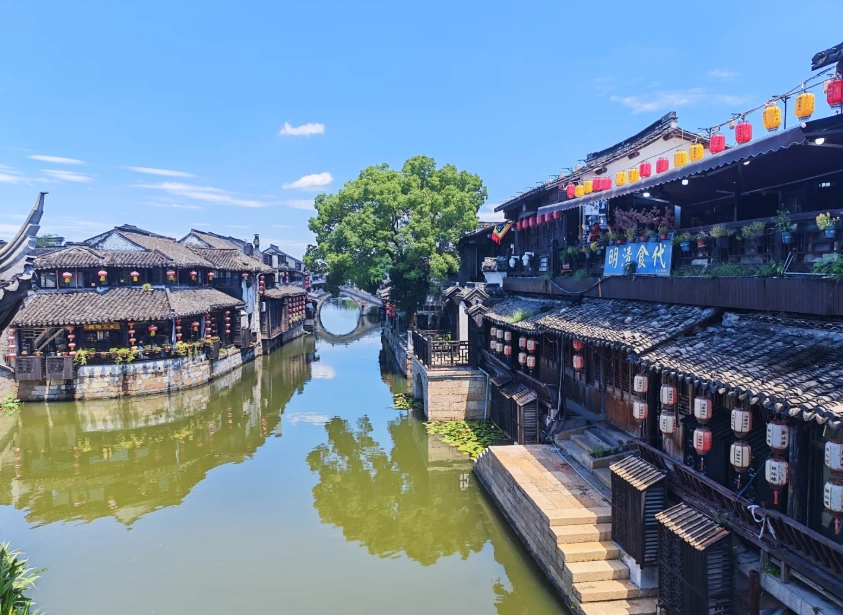





Honestly, I was a bit disappointed. The guide hyped up some spots that turned out to be full of tourists and souvenir shops. The 'secret corner' near the south entrance was just a dirty alley with trash bins. The lighting tips were okay, but you can find the same info for free on travel blogs. Also, the town itself felt way too commercialized—every bridge had someone trying to sell you a photo prop. If you’re looking for a quiet, authentic photography experience, this isn’t it. Two stars from me, but I’ll give three because the map was accurate.
Good overall guide, and the locations are definitely worth checking out. The sunrise spot along the main canal was beautiful, but by 9am it got way too crowded to get a clean shot. Also, a few of the 'less touristy' alleys were already packed with people trying to take selfies. That said, the detailed map and time suggestions were helpful. If you can go on a weekday during off-peak season, you’ll have a much better experience. Four stars—still a solid resource, just manage your expectations on crowds.
Incredible resource for composition ideas! I’m an amateur photographer and this guide pointed me to the exact spots that made my portfolio pop. The location near the Wansheng Bridge gives a perfect leading line along the canal, and the tip about shooting through archways created these gorgeous frames within frames. I also loved the advice on shooting during blue hour near the boat pier—no filters needed. Only wish I'd had this guide on my first trip here. Five stars!
Absolutely loved Xitang, and this guide helped me find all the hidden gems! I’m not a pro photographer, just love taking travel pics, and the sunset view from the alley behind the East Gate was stunning. The warm lantern lights against the darkening sky—pure magic. The tips about avoiding the midday crowds and using a tripod for night shots were spot on. Honestly, one of the most photogenic ancient towns I’ve ever visited. Highly recommend!
If you're into photography, this guide is a goldmine! I spent two full days in Xitang and followed the tips here—especially the early morning shoot at the covered bridges. The light around 6:30am creates the most magical reflections on the canal, and there's barely anyone around. The spot near the Qilong Bridge is a must; the old houses and willow trees frame the shot perfectly. Seriously, this place is a dream for any shutterbug. Five stars, no question!