 Hua Sun
The Route Map in My Head
- Why Liaoning Rewards Slow Travel
- How to Travel Around Liaoning by Rail
- Booking With a Passport: 12306 vs Trip.com
- The 7-Day Itinerary I Actually Run
- Choosing Transport: What to Know First
- Attractions Worth Your Time
- Where to Stay, City by City
- What to Eat in Liaoning
- Payments, VPNs and Practical Traps
- Questions I Get Asked Every Season
Two hours on a train. That's the whole secret.
Most travelers treat Liaoning as a side quest bolted onto a Beijing trip, then lose four days bouncing between cities that sit ninety minutes apart.
I learned that the hard way. On my first run through the province I booked Dalian first, Shenyang second, Dandong third — and paid for it with a nine-hour overnight bus I still refuse to talk about. These days I plan how to travel around Liaoning the boring way. One straight line. No backtracking. Every long hop on the high-speed rail.
The payoff, up front: the province runs on a single north-south rail spine from Shenyang down to Dalian, with Dandong hanging off the southeast corner. Three cities, seven days, zero wasted mornings. If you remember one thing from this page, remember this — book the trains before you book the hotels, because the Harbin–Dalian line sells out on weekends long before the rooms do.
Why Liaoning Rewards Slow Travel Instead of a Checklist Sprint
Liaoning is three trips wearing one name tag.
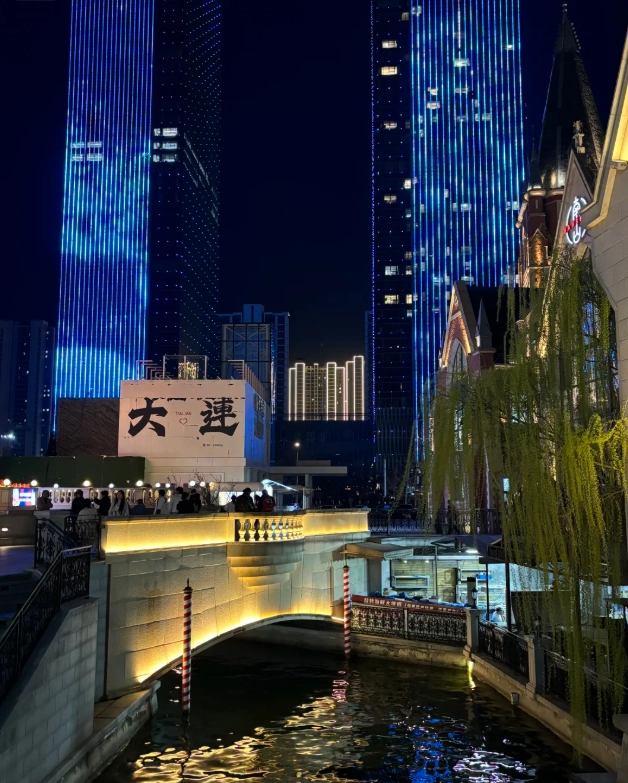
There's the Qing-dynasty Shenyang — the palace, the tombs, and the museums that explain how the last empire started in this cold northeast corner. Then there's Dandong, a border town where the Yalu River separates you from North Korea by a few hundred meters. And then Dalian, a port city that looks like a European seaside town that got lost on the way to the Mediterranean.
Guides that promise you Liaoning in four days are selling train seats, not experiences. I've watched groups attempt Shenyang, Dandong and Dalian in 96 hours. They fly home with four hundred photos and no memories.
Here's a view you won't find in most itineraries: skip Dalian's beaches in July and August if you actually want to swim. The water stays cold well into June, the popular stretch at Xinghai Bay gets shoulder to shoulder, and room rates triple. Late September gives you warmer water, empty sand and roughly half the price. I've rerouted three separate families away from August Dalian and none of them regretted it.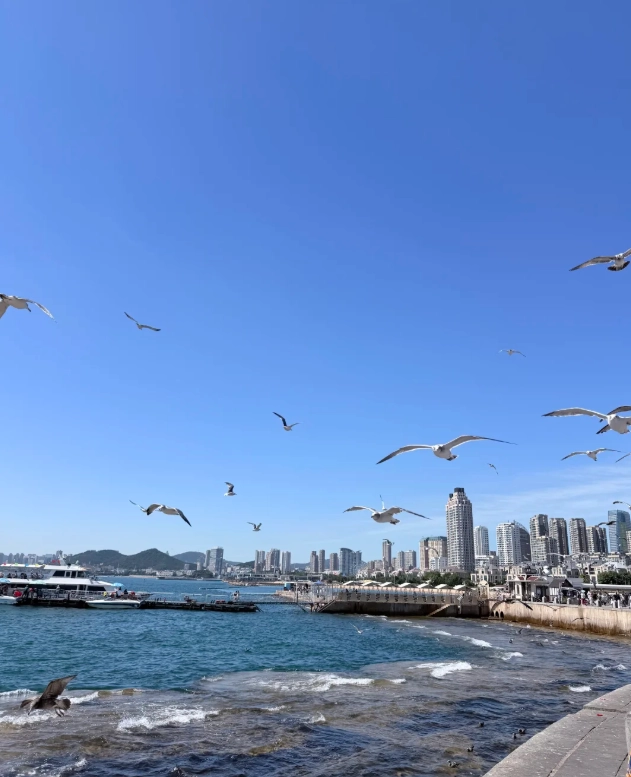
How to Travel Around Liaoning by High-Speed Rail?
Short answer: you don't need a car, a private driver or a domestic flight. The province's rail spine does the work.
The Harbin–Dalian Line Is Your Spine
The Harbin–Dalian high-speed rail is the single most useful piece of infrastructure for a Liaoning trip — it strings Shenyang, Liaoyang, Anshan, Yingkou and Dalian together on one clean north-south line.
Daytime departures between Shenyang and Dalian run frequently, often every 20 to 40 minutes at peak hours, so on a normal weekday you can decide the night before and still get a seat. Weekends and the first week of October are a different animal entirely. Book those three to four days out at minimum.
Dandong sits on a separate branch southeast of Shenyang, roughly 90 minutes away by high-speed train. Dalian to Dandong takes about two hours, but there are far fewer departures, so that leg is the one to lock in first.
Now the part nobody tells you until you're standing on a platform with your suitcase.
Pro Tip: When you book Shenyang to Dalian, check the arrival station, not just the city. Trains terminating at "Dalian" drop you in the downtown core near Zhongshan District. Trains terminating at "Dalian North" leave you about 15 km out, and the taxi back in costs 50–70 RMB and 40 minutes of your afternoon. Identical ticket price, completely different day.
Second class on these trains is comfortable — reserved seats, luggage racks above your head, hot water dispensers at the end of each carriage. First class buys a wider seat and a quieter cabin. On a two-hour hop, second class is plenty. I only upgrade when I'm moving with someone over 70, or when the leg runs past three hours.
Booking Tickets With a Passport: 12306 vs Trip.com
China Railway's official platform at 12306 now runs an English interface that accepts passports, but for most foreign travelers Trip.com is worth the small service fee.
The problem is verification, not language. 12306 occasionally stalls on foreign passport checks, and the payment step can reject international cards for reasons it never explains. Trip.com takes your passport number, issues the ticket against it, and lets you pay with a card you already trust. You'll pay a few RMB more per ticket. Take the trade.
What you actually need at the station:
- Your passport. It is the ticket — no paper, no QR code, no printing.
- Arrive 25 to 30 minutes early. Security scan first, then the waiting hall, then a gate that closes a few minutes before departure.
- Scan the passport at the gate reader, and again if a staff member asks. Keep it in your hand, not in your suitcase.
One more thing — don't lose that passport between the gate and your seat. It's a genuinely annoying afternoon to fix, and I've spent one of them in a Shenyang station police office with a very patient client.
The 7-Day Liaoning Itinerary I Run With Real Clients
Seven days, three cities, one direction. This is the version that survives contact with reality.
Days 1–3: Shenyang, Without the Museum Fatigue
Shenyang deserves two full days, not one — the Imperial Palace is a half-day, and the museums that explain modern China are the real reason to stay.
Fly into Shenyang Taoxian International Airport. Metro Line 2 now reaches the airport, so check the station signage rather than an old printed map. A taxi into the Zhongjie area runs roughly 30 to 40 minutes and around 90–120 RMB depending on traffic. Take the metro if you land before 9 pm and you're not hauling three suitcases.
Base yourself near Zhongjie, the pedestrian spine of the old city.
Day 1 is arrival and decompression. Walk Zhongjie in the evening, eat dumplings, buy an ice bar from a street cart because that's what locals do. Sleep early.
Day 2 is the Imperial Palace. Go at opening. I mean it. By 10:30 the tour groups arrive and the courtyard in front of Dazheng Hall turns into a queue for photos. Two to three hours inside is right. Right next door sits the former residence of Zhang Xueliang, the warlord whose story explains half of twentieth-century northeast China — another 60 to 90 minutes, and worth every one of them.
After lunch, head to the 9.18 Historical Museum. It's free, it's heavy, and it's one of the best-explained modern history museums in the country. Bring your passport for entry and check the closure day — Chinese museums typically shut on Mondays, and this one is no exception.
Dinner in Xita, the Korean quarter, where the grill smoke and the bilingual signage will make you forget where you are for an hour.
Day 3 is your call. Beiling Park and the Zhaoling tomb if you want green space plus Qing history — metro Line 2 stops at Beiling Gongyuan. Or the Liaoning Provincial Museum if you want the deep dive on regional archaeology and painting. Both need a passport, both are free or close to it, and both close on Mondays.
Then take an afternoon train to Dandong. Ninety minutes and you're on the border.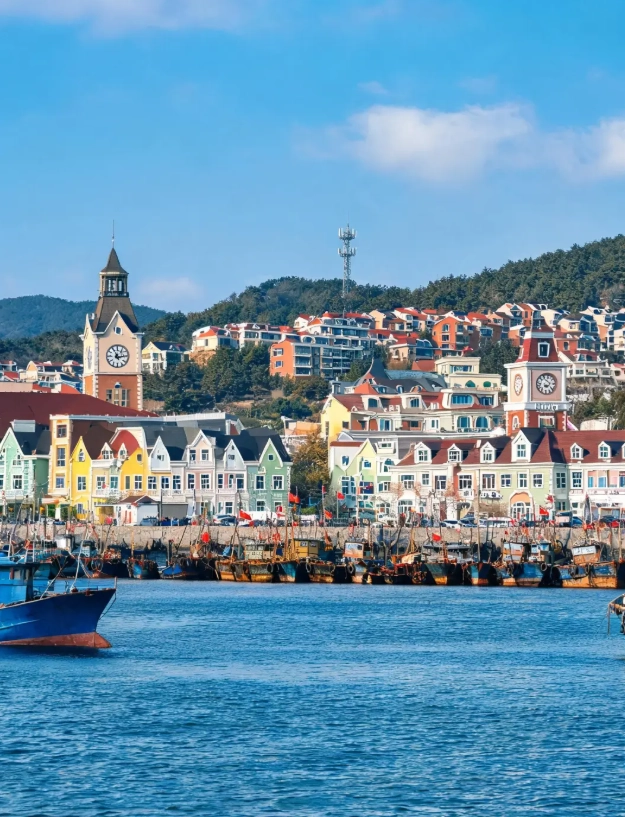
Day 4: Dandong and the North Korean Border
Dandong is a one-night city with a very specific payoff: the Yalu River, the Broken Bridge, and a view of North Korea that most travelers never expect to be this close.
The train station sits a 10 to 15 minute walk from the riverfront, which is why I tell people to book a riverside hotel on Binjiang Middle Road rather than anything near the commercial center. You want to open your curtains and see the far bank.
Morning: the Yalu River Broken Bridge. The half-destroyed span is the photo everyone comes for, and it's genuinely striking in low morning light with the far bank in frame. Give it an hour. The riverside promenade beside it is free and better for people-watching anyway.
Afternoon: take a DiDi or taxi to Hushan Great Wall, about 35 minutes northeast of the city. It's billed as the eastern end of the Ming Great Wall, and the climb is steep enough that you'll want real shoes, not sandals. Budget two to three hours including the walk up. Public buses exist but the connections are slow and unfriendly to anyone who doesn't read Chinese — a round-trip taxi is money well spent.
If it rains, swap in the Korean War Memorial Museum. Free, passport at the gate, closed Mondays.
Insider Advice: The Yalu River sightseeing boats look tempting from the promenade. If you have one night in Dandong, skip them. You get the same view of the far bank for free from the bridge and the promenade, and the boat eats 90 minutes you could spend eating yellow clams. Operators and schedules change often — if you do want one, ask your hotel front desk to arrange it rather than buying from a guy waving a laminated sign.
On photography: shoot the river, the bridge and the far bank freely. Don't point a long lens at military installations, and don't photograph checkpoints or guards. It's not a dramatic risk, but it's a needless hassle — and Dandong is otherwise an entirely ordinary, relaxed city.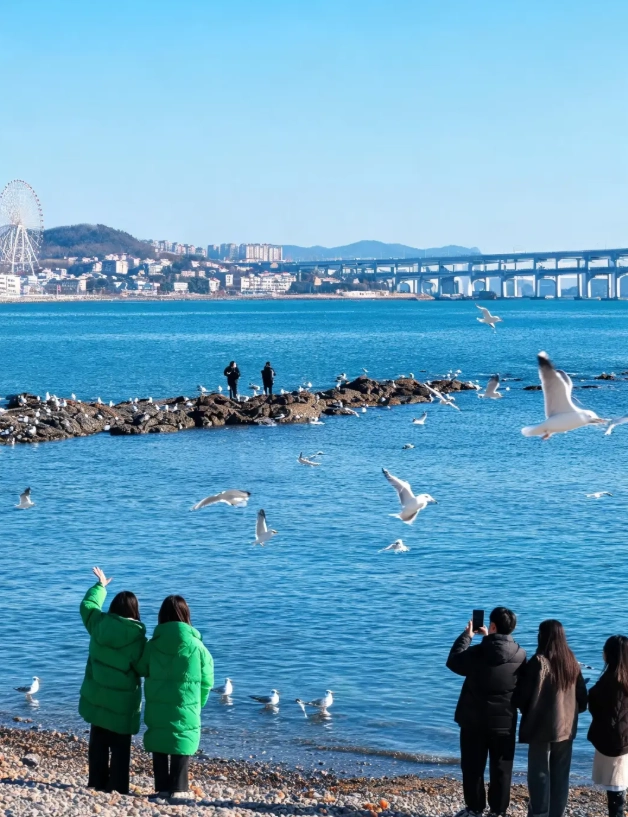
Days 5–7: Dalian and the Coastal Road
Dalian is where you stop moving — three nights here, one for the old city, one for the coast road, one for Jinshitan.
Morning train from Dandong, roughly two hours, and you're in a city that feels nothing like the rest of the province. Check the arrival-station note above before you book.
Day 5 afternoon: Zhongshan Square and its ring of colonial-era bank buildings, then Russian Street. Be honest with yourself about Russian Street — it's a short rebuilt strip, and 20 minutes is enough. Walk it, take the photo, move on to the Donggang waterfront for sunset.
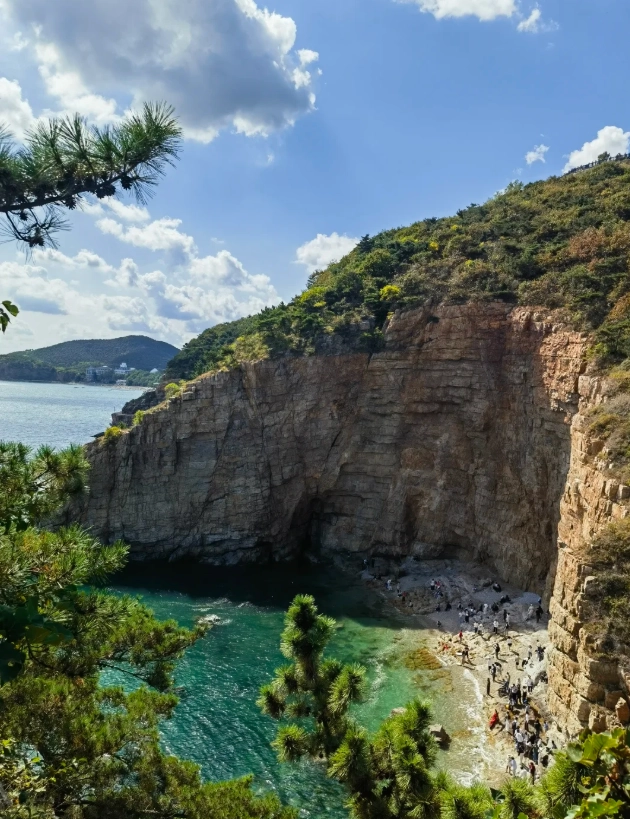
Day 6 is the Binhai Road, the coastal route wrapping around the southern edge of the city. You cannot do this well on public transport. Hire a car through DiDi for half a day, or ask your hotel to arrange a driver. Stops worth your time: Bangchui Island for the rock formations, Yanwoling for the viewpoint, and Beida Bridge for the shot that ends up as everyone's phone wallpaper. Sections of the road are one-way, which is why direction matters — start from Xinghai Square and work east.
Day 7: Jinshitan, the Golden Pebble Beach area, reachable on metro Line 3 in about 50 minutes. It's a full-day commitment with beach zones, geological formations and a lot of walking. If that sounds like too much, stay in the city instead — Xinghai Square and the Laohutan area comfortably fill a day.
If you only have 24 hours in Dalian: skip Jinshitan entirely. Do Xinghai Square early, drive the eastern half of the Binhai Road mid-morning, eat seafood near Zhongshan District for lunch, and finish at Donggang for sunset. That's the compressed version, and it works.
Rain plan: Dalian's museums and the coffee shops around Zhongshan Square are your indoor fallback. Chinese museums generally close Mondays, so plan around it.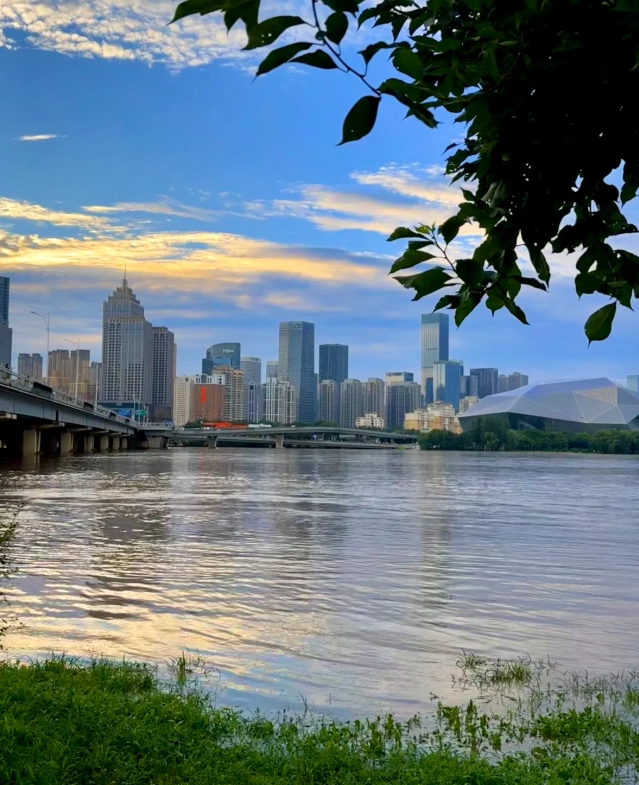
What Should You Know Before Choosing Transport in Liaoning?
| Route | Best option | Typical time | Rough cost | What I'd actually do |
|---|---|---|---|---|
| Shenyang to Dandong | High-speed rail | About 1.5 hours | 100–150 RMB | Book two days ahead; an afternoon departure saves a hotel night |
| Shenyang to Dalian | High-speed rail | 2 to 2.5 hours | 180–260 RMB | Pick a downtown "Dalian" arrival, never "Dalian North" |
| Dalian to Dandong | High-speed rail | About 2 hours | 130–200 RMB | Fewest departures of any leg — lock this one first |
| Shenyang city to Taoxian Airport | Metro Line 2 or taxi | 45 min metro, 35 min taxi | About 5 RMB metro, 90–120 RMB taxi | Metro before 9 pm, taxi after |
| Dalian city to Jinshitan | Metro Line 3 | About 50 minutes | Under 10 RMB | Cheap and simple, departs near the main railway station |
| Dandong to Hushan Great Wall | DiDi or taxi | About 35 minutes | 80–120 RMB each way | No convenient public bus for non-Chinese speakers |
Prices and timings shift with season and seat class — verify on 12306 or Trip.com before you commit.
Uber doesn't operate in mainland China. Use DiDi instead; it has an English interface and accepts international cards through Alipay. Regular taxis are cheap and metered, but drivers rarely speak English, so have your destination written in Chinese characters on your phone. Cash is still legal tender, yet plenty of small vendors and drivers will struggle to give change on a 100 RMB note — Alipay or WeChat Pay linked to an international card solves about 95 percent of this.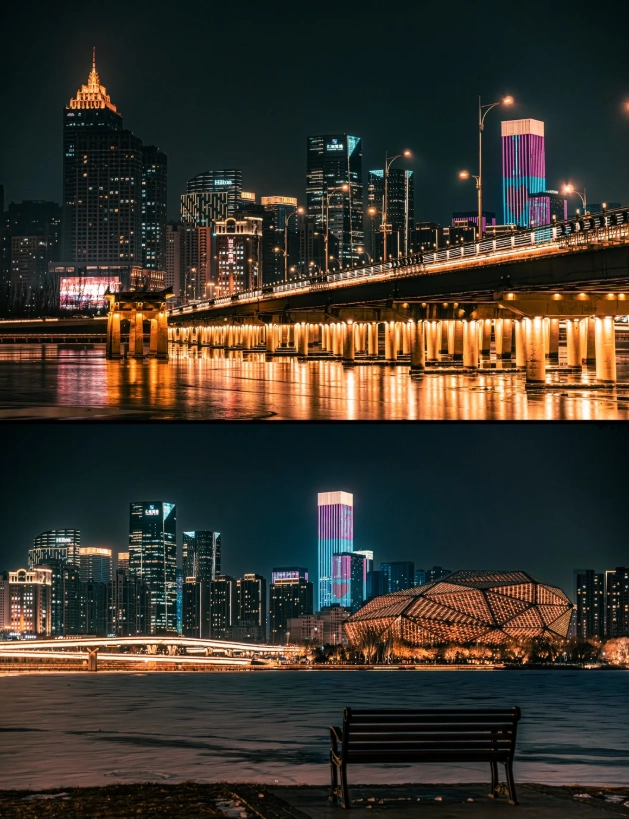
Liaoning Attractions Worth Your Time — and Two I'd Skip
| Attraction | City | Ticket | Booking | Time needed |
|---|---|---|---|---|
| Shenyang Imperial Palace | Shenyang | Roughly 50–60 RMB, seasonal | WeChat mini-program or Trip.com, passport required | 2 to 3 hours |
| 9.18 Historical Museum | Shenyang | Free | Passport at the gate, closed Mondays | 2 hours |
| Liaoning Provincial Museum | Shenyang | Free | Advance reservation, closed Mondays | 3 hours |
| Yalu River Broken Bridge | Dandong | Around 30 RMB | On site with passport | 1 hour |
| Hushan Great Wall | Dandong | Around 60 RMB | On site with passport | 2 to 3 hours |
| Xinghai Square | Dalian | Free | N/A | 1 hour |
| Jinshitan scenic zone | Dalian | Varies by zone | On site or Trip.com | Half day |
The Shenyang Imperial Palace carries the same UNESCO World Heritage listing as the Forbidden City, and that surprises people who assume it's the budget version. It isn't. It's the earlier one, and the Manchu architectural details — the mounted banners, the raised platforms, the colors — are genuinely different from anything in Beijing.
Two things I'd cut if you're short on time:
- Russian Street in Dalian, beyond a 20-minute photo stop. Rebuilt, short, and mostly a shopping strip.
- The Dandong river boat on a one-night stay. The free view from the promenade is nearly identical.
And one timing note I give every group: I shoot the Imperial Palace in the first 45 minutes after opening. The courtyards are close to empty, the light is soft, and you're not fighting anyone for the frame.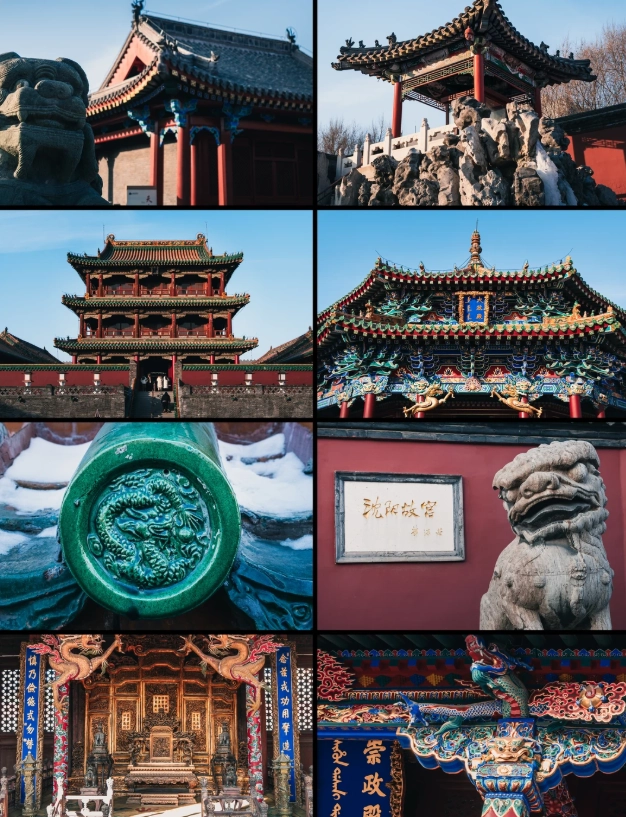
Where to Stay in Liaoning: City-by-City Picks
| Area | Best for | Est. nightly range | Why it works |
|---|---|---|---|
| Zhongjie and Imperial Palace district, Shenyang | First-time visitors staying 2 to 3 nights | 350–800 RMB | Walk to the palace, metro Line 1 under your feet, street food everywhere |
| Qingnian Street, Heping District, Shenyang | Business travelers and higher-end stays | 800–1,600 RMB | International brands including Shangri-La Shenyang, quieter evenings |
| Binjiang Middle Road riverside, Dandong | Anyone who wants the Yalu River view | 300–700 RMB | River-facing rooms, 10-minute walk to the Broken Bridge |
| Xinghai Square, Dalian | Couples and families wanting sea views | 600–1,500 RMB | Grand Hyatt Dalian sits right on the square, metro Line 1 nearby |
| Zhongshan District, Dalian | History buffs and seafood hunters | 400–900 RMB | Colonial-era streets, the best restaurant density in the city |
Ranges are for a standard double room. Peak weeks such as the first week of October can double them.
Practical checks before you book anywhere in the province:
- Ask whether the front desk handles foreign guest registration on site. Almost all hotels do, but it takes five minutes and it's worth confirming.
- Confirm the room has an elevator, not just stairs — some smaller boutique properties in Dandong's old streets don't.
- Wi-Fi is standard in chain hotels. Speed varies; if you need reliable video calls, bring a data eSIM as backup.
- Mid-range chains such as Atour and Holiday Inn Express are consistently clean, English-friendly enough, and often half the price of international five-stars.
- Dandong has limited international-brand options. Book a river-view room on Trip.com and read the reviews for noise — the promenade gets lively at night.
What to Eat in Liaoning, Region by Region
Shenyang. Start with Laobian Dumplings on Zhongjie — the flagship branch, picture menu, roughly 80–120 RMB per person, and expect a 20 to 30 minute wait if you walk in after 6:30 pm. I order the steamed pork and pickled cabbage dumplings every single time. Cards are hit and miss; Alipay works. Li Liangui's smoked pork with pancake is the other Shenyang institution worth a lunch, and Xita's Korean barbecue is cheap, loud and excellent. Grab a Zhongjie ice bar on the walk home.
Dalian. This is seafood country, and the local style is steamed with light seasoning rather than spicy. Sea urchin, abalone, mantis shrimp and clams are the standards. Check the per-jin price before you point at a tank, because the range between restaurants is enormous. And find a street stall selling menzi — a fried starch cake with garlic and sesame paste, usually under 15 RMB. I eat at least two every visit.
Dandong. Yellow clams, Korean-Chinese cold noodles, and strawberries if you're passing through in spring. The border location means the Korean food here is better than in most Chinese cities.
For vegetarians, Shenyang's Xita and Dandong's Korean restaurants are your easiest bets. Halal food is straightforward to find in Shenyang around the South Mosque area on Xiaoxi Road.
Payments, VPNs and the Boring Stuff That Ruins Trips
- Set up Alipay or WeChat Pay before you fly, with your international card attached, and test it with a small purchase at the airport.
- Carry a few hundred RMB in cash as backup. Many small restaurants and street vendors won't take Visa or Mastercard.
- Google Maps is unreliable in mainland China. Apple Maps works well and shows metro routes, and Amap has an English mode. Download an offline map before you arrive.
- Install your VPN before you land. Downloading one once you're inside is a headache.
- Download a translation app with offline Chinese. Apple Translate and Baidu Translate both handle menus reasonably well.
- Hotels register foreign guests with the local police. This is normal paperwork, not a problem, and it takes five minutes.
- Every metro and railway station has a security scan. Budget an extra 10 minutes.
- Check whether your nationality qualifies for China's transit visa-free entry through Shenyang or Dalian — the National Immigration Administration publishes the current port and eligibility list.
Pro Tip: Yes, booking certain Liaoning attractions through a WeChat mini-program that exists only in Chinese is a nightmare even for me. Don't fight it. Ask your hotel receptionist to do it — they'll spend two minutes and you'll spend forty. Trip.com also lists most major Liaoning attractions with English booking and passport entry.
Liaoning Travel Questions I Get Asked Every Season
How many days do I actually need to travel around Liaoning without rushing?
Seven days for Shenyang, Dandong and Dalian in one direction. Four days means picking two cities, not three. The itinerary that fails most often is three cities in three days — you spend more time in stations than in courtyards, and Dandong in particular only works if you give it a full night.
Can I travel around Liaoning speaking only English?
In hotels, high-speed rail stations and major attractions, yes — signage is bilingual and staff at ticket counters usually manage. In Dandong's small restaurants and Shenyang's older neighborhoods, almost nobody speaks English. A translation app plus a screenshot of your destination in Chinese characters covers the gap. I've guided groups with zero Mandarin and they were fine.
Is the high-speed rail through Liaoning reliable in winter?
The trains are heated and run on time even in serious cold. The real winter problem is daylight, not transport — attractions close earlier and it gets dark around 4:30 pm in December and January, which compresses your sightseeing window. Shenyang also runs an ice and snow festival in the Qipanshan area, so winter isn't a wasted season if you pack properly. Dalian is noticeably milder than Shenyang but windier.
Do I need a visa to visit Liaoning?
It depends entirely on your nationality and route. Shenyang and Dalian are designated entry ports under China's transit visa-free policies, which many travelers don't realize applies here. Check the National Immigration Administration's official list before you book flights rather than trusting a blog from three years ago.
Is it safe to photograph the North Korean side from Dandong?
The river, the bridge and the far bank are fine to photograph, and thousands of visitors do it daily. Point a long lens at military installations or photograph checkpoints and guards and you'll invite an unnecessary conversation. Skip the river boats if you only have one night — the free promenade view is just as good and costs you nothing.
Verified and fact-checked by the editorial team. This content has been fact-checked to ensure informational precision.

No comments yet.