 Yan Zhou
Quick Route Map — Tap to Jump
- Why Shandong Works in Winter, and When It Doesn't
- The 7-Day Shandong Winter Itinerary I Actually Run
- Mount Tai Without the 11 PM Death March
- Trains, Taxis and What Breaks in the Snow
- Where to Base Yourself
- What to Eat When It's Freezing
- Payments, Tickets and Apps
- Gear That Actually Matters
- Winter Questions I Get Every Trip
Minus twelve on Mount Tai. That's the number I check before every winter departure. My first Shandong winter tour ended with a client in tears at the summit cableway station — not from the cold, but because gale-force wind had shut the line and we had a train to catch in Taian.
So when I sit down to build a Shandong winter itinerary for someone, I don't open a map of attractions. I open the 12306 train app, the Taishan cableway status feed, and a weather radar for the peninsula. Winter here is not a scaled-down version of autumn. It rewrites your route.
Here's the verdict up front: fly into Qingdao, ride high-speed rail west, treat Mount Tai as a two-day stop instead of a midnight sprint, and finish in Jinan where the springs steam at minus five. Skip the coastal pavilions in January — the wind strips the fun right out of them. The rest of this guide explains the how, the cost, and the traps I've watched people walk into.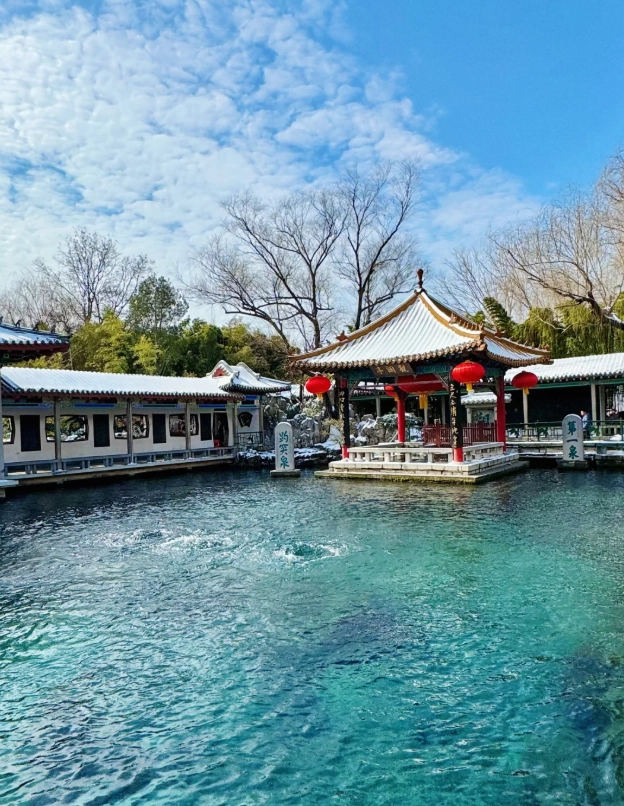
Why Shandong Works in Winter, and When It Doesn't
Winter in Shandong is a trade: you lose green hillsides and gain empty temples, cheaper hotels, and one wildlife spectacle that only exists in the cold months.
In the first week of October, the summit path on Mount Tai is shoulder to shoulder for hours. On a Tuesday in January I walked the same stone staircase past maybe forty people. Same mountain, same view, zero elbows.
Qingdao is the real surprise. From roughly November through March, thousands of gulls move into the bay around Zhanqiao Pier, and locals show up at dawn with bags of bread. It's become one of the city's signature winter scenes, and almost no foreign itinerary mentions it. Go between 8 and 10 in the morning. By afternoon the weekend crowds from the suburbs arrive and the pier turns into a queue.
Snow, though, is regional. Yantai and Weihai sit in a sea-effect snow belt — locals literally call them the snow nests. Some winters those two cities get hammered repeatedly while Jinan stays dry and grey. If snow photography is your goal, the peninsula is where you aim, not the provincial capital.
Now the honest part. Spring Festival is the worst two weeks of the year to attempt this route. Domestic travel peaks, peninsula trains vanish within minutes of the booking window opening, and hotel rates in Qingdao and Taian double or triple. If your dates are locked to that period, read the FAQ section below before you book anything.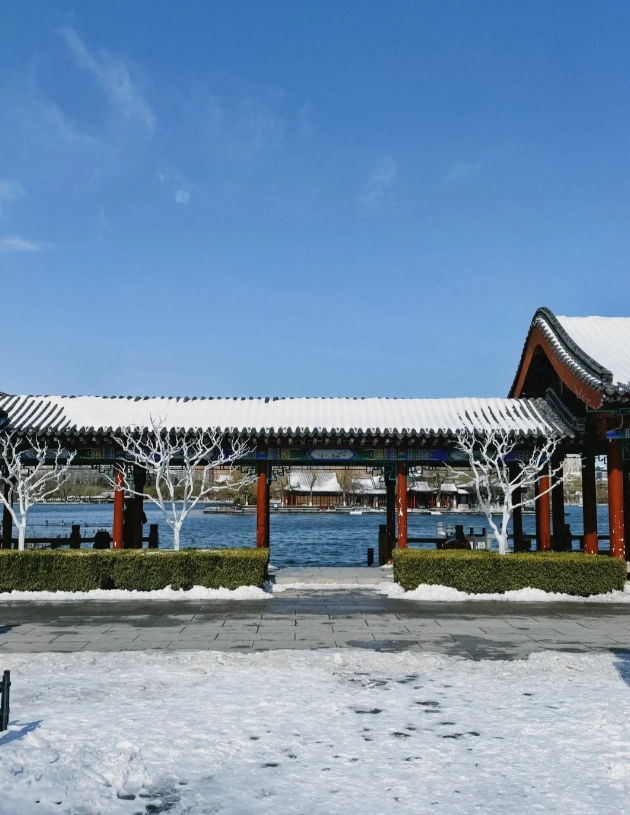
Pro Tip: Ice on the Mount Tai steps is the single biggest risk on this whole route. The scenic area spreads sand and salt on the main staircase after snow, but the side paths stay slick for days. If you're over 65, traveling with small kids, or pushing a stroller, use the shuttle bus and both cableways and skip the walking sections entirely. Nobody gives you a medal for the stairs.
The 7-Day Shandong Winter Itinerary I Actually Run
This is the version I book for clients who have a week and want both the coast and the mountain. It moves east to west, which means you fly into Qingdao and fly or train out of Jinan. Doing it in reverse works too, but Qingdao has the better international connections.
| Day | Base | What You Do | Getting There |
|---|---|---|---|
| Day 1–2 | Qingdao | Zhanqiao gulls, old town, beer museum, Badaguan | Airport Metro Line 8 then Line 3, or taxi |
| Day 3 | Weihai | Rongcheng swans at Yandunjiao village | High-speed rail Qingdao to Weihai, 2 to 2.5 hours |
| Day 4 | Taian | Travel west, tofu banquet, early night | High-speed rail with one transfer, 5 to 6 hours |
| Day 5 | Mount Tai or Taian | Cable car or climb, summit, sunrise | Shuttle bus from Tianwaicun |
| Day 6 | Qufu then Jinan | Confucius temple, mansion, cemetery | Taian to Qufu East 20 min, Qufu East to Jinan West 45 min |
| Day 7 | Jinan | Baotu Spring, Daming Lake, Kuanhouli food street | Taxi or Didi around the city |
Day 1–2: Qingdao — Gulls, Beer and a Wind You Underestimated
Qingdao in winter is a different city: no beach crowds, hotel prices that drop noticeably, and a pier full of gulls that only shows up in the cold months.
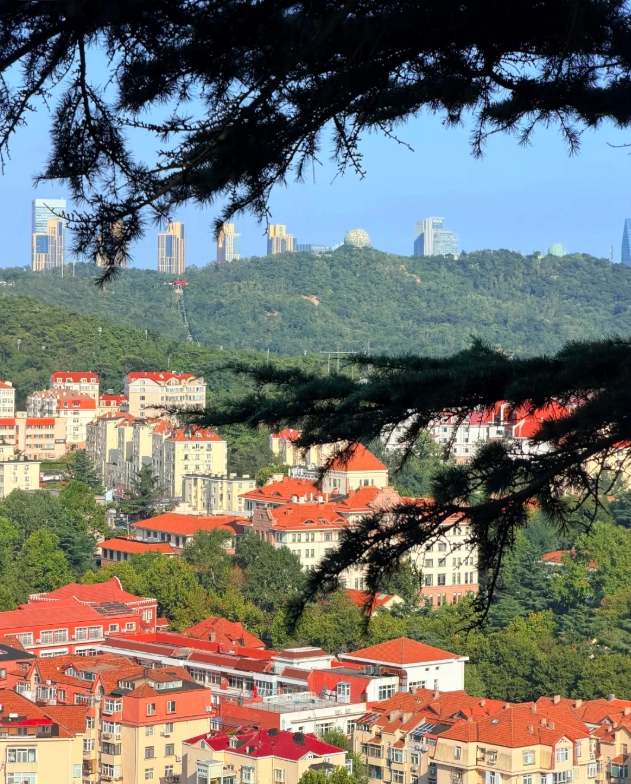
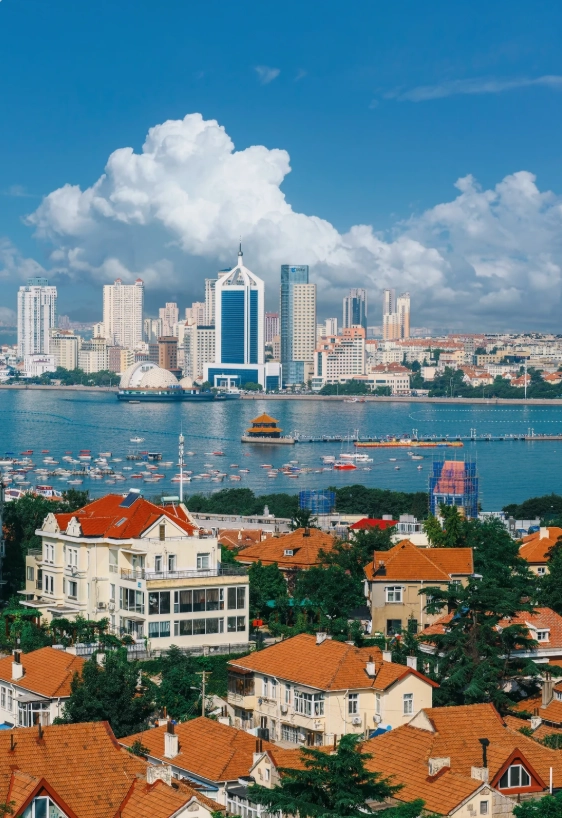
Zhanqiao Pier is free and open around the clock. The gulls feed in the morning light, which is also when the red-roof old town photographs best from Signal Hill Park. That park charges a small entry fee and it's worth every yuan on a clear day.
St. Michael's Cathedral charges a modest admission, usually under 15 RMB, and doesn't normally require a reservation. The plaza in front is the shot, and the south face catches light before noon. Badaguan, the villa district, is free to wander, but the lanes are narrow and hilly — after snow, taxis often refuse to turn into them, so plan to walk in from the main road.
The Tsingtao Beer Museum on Dengzhou Road is the indoor Plan B when the coastal wind turns brutal. Entry runs around 60 RMB with tastings included, and Beer Street next door is where you eat afterward. Winter hours are shorter than summer, so check the museum's official WeChat account or Trip.com the day before.
Getting in from Qingdao Jiaodong International Airport is the part people miscalculate. The airport is far from the old town. Metro Line 8 runs to Qingdao North Railway Station and Line 3 continues south toward Zhanqiao — roughly 90 minutes for under 10 RMB. A taxi is 60 to 80 minutes and will cost you 150 to 200 RMB depending on traffic.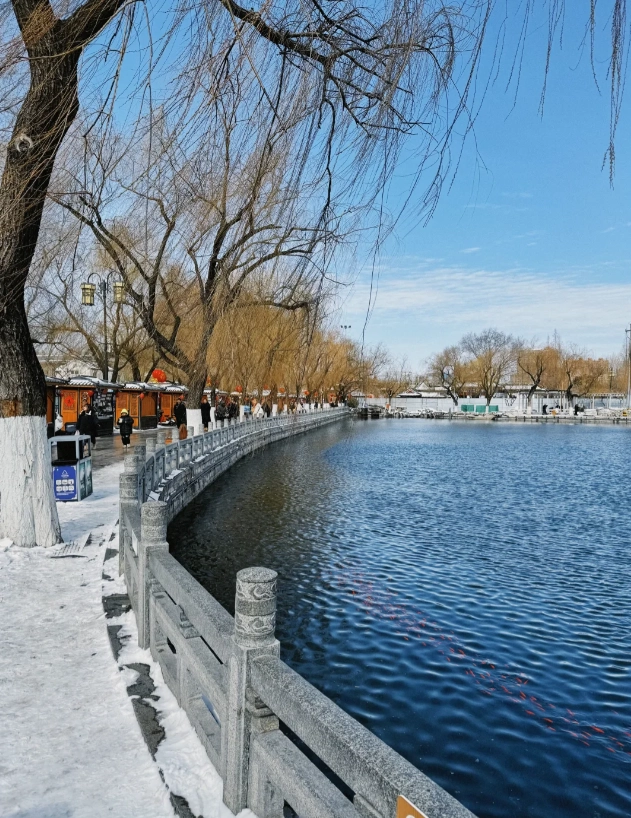
Insider Advice: On Beer Street and in the seafood markets, prices are quoted per weight. Confirm the price per 500 grams before anything goes on the scale, and ask for the printed receipt. This is the one place in Shandong where I've seen visitors overpay badly, not because anyone cheated them, but because nobody explained the math first.
Day 3: Rongcheng and Weihai — the Swan Detour
Every winter, thousands of whooper swans fly down from Siberia to a handful of shallow bays around Rongcheng, and almost no foreign traveler knows it exists.
The best viewing is at Yandunjiao, a fishing village about 20 to 30 minutes by taxi from Rongcheng. Swans gather in the bay from November through March, with January and early February as peak. Walking the shoreline is free. The village itself is worth the trip for its seaweed-thatched roofs, a building style you won't see elsewhere in China.
Arrive between 7 and 9 in the morning. Mist rises off the water, the swans are close to shore, and the light is soft. By midday they drift out and the tour buses from Weihai pull in.
Two practical notes. Bring binoculars or a zoom lens — the swans keep their distance from the bank. And don't feed them bread. Local vendors sell small bags of corn, which is what they actually digest.
High-speed rail from Qingdao to Weihai takes about two to two and a half hours, and Rongcheng has its own station on the same line. Weihai city center has clean mid-range chain hotels in the 200 to 400 RMB range, and taxis are cheap. The Liugong Island ferry stops running in high wind, so treat that as optional rather than a fixed plan.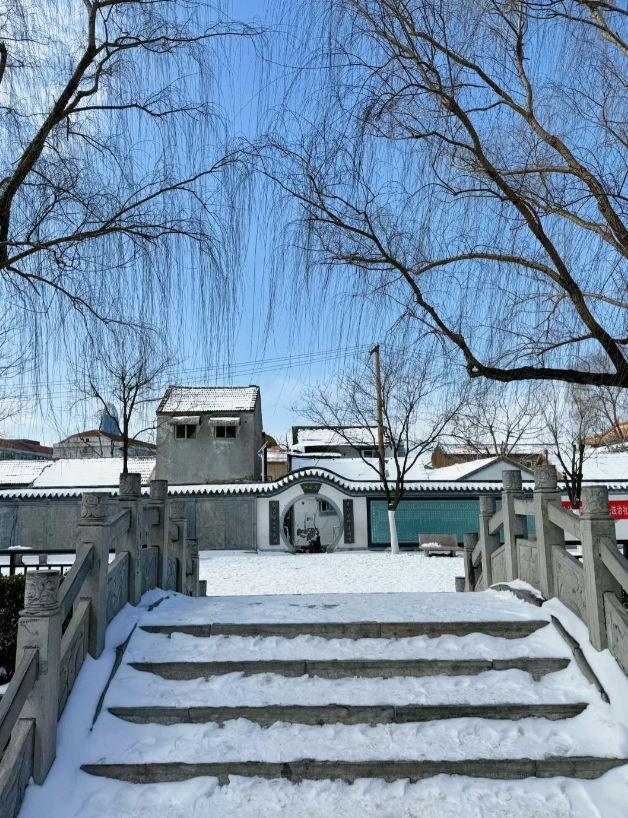
Day 4: The Long Ride West — and Why Most Itineraries Blow It
This is the day people get wrong: they try to squeeze Yantai in on the way west and end up arriving in Taian after dark with no dinner and no rest before the mountain.
Weihai to Taian requires one transfer, usually at Qingdao North or Jinan, and takes five to six hours door to door. Book on 12306 as soon as the booking window opens. The peninsula-to-Jinan corridor fills fast in winter because it's also a commuter route for students and workers heading home.
One detail that saves people real pain: Taian has two railway stations. Taishan Station serves regular trains and sits close to the mountain. Taian High-Speed Station is about 20 minutes by taxi from the Red Gate trailhead. Mixing them up costs you an hour and a taxi fare at exactly the wrong moment.
Dinner is the Taishan tofu banquet, a multi-course meal built entirely around local tofu. Restaurants cluster along Hongmen Road near the trailhead, and you'll pay roughly 60 to 120 RMB per person. Fair warning — the seasoning is light and the textures are soft. If you want bold flavors after a long train day, order the braised pork and the mountain pancakes instead.
Mount Tai Without the 11 PM Death March
Climbing Mount Tai overnight to catch sunrise is the most overrated advice in Chinese travel forums, and in January it is also the coldest and most dangerous version of it.
Winter sunrise lands around 7:00 to 7:20 in the morning, which means you do not need to start walking at 11 PM. You have three sensible options.
- Sleep at the summit near Nantianmen. Rooms are basic — thin walls, dated or shared bathrooms, no lifts — and run roughly 400 to 800 RMB in winter. Confirm the property is actually open before booking, because some close in the cold season. The payoff is waking up ten minutes from the viewpoint.
- Take the first shuttle bus from Tianwaicun, 天外村, up to the Midway Gate and ride the Zhongtianmen cableway from there. Winter bus start times are later than summer, so check at the visitor center the day before. If you miss sunrise, honestly, the 9 to 11 AM light on the summit is better for photos anyway.
- Walk up from the Red Gate in the morning, four to six hours at an easy pace, and ride the cable car down. This is my pick for anyone reasonably fit.
Entrance tickets run roughly 100 to 115 RMB depending on season, with the shuttle bus and cableways charged separately. Prices do change, so verify on the official Taishan account or Trip.com before you commit. Your passport is required for the reservation.
The cableways suspend service in strong wind. That's not a rare event in January. Check the status before you start up, not after. The Taohuayuan cableway on the western side sees fewer people and is worth asking about if the main line is packed.
Mount Tai holds a UNESCO World Heritage listing as a mixed cultural and natural site, and standing on the summit ridge in snow makes the reason obvious. Toilets near the top are basic and get swarmed at sunrise — use the facilities at Nantianmen before you walk to the viewpoint.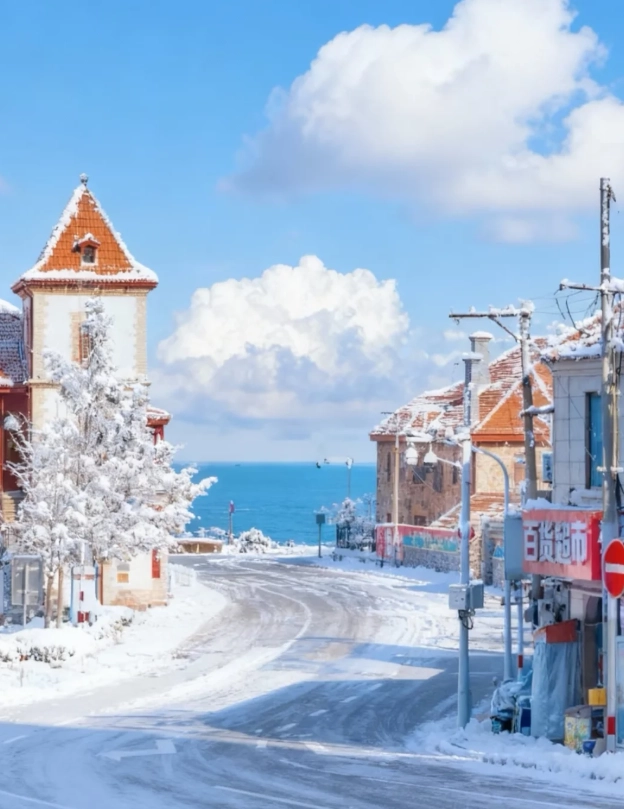
Day 6: Qufu — Confucius in the Snow
Qufu's three Confucian sites are the most underrated stop on a Shandong winter itinerary, mainly because snow turns the Kong Family Cemetery into something you'll remember longer than the temple itself.
The Temple of Confucius, the Kong Family Mansion and the Cemetery of Confucius are sold as a combo, usually somewhere in the 140 to 150 RMB range, with single-site tickets around 80 RMB. Winter opening hours are shorter than summer — generally an early morning start and a last entry in the mid-afternoon — so confirm the day before and plan to arrive by mid-morning.
The cemetery sits about 1.5 km north of the temple. A taxi costs 10 to 15 RMB, or it's a 25-minute walk. Go there first. Ancient cypresses, fresh snow, and almost nobody else on the paths. It's the quietest hour you'll spend in Shandong.
Pro Tip: Touts at the temple gate sell "official" guided tours. They are not official. Licensed guides are arranged through the ticket office, and English-speaking guides in Qufu are genuinely limited — book one through your hotel at least a day ahead, or accept that you'll be reading signs and using a translation app.
Day 7: Jinan — Springs That Steam at Minus Five
The springs are at their most photogenic in winter, because the water holds a near-constant temperature and the cold air turns the surface into visible steam.
Baotu Spring is the headline act, with entry around 40 RMB. Get there between 8:00 and 9:30 in the morning. The steam is thickest before the sun climbs, and the main pool is nearly empty. By 10 AM the domestic tour groups arrive and the good angles are gone. Budget an hour to 90 minutes — the park is compact.
Daming Lake is free to enter at the main park and freezes over in cold snaps, which is its own photo. Qianfo Mountain charges a small fee and takes half a day if you climb to the top; skip it on a high-wind day.
For food, Kuanhouli near Quancheng Road is where locals actually eat. Furong Street is the famous one, and it's a tourist funnel — the same ten skewer stalls repeated down a narrow lane at inflated prices. Walk it once for the atmosphere, then eat somewhere else.
From Jinan West Railway Station to the Quancheng Road area, a taxi or Didi takes 30 to 40 minutes and costs roughly 35 to 50 RMB. Jinan's metro doesn't reach every corner of the old town yet, so don't overthink it — the car is faster and cheap.
Trains, Taxis and What Breaks in the Snow
High-speed rail is the backbone of any Shandong winter itinerary, and it's also the part most likely to be misunderstood by first-time visitors.
| Route | Best Mode | Typical Time | What to Know |
|---|---|---|---|
| Qingdao Jiaodong Airport to Old Town | Metro Line 8 plus Line 3, or taxi | 90 min / 60–80 min | Metro under 10 RMB, taxi 150–200 RMB |
| Qingdao to Weihai | High-speed rail | 2–2.5 h | Book with passport on 12306 or Trip.com |
| Weihai to Rongcheng | High-speed rail or taxi | 30 min / 1 h | Rongcheng station is 20–30 min from Yandunjiao |
| Weihai to Taian | High-speed rail, one transfer | 5–6 h | Transfer at Qingdao North or Jinan |
| Taian to Qufu East | High-speed rail | 20 min | Short hop, cheap, frequent |
| Qufu East to Jinan West | High-speed rail | 45 min | Quancheng Road is 30–40 min by taxi from Jinan West |
Book rail through the official China Railway site at www.12306.cn, which has an English interface and accepts international cards, or through Trip.com if you'd rather pay a small service fee for a smoother checkout. Your passport number must match your passport exactly — one wrong digit and the ticket won't scan.
Here's a detail nobody warns you about. At many Shandong stations, foreign passports don't reliably scan at the automatic gates. You'll be waved to the staffed lane, and sometimes that lane has a queue. Add 15 minutes to your buffer. I've watched people miss trains over this, and it's entirely avoidable.
Snow affects different modes differently. High-speed trains rarely stop but do get slowed, adding 20 to 40 minutes. Airports are the fragile link — Qingdao and Jinan both see cancellations in heavy storms. If you have an international flight out, build a full day of buffer rather than an afternoon.
For city transport, Didi inside the Alipay app works well and has an English interface. Set the Chinese address before you request the car and screenshot it. Most drivers don't speak English, and the app handles the conversation for you.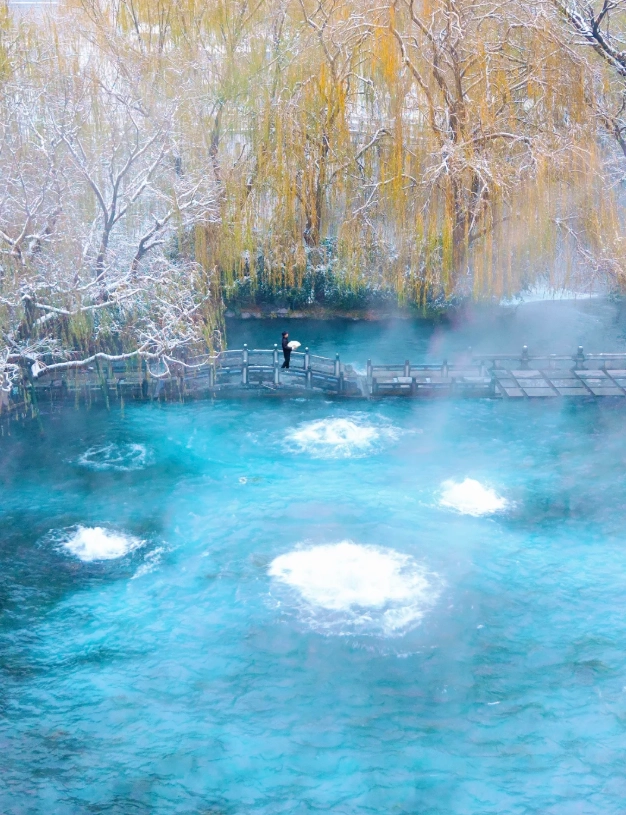
Where to Base Yourself
Picking the right base matters more in winter than in summer, because a 20-minute walk in July is a 20-minute ordeal in January wind.
| Area | Best For | Winter Price Range | Trade-Off |
|---|---|---|---|
| Qingdao, May Fourth Square area | First-timers, couples | 450–900 RMB | International brands and metro access, but 20–30 min from the old town |
| Qingdao Old Town near Zhanqiao | Photographers, budget travelers | 200–450 RMB | Atmosphere and walkability, but older buildings can be drafty and many lack lifts |
| Weihai city center | Swan day-trippers | 200–400 RMB | Clean chain hotels, cheap taxis, limited English at reception |
| Taian near Hongmen | Hikers | 180–350 RMB | 5–10 min walk to the trailhead, basic breakfast options |
| Taian near the high-speed station | Early trains out | 200–400 RMB | Convenient but soulless, 20 min from the mountain |
| Qufu old town | Culture-focused travelers | 200–400 RMB | Walk to the temple, but inventory is small and sells out on snowy weekends |
| Jinan, Quancheng Road and Kuanhouli | Everyone, final night | 300–600 RMB | Walk to Baotu Spring and Daming Lake, best food access in the city |
Mid-range Chinese chains are the sweet spot for foreign travelers in Shandong. Properties under brands like Atour and Ji Hotel are clean, modern, well heated and usually 250 to 450 RMB a night. Front desks rarely speak fluent English, but translation apps close the gap fast.
One thing that surprises people: Shandong hotel rooms are aggressively heated. Twenty-five degrees indoors in January is normal. Ask for a humidifier if your throat dries out overnight, and pack layers you can shed the moment you walk into a lobby.
What to Eat When It's Freezing
Shandong winter food is heavy, salty and built for cold weather, and the two things you should not skip are the Mount Tai tofu banquet and Jinan's braised pork over rice.
- Bazi rou, Jinan — soy-braised pork belly ladled over steamed rice, usually 15 to 25 RMB. I order this every single time I'm in the city.
- Taishan tofu banquet — a multi-course tofu dinner near Hongmen Road, 60 to 120 RMB per person. Light seasoning, soft textures, an acquired taste for some.
- Mackerel dumplings in Qingdao — the local winter staple, 30 to 50 RMB a portion, served boiled and slightly chewy on purpose.
- Pork rib rice in Qingdao — a cheap, filling lunch that appears on almost every corner near the old town.
- Kong family cuisine in Qufu — the historic banquet style, pricier than everything else on this list, worth it once.
- Grilled seafood on Qingdao's Beer Street — priced by weight, so confirm before ordering.
Payment in restaurants is almost entirely mobile. Alipay and WeChat Pay both work with a linked international Visa or Mastercard once you've verified your passport in the app. Cash is legal tender and vendors must accept it, but small noodle shops often can't break a 100 RMB note — keep smaller bills.
English menus are rare outside hotel restaurants. The camera translation in Apple Translate or Baidu Translate handles menu photos well enough. And if you have dietary restrictions, learn the two phrases that matter: wo bu chi rou for no meat, and bu yao la for not spicy. Staff appreciate the effort.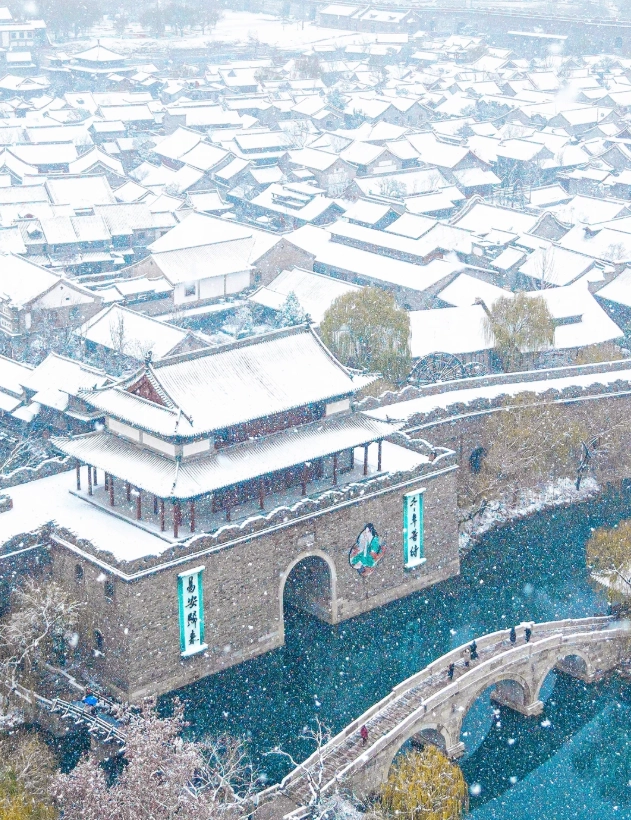
Payments, Tickets and Apps
Your phone is your wallet, your ticket and your translator in Shandong, which is exactly why a dead battery at a ticket gate is the most common crisis I deal with on winter tours.
- Alipay and WeChat Pay — link an international card and complete passport verification before you fly. These work everywhere from convenience stores to temple ticket counters.
- Cash — legally accepted, practically awkward for small purchases. Carry 100 to 200 RMB in small notes as backup.
- Physical foreign credit cards — fine at international hotels and large department stores. Assume they won't work anywhere else.
- Attraction tickets — most sites now require a timed reservation with passport details. Trip.com and Klook both have English interfaces and take foreign cards.
- VPN — install and test it before departure, not after you land.
- Visas — many nationalities qualify for visa-free entry or transit exemptions, and the rules change. Check the National Immigration Administration at www.nia.gov.cn before you book flights.
Yes, booking a Mount Tai time slot through a Chinese-only WeChat mini-program is a headache, even for me. The workaround is simple: hand your passport to the hotel front desk and ask them to do it. They do this daily. Alternatively, pay the small markup on Trip.com. What you should not do is show up at the gate at 7 AM hoping to buy a ticket on the spot, because in peak winter periods that line ends in disappointment.
Gear That Actually Matters
Nobody freezes in Shandong because they lack a down jacket. They freeze because the wind on Mount Tai and along the Qingdao waterfront cuts through anything that isn't windproof.
- A windproof shell over a down mid-layer. The shell is the important half.
- Touchscreen-compatible gloves. You'll unlock your phone to pay every 20 minutes, and bare hands in that wind are miserable.
- Insulated boots with real grip. Stone steps and old-town cobbles both turn slick.
- A power bank. Cold drains phone batteries fast, and your phone is your ticket.
- Lip balm and sunglasses. Snow glare at the summit is genuinely harsh.
- Hand warmers, sold at every convenience store for a couple of yuan.
Pack so you can strip down indoors. Between overheated hotels, heated trains and heated restaurants, you'll spend more of the day too warm than too cold — which is a strange thing to write about a winter trip, but it's true.
Winter Questions I Get Every Trip
I only have three days and I land in Qingdao. Can I still do a Shandong winter itinerary?
Drop the peninsula loop entirely. Two nights in Qingdao, then one high-speed rail hop to Jinan on day three. Mount Tai needs a full day plus travel time on both ends, so squeezing it in means seeing the mountain from a bus window. Qingdao to Jinan runs one and a half to two and a half hours by rail, so a morning train puts you at Baotu Spring by lunch.
What happens if the Mount Tai cableway closes for wind while I'm at the summit?
The shuttle buses almost always keep running — the cableway is the fragile link, not the road. Walk down the Zhongtianmen staircase, which takes two and a half to three hours for a fit adult, or wait it out in the teahouses near Nantianmen. Do not attempt the full descent to the Red Gate in ice after dark. And whatever you do, keep a three-hour buffer before any onward train.
Do I need to book Spring Festival travel differently for Shandong?
Dramatically. Domestic travel peaks, peninsula trains sell out the moment the booking window opens, and hotel rates double or triple. If your dates are locked to the holiday, book rail and accommodation the day the window opens, and expect a scattering of restaurants to close for a few days around New Year's Eve itself. My honest advice is to shift your trip by a week in either direction if you possibly can.
Are the Rongcheng swans worth a full detour day?
If you shoot wildlife or simply like birds, yes, and January through early February is peak season. If birds don't move you, no. The village is small, food options are limited, and the drive eats half a day. Also bring at least a 200mm lens. The swans stay well off the bank, and phone photos will disappoint you.
Can I pay for everything in Shandong with cash?
Legally, vendors must accept RMB cash, and larger restaurants and hotels will. In practice, small shops and some taxi drivers may not have change for a 100 RMB note. Use Alipay or WeChat Pay for small purchases, keep cash for emergencies, and treat your phone as the primary wallet it is in modern China.
Verified and fact-checked by the editorial team. Prices, opening hours and transport schedules in Shandong change with the season and with local policy, so confirm current details on official channels or Trip.com before you travel.
No comments yet.