 Qiang Huang
Quick Navigation
Landing at Pudong or Hongqiao, jet-lagged and staring at a “No Service” icon—I’ve been there dozens of times with my tour groups. The good news: buying a SIM card at Shanghai airport is straightforward if you know which counter to hit and which plan won’t burn your wallet. Let me save you the trial-and-error.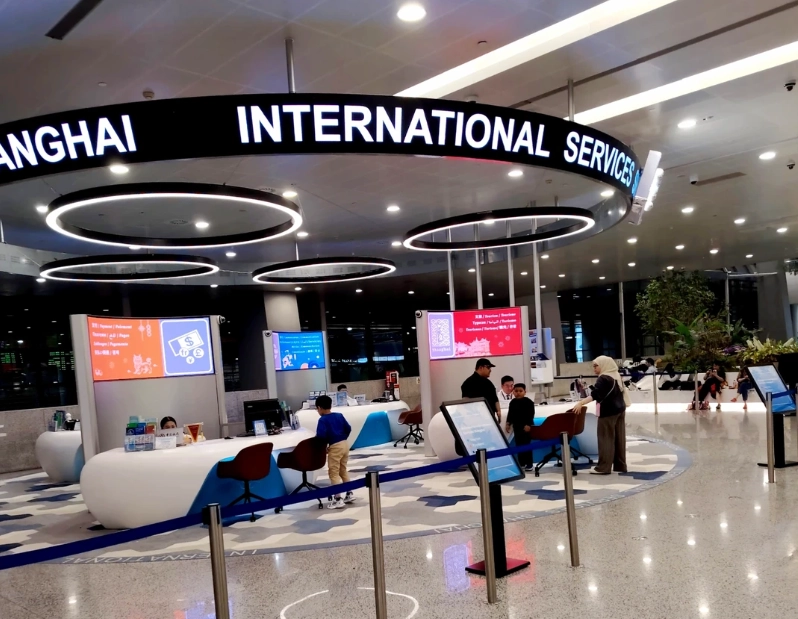
Where to Buy SIM Cards at Shanghai Airport
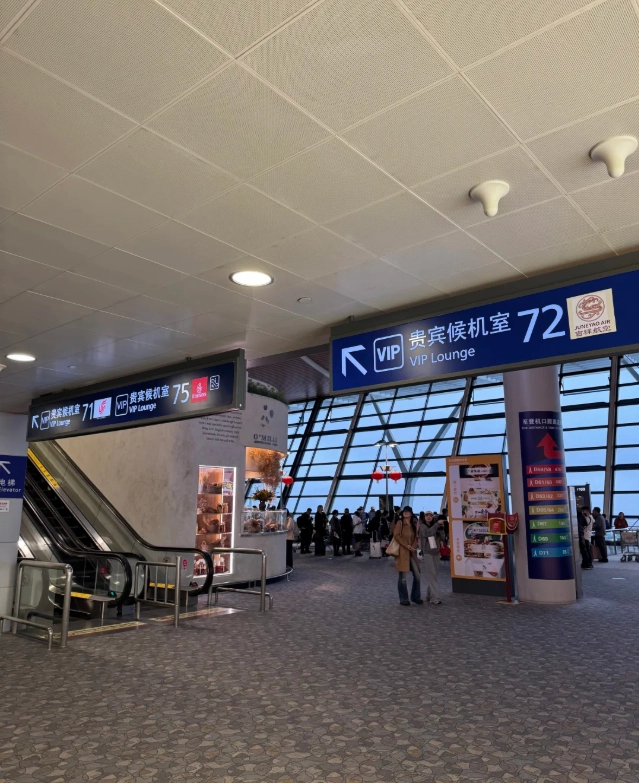
Both Shanghai Pudong International Airport (PVG) and Hongqiao International Airport (SHA) have official carrier counters in the arrival halls. They’re impossible to miss—brightly lit booths with English signage. Here’s the breakdown:
| Terminal | Carrier Booths | Location | Operating Hours |
|---|---|---|---|
| PVG T1 | China Unicom, China Mobile | After customs, near Exit 5 | 7:00 AM – last arrival |
| PVG T2 | China Unicom, China Telecom | Arrival hall, between Gates 28-30 | 7:00 AM – last arrival |
| SHA T1 | China Mobile | Near baggage claim area | 6:30 AM – 11:00 PM |
| SHA T2 | China Unicom, China Telecom | Arrival hall, central area | 6:30 AM – 11:00 PM |
I always recommend going to China Unicom at PVG T2. Why? Their staff speaks decent English (compared to the others), and they have the most tourist-friendly plans. Plus, if you arrive late, they’re almost always still open—they wait for the last flight.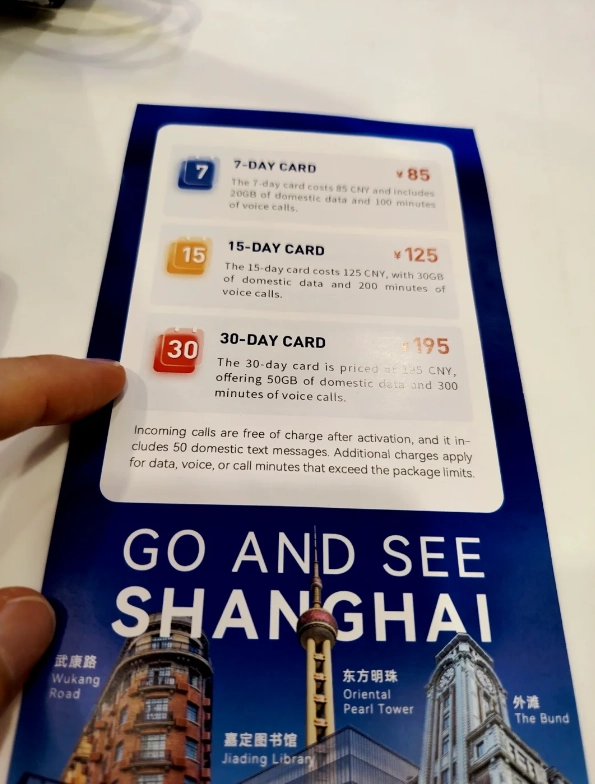
Which Carrier Should You Choose?
Three major carriers operate in China: China Unicom, China Mobile, and China Telecom. For short-term visitors, here’s my take after countless comparisons:
| Carrier | Pros | Cons | Best For |
|---|---|---|---|
| China Unicom | Fastest international internet, English app, tourist plans with VPN-friendly data | Slightly pricier than others | Travelers who need reliable Google/Meta access (with VPN set up) |
| China Mobile | Best coverage in remote areas, largest network | English support is weaker, plans are less flexible | Travelers venturing outside big cities |
| China Telecom | Cheapest options for short stays, decent urban speed | Customer service in English almost nonexistent | Budget-conscious city travelers |
SIM Card Plans and Prices for Tourists
Most airport counters offer dedicated “tourist cards” valid for 7, 15, or 30 days. Here are the standard options (prices in CNY, as of my last visit):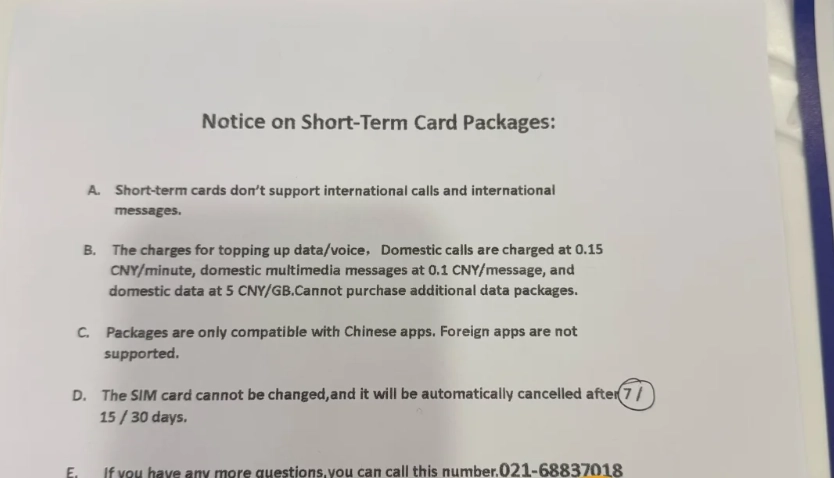
| Plan | Data | Call Minutes (China) | Price (CNY) | Validity |
|---|---|---|---|---|
| Unicom Tourist 7 | 15 GB high-speed + unlimited slow | 30 min | 128 | 7 days |
| Unicom Tourist 15 | 30 GB high-speed + unlimited slow | 60 min | 198 | 15 days |
| Mobile Easy Travel 7 | 12 GB high-speed + unlimited slow | 30 min | 108 | 7 days |
| Mobile Easy Travel 15 | 25 GB high-speed + unlimited slow | 60 min | 168 | 15 days |
| Telecom Fly 7 | 10 GB high-speed + unlimited slow | 20 min | 88 | 7 days |
Quick tip from my tours: If you stay 10 days, buy two 7-day cards rather than one 15-day. You’ll get more data for a similar price, and you can use the second card as a backup if something goes wrong.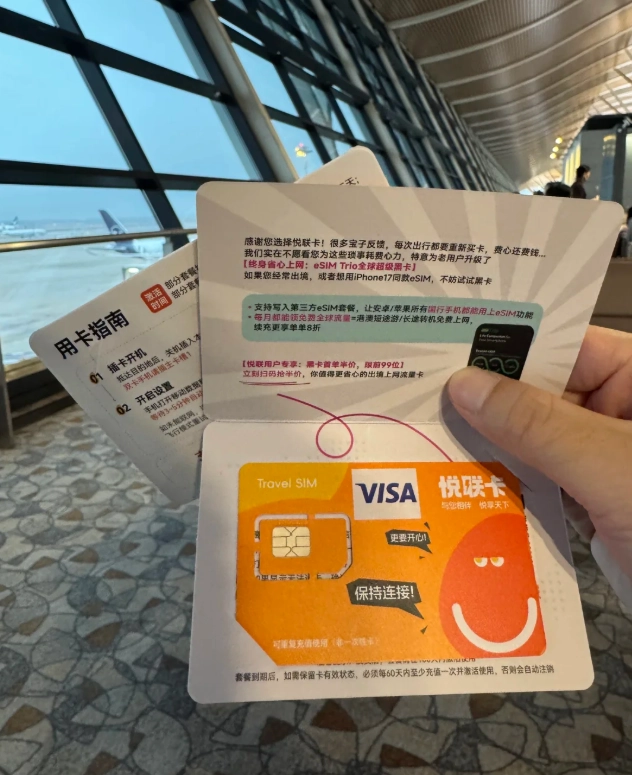
Step-by-Step Activation Guide
Activation is handled by the staff at the counter—they’ll insert the SIM and test it for you. But here’s what you need to bring and watch out for:
Documents Required
- Passport (physical copy, not a photo). Make sure it’s the same passport you used for immigration.
- Visa or entry stamp—they may ask to see it.
- Departure flight info (sometimes they require proof of return within the card’s validity).
The Activation Process
- Hand your passport to the staff. They’ll take a photo and enter your details into the system.
- Choose a plan. Don’t feel rushed—ask them to show the data speed test.
- Pay. Here’s the catch: most airport counters do not accept international credit cards. They take Alipay, WeChat Pay, or cash (Chinese yuan). Have some cash handy or link your card to Alipay before you travel.
- Staff will insert the SIM and test it. Confirm you see 4G/5G and can browse a website (like Baidu).
- Keep the SIM card packaging—it has the PUK code and customer service number.
Common Pitfalls and How to Avoid Them
After guiding over 50 groups through Shanghai airports, I’ve seen the same mistakes again and again. Here are the big three:
1. Buying from unofficial resellers
You’ll see kiosks selling “global SIMs” near the exits. Avoid them. They often sell overpriced, slow data that throttles after 1 GB. Stick to the official carrier booths—they’re regulated and have real customer support.
2. Not checking phone compatibility
Most modern phones (iPhone 8 and later, most Androids) work with Chinese networks. But if you have a super old phone or a Verizon-locked device, it may not support the bands. Ask the staff to check with a test SIM before you pay. I once had a client with a locked AT&T phone—wasted 30 minutes trying to activate.
3. Forgetting to install a VPN before departure
Yes, even with a local SIM, you can’t access Google, Gmail, WhatsApp, or Instagram without a VPN. The SIM itself doesn’t bypass the firewall. Set up a VPN (I recommend ExpressVPN or Astrill) on your phone before you leave home. Trying to download one in China requires a miracle—most VPN websites are blocked.
FAQ: Buying SIM Card at Shanghai Airport
Verified and fact-checked by the editorial team. This content has been fact-checked to ensure informational precision.







No comments yet.