 Yan Zhou
No Google. No WhatsApp. No Uber. Your phone becomes a paperweight the moment you land in Beijing. I've watched too many travelers freeze at the airport taxi queue, credit card in hand, only to realize nobody takes it. So let's fix that before you board.
I've been guiding foreigners through China for over a decade. The best apps for traveling in China aren't about flashy features—they're about survival. Here's my personal toolkit, the one I install on every client's phone before we leave the arrivals hall.
Quick Navigation
1. Alipay: Your Wallet Replacement
If you install only one app, make it Alipay. Foreign cards link seamlessly—I've done it with a US Visa and a German Mastercard. The setup takes ten minutes, but the payoff is enormous. Street vendors, subway machines, temple donation boxes: they all scan Alipay QR codes.
Here's the catch nobody tells you. Your card might get flagged for a “security review” on day one. I always tell my clients to make a small test payment at a convenience store before relying on it for a taxi. If it works there, you're golden.
2. WeChat: More Than Messaging
WeChat Pay is the backup wallet, but WeChat itself is the real lifeline. Museums, train stations, and even some restaurants only publish booking links through WeChat mini-programs. Yes, navigating them in pure Chinese is a nightmare even for me. But don't panic—your hotel receptionist can usually scan the QR code for you.
I use WeChat mostly to communicate with drivers. Send them your destination pin, and the pickup becomes instant. No language barrier, no pointing at a paper map. That alone is worth the download.
3. Amap: The Navigation Savior
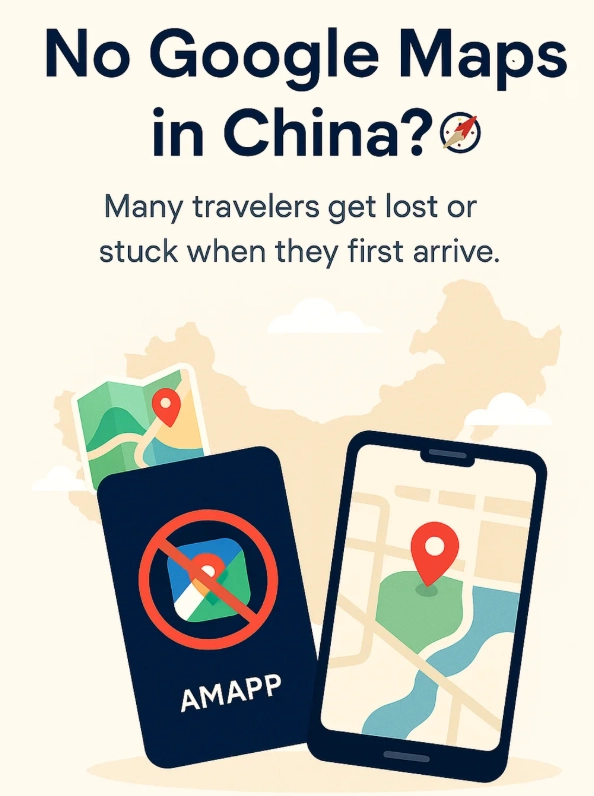
Google Maps will lead you into a construction site in Shanghai. I've seen it happen. Amap—also called Gaode—is the only navigation app that understands Chinese roads, bus lanes, and building entrances. Switch the language to English in the settings, and it's surprisingly usable.
The pedestrian mode is gold. It routes you through alleyways and underground malls that Google doesn't even know exist. But here's the insider detail: Amap's English search sometimes misses small businesses. Type the Chinese name if you have it, or just search the phone number.
4. Trip.com: Book Without Chinese
Trip.com is the English bridge to China's booking chaos. High-speed train tickets, hotel reservations, attraction passes—all in English, all with your passport number. I've compared prices, and it's rarely more expensive than the Chinese-only alternatives.
For train tickets specifically, Trip.com's “Waitlist” feature saved a client's itinerary during Golden Week. The official 12306 app crashed under the traffic; Trip.com held the reservation. That's the difference between a guided tour and a ruined vacation.
| App | Main Use | Works Offline? | English Support |
|---|---|---|---|
| Alipay | Payments | No | Full |
| Messaging + mini-programs | No | Partial | |
| Amap | Navigation | Limited | Good |
| Trip.com | Bookings | No | Full |
| VPN | Access blocked sites | No | N/A |
5. VPN & Translation Combo
Without a VPN, you lose Google, Instagram, and WhatsApp entirely. Set it up before you arrive—downloads are blocked once you're inside China. I recommend testing two providers; redundancy is not paranoia here.
For translation, Apple Translate works fine offline for basic phrases. But Baidu Translate handles menus and signs better. The camera feature is faster, and it recognizes handwritten characters. One note: it occasionally spits out hilarious mistranslations for local dishes. “Husband and wife lung slices” is actually a spicy beef offal dish—trust me, it's delicious.
How to Set Up Before You Fly
The single biggest mistake I see: arriving with an unlinked payment app. Do this at home, on stable Wi-Fi, with your passport in hand.
- Install Alipay and link your international credit card. Verify your identity with passport photos.
- Download WeChat and set up your account. Add your hotel as a contact so they can send you their QR code.
- Install Amap and switch the language to English. Save your hotel's Chinese address as a favorite.
- Register on Trip.com and enter your passport details in the “Traveler Information” section.
- Purchase and test your VPN. Screenshot the server list in case you need to reconnect.
Now you're ready. The rest is just practice.
Real Questions from Real Travelers
Can I use my foreign credit card directly in most shops without Alipay?
Very rarely. High-end hotels and international chains accept Visa or Mastercard, but family restaurants, taxis, and convenience stores are cashless and cardless. They expect Alipay or WeChat Pay. Keep 200–300 RMB in cash for emergencies, but don't rely on it.
What happens if my VPN stops working mid-trip?
It happens. Hotel Wi-Fi sometimes throttles VPN traffic. Switch to cellular data, or ask the front desk for a “business center” connection. As a last resort, your hotel concierge can usually access Google for you—just bring the exact URL you need.
Do I need a Chinese phone number to use these apps?
No, but it helps. Alipay and WeChat both work with international numbers. However, some mini-programs and restaurant reservation systems require a +86 number for verification. If you're staying more than two weeks, buy a local SIM at the airport—it's worth the hassle.
Is Amap accurate for bus routes and schedules?
The routes are accurate, but real-time bus arrival predictions are hit-or-miss. I use Amap to find the nearest bus stop and understand the route, then check the physical sign at the stop for actual timing. In major cities, the electronic display boards are reliable.
Can I book high-speed train tickets on Trip.com with my passport?
Yes, and it's the smoothest method. Enter your passport number exactly as it appears on your document, including middle names. At the station, skip the ticket counter and use the manual verification lane with your passport—the automated gates often reject foreign passports.
Verified and fact-checked by the editorial team.







No comments yet.