 Qiang Huang
What’s inside—my quick field notes
Two students just paid $80 for a “traditional tea ceremony” that lasted 10 minutes. I saw it happen last Tuesday near the Bund. My heart sank—because that scam is old, recycled, and entirely avoidable. Here, I’m sharing the most common scams to avoid in China travel, based on my decade guiding foreigners. You’ll learn the exact tricks, how to spot them in seconds, and what to say. No fluff—just field-tested tactics.
Most visitors get hit by the same handful of hustle plays. The good news? They’re predictable. Once you know the script, you’ll walk past like a local. Let’s dig in.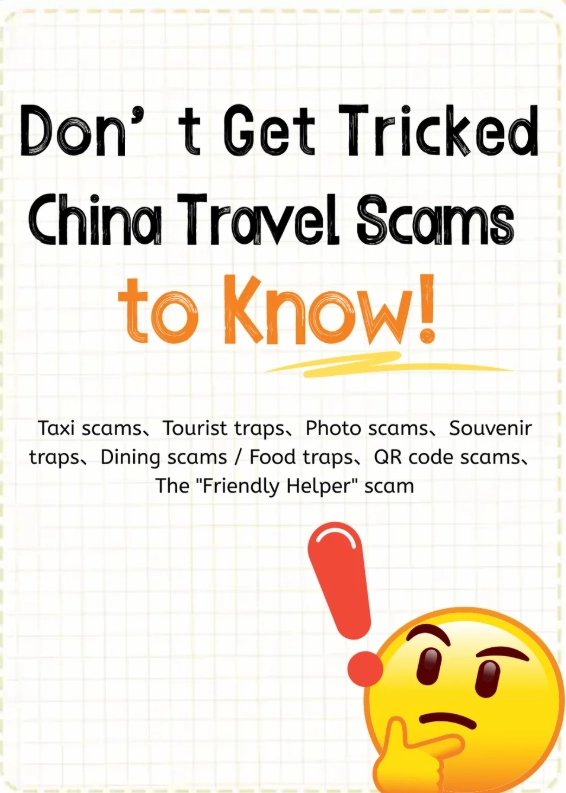
1. The Tea House Invite Scam
Two young women—often students—strike up a friendly chat, invite you to a “hidden tea house,” and then present a bill for hundreds of dollars. This scam targets friendly travelers in Shanghai, Beijing, and Hangzhou hotspots. I’ve heard countless victims describe the exact same setup: a casual English chat near the metro, then an invitation to try “real Chinese tea.” After 15 minutes, the bill arrives—$200 to $500, paid under pressure from a group of men.
Here’s the catch: real tea houses don’t have hawkers on the street. If someone approaches you unprompted to “practice English” and then invites you for tea, coffee, or a “student art show,” just smile and keep walking. If you’re already inside and the menu has no prices—leave immediately. One client told me he was physically blocked. In that case, call 110 (Chinese police) and loudly say “I’m calling the police.” The staff usually backs down. My advice: only enter tea houses recommended in English-friendly apps like Trip.com or those I list in my own itinerary notes. The best spots near the Bund? I always send clients to Chalou at 50 Yongkang Road—they post prices outside.
2. Fake Taxi Meters & Detours
Unlicensed cabs—especially at airports and train stations—often run rigged meters or take absurd detours. The meter might jump a few extra yuan for every kilometer, or the driver claims “traffic” and drives 20 minutes extra. I’ve personally argued with a driver in Beijing who tried to charge me 300 RMB for a 60 RMB ride. My rule: always use DiDi or the official taxi queue.
Now, here’s what most guides don’t tell you: even official-looking taxis at Beijing Capital Airport have fake meters. The tell? The meter runs faster than normal, and the driver “forgets” to start it until you’re halfway. Use ride-hailing apps like DiDi (English interface available) or the Amap Global ride-hailing. If you must take a street taxi, ask for the receipt—printed with trip details. And remember the magic number: 12328 for transport complaints. If a driver refuses to use the meter, get out. No exceptions.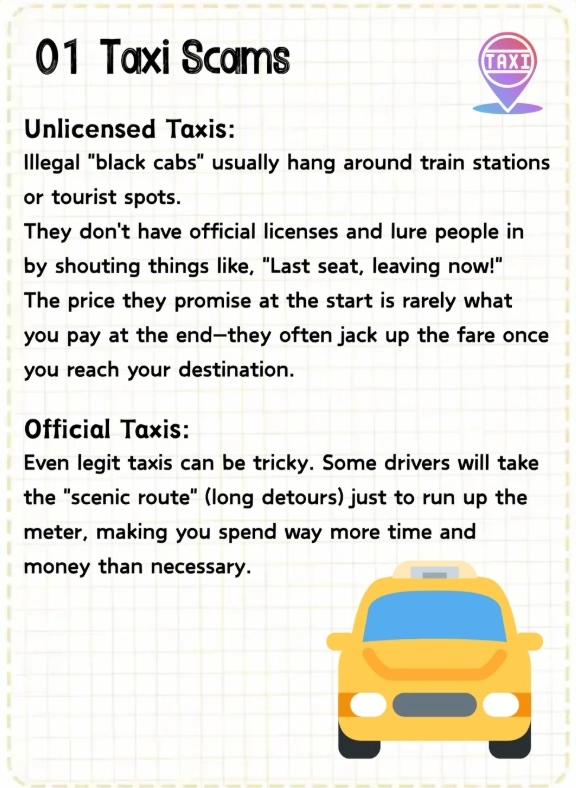
What’s a fair airport fare? From Beijing Capital Airport to downtown, expect 80–120 RMB by official taxi. If you’re quoted 300, it’s a scam. From Shanghai Pudong, it’s 160–220 RMB. My trick: check the official taxi queue—there’s a uniformed attendant. Ignore anyone approaching you inside the terminal.
3. The “Art Student” Gallery Trap
Someone claiming to be an art student invites you to a gallery exhibition, then pushes you to buy overpriced “original” paintings. I’ve seen this near the 798 Art District in Beijing and around Tianzifang in Shanghai. The conversations are polished, and the gallery looks legitimate. Once inside, you’re offered tea and a personal tour—then the sales pitch. The paintings are often mass-produced prints with a few brushstrokes added. Prices start at 1,000 RMB.
Here is the catch: no real art student peddles paintings on the street. If you’re interested in art, go directly to reputable galleries like UCCA in Beijing or the Power Station of Art in Shanghai. Both have English signage and fixed-price shops. If someone approaches you with a “free exhibition,” politely decline. My insider tip: the art scene in China is incredible—don’t let this scam ruin it. Just buy from established stores or skip the street pitches entirely.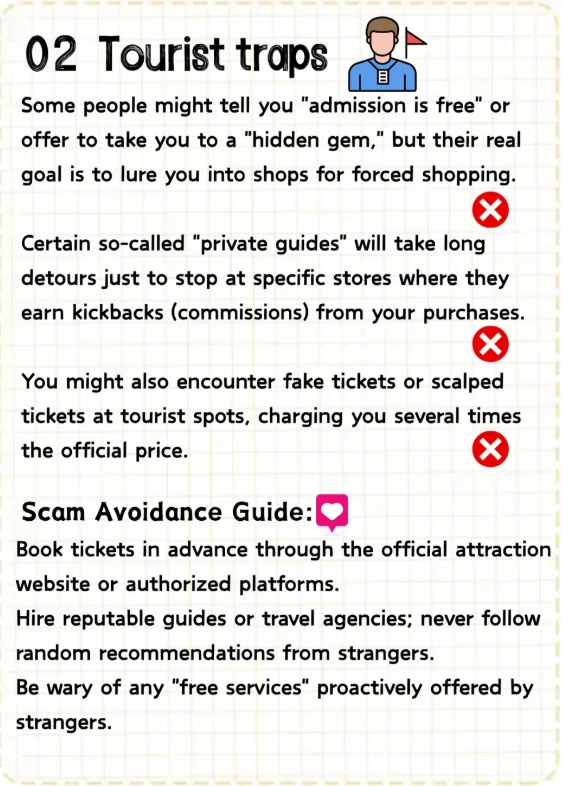
4. Ticket Touts at Major Attractions
Scammers sell “skip-the-line” tickets that are either fake or unnecessary because you still have to queue. This is rampant at the Forbidden City, Terracotta Army, and Shanghai Museum. They’ll tell you tickets are sold out for the day—but the official online booking often has slots. I’ve tested it: on a busy Saturday, I walked past touts saying “no tickets” and booked one on Trip.com in two minutes. Tickets are released a week ahead—grab them then.
Always buy through official channels: the official WeChat account of the attraction, Trip.com, or Klook. The Forbidden City requires real-name registration with your passport. Avoid anyone waving physical tickets. If you’re stuck, ask a hotel receptionist to help—they can often book on the spot. My rule: never pay cash to a stranger for a ticket. The only legitimate way is online or at the official ticket window—which exists at most sites, just with a long queue.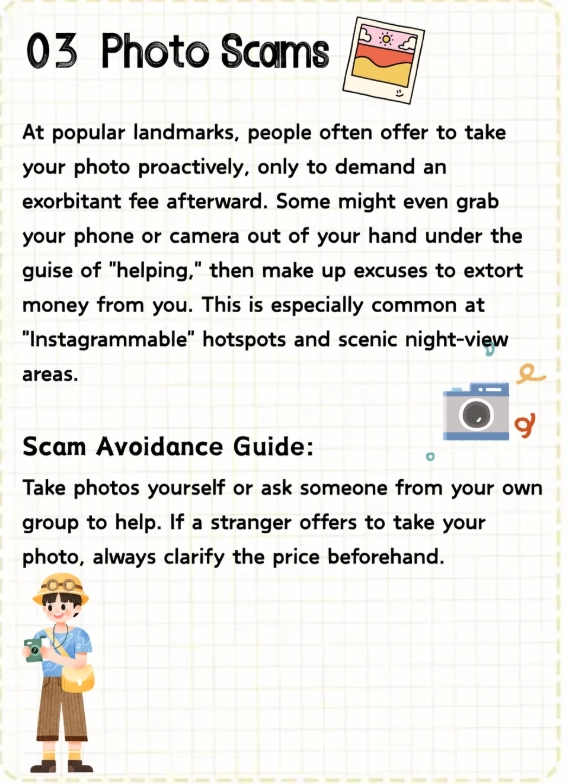
Pro Tip: The official ticket office at the Forbidden City is inside the Meridian Gate—not at the street entrance. Touts will try to intercept you at the subway exit. Walk straight to the gate and ignore them like you live there.
FAQ: Real Questions from Travelers
How do I know if a taxi meter is rigged?
The meter should start at 13 RMB for the first 3 km in Beijing—if it jumps to 20 before you leave the airport, it’s rigged. A trick: ask the driver to show you the meter reset—or just use DiDi. I’ve never had a DiDi driver scam me. If you must use street taxis, note the license plate and complain to 12328.
Are credit cards accepted widely in China, or should I rely on cash?
International credit cards are only accepted at high-end hotels and some tourist restaurants. Alipay or WeChat Pay linked to your home bank card is the norm. But for small vendors, cash is still king—keep 100–200 RMB in small bills. And if someone offers to “help” you pay with their phone, decline—that’s a classic scam to overcharge you.
What’s the biggest scam tourists fall for without realizing it?
Pre-paying for a “guided tour” at a train station. A friendly person sells you a tour package that includes a “discount” ticket—but you pay double and get a rushed bus ride. Just say no. Book through your hotel or an app like Klook. I’ve seen tourists lose hours waiting for a “guide” who never shows.
Is it safe to buy street food from unlicensed vendors?
Not a scam per se, but risky. The real scam is the inflated price—if there’s no price board, ask before ordering. A skewer that should cost 5 RMB might be quoted as 15 RMB to tourists. I always point to the price board or use a translation app to confirm. Locals pay with QR codes—watch what they pay, and match it.
How do I avoid the tea house scam if I actually want to try tea?
Look for tea shops with a visible menu and fixed prices. My go-to in Hangzhou is Longjing Tea Village, where you can sample and buy directly from farmers—no invitation needed. In Shanghai, Song Fang Tea House near the Bund has English menus and reasonable prices (around 80 RMB per pot). Avoid any tea house that doesn’t display prices outside.
Verified and fact-checked by an experienced local guide. The information reflects current common practices; always confirm details with official sources like the National Immigration Administration (nia.gov.cn) for visa matters and the China National Tourism Administration for official advisories.


No comments yet.