 Fang Wang
Two weeks ago I watched a client shiver through a 7 a.m. West Lake boat ride in a thin hoodie—then sweat through the same hoodie by noon. That’s spring in China. I’ve guided dozens of spring trips, and the single biggest packing mistake is treating the season like a uniform temperature.
Booking what to pack for spring travel in China often starts with weather apps showing 18°C. But those numbers hide wind chill, sudden drizzle, and indoor heating that’s already switched off. You need a system, not a checklist.
Here’s the exact layering approach I use for my own spring trips—plus the gear most visitors forget to bring.
Spring Weather Reality Check: Why Layers Beat Everything
Spring in most of China swings from near-freezing mornings to 22°C afternoons, and rain is common but rarely all-day. The trick is to dress for the transition, not the average.
What most travelers get wrong about spring temperatures
They pack one heavy jacket and overheat by lunch. Instead, pack a lightweight base layer, a warm mid-layer, and a windproof shell. I typically wear a merino T-shirt, a packable down vest, and a hooded rain shell. That combo covers 5°C to 25°C without bulk.
For city days in Shanghai or Hangzhou, morning humidity makes 12°C feel colder than dry 8°C in Beijing. A wind-resistant outer layer matters more than thickness.
Rain gear vs. umbrellas—what’s practical
A small folding umbrella is fine for cities, but a lightweight rain shell is better for day hikes. Avoid ponchos—they flap and trap heat. I recommend a breathable shell with taped seams. For trails like Huangshan, a pack cover is worth the extra 80 grams.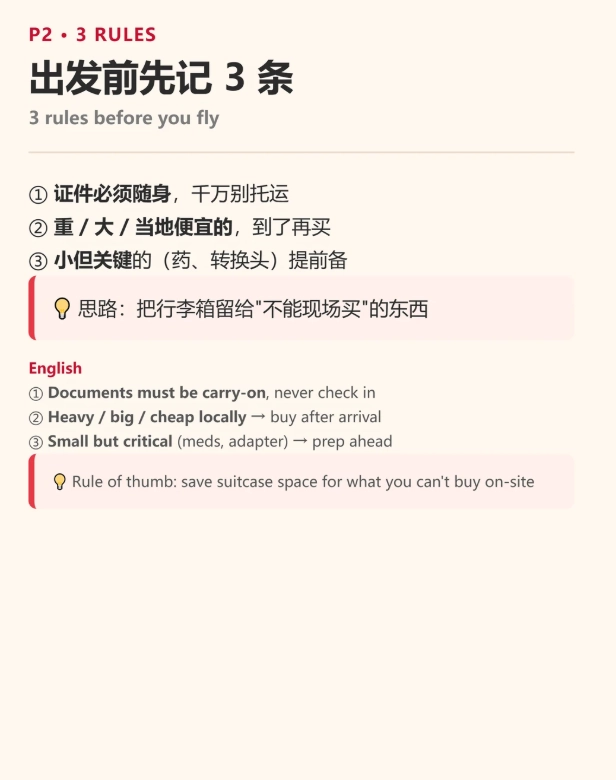
The 3-Layer Clothing System That Actually Works
Below is the exact setup I recommend to every client, adjusted for 7–10 days.
Base layer
Two merino wool T-shirts. They resist odor, dry fast, and work for both cool mornings and warm afternoons. Avoid cotton—it stays damp after sweat or rain.
Mid-layer
One packable down vest or fleece. I prefer a vest because it keeps your core warm without bulk on your arms. A lightweight fleece works too, but down compresses smaller.
Outer layer
A windproof, water-resistant shell. This is your rain jacket and wind blocker. Look for pit zips—spring afternoons in Beijing can hit 24°C, and you’ll want to vent heat without taking the jacket off.
Bottoms and extras
One pair of quick-dry travel pants and one pair of jeans or casual trousers. Add a scarf and a light beanie for chilly mornings—they take almost no space and save you on a boat ride or early temple visit.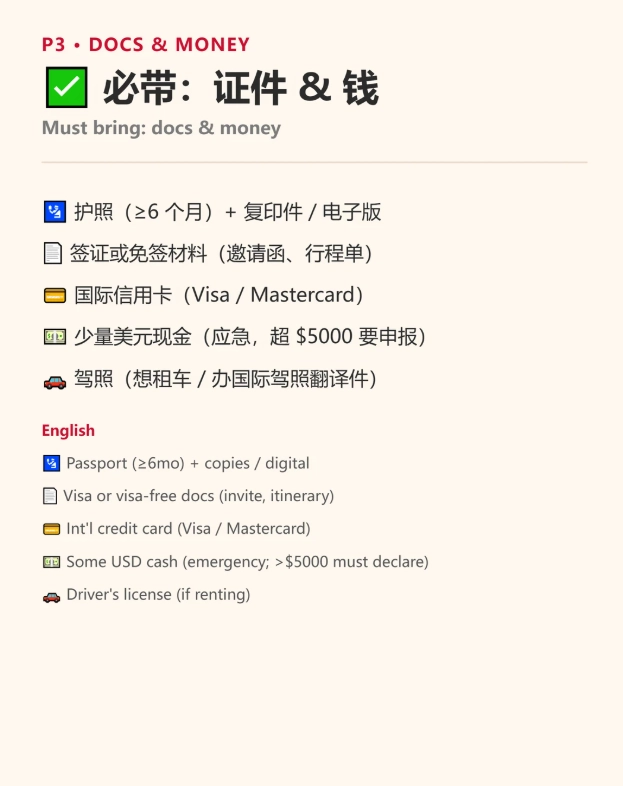
| Item | Why It Works | Quantity for 7–10 Days |
|---|---|---|
| Merino T-shirt | Odor-resistant, quick-dry | 2 |
| Packable down vest | Warmth without bulk | 1 |
| Rain shell with hood | Windproof, water-resistant | 1 |
| Quick-dry pants | Handles rain and sweat | 2 |
| Light scarf & beanie | Morning chill on boats or mountains | 1 each |
Footwear: Cobblestones, Rain, and Temple Stairs
Bring one pair of waterproof walking shoes with good tread. Spring rain leaves stone paths slick—I’ve seen more than one client slip near the Forbidden City’s side gates. Avoid new shoes; break them in at home.
For city days, comfortable sneakers work. For mountain areas like Huangshan, a light hiking shoe is better. Don’t bring heavy boots unless you plan serious trails—they take up suitcase space and feel miserable on warm afternoons.
Tech & Documents: What You Can’t Buy There
Your passport and a printed copy of your visa are non-negotiable. Many attractions require passport registration for entry—I always tell clients to carry a photocopy in a separate bag.
- VPN installed and tested before departure—Google Maps won’t load reliably, but Apple Maps and Amap Global work well.
- Translation app with offline Chinese pack—Apple Translate or Baidu Translate.
- Power bank (10,000 mAh) and a universal adapter. China uses 220V, Type A/C/I plugs.
- Small cash reserve (¥300–500) for places that don’t accept foreign cards or mobile pay.
Payment tip: Alipay and WeChat Pay linked to an international card work in most cities, but small vendors may only take cash. Keep a few ¥10 notes for street food.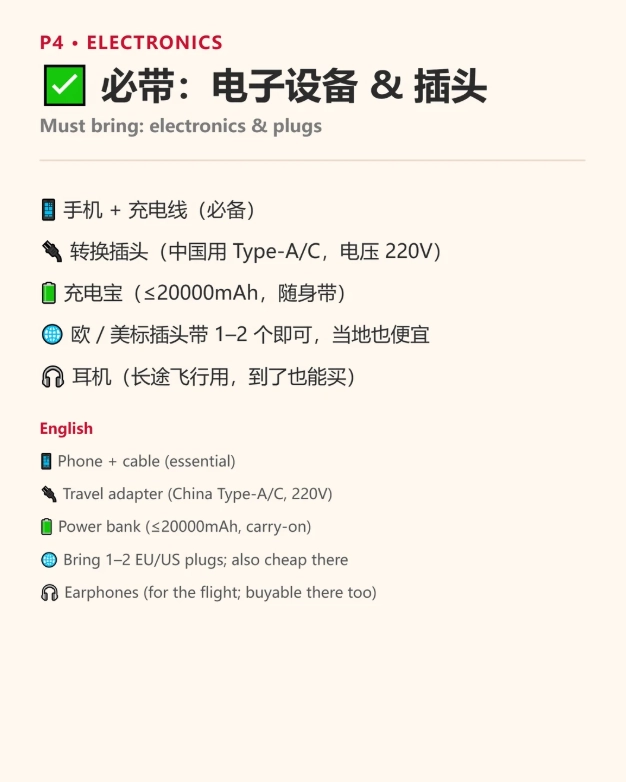
Health & Everyday Carry: Small Items, Big Saves
Pack a basic first-aid kit with blister plasters, pain relievers, and rehydration tablets. Spring temperature swings can leave you dehydrated after a long walk. I also carry hand sanitizer and a small pack of tissues—public restrooms often lack paper.
- Sunscreen (SPF 30+) and lip balm—spring sun is stronger than it feels.
- Reusable water bottle with filter—tap water isn’t drinkable; hotels provide kettles.
- Compact daypack for layers you shed by afternoon.
For travelers with allergies, spring pollen in Beijing and Nanjing can be intense. Bring antihistamines if you’re sensitive.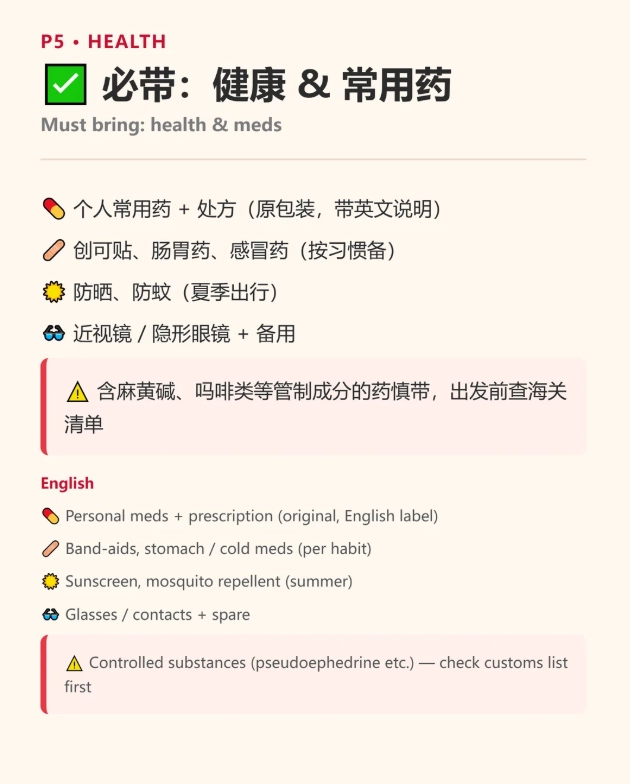
Packing Questions I Answer Every Spring
Verified and fact-checked by the editorial team.

No comments yet.