 Fang Wang
Skim This First
- What Makes a Shandong Luxury Hotel Different?
- Where the Luxury Is Actually Worth It: City by City
- Qingdao: The Deepest Bench of Five-Star Hotels
- Jinan: Quiet Luxury in the Provincial Capital
- Yantai and Weihai: Coastal Luxury Without the Crowds
- How Do You Book Shandong Luxury Hotels With a Foreign Passport?
- Qufu and Mount Tai: Heritage Stays
- Only 24 Hours in Qingdao? My Exact Plan
- Questions I Answer Every Week
The rain came off Yantai's harbor sideways. My client's card got declined at check-in. Twice.
Nobody warns you about that part. The lobby was marble and orchids. The front desk spoke perfectly decent English. And the payment terminal, on a wet Tuesday, simply refused to cooperate.
I have booked Shandong luxury hotels for travelers in every season — Qingdao in the summer fog, Jinan in the dead of summer heat, Yantai during the grape harvest. Some of those stays were genuinely world-class. A few were expensive lessons I still wince about. What follows is the honest version: real neighborhoods, real price bands, and the booking workarounds that actually function when your passport is foreign.
Read this far? Then take the shortcut. Put your money in Qingdao's Shinan district. Treat Jinan as a comfortable rail hub rather than a destination. And do not book a night in Tai'an just to climb Mount Tai — you will regret the room far longer than you regret the stairs.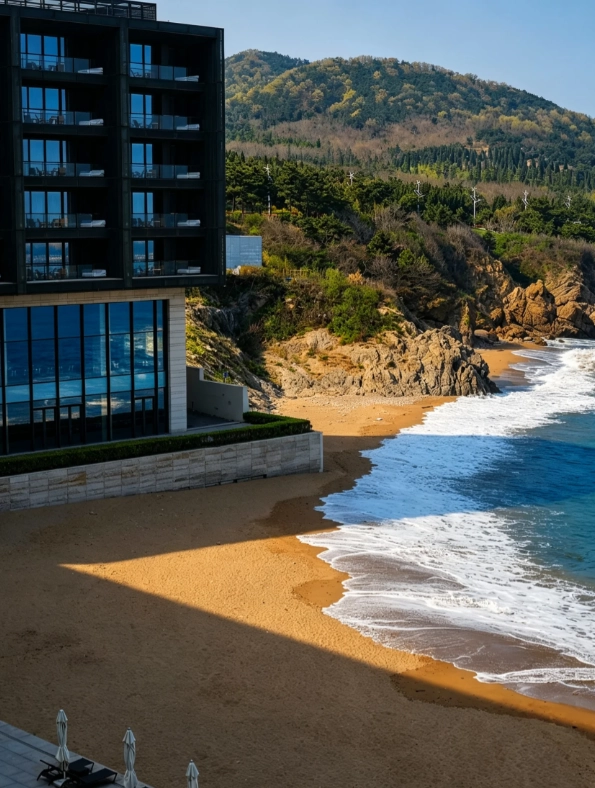
What Makes a Shandong Luxury Hotel Different?
Shandong's five-star hotels are cheaper than Shanghai's, warmer than Beijing's, and much more likely to be fully booked by domestic travelers on a random Tuesday. That last part catches people off guard. This is a province where locals vacation, not just foreigners passing through.
The Sea-View Premium, and When It Is a Waste of Money
Paying extra for an ocean-view room in Qingdao during the early-summer fog window is the single most common way visitors waste money here. The fog rolls in off the Yellow Sea, sits on the coastline for days, and turns your expensive "sea view" into a white wall with a balcony.
Book the sea view in early autumn instead. The light is clean, the humidity drops, and the same room costs less because the domestic summer crowd has gone home.
Winter is the sleeper season. Rates at Qingdao's international five-stars can fall hard, the air is razor sharp, and the coastal walk from May Fourth Square to the Sailing Center is basically yours. Just bring a real coat — the wind off the bay is not a joke.
Service Style: Warm, Not Fussy
Shandong hospitality leans direct and friendly rather than formal and invisible. Staff will chat with you. They will ask where you are from and then tell you their cousin lives there. It is genuinely lovely, but do not expect the silent, glide-past-you service of a Tokyo or Singapore five-star.
English is a lottery. Front desks at international brands handle it fine. The breakfast restaurant often does not. This is where a translation app earns its keep.
One thing to look forward to: Chinese five-star breakfast buffets are a serious production. In Qingdao, look for mackerel dumplings and clam soup on the hot line. In Jinan, sweet porridge and griddle bread. Eat properly at the hotel and you can skip lunch entirely.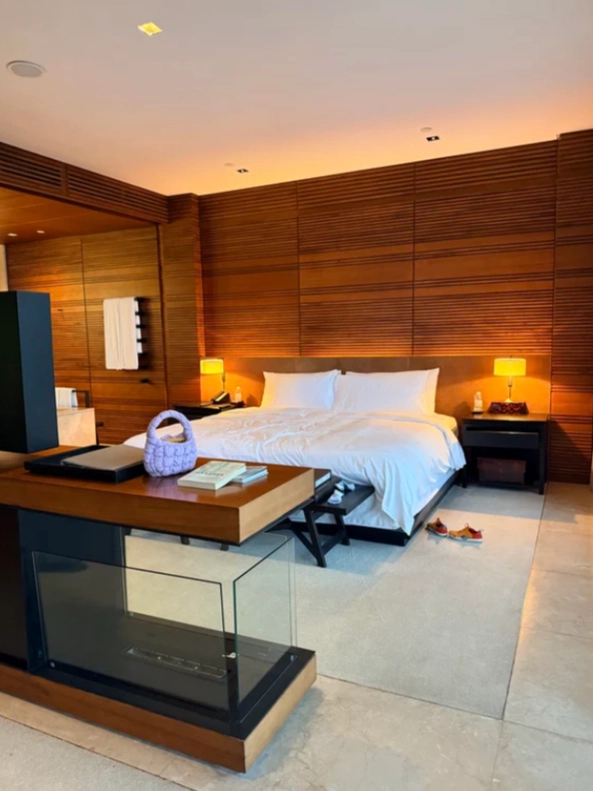
What "Luxury" Actually Buys You in Shandong
The jump from a solid four-star to a five-star in Shandong often costs less than two dinners out — which is not true in Shanghai or Sanya. That math is exactly why it is worth upgrading here.
- Front-desk staff who can register a foreign passport without a 40-minute phone call
- Payment terminals that accept Visa, Mastercard and Amex without drama
- Real soundproofing — Chinese city traffic starts early and does not apologize
- Gym, pool and laundry turnaround, which matter on a two-week trip
- Airport pickup arranged in advance, usually for less than a taxi you cannot communicate with
Pro Tip: Not every Chinese hotel is licensed to register foreign guests. Mid-range and boutique properties sometimes turn foreigners away at the door, politely but firmly. International five-star brands in Shandong always have the license. This alone justifies the upgrade.
Where the Luxury Is Actually Worth It: City by City
Shandong is not one destination. It is a coastal strip, a capital, and a heritage corridor, and the hotel quality does not distribute evenly across them.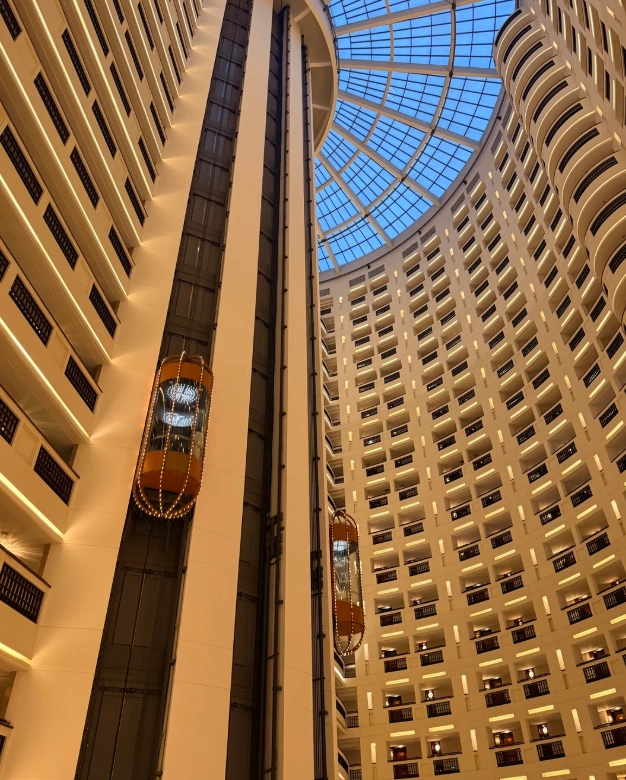
| City | Best Luxury Zone | Typical Nightly Rate (RMB) | Best For | Foreign Card Ease |
|---|---|---|---|---|
| Qingdao | Shinan District, Fushan Bay | 900 to 2,600 | Sea views, food, first trips | Excellent |
| Jinan | Lixia District, city center | 700 to 1,600 | Rail connections, springs, business | Very good |
| Yantai | Laishan and the seafront | 600 to 1,200 | Wine country, quiet coast | Good |
| Weihai | City seafront and Rongcheng | 500 to 1,100 | Winter swans, island history | Moderate |
| Qufu | Around the Temple of Confucius | 600 to 1,200 | Confucian heritage | Good |
| Tai'an | City center near the cableway | 400 to 900 | One-night Mount Tai access | Moderate |
Roughly divide RMB by seven for US dollars. Rates above are indicative mid-range figures and swing wildly with holidays, coastal summer weekends and the first week of October, when they can double or triple.
Qingdao: The Deepest Bench of Five-Star Hotels
If you only have time for one luxury stay in Shandong, make it Qingdao. Nowhere else in the province has this many international flags, this much coastline, and this much good seafood within a fifteen-minute taxi ride.
Which Qingdao Neighborhood Should You Book In?
- Shinan District and Fushan Bay — the CBD strip. Walk to the waterfront, the big shopping mall, and Metro Line 2. Best choice for first-timers.
- Badaguan and the Old Town — historic villas, quieter streets, close to Zhanqiao Pier and St. Michael's Cathedral. Fewer big-name hotels, and some older buildings hide dated rooms behind pretty facades.
- Laoshan District and Shilaoren — beach resort zone. Rooms are bigger, sand is closer, and the old town is a 30 to 40 minute taxi away.
- West Coast New Area — wide Golden Beach, lower rates, but you are across the bay. Budget 40 to 60 minutes each way into the city.
Standout Properties, and the Type I Would Skip
| Hotel | Neighborhood | Est. Nightly Rate (RMB) | Best For |
|---|---|---|---|
| The St. Regis Qingdao | Shinan District, Fushan Bay | 1,600 to 2,800 | Couples, high-floor views, celebrations |
| Shangri-La Qingdao | 9 Xianggang Middle Road | 900 to 1,700 | Families, walkability, reliable English |
| InterContinental Qingdao | Aomen Road, Olympic Sailing Center | 900 to 1,800 | Marina views, business travelers |
| Hyatt Regency Qingdao | Donghai East Road, Laoshan District | 700 to 1,300 | Beach days, resort feel, families |
| Hilton Qingdao Golden Beach | West Coast New Area | 700 to 1,400 | Long stays, big rooms, quiet coast |
The St. Regis sits high in one of the city's tallest towers, and the elevator ride alone is worth the splurge once. The Shangri-La is the one I recommend most often to nervous first-timers — the location is walkable, the front desk has seen every passport problem imaginable, and there is a convenience store within a three-minute walk for water and SIM cards.
The Hyatt Regency in Laoshan is my pick for anyone traveling with kids. You cross a road and you are on the sand. Rooms are generous, the pool is real, and breakfast handles picky eaters well. The trade-off is honest: you are far from the Old Town, and a taxi back after dinner runs 60 to 80 RMB.
What would I skip? The old-town properties that have rebranded themselves as five-star while keeping four-star bones. The sea view is real. The soundproofing is not. I have had clients wake at 5 a.m. to a delivery truck and a very clear view of it.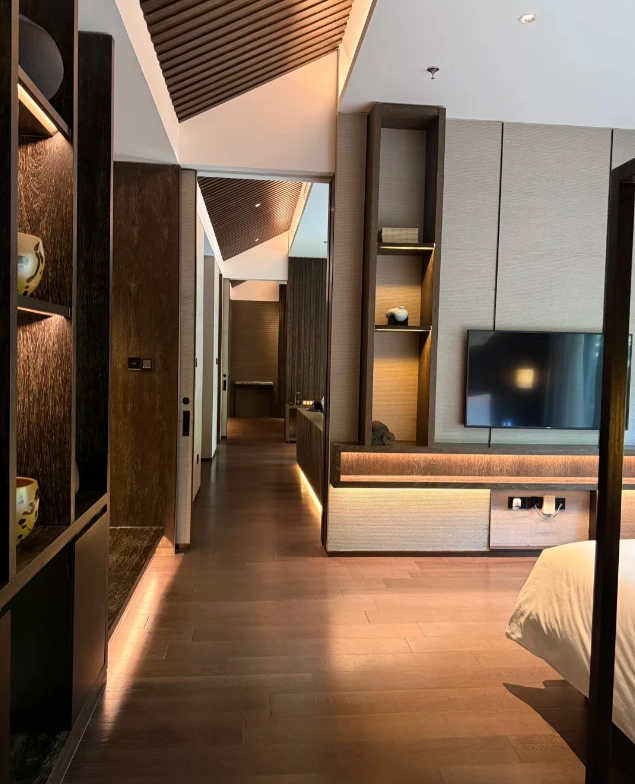
Jinan: Quiet Luxury in the Provincial Capital
Jinan's luxury is functional rather than scenic — you book here for location, service and rail access, not for a view. That is not a criticism. It is a planning fact.
The Sofitel Jinan Silver Plaza on Luoyuan Avenue in Lixia District is the classic choice. Big lobby, mature service, and within a comfortable walk of Baotu Spring and the Quancheng Square area. I always tell clients to base themselves in Lixia District, because Baotu Spring, Daming Lake, Kuanhou Alley and Furong Street all cluster there.
The Hyatt Regency Jinan on Jingsi Road sits in a shopping complex, which is convenient when it rains. The InterContinental Jinan is newer and quieter, out by the Olympic Sports Center, but you will be paying for taxis to reach the springs.
Tickets at Baotu Spring hover around 40 RMB and Daming Lake is partly free, but pricing and opening hours shift with season. Confirm on the official WeChat account or through an English-friendly booking platform before you go.
Insider Advice: Jinan has two main high-speed rail stations and they are nowhere near each other. Jinan West handles most long-distance trains and sits far out in the western suburbs. Jinan East is closer to the city center. Choose your train by station, not just by departure time — I have watched people miss dinner over this.
Yantai and Weihai: Coastal Luxury Without the Crowds
Yantai is the most underrated luxury stop in Shandong, and Weihai is where you go when you want the coast to yourself.
In Yantai, the Yantai Marriott Hotel in Laishan District is the reliable international-standard option, with the Crowne Plaza Yantai Sea View as a solid alternative. Rates sit comfortably below Qingdao's for similar room quality. The city is China's oldest winemaking region, and a visit to the Changyu Wine Culture Museum is genuinely interesting even if you are not a wine person.
Weihai's hotel stock is thinner and skews toward domestic brands. My honest advice: if you want international-standard luxury on this stretch of coast, sleep in Yantai and take the high-speed train to Weihai as a day trip. It is short, cheap and painless. Weihai rewards you with Liugong Island and, in the colder months, the whooper swans that winter around Rongcheng's Swan Lake — one of the genuinely special wildlife sights in eastern China.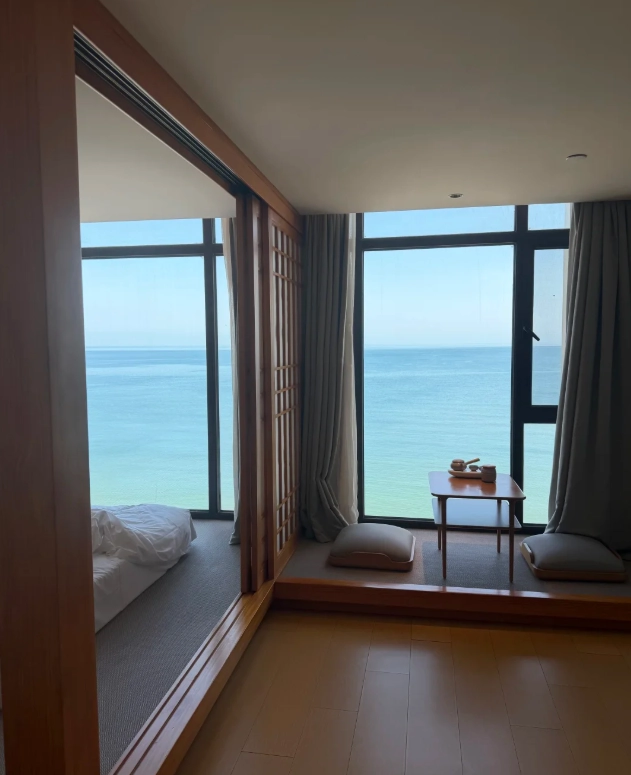
How Do You Book Shandong Luxury Hotels With a Foreign Passport?
Passports, Payment, and the Mini-Program Problem
Every guest in a Chinese hotel must be registered, and that means your physical passport — a photo on your phone will not work. Front desks scan it and file the record with local police. This is routine and takes a few minutes at international brands.
Payment is the bigger trap. International five-stars take Visa, Mastercard and Amex at the desk. Domestic-brand five-stars sometimes take UnionPay and mobile payment only. Set up Alipay or WeChat Pay with your international card before you fly, and carry a second card in case the first one triggers a fraud block.
- Trip.com and Klook are the two platforms that most reliably accept foreign cards and offer English support
- Expect a pre-authorization hold at check-in for incidentals; it releases days after you leave
- Some hotels push a WeChat mini-program for deposits or breakfast add-ons, entirely in Chinese — just hand your phone to the front desk and let them do it
- Install a VPN before you arrive, not after
- Google Maps is unreliable in China. Use Apple Maps or Amap's English mode instead
Pro Tip: Copy each hotel's Chinese name and address into your phone notes before you land. Showing a driver a pinned location on Amap works beautifully. Saying the English brand name out loud usually does not.
What You Will Actually Pay, and When to Book
Shandong's coastal five-stars are seasonal in a way inland hotels are not, and the gap between peak and off-peak is brutal.
- Peak pricing hits during national holidays, coastal summer weekends, and the first week of October. Rates can double or triple
- Late autumn, winter and early spring are the value windows. Qingdao five-stars can drop well below their summer rates
- Book coastal summer stays three to six weeks ahead. Same-week booking in Jinan is usually fine
- Breakfast is often 100 to 180 RMB per person if it is not included in your rate. Check the rate details carefully — the buffet is usually worth it
- Quoted rates in China generally already include service charges and taxes, unlike in North America
Tipping is not expected anywhere in Shandong. Rounding up for a bellhop who wrestles four suitcases up a staircase is a kind gesture, not an obligation.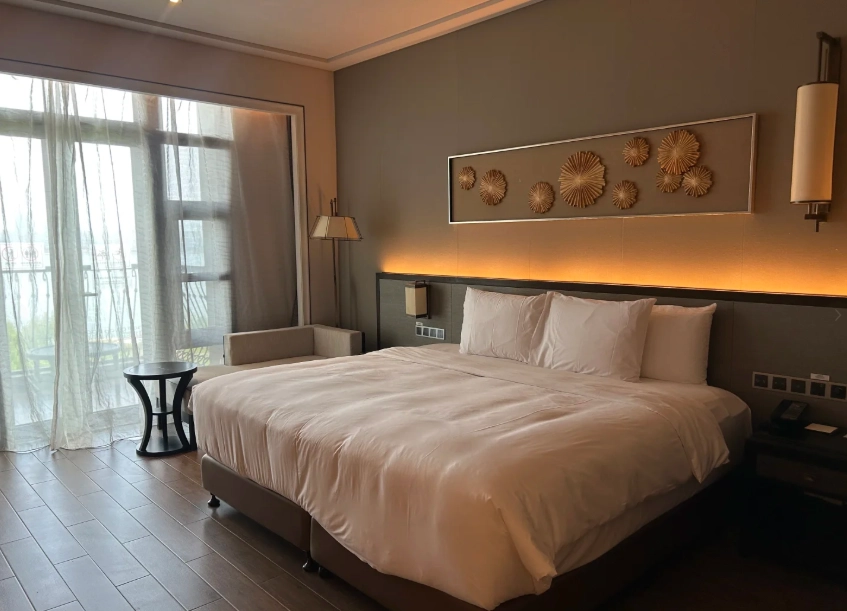
Qufu and Mount Tai: Heritage Stays
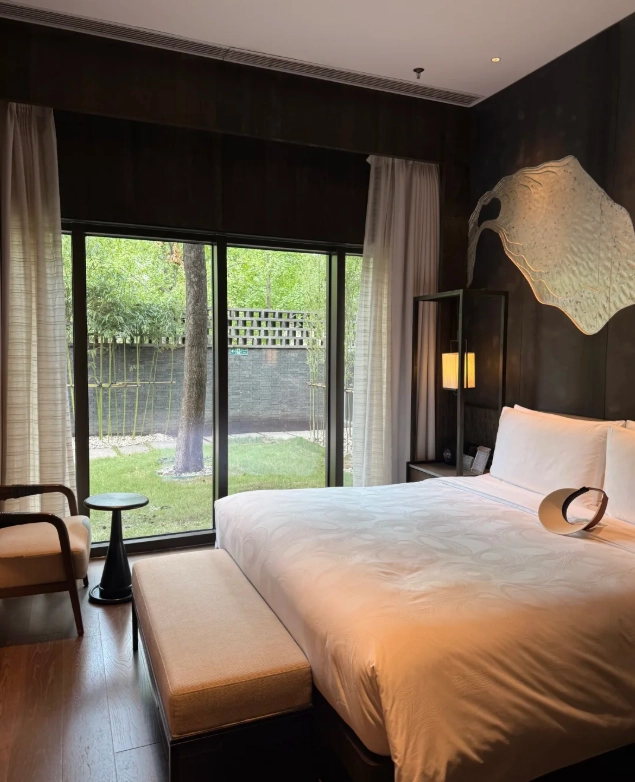
Qufu has one clear luxury anchor, the Shangri-La Qufu, and it is a genuinely lovely low-rise property with garden courtyards a short drive from the Temple of Confucius. For a heritage-focused trip, this is the right base.
Mount Tai, or Taishan, holds UNESCO World Heritage status and has been a pilgrimage site for centuries. Here is the advice most itineraries get wrong: do not sleep in Tai'an. The high-speed train from Jinan to Tai'an takes roughly twenty minutes, and connections from Qufu are also quick. Base yourself in Jinan or Qufu and treat the mountain as a day trip. Tai'an's hotels are functional, but you will pay a premium for mediocrity.
The classic ascent runs from the Red Gate up thousands of stone steps to the South Gate of Heaven — four to six hours on foot, and your legs will file a complaint. A cable car covers part of the climb. Expect roughly 100 to 150 RMB for the gate ticket plus a similar amount per cable-car leg, and confirm current pricing on the official WeChat account or an English-language booking platform before you go.
Sunrise from the summit is famous. It is also a 3 a.m. crush of rented coats and phone tripods. Sunset from the same spot is nearly empty, warmer, and arguably the better photograph. I have stopped recommending sunrise climbs to anyone over fifty.
Only 24 Hours in Qingdao? My Exact Plan
One night in Qingdao is enough if you resist the urge to see everything. Here is how I structure it for clients arriving by rail or air.
- 07:30 — Breakfast at the hotel. Eat the mackerel dumplings. This is not optional
- 09:00 — Zhanqiao Pier. Fifteen minutes is genuinely enough. Walk into the Old Town afterwards
- 10:00 — St. Michael's Cathedral. Entry is around 10 RMB. The best photo angle is from the sloped street to the south, not the square in front
- 11:30 — Coffee and a wander through Kuanhou Alley style lanes. Sit down. You will need the break
- 13:00 — Lunch: clam soup, prawn dumplings, stir-fried clams. Budget 60 to 120 RMB per person
- 15:00 — Taxi to Badaguan, the Eight Great Passes. Late afternoon light here is the reason photographers come. Roughly 20 minutes and 20 RMB from the Old Town
- 17:30 — May Fourth Square and the Fushan Bay waterfront walk for sunset
- 19:30 — Seafood dinner near the Sailing Center or on the beer street
- 21:00 — Buy draft Tsingtao in a plastic bag from a corner shop. Yes, a bag. It costs a few RMB and it is the most Qingdao thing you can do
Rain plan: swap Badaguan for the Tsingtao Brewery Museum or the Qingdao Art Museum, both indoor and both fine in a downpour. Metro Line 3 serves Qingdao Station and Line 2 covers May Fourth Square, so you can bail on taxis entirely if traffic turns ugly.
From Qingdao Jiaodong International Airport, Metro Line 8 runs to Qingdao North Railway Station, where you transfer to Line 3 or Line 2. It is cheaper than a taxi and often faster in evening traffic.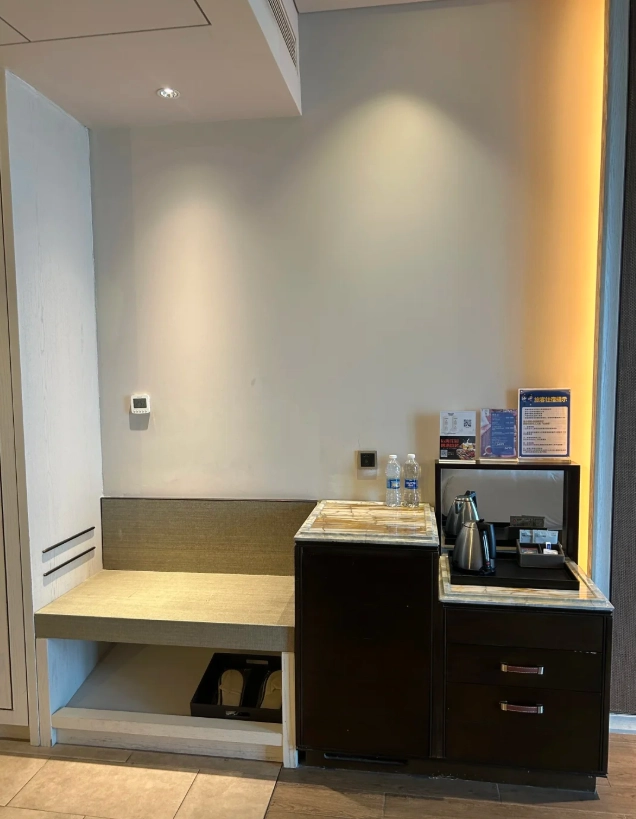
Questions I Answer Every Week
Can I pay for a Shandong luxury hotel with a foreign credit card, or do I need Alipay?
At international five-star brands, your Visa or Mastercard works fine at the front desk. At domestic-brand five-stars, it is a gamble — some accept UnionPay only, which foreign cards usually cannot use. Set up Alipay or WeChat Pay with your international card before departure and carry a backup card. If a terminal declines, ask them to try again on a different machine rather than assuming your card is blocked.
Is a sea-view room in Qingdao worth the extra cost?
In early autumn, absolutely. During the early-summer fog window, no — the fog can sit on the coast for days and your premium view becomes a white wall. If you are visiting then, save the money and book a high floor facing the city instead. You will still get the skyline at night.
How far ahead should I book Shandong luxury hotels around the October holiday?
Two to three months for coastal Qingdao, and earlier for anything with a sea view. Book a refundable rate the moment you have flights, then rebook if prices drop. Domestic demand during that week is enormous, and Qingdao fills before Jinan or Yantai ever do.
Can I travel between Qingdao, Jinan, Qufu and Yantai without flying?
Easily. The high-speed rail network covers all of them, with Qingdao to Jinan running roughly an hour and a half to two and a half hours depending on the service. Book through China Railway 12306, which has an English interface, or use Trip.com if you would rather pay a small fee for simplicity. Bring your passport — it is your ticket.
Do I need a visa to visit Shandong?
It depends entirely on your nationality and your routing. China operates visa-free transit schemes at selected ports, and Qingdao is one of the gateways that participates. Policies change, so check the current list of eligible ports and nationalities on the National Immigration Administration site before you book anything non-refundable.
Are Shandong luxury hotels safe for solo female travelers?
The international five-stars are about as safe as hotels get anywhere — key-card elevator access, 24-hour lobbies, and staff who notice who comes and goes. The practical risks here are mundane: unlicensed taxis outside stations, and overpriced seafood restaurants in tourist zones where the menu has no prices. Always confirm the price of seafood by weight before it goes in the tank. That single habit has saved my clients more money than any booking trick.
Verified and fact-checked by the editorial team. This content has been fact-checked to ensure informational precision.
No comments yet.