 Yan Zhou
Nobody warned me about Shandong.
I walked out of a Jinan night market at 11:40 p.m., phone at 8 percent battery, no taxi in sight, and nothing happened. No one followed me. Nobody tried anything. That is the least dramatic travel story I own, and it is exactly why I answer this question the way I do.
Travelers email me asking whether Shandong is safe for tourists, and I never send them statistics. I send them that walk, plus the three things that genuinely went wrong on my first trip here: a driver who quoted triple the meter, a guesthouse that forgot to register my passport, and a seafood stall that billed me by the jin instead of by the plate.
Short answer: Shandong is one of the safest provinces in China for foreign visitors. Violent crime against tourists is rare enough that in years of guiding here, I have never had a client report one.
The real risks are smaller and more irritating — overpriced rides outside train stations, digital payment walls, and e-bike traffic that treats red lights as a suggestion. Handle those three and the province is smooth sailing.
Here is what I actually tell people before they land in Jinan or Qingdao.
The 60-Second Safety Rundown
- What Does Safe Actually Mean in Shandong?
- Is Shandong Safe for Tourists at Night?
- How Do You Avoid the Common Scams in Shandong?
- Transport Safety: Trains, Taxis, and Didi
- Food, Water, and Stomach Safety
- Is Shandong Safe for Solo Women and Families?
- Emergency Numbers, Hospitals, and Real Backup Plans
- City-by-City Safety Snapshot
- Straight Answers to the Questions I Get Most
What Does Safe Actually Mean in Shandong?
Shandong's safety reputation comes from low violent crime, near-zero civilian gun ownership, and a culture where public order is taken seriously. Police stations sit on almost every commercial block, streets stay busy well past midnight, and security cameras are everywhere. That combination makes street crime against foreigners genuinely uncommon.
What catches visitors here is not crime. It is administration.
- Hotel registration. Every hotel registers your passport with the local police automatically. If you book a private apartment or a homestay instead, you are legally responsible for registering yourself at the nearest police station within 24 hours of arrival. The National Immigration Administration sets the national rules, and front desks in Shandong follow them strictly.
- Carrying ID. You are expected to have your passport with you. In practice, a clear phone photo plus your hotel card covers a routine check, but you need the physical passport to board trains, collect tickets, and enter many attractions.
- Alcohol and nightlife. Bars exist and they are fine. Getting into a fight in one is the single fastest way to turn a holiday into a legal problem, since Chinese penalties for public disorder are heavier than most Western travelers assume.

Pro Tip: I have watched a client lose a full morning to a police station visit because his Airbnb host never registered him. If your host cannot show you a registration slip, walk to the local police station yourself with your passport and lease. It takes fifteen minutes. Skipping it can take a day.
Is Shandong Safe for Tourists at Night?
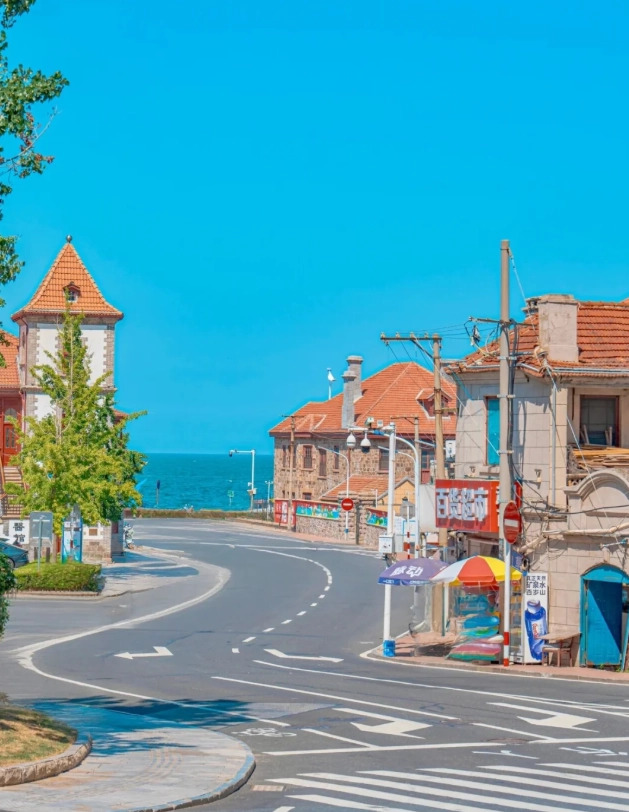
Night in Shandong is louder and busier than most first-timers expect, and that noise is your friend. Jinan's Furong Street and Kuanhouli alleys stay packed until well after 11 p.m. Qingdao's Taidong night market and the May Fourth Square waterfront do the same. Tai'an's streets around the Hongmen gate fill up with climbers heading for Mount Tai around 10 p.m.
I have walked alone at midnight in Jinan and Qingdao and felt nothing but mild boredom. Weihai is quieter still.
Now the part nobody writes about. The thing that has actually hurt my clients after dark is not a person — it is the ground. Jinan has an enormous number of e-bikes parked on sidewalks at odd angles, plus unlit construction edges and open drainage covers in the older neighborhoods. I have had two travelers trip and one twist an ankle badly enough to cancel a day of sightseeing.
There is also a map-reading trap. A 2-kilometer walk back to your hotel looks like a pleasant fifteen minutes on your screen. On the ground, it can mean walking along a road with no sidewalk and traffic passing at speed. Take the Didi.
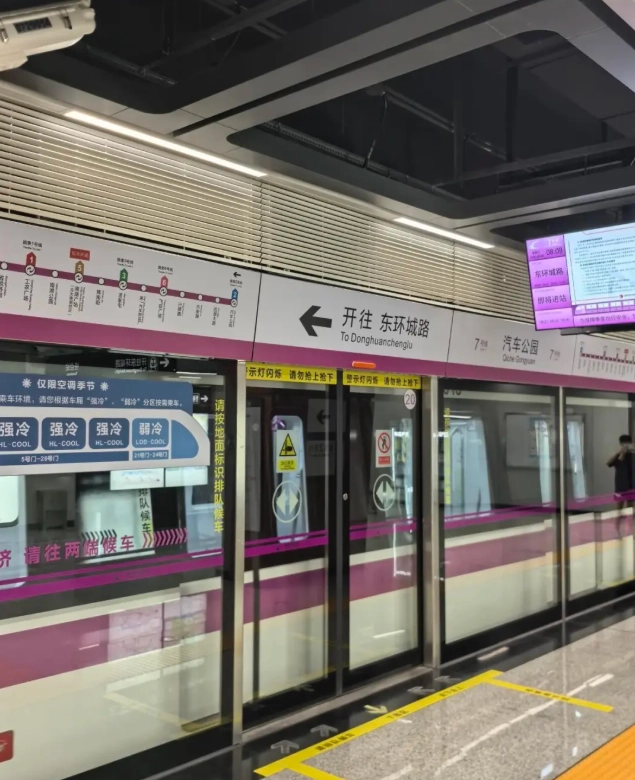
Last metro trains in Jinan and Qingdao leave around 10:30 p.m. to 11 p.m., depending on the line. After that, ride-hailing is your only sensible option.
Insider Advice: Before you leave your hotel, ask the front desk to write your hotel name and address in Chinese on a card, and screenshot it. At 1 a.m., with a dead phone and a driver who speaks no English, that card is worth more than any translation app.
How Do You Avoid the Common Scams in Shandong?
Nearly every scam that reaches foreign tourists in Shandong starts within 200 meters of a railway station exit or a scenic-area gate. The province is not a scam hotspot by Chinese standards, but the train-station perimeter is where the professionals work.
- The "taxi, taxi?" man. At Jinan West Railway Station and outside Qingdao Station, men will approach you in the arrivals hall offering a car. The price is always negotiable in their favor. Never follow them.
- Meter refusal. A licensed driver who says the meter is broken is asking for a flat fare, usually double or triple. Get out, or use the app instead.
- Mount Tai shuttle hustlers. Near the base of Mount Tai, unofficial sellers push overpriced rides to the cable car. The official shuttle bus runs from clearly signposted stands and costs a fraction of what they quote. Mount Tai carries a UNESCO World Heritage listing, which means signage and official services are actually quite good once you ignore the touts.
- Seafood priced by weight. Around Qingdao's Zhanqiao Pier and the beer street, some restaurants list prices per jin, roughly half a kilogram. A cheap-looking number becomes a large bill. Confirm the unit and the total before the kitchen starts.
- Free incense at temples. Someone hands you incense as a gift. Then a donation is demanded, and the amount is not small. Decline the incense with a smile and keep walking.
One honest detail: the taxi rank outside Qingdao North Railway Station is well managed and staffed. Walk sixty meters past the men whispering at the curb and join the real queue. It is faster, not slower.
Transport Safety: Trains, Taxis, and Didi
High-Speed Rail Is the Safest Way to Cross Shandong
Trains here are clean, punctual, and screened like airports, and they are by far the lowest-stress way to move between cities. Jinan to Qingdao takes roughly two hours on the fast services. Jinan to Tai'an is under thirty minutes. Book through the official China Railway 12306 platform if you can handle a Chinese-language interface, or use Trip.com, which accepts international cards and is far friendlier for a first trip.
Bring your physical passport. It is your ticket at the gate, and station staff scan it rather than a QR code. At Jinan West, allow thirty minutes before departure — the security line can back up badly on Sunday evenings.
Are Taxis and Didi Safe in Shandong?
Ordering a Didi through Alipay is the single best safety upgrade available to a foreign visitor in Shandong. The route is tracked, the price is fixed before you get in, the driver's plate is visible in the app, and there is no cash conversation to misunderstand. Licensed taxis from official ranks are also fine, but only with the meter running.
One practical note: Didi drivers may call you to confirm your location. You will not understand the call. Use the in-app text chat and send a photo of the nearest storefront instead. It works every time.
| Option | Typical Cost | How You Pay | Safety Notes | Best For |
|---|---|---|---|---|
| Didi via Alipay | 15 to 40 yuan in city | Alipay or WeChat Pay linked to an international card | Trip tracked, driver ID visible, no cash needed | Almost every trip, especially after dark |
| Licensed taxi at an official rank | 20 to 50 yuan, metered | Cash sometimes, mobile payment usually, international cards rarely | Insist on the meter, refuse flat fares | Airport and station arrivals with a marked queue |
| Airport shuttle bus | 20 to 30 yuan | Cash or mobile payment | Fixed route, luggage stored below, no haggling | Solo arrivals at Qingdao Jiaodong Airport |
| Metro | 2 to 8 yuan | Alipay QR code or ticket machine with cash | Staffed, camera-covered, last trains around 22:30 | Daytime cross-city travel |
| Long-distance bus | 30 to 120 yuan | Cash or mobile payment | Slower, less English support, more stops | Small towns with no rail connection |
The Real Traffic Risk: E-Bikes
Millions of electric bikes share the road in Jinan, and a meaningful share of riders ignore red lights entirely. This is not an exaggeration or a stereotype — I watch it every single day. Even when your pedestrian signal is green, look both ways before stepping off the curb, and never step out from behind a stopped bus. Cross with a crowd of locals when you can. They read the traffic pattern better than any visitor will.
Food, Water, and Stomach Safety
Tap water in Shandong is not drinkable, but this almost never becomes a problem. Every hotel room I have stayed in has a kettle, and bottled water costs a couple of yuan at any convenience store. Ask for hot water rather than ice if you are sensitive, and skip drinks with ice from small roadside stalls.
My honest take on street food: turnover beats hygiene certificates. A busy stall at 7 p.m. is safer than a quiet one, because the ingredients are moving. If a stall has no queue and no customers, keep walking.
Here is the non-consensus bit. The food that most often sends my clients to the bathroom is not street food at all. It is the hotel breakfast buffet — trays sitting under heat lamps for two hours — and the decision to order a giant raw salad because they miss vegetables. Cooked, hot, freshly made food is the safer choice in Shandong, and it is also the tastiest one.
Shandong cuisine runs salty and vinegar-forward. If heavy seasoning bothers you, ask for "shao yan" — less salt. It works, and servers appreciate the attempt.
Is Shandong Safe for Solo Women and Families?
Solo female travelers report far less harassment in Shandong than in most Western capitals, but attention is constant and it is rarely hostile. You will be stared at, photographed discreetly, and occasionally asked for a selfie. That is curiosity, not threat.
- Book chain hotels with a 24-hour staffed front desk rather than unstaffed apartments.
- On trains, choose a seat in the middle of a carriage. Quieter, better lit, and staff pass through regularly.
- Avoid KTV bars and clubs with no visible street frontage, especially in unfamiliar districts.
- Never take an unlicensed car late at night, even if it is raining and you are exhausted.
For families, the biggest genuine hazard is water, not people. Qingdao's beaches have real currents, and the rip tides near some stretches are stronger than the calm-looking surface suggests. Swim only at beaches with lifeguards and flags, and never past waist depth with small children.
Mount Tai with kids needs a plan. The classic central route up the mountain runs over six thousand stone steps, which is a serious undertaking for a child under eight. Take the shuttle bus and the cable car, and skip the overnight climb entirely unless your kids are strong hikers and you have packed real cold-weather layers. Summit temperatures drop far below the city below.
Emergency Numbers, Hospitals, and Real Backup Plans
The emergency numbers are 110 for police, 120 for an ambulance, and 119 for fire — and you should assume the operator will not speak English. So plan around it. Your first call in any emergency should be your hotel front desk, then your embassy's consular hotline.
For medical care, Jinan and Qingdao both have large public hospitals with dedicated international or VIP clinics where staff usually manage basic English. Qilu Hospital in Jinan and Qingdao Municipal Hospital are the two I send clients to most often. Ask your hotel to confirm current clinic hours before you travel there, because departments rotate their schedules and I would rather you check than waste a taxi ride.
Two money details that catch people badly:
- Non-emergency treatment usually requires payment up front. Travel insurance reimburses you afterward, so keep every receipt.
- If you are robbed or lose valuables, you need a stamped police report to file a claim. Ask for it in writing at the station, and take a photo of it before you leave.
Also worth knowing: cash is accepted almost everywhere by law, but in practice many small shops and cafés will simply tell you they have no change. Alipay or WeChat Pay linked to an international card is what actually works. Set both up before you fly, and keep a few hundred yuan in cash as a fallback.
City-by-City Safety Snapshot
Different cities, different friction. This is how I would rank them for a first-time visitor.
| City | What Actually Feels Risky | Best Base for First-Timers | My Night-Time Verdict |
|---|---|---|---|
| Jinan | E-bikes running red lights, unlit construction edges near old streets | Quancheng Road and Kuanhouli area | Busy and calm after 10 p.m., I walk it alone |
| Qingdao | Seafood billed by weight, pier crowds, strong sun | Old Town or May Fourth Square | Well lit, crowded, easy to get a Didi |
| Tai'an | Cold and fatigue on the Mount Tai night climb, pushy summit sellers | Near Hongmen gate or Tianwai Village | Safe but freezing, bring a real jacket |
| Qufu | Souvenir upselling around the temple gates | Inside the walled old town | Very quiet after 9 p.m., streets empty |
| Weihai | Currents at unguarded beaches | Seaside hotels along the bay | Almost sleepy, the calmest of the five |
Straight Answers to the Questions I Get Most
Can I drink the tap water or eat street food in Shandong without getting sick?
Skip the tap water entirely — locals do not drink it either. Bottled water is everywhere and costs almost nothing. Street food is a different calculation: it is safe when it is cooked in front of you and the stall is busy. The pattern I see is that travelers who get sick usually blame street food when the real culprit was a lukewarm hotel buffet or a raw salad. Eat hot, eat fresh, and you will almost certainly be fine.
Do I need a VPN in Shandong, and will my phone even work?
Install your VPN before you fly, not after you land, because the download pages are blocked once you are inside China. Google Maps is unreliable here for anything except rough orientation, so lean on Apple Maps or a China-friendly mapping app with English labels. Download an offline translation pack too. You will use it more than you expect, particularly with taxi drivers and small restaurant staff.
What happens if I get sick or injured in Shandong as a foreigner?
You will be treated, but you will likely pay first and claim later. Go to a large public hospital with an international or VIP clinic rather than a small neighborhood clinic, and ask your hotel to write the hospital name in Chinese for the driver. Carry your passport and your insurance policy number. Keep every receipt — without paperwork, reimbursement becomes a fight.
Is climbing Mount Tai at night actually safe?
Physically, yes, if you are reasonably fit and dressed properly. Thousands of people do it and the path is lit and paved. The mistake I see is underestimating the cold. The summit sits far above the city, and people who left their hotel in a T-shirt end up renting dirty coats at the top for far more than the coat is worth. Bring layers, bring a headlamp, and start around 10 p.m. if you want sunrise.
Can I rely on my international credit card in Shandong?
Assume you cannot. Large hotels sometimes accept Visa or Mastercard, and almost nothing else does. Link your international card to Alipay or WeChat Pay before departure and test it with a small purchase on day one. Keep some cash for the rare shop that refuses mobile payment. This single setup step removes most of the daily friction of traveling here.
Verified and fact-checked by the editorial team. Emergency numbers, entry rules, and rail booking procedures were confirmed against official Chinese sources; pricing and waiting times reflect typical on-the-ground conditions and should be reconfirmed locally before you travel.

No comments yet.