 Jing Song
Three lines. Zero English on the ticket machine. One very confused foreigner.
That was me, standing in the echoing hall of Changchun Station with a 100-yuan note and a queue of commuters breathing down my neck. I have since walked hundreds of travelers through this system, and I still watch grown adults freeze in front of the same machine.
So here is the version of this Jilin metro guide I wish someone had handed me at the airport — the one that skips the theory and tells you what actually happens at the gate.
The short version: Jilin Province has exactly one metro network, and it lives in Changchun, not in the separate city that is also called Jilin. Fares top out around 6 RMB. Trains run from roughly 6 a.m. to 10 p.m. Your international credit card will not work at a single ticket machine, and Google Maps will quietly lie to you about which line to take. Bring small cash, or set up Alipay's transit QR before you land, and you will be fine.
Here is what is inside.
Your Shortcut Map for This Guide
- What Is the Jilin Metro, Exactly?
- How Much Does the Changchun Metro Cost, and How Do Foreigners Pay?
- Hours, Security Checks, and Rules You Will Trip Over
- Which Changchun Stations Do Tourists Actually Use?
- How Do I Get From Changchun Airport to the City by Rail?
- Changchun to Jilin City When There Is No Metro
- A Realistic 24-Hour Changchun Metro Plan
- Questions I Get Asked Every Single Week
What Is the Jilin Metro, Exactly?
Changchun Rail Transit — 长春轨道交通 — is the only urban rail network in Jilin Province, and it is numbered rather than named. That is genuinely good news. You never have to memorize which color is the airport line, because there is no airport line color to memorize.
Lines 1 and 2 form the underground cross through the city center. Lines 3 and 4 are older elevated routes. Line 8 heads out to the northern lake district. Newer routes have been stitched onto the west and south sides in the past couple of years, which is exactly why you should trust the live map in your navigation app instead of a screenshot from a blog post written three years ago.
Which Changchun Metro Lines Actually Matter to Visitors
Line 1 is the north-south spine and the one you will use most. It cuts straight through downtown, stops at Renmin Square, and puts you within a short walk of the Guilin Road food strip. Deep-level, fast, air-conditioned.
- Line 2 — the east-west counterpart. It crosses Line 1 at Renmin Square, which is where most of your transfers will happen.
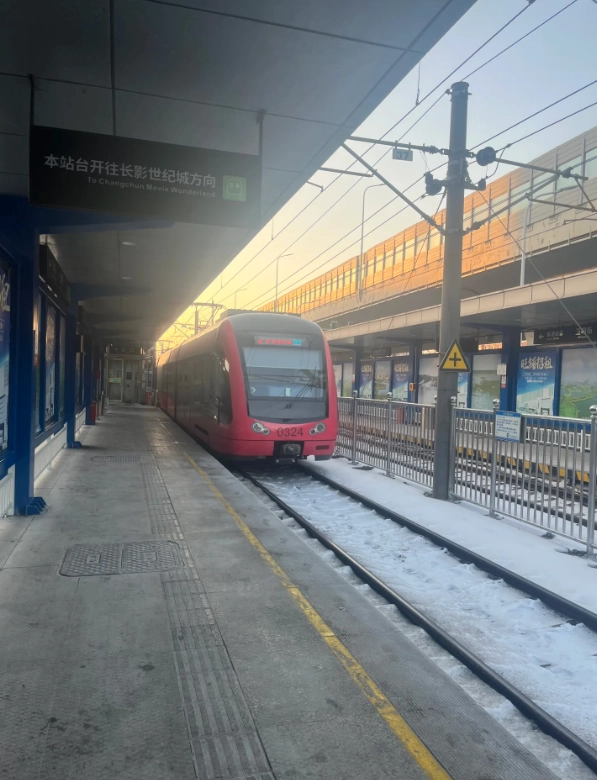
- Line 3 — the elevated light rail and the only line with a view. It starts at Changchun Station and swings south toward Jingyuetan and Changying Century City. Slower than the tunnels because it runs above street level, but this is the line you ride for pleasure, not for speed.
- Line 4 — a northern arc linking the Changchun Station complex with the northern districts. Tourists rarely need it except to transfer.
- Line 8 — runs out to the north lake area. Skip it unless you are meeting a local friend.
Why Jilin City Does Not Have a Metro
Jilin City is a separate municipality about 110 kilometers east of Changchun, and despite the name it has no subway at all. Locals get around by bus, taxi, and Didi. If some blog promises you a Jilin City subway map, close the tab — you are being sold something that does not exist.
How Much Does the Changchun Metro Cost, and How Do Foreigners Pay?
Fares are distance-based and almost insultingly cheap. Two RMB covers the shortest hop, and a cross-city ride rarely exceeds 6 RMB. The problem is never the price. The problem is the payment method.
| Ticket Option | Typical Price | Where to Get It | Foreigner-Friendly? |
|---|---|---|---|
| Single-journey token | 2 to 6 RMB | Ticket machine or staffed window | Yes, with small cash notes |
| Alipay transit QR | Same as token fare | Alipay app, Transport section | Yes, once your identity is verified |
| WeChat Pay transit code | Same as token fare | WeChat mini-program | Partly, Chinese-only interface |
| China T-Union stored-value card | Around 20 RMB deposit plus top-up | Service window at major stations | Yes, pays off after four rides a day |
| International credit card at the gate | N/A | N/A | No, not accepted on any line |
The Ticket Machine Trap Nobody Warns You About
The machines take coins and small notes, and some older machines take coins only. I have watched a traveler feed a 100-yuan note into a slot for ten straight minutes while a line formed behind him. It was never going to work.
Two things to remember. First, the plastic token you buy is also your exit ticket — lose it and you are having an awkward conversation at the service window. Second, if you only have a large note, walk to the staffed window and hand it over. Staff will break it without drama.
Does Alipay's Transit QR Actually Work on the Changchun Metro?
On most gates, yes — but the code is city-specific, so a QR you activated for Shanghai will not scan here. Open Alipay, tap Transport, select Changchun, and activate the metro code. You will need your passport-verified identity already set up, which is the step that trips people up. Do it on hotel Wi-Fi, not in a station with no signal.
Pro Tip: If the gate flashes red and refuses you twice, stop swiping. Step aside, walk to the service window, and show the staff your phone. Standing there retrying while forty commuters sigh behind you is the single most stressful two minutes of most tourists' first day.
Hours, Security Checks, and Rules You Will Trip Over
Trains generally run from about 6 a.m. to 10 p.m., with the last services leaving terminal stations between roughly 21:30 and 22:00 depending on the line. That sounds generous until you realize a late dinner can strand you. Keep a Didi backup in mind for anything past 9:30 p.m.
- Every bag goes through an X-ray machine. Lighters, pocket knives, and oversized power banks get flagged and confiscated.
- Staff may ask you to sip from a water bottle. It takes three seconds, so just do it.
- Eating is discouraged and smoking is banned throughout, including station entrances.
- Rush hour runs roughly 7:30 to 9:00 and 17:00 to 18:30. Avoid hauling luggage then if you can.
- Accessibility is uneven. Newer underground stations have elevators and wide gates, but some elevated Line 3 platforms are reached by long staircases with no lift.
Here is my contrarian take, and I will defend it. Almost every itinerary tells you to ride Line 3 in the afternoon for the scenery. Do not. The elevated cars turn into glass ovens by midday, and the light is flat and white. Ride it right after opening, or after 6 p.m. when the sun drops behind the buildings. Same track, completely different experience.
Which Changchun Stations Do Tourists Actually Use?
You do not need the whole map. You need five stations.
| Station | Line(s) | What Is Around It | Why You Care |
|---|---|---|---|
| Changchun Station — 长春站 | Line 3 and Line 4, the latter signed as Changchun Station North | National rail hub and intercity platforms | Your launchpad for Jilin City and the airport train |
| Renmin Square — 人民广场 | Lines 1 and 2 | Downtown core, shopping streets, Culture Square | The transfer you will make most often |
| Northeast Normal University — 东北师大 | Line 1 | Guilin Road food strip | Cheapest good meal of your trip |
| Jingyuetan — 净月潭 | Line 3 | Jingyuetan National Forest Park | A full nature day without leaving the city |
| Changying Century City — 长影世纪城 | Line 3 southern end | Film-themed amusement park | Where the scenic light rail ride finishes |
What I Would Skip, Honestly
Skip the hunt for a tourist day pass. Changchun does not have a cheap unlimited ride card aimed at visitors, and at 2 to 6 RMB a trip, chasing one wastes more time than it saves. Buy tokens or use Alipay.
I would also skip the northern stretch of Line 4 unless you are transferring. There is nothing wrong with it. It is just residential, and your hours in Changchun are too few to spend on residential.
How Do I Get From Changchun Airport to the City by Rail?
Longjia Airport has its own railway station on the intercity line, and the train beats a taxi by half the time. From Changchun Station the ride takes under fifteen minutes, and the ticket costs about as much as a coffee back home.
Book through the official China Railway platform at 12306.cn, which now has an English interface. Your passport number is your ticket, and you tap through the gate with the passport itself. No printed ticket needed.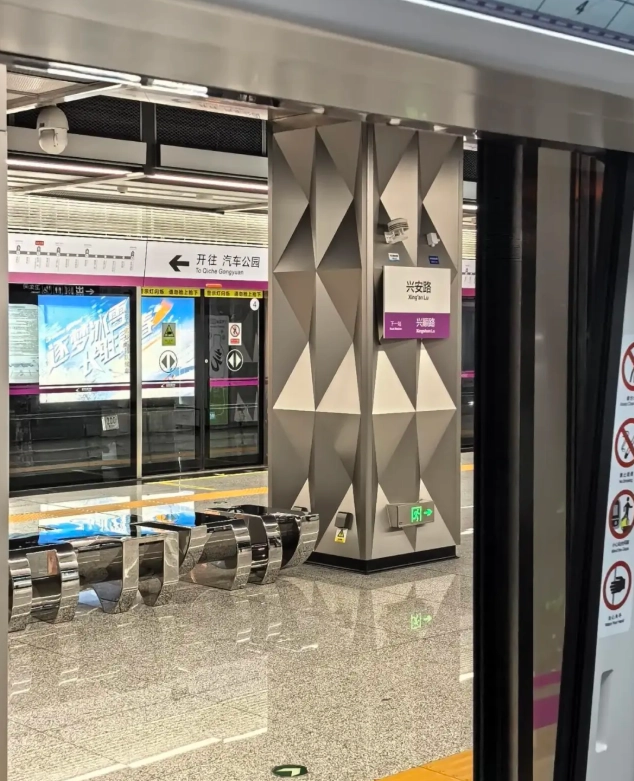
Insider Advice: The walk from Longjia Station into the terminal is longer than the train ride. Give yourself ten minutes and do not book a tight connection. And if you miss the train, the taxi queue outside arrivals costs roughly 100 RMB and takes 45 to 60 minutes in traffic — annoying, not catastrophic.
Changchun to Jilin City When There Is No Metro
Intercity high-speed trains connect Changchun Station to Jilin Station in about 40 minutes, and they run frequently throughout the day. Second class costs roughly the price of a sandwich. Book on 12306 with your passport, or buy at the station counter if you have time to spare.
Once you arrive in Jilin City, you are back to buses, taxis, and Didi. Bus fare is small change and drivers expect exact coins, so keep a pocket of one-yuan coins. Short taxi hops across the city center usually land between 10 and 20 RMB. Show the driver the Chinese characters rather than the English name — pronunciation here is a genuine gamble.
The Rime Ice Season, and the Logistics Nobody Explains
Jilin City's famous rime ice on the Songhua River peaks between December and February, and it is best before 9 a.m., when the fog is still hanging and the sun is low. The classic viewing spot, Wulajie Rime Island, sits about 40 kilometers north of the city.
Here is the honest part. Public transport to the island in winter is slow, cold, and involves waiting outdoors. Most travelers hire a driver for a sunrise run, and you should agree the round-trip price before you get in the car. If you are solo and on a budget, ask your hotel to add you to a shared van — cheaper, less flexible, still worth it.
If you want a deeper heritage detour, the tombs and capital cities of the ancient Koguryo Kingdom in Ji'an carry a UNESCO World Heritage listing and see almost no foreign visitors. It is far from Changchun, so treat it as a separate trip rather than a day out.
A Realistic 24-Hour Changchun Metro Plan
This plan assumes one day, one metro card, and legs that still work after a long flight. Times are deliberately loose. Trains are frequent enough that a ten-minute slip costs you nothing.
07:30 — Breakfast near Renmin Square. Take Line 1 or Line 2 to Renmin Square and walk one block in any direction until you find a steam-filled breakfast window. Soy milk, fried dough sticks, and a warm bun will set you back a few RMB. Eat standing up like everyone else.
09:00 — Palace of the Puppet Emperor. The metro will not drop you at the gate, so stop trying to solve that puzzle. From Renmin Square, a Didi takes about 15 minutes and costs around 15 RMB. Many Chinese museums close on Mondays, and this one expects advance booking with your passport — reserve through Trip.com or the official WeChat account the night before. Budget two hours inside.
12:00 — Lunch downtown. Ride back toward Renmin Square or Chongqing Road. This is a good moment to sit down properly rather than eat on the move.
13:30 — Line 3 southbound from Changchun Station. This is the scenic elevated ride. Budget 50 minutes to the southern end and sit on the right side heading south. Get off at Jingyuetan.
14:30 — Jingyuetan National Forest Park. It is enormous — far bigger than the metro map suggests. The park runs shuttle vehicles and rents bicycles, and the entrance fee sits in the low tens of RMB. Confirm the current price and closing time at the gate, because seasonal hours shift.
17:30 — Ride back into the city. Line 3 northbound to the Changchun Station complex, then Line 1 to Northeast Normal University for dinner around Guilin Road. It is loud, crowded, and exactly what you came for.
20:00 — Evening walk at Culture Square. Locals dance, skate, and argue about chess here. It is a ten-minute walk from Renmin Square and a perfect last stop before your hotel.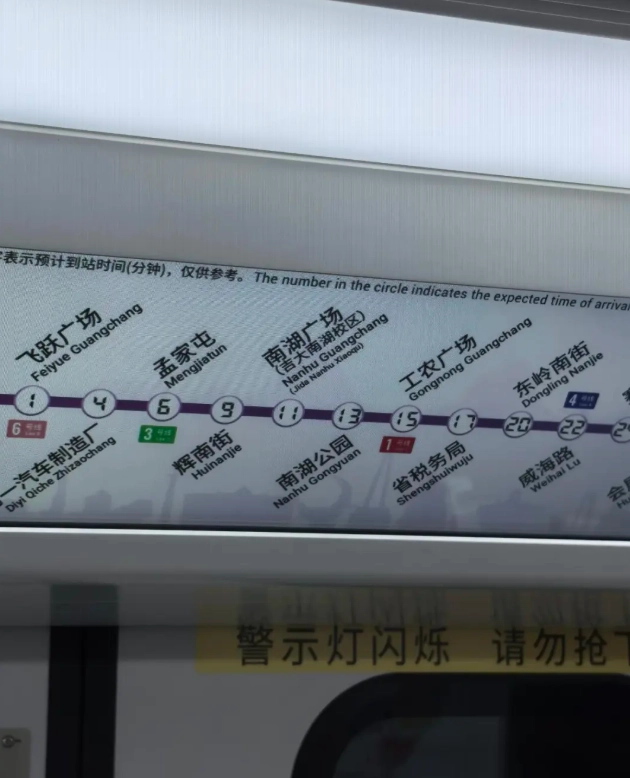
Rain Plan B
If the sky opens up, swap Jingyuetan for the Jilin Provincial Museum. It is free, indoors, requires your passport at the door, and typically closes on Mondays. If that is also shut, take Line 1 or Line 2 to a large shopping mall downtown, find a tea house on an upper floor, and let the storm pass over a pot of jasmine tea. Nobody in Changchun will judge you for it.
Questions I Get Asked Every Single Week
Can I use Google Maps to navigate the Changchun metro?
Google Maps in mainland China is unreliable and often shows transit data that is years out of date. Use AMap, which is available with an English interface, or Apple Maps if you are on an iPhone. Both handle metro routing well. I keep AMap open and simply type the Chinese station name copied from my hotel's front desk — it is faster than fighting with transliteration.
Do I need a VPN just to buy a metro ticket?
No. Alipay, WeChat Pay, the ticket machines, and the transit QR codes all work on a normal Chinese connection. The VPN matters for Google, WhatsApp, Instagram, and Gmail. Install and test it before you fly, because downloading one after you land is the mistake I see most often.
Is the Changchun metro safe at night for a solo traveler?
Stations are staffed, brightly lit, and covered by cameras, so the trains themselves are not the concern. The real risk is timing. Last services leave terminal stations around 21:30 to 22:00, and being stranded on an unfamiliar street after that is the actual problem. Have Didi installed and your hotel address saved in Chinese before your evening plans start.
Do I need to reserve metro tickets in advance like the attractions?
Metro rides are walk-up, always. The advance booking headache applies to attractions and trains, not to city rail. What does need booking is the intercity train to Jilin City and the airport service, especially around weekends and the winter rime ice season when locals travel too.
What if I only have a foreign credit card and no Alipay?
Then bring cash, and bring it in small denominations. Machines and staffed windows accept RMB notes, but a 100-yuan note at a coin-only machine is useless. Cash is also accepted at the service window when you need change. Visa and Mastercard taps at the fare gate simply do not exist here, so do not build a plan around them.
One last practical note that has nothing to do with trains but everything to do with your first day: entry rules, visa-free transit eligibility, and registration requirements change more often than any metro schedule. Check the National Immigration Administration before you book flights, not after.
Verified and fact-checked by the editorial team.


No comments yet.