 Tao Xu
Quick Lookup
- Why Wudang Mountains Are a Photographer’s Dream (and a Logistical Nightmare)
- Top 5 Wudang Mountains Photography Spots You Shouldn’t Miss
- How to Time Your Shots for Golden Light in Wudang?
- What Photography Gear Should You Bring to Wudang?
- How to Avoid Crowds and Get Clean Shots?
- Essential Logistics for Foreign Photographers in Wudang
- FAQ: Wudang Photography Questions
Sunrise at the Golden Hall. That’s the shot everyone dreams of when they book a trip to the Wudang Mountains. But here’s the thing — in my years guiding photographers up here, I’ve seen a lot of people leave frustrated. Not because the mountains aren’t stunning — they are. But because most of them arrive at the wrong time, queue for hours, and miss the light entirely. The Wudang Mountains photography spots are many, but only a handful actually deliver without a fight. So, let me save you the trouble: skip the mid-morning tourist wave, go straight for the summit at the last cable car, and have your tripod ready for sunset. That’s your winning formula.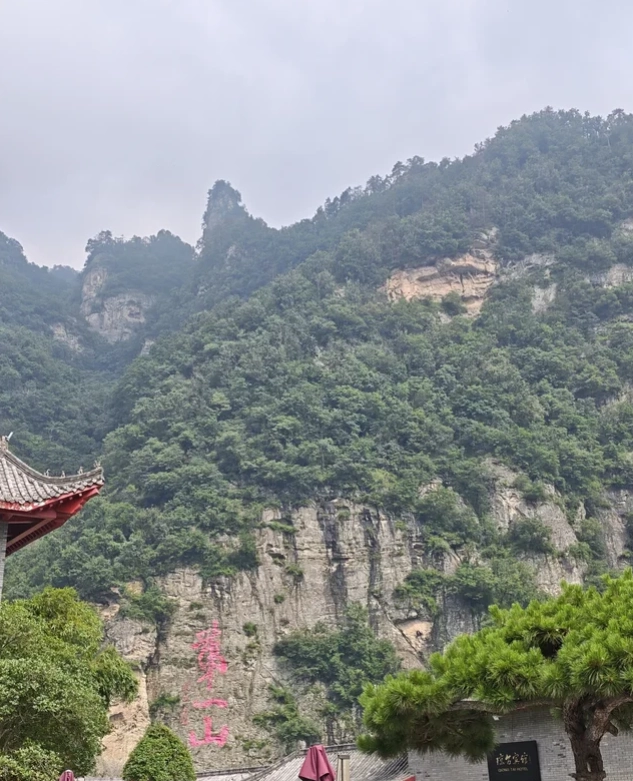
Why Wudang Mountains Are a Photographer’s Dream (and a Logistical Nightmare)
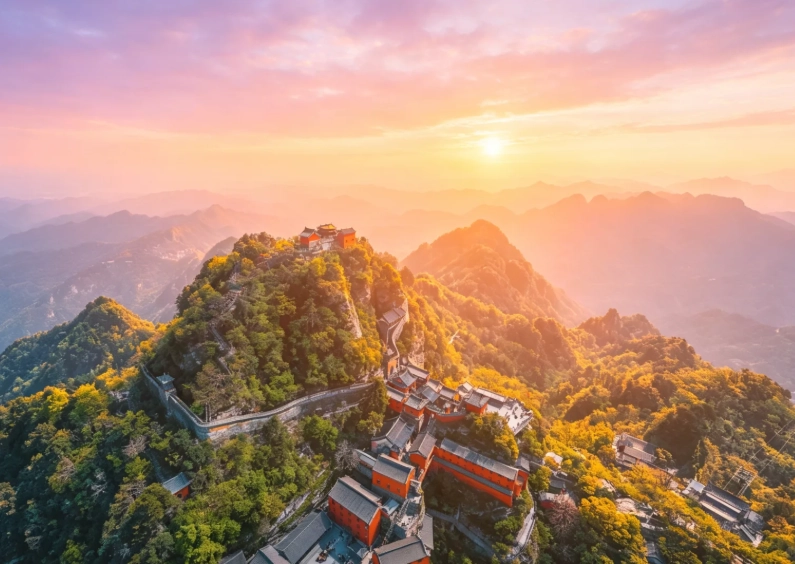
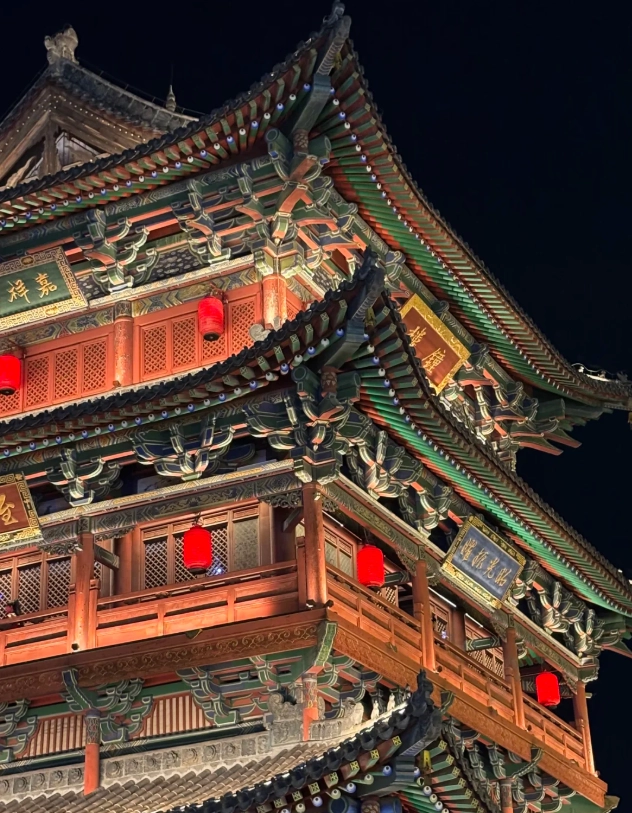
Let me start with what makes this place special. Wudang is not just a mountain range; it’s a sprawling complex of Taoist temples, palaces, and gardens tucked into lush green peaks. The architecture is jaw-dropping — golden roofs, crimson walls, and intricate carvings that blend perfectly with the cliffs. For photographers, this means endless possibilities: misty mornings, dramatic sunsets, and architecture that looks ancient, powerful, and peaceful all at once.
But here is the catch — Wudang is also a massive tourist site. On a busy day, the narrow stone steps overflow with tour groups. The cable car queues can eat up precious golden hours. And the mountain’s unpredictable weather often closes in the views right when you set up your tripod. If you don’t know the system, you’ll waste time and miss the good stuff.
The good news? With some insider planning, you can shoot most of these places nearly alone. I’ll show you how.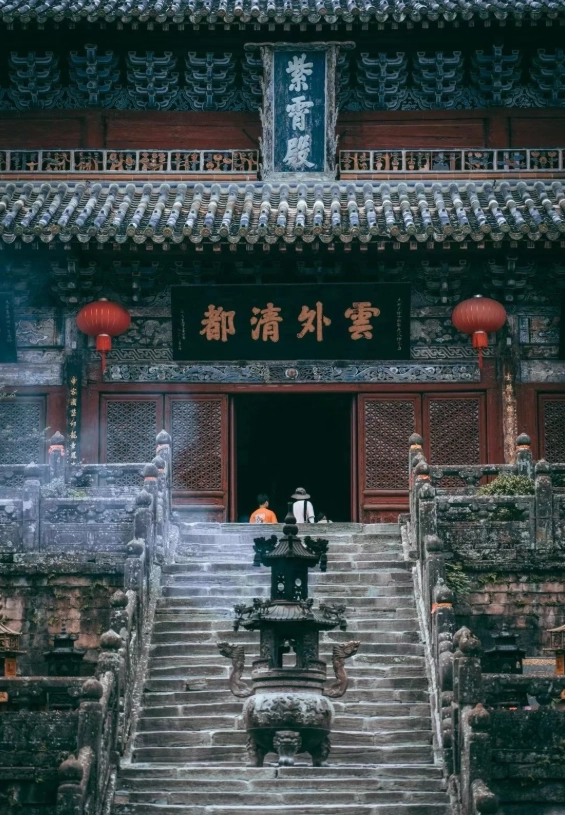
Top 5 Wudang Mountains Photography Spots You Shouldn’t Miss
These five locations are my personal picks for both beauty and accessibility. Each one offers something unique, but they require a bit of different planning. Check the table below for a quick comparison, then read the details for each.
| Spot | Best Time | Difficulty | Key Photo Tip |
|---|---|---|---|
| Golden Hall (太和宫) | Sunrise | Hard (high altitude) | Use a wide-angle for the sea of clouds |
| South Rock Temple (南岩宫) | Sunset | Moderate | Include the cliff in your foreground |
| Purple Cloud Temple (紫霄宫) | Morning mist | Easy | Shoot the entrance from the stairs |
| Prince Slope (太子坡) | Any time | Easy | Focus on the curved red walls |
| Xiaoyao Valley (逍遥谷) | Late morning | Easy | Long exposure for the stream |
1. Golden Hall (太和宫) – The Classic Sunrise Shot
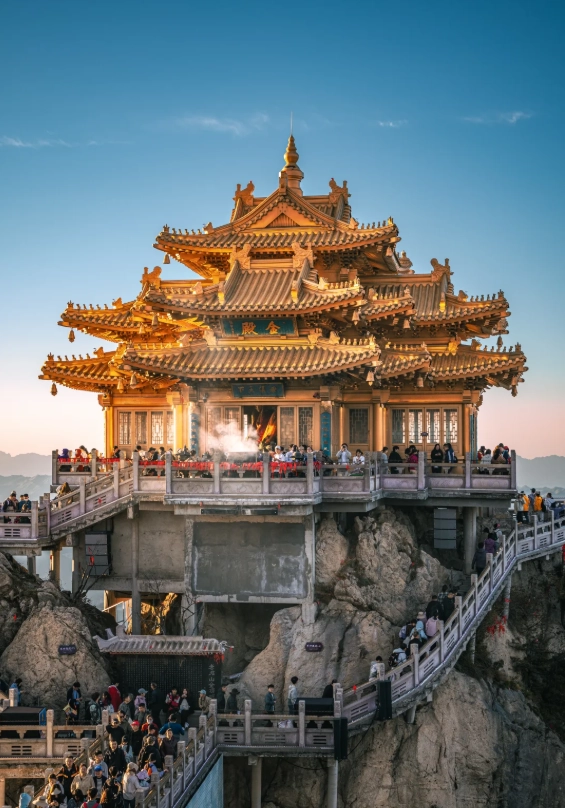
The Golden Hall sits on the summit of Tianzhu Peak, the highest point in Wudang. It’s a bronze-clad temple that glows when the first rays hit it. To get here, you’ll need to take the cable car up, then climb about 500 stone steps. The effort pays off — the view is a sea of clouds on clear mornings.
Pro Tip: The first cable car leaves around 7:30 AM. If you want a serious sunrise, you actually need to stay overnight at the summit. There are a few basic hostels near the cable car top station. Otherwise, aim for the last cable car down — you’ll catch the sunset crowds clearing out.
Details: The Golden Hall is part of the main entrance ticket (around ¥140). You’ll also need the cable car ticket (¥80 one way, ¥150 round trip). Bring your passport for the ticket purchase — it’s required for all foreign visitors.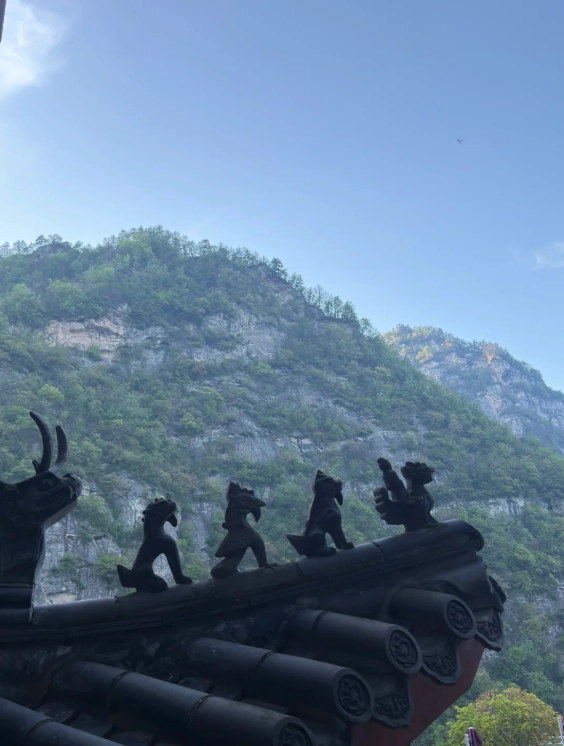
2. South Rock Temple (南岩宫) – Drama on the Cliff
South Rock Temple is famous for its location — it hangs off a sheer precipice. The temple complex includes several pavilions connected by narrow bridges. Sunset lights up the red walls beautifully against the deep green valley.
This one is easier to reach: from the main tourist center, take the shuttle bus that goes to the South Rock stop. Walk about 20 minutes down a gentle slope to reach the temple entrance. The best viewing area is just past the main hall, where you can see the iconic “Flying Dragon” architecture protruding over the cliff.
I always tell my clients to be careful: the railings are old, and the stairs can be slippery. Watch your step and keep your camera strap secured.
3. Purple Cloud Temple (紫霄宫) – Royal Grandeur
Purple Cloud Temple is the largest and most impressive building group in Wudang. It’s a must-visit for architecture photography. The temple sits in a narrow basin, surrounded by hills. On misty mornings, the fog drifts through the courtyards — pure magic.
To get here, take the shuttle bus to the “Zixiao Gong” stop. The entrance is a short walk from the bus stop. There’s usually less crowd here than at the summit, which gives you time to compose clean shots without people jumping in front of your lens.
Notice the wooden carvings and the intricate ceiling paint — a telephoto lens will help you pull out those details.
4. Prince Slope (太子坡) – Curves and Contrast
Prince Slope is known for the “Nine Winding Yellow Wall” (九曲黄河墙) — a series of curved red walls that make a perfect leading line. It’s a compact site, easy to walk in 30 minutes. The contrast between the bright red walls and the blue sky is striking, especially on a clear day.
To get there, take a shuttle to the “Taizipo” stop. From the stop, walk up ten minutes. The walls are right after the entrance. I recommend a wide lens and a low angle to exaggerate the curve.
One warning: this place attracts lots of tourists. The only way to shoot it without people is to come before 9 AM or after 4 PM.
5. Xiaoyao Valley (逍遥谷) – Peaceful Nature
Xiaoyao Valley is the greenest part of Wudang, with a babbling stream and wild monkeys. It’s a perfect spot for nature photography and a welcome break from the temples. The valley is flat and easy to walk, making it ideal for a relaxed shoot.
The shuttle bus stop “Xiaoyao Gu” drops you right at the entrance. Once inside, follow the wooden walkway. The light is best late morning, when the sun gets above the trees. Use a polarizer filter to cut the water glare and bring out the colors.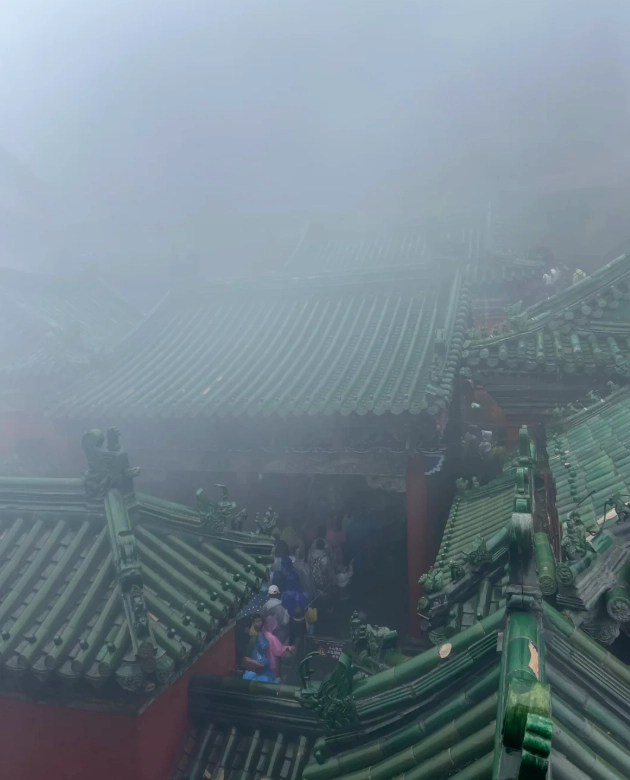
Insider Advice: Don't feed the monkeys. They can get aggressive and snatch your camera. Keep your gear inside your bag when you pass through the monkey area.
How to Time Your Shots for Golden Light in Wudang?
The classic mistake is shooting in the middle of the day, when the sun flattens the scenery. For most of the peaks, the golden hours last from 6:30 AM to 9 AM and from 4:30 PM to 7 PM, depending on the season.
Sunrise: Only possible at the summit. You have two options — stay overnight up there or start hiking at 3 AM. Trust me, the hostel is worth it. The hostel near the cable car top costs about ¥150 per bed. Wake up at 5 AM, hike 40 minutes to Golden Hall, and you’ll have the place almost to yourself just after dawn.
Sunset: My favorite time for South Rock Temple and Purple Cloud Temple. The warm colored light makes the red walls glow. At South Rock, the sun sets behind the temple, creating a beautiful halo effect.
What about clouds? Cloudy days are actually great for moody shots. The fog rolls in and out, giving you layers of mountains. Just protect your gear — carry a rain cover.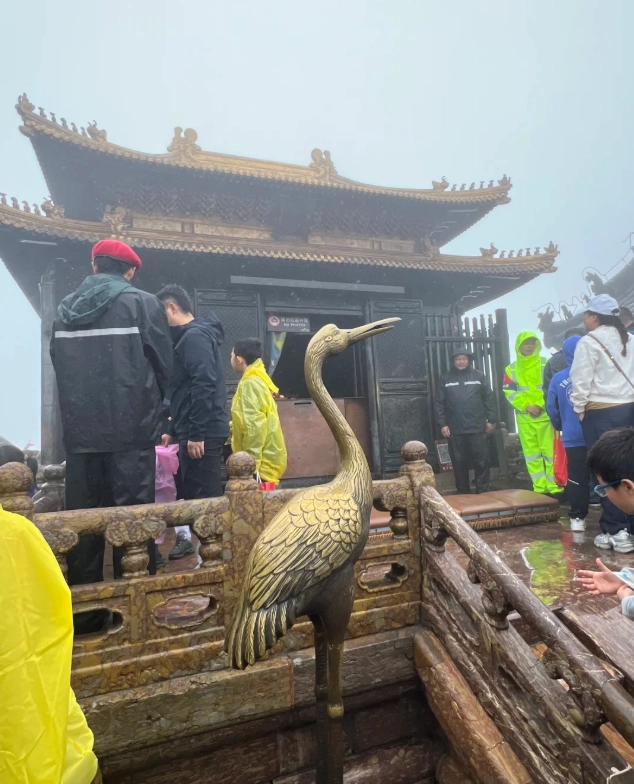
What Photography Gear Should You Bring to Wudang?
You don’t need a full pro kit, but a few specific items will save your day. First, a sturdy tripod. You’ll be using long exposures for clouds and water. Second, a wide-angle zoom (e.g., 16-35mm) for the architecture and vast landscapes. A telephoto lens (70-200mm) is also useful for shooting details from a distance.
- Extra batteries — the cold at the summit drains them fast.
- Neutral density filters for smooth water in streams.
- A rain cover for your camera — weather is unpredictable.
- Comfortable shoes — you'll walk several kilometers a day.
I also bring a small flashlight for early morning hikes — the steps can be dark before sunrise.
How to Avoid Crowds and Get Clean Shots?
It’s possible to shoot with very few people in the frame, but you need to work around the tour buses. The biggest crowds hit between 10 AM and 3 PM, when the group tours arrive. Here are my personal strategies:
- Take the first shuttle bus into the scenic area (around 6:30 AM).
- Head straight to the farthest spot first — usually Golden Hall or South Rock — then work your way back.
- Use the “last cable car” trick: take the cable car up at 4 PM, shoot sunset, and take the shuttle back after dinner. You’ll have the summit mostly to yourself.
- Visit on weekdays, especially Tuesday to Thursday. Avoid Chinese holidays like May Day and National Day — you’ll be fighting for space.
Essential Logistics for Foreign Photographers in Wudang
Understanding the local logistics can make or break your photo trip. Let me walk you through the big ones.
Getting there: Fly into Wuhan Tianhe Airport or Shiyan Wudangshan Airport. From Wuhan, take a high-speed train to Wudangshan West Station (about 2 hours). From the station, a taxi to the scenic area takes 30 minutes and costs around ¥50. Make sure the driver uses the meter or use a ride-hailing app like Didi — but the English version might not be available. Alternatively, book a private car through your hotel.
Tickets: The combined ticket (entrance + shuttle bus) is around ¥140. The cable car is extra. You must bring your passport to buy tickets. The gates open at 7:30 AM and close around 5:30 PM (hours may vary). It’s best to book in advance — you can do it via Trip.com or Klook, which have English interfaces. The official website also works, but it’s all in Chinese.
Payment: Alipay and WeChat Pay are widely accepted, but international credit cards are rarely taken. Set up Alipay before you arrive and link your foreign card — it’s the easiest way. Cash might be accepted, but you’ll need small bills; change is hard to get. I always keep ¥300 cash in my pocket just in case.
Navigation: Google Maps won’t work well in China. Apple Maps is decent for walking directions. For driving routes, ask your driver to use Amap (高德地图) — it has a built-in translator for English place names. When you need to show an address, use the Chinese characters I’ve provided for each spot.
Internet & VPN: You’ll need a VPN to access Google, Instagram, or Facebook. Download one before you arrive. For translation, use the Apple Translate app or Baidu Translate — Baidu sometimes understands Chinese street signs better.
Language: Not many locals speak English. Learn a few basic phrases like “how much?” (duōshǎo qián) and “thank you” (xièxiè). Or just point at your phone screen — most counter staff are used to it.
FAQ: Wudang Photography Questions
Verified and fact-checked by the editorial team.





No comments yet.