 Peng Gao
Jet lag hits hard. Your phone says 2 AM. But Xi'an's airport transfer is already testing your patience. I've been there — many times. Let me cut through the noise and give you the real deal on visiting Shaanxi.
The top things to do in Shaanxi aren't all on the typical bucket list. I've watched travelers waste hours at overrated spots while missing the real gems. Let me fix that.
Here's the secret: most visitors go straight to Pit 1 at 9 AM. I always take my groups at 2 PM — the crowds thin out, and the light hits the warriors just right. That's the kind of insider logic you'll get throughout this guide.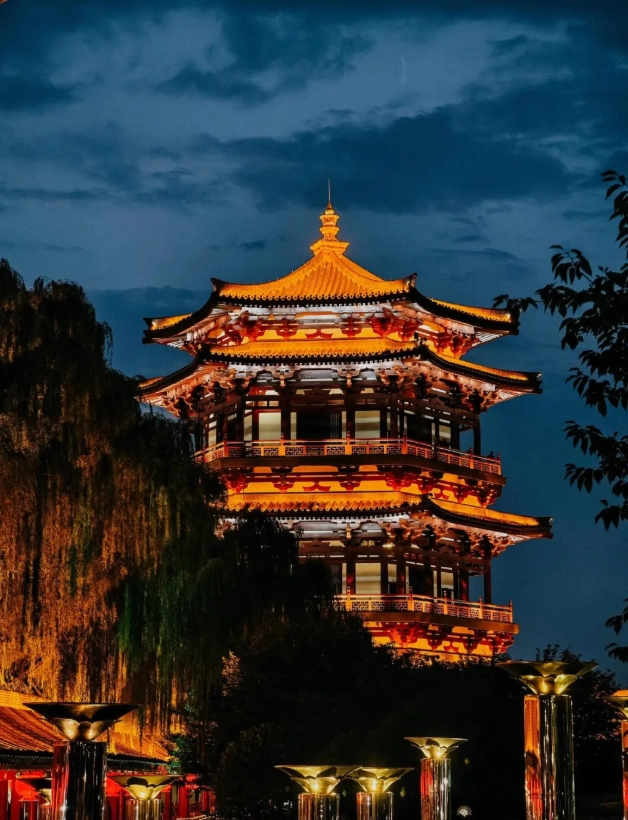
Why These Top Things to Do in Shaanxi Matter So Much
Shaanxi is often called the cradle of Chinese civilization — one of the country's most historically dense provinces. Xi'an, the capital, was the eastern terminus of the Silk Road and served as the imperial seat for 13 dynasties. For foreign visitors, this means you're walking on layers of history that make most other cities feel young. The province's signature sites — the Terracotta Army, ancient city walls, and sacred mountains — offer a tangible connection to China's imperial past. And as a travel guide who has led countless expedition groups here, I can tell you: these wonders are not just dusty relics — they're alive in the food, daily life, and even the way locals cross the street. For updated entry policies, I always tell friends to check the National Immigration Administration — they post official English versions, making it easy to stay compliant.
The Top 10 Things to Do in Shaanxi: A Local's Breakdown
I'll walk you through each highlight with the practical details that matter — prices, timing, and little tricks that only a local guide would notice. Prices are approximate, so always verify with official sources before you go.
1. The Terracotta Warriors — The World's Eighth Wonder
The Terracotta Warriors are the undisputed highlight of Shaanxi — and the only reason many travelers cross the globe. This UNESCO World Heritage site (check the official UNESCO listing) is an army of life-size clay soldiers, horses, and chariots buried with Emperor Qin Shi Huang in 210 BC. Discovered in 1974, it remains one of the most breathtaking archaeological finds on Earth. Every single warrior has a unique face — you can spend hours marveling at the details. The site is divided into three pits, with Pit 1 being the largest and most impressive. I always tell my travelers to pace themselves; the sheer scale can be overwhelming.
Pro Tip: Go at 2 PM. Trust me. The morning tour groups vanish, and the lighting inside Pit 1 becomes dramatic. I've been here over 20 times, and I always time it for that golden hour. You'll also avoid the long queue for the electric shuttle that takes you from the main entrance to the pits.
Need to know: Entrance is to a three-building complex. Adult admission is approximately 120 RMB (around $17), but double-check the price on the official site, as it can fluctuate during holidays. Bring your passport to buy tickets at the counter. The site is open from 8:30 AM to 5:30 PM, with last entry at 5 PM. From Xi'an, take a taxi (about 200 RMB, 1 hour) or an official tourist bus from Xi'an Railway Station. The buses have red-blue signs with English. Don't listen to touts offering "faster routes" — they'll take you to a replica. The real site has a huge gray pyramid-shaped museum hall.
2. Cycle the Ancient City Wall
Renting a bike on the Xi'an City Wall is the best way to grasp the city's grid — and it's an absolute must-do. The wall is the most complete in China, stretching 14 kilometers around the old city. Built in the Ming Dynasty, it offers a unique perspective of modern Xi'an against ancient fortifications. You'll see watchtowers, drawbridges, and gates that once protected the empire's capital. The flatness of the wall makes it an easy ride for casual cyclists; you can even rent a tandem bike.
Entrance is about 54 RMB, and bike rental is separate (around 45 RMB for 2 hours). You can enter from Yongning Gate (South Gate), which is the most photogenic. The gate is right above the metro station Yongningmen (Line 2). I recommend starting your ride an hour before sunset — the light hits the city perfectly, and you'll be on the wall as it lights up at night. Sunset is also the time when local musicians and families come out, giving you a real feel for daily life.
Mistake to avoid: Don't rent a bike at the north gate — the bike rental stations close early and you might get stuck. Also, the wall is completely flat, so it's an easy ride even for beginners. If you're short on time, walk a small section then exit at any gate.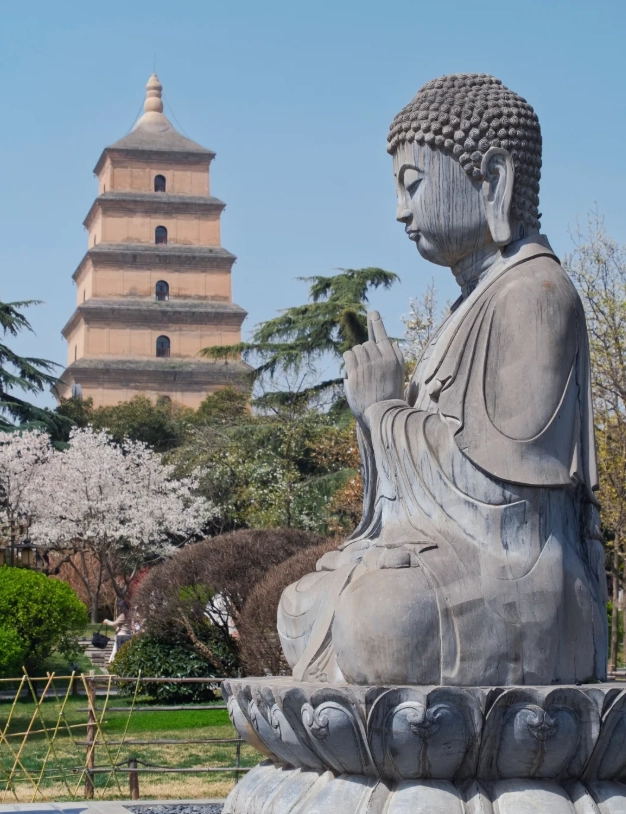
3. Tread the Giant Wild Goose Pagoda & Datang Everbright City
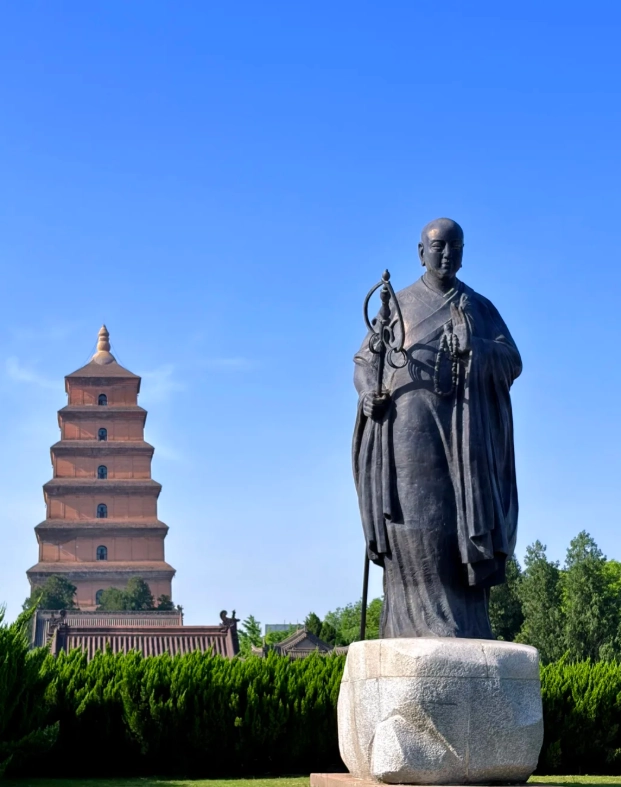
This area is the heart of Xi'an's evening buzz — a sprawling pedestrian zone that turns into a light show after dark. The pagoda itself dates back to 652 AD and holds ancient Buddhist scriptures brought from India. But the real draw is the surrounding Datang Everbright City, a commercial drag that re-creates the Tang Dynasty spirit with lanterns, street performances, and food stalls. Everything is vividly illuminated, making it an Instagram dream, but be prepared for massive crowds. The best time to visit is after 7 PM when the lights come on. There's also a famous fountain show in front of the pagoda — ask a local or your hotel for the daily schedule, as it varies depending on the season.
Entrance to the pagoda park is about 50 RMB, and climbing the pagoda costs an additional fee. The surrounding zone is free, so you can soak in the atmosphere without spending a cent. Insider Advice: Don't spend money on the tower climb unless you're into hot, crowded staircases. The view from the base is just as good, and the real magic is at the ground level of the pedestrian street. If you're hungry, try the "Biang Biang" noodles at one of the local eateries — they're flat, wide, and absolutely delicious.
4. Uncover Romance at Huaqing Palace
Huaqing Palace is an unexpected gem often booked as a half-day trip from Xi'an — and it's a fantastic complement to the Terracotta Warriors. Located at the foot of Mount Li, it was the imperial bathing spot for Tang Dynasty royalty, including the Emperor Xuanzong and his beloved concubine Yang Guifei. The palace grounds also include a replica of the "Xi'an Incident" relocation site, which is historically significant for modern China. The hot spring pools are surprisingly well-preserved, and the gardens are beautifully landscaped with older cypress trees.
Entrance is around 120 RMB. You can easily combine it with the Terracotta Warriors since they're in the same direction — make a day trip out of both. The bus stop for Huaqing Palace is on the way to the warriors. Many private tours include it. One highlight is the "Song of Everlasting Sorrow" (长恨歌) outdoor performance in the evening — it's spectacular but sold out well in advance. Book through a hotel or reputable agency, not from street touts. I've seen too many travelers get scammed by fake tickets.
The catch: The palace is heavily reconstructed. Some travelers find it kitschy. But the gardens and the hot spring pools are genuine. It's a nice contrast from the military might of the warriors.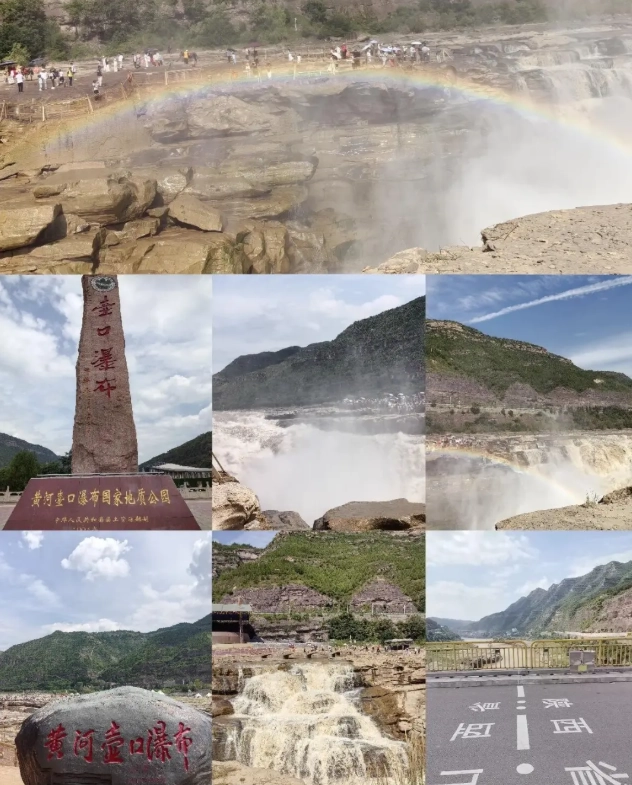
5. Conquer Mount Huashan — The Most Dangerous Hike in China?
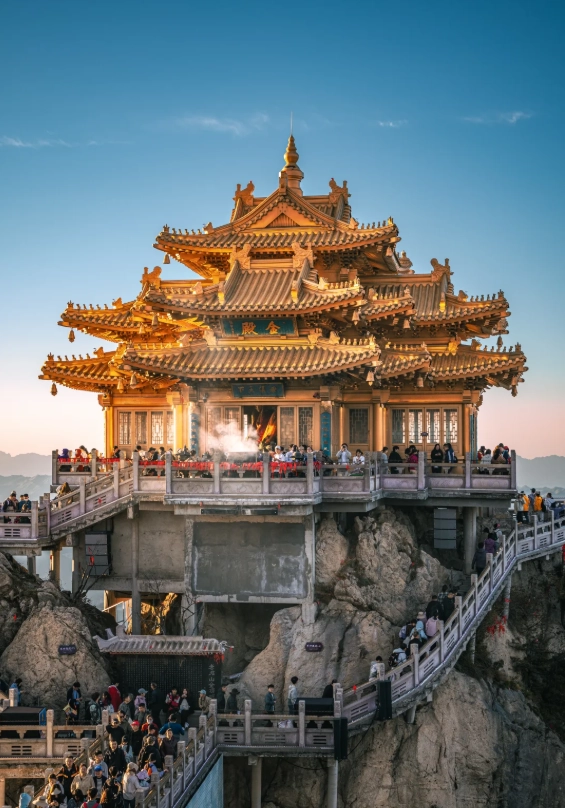
Mount Huashan is one of China's five sacred Taoist mountains and a thrilling day trip from Xi'an — if you're up for a challenge. The mountain offers several peaks connected by skywalk paths and cliff-suspended plank roads. It's not for the faint of heart, but the views are absolutely insane. The sunrise from the East Peak is something you'll never forget, provided you're willing to tackle the steep stairs. Huashan is also home to the famous "Lotus Flower Peak" and other stunning granite formations.
Getting there is easy: take the high-speed train from Xi'an North Station to Huashan North (about 30 minutes), then a free shuttle bus to the tourist center. Entry ticket is around 160 RMB during peak season, and the cable car costs extra (around 120-140 RMB one-way). I recommend taking the cable car up to the North Peak, then hike to the other peaks. The famous "Long Plank Road" (Chang'an plank) is an extra adrenaline kick, but it's often closed for safety reasons. Check on-site. If you're not a seasoned hiker, you can still appreciate a shorter loop.
Important: Wear sturdy shoes and a headlamp if you're aiming for the sunrise — many travelers stay overnight. But if you're not a hiker, just do half a day. The scenery is still worth it. Mistake to avoid: Don't be lured by "fast track" tickets sold outside the official tourist center. They often are just for the shuttle bus. Use only official ticket offices. And remember to carry water — the mountain is steep, and hydration is key.
6. Feast Your Way Through the Muslim Quarter
No trip to Shaanxi is complete without wandering through the Muslim Quarter (Huimin Jie) — a labyrinth of food stalls and shops that's been the city's Muslim heart for centuries. This is where you'll taste the famous Xi'an specialties: roujiamo (Chinese hamburger), liangpi (cold noodles), and Yangrou Paomo (lamb soup with bread). The aroma of spices and sizzling meat fills the air, and the narrow alleys are packed with locals and travelers alike. It's not strictly a tourist trap — locals genuinely eat here, though some vendors are clearly more geared toward visitors.
The quarter is free to enter and is always buzzing, but it gets ridiculously crowded after 7 PM. I advise going around 4 PM for a late lunch and to watch the street vendors set up. For the best roujiamo (pork-filled flatbread), local foodies swear by the one at "Lao Sun Jia" (老孙家), but there are dozens — look for long queues, that's a good sign. Payment reminder: Most stalls still operate on cash or Chinese mobile payment (Alipay/WeChat). Bring some cash, as some elders still prefer it. You'll also find ATM machines near the main entrance.
Big mistake: Don't be fooled by vendors shouting "one thousand-year-old" food. It's marketing. Stick to what's sizzling hot and fresh. Also, watch your belongings — the crowds are dense and pickpocketing can happen in crowded areas.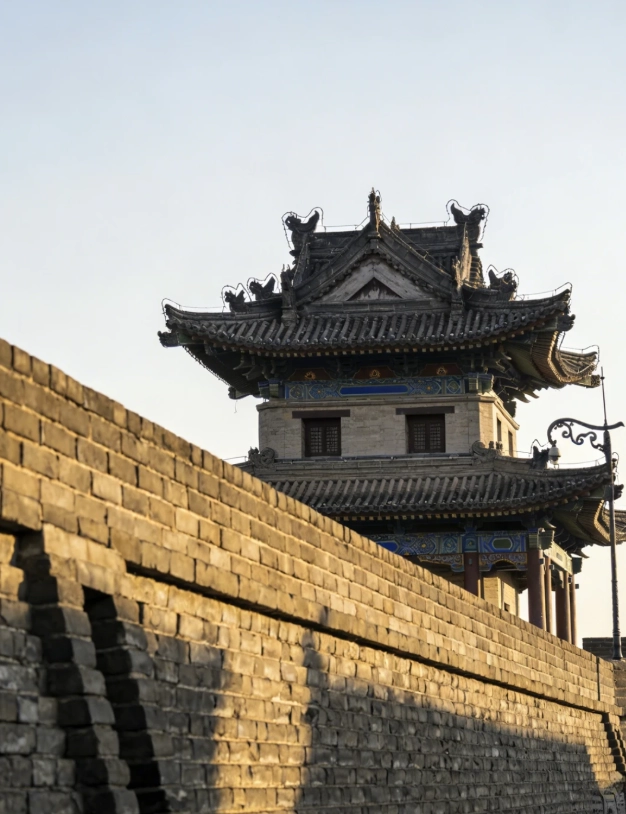
7. Get Your Ticket to the Shaanxi History Museum
The Shaanxi History Museum is a treasure trove of Chinese history — but the free tickets are harder to get than a Taylor Swift concert. It's home to over 370,000 artifacts, including Bronze Age vessels and Tang dynasty gold. The museum is internationally renowned, and rightly so. The collection spans from prehistoric times to the Qing dynasty, with highlights like the gold and silver relics from the Tang court. It's a bit like a mini-Forbidden City in terms of richness.
Here's the catch: the museum only allows a limited number of free visitors per day, and they must be booked online with your passport. The official website (and WeChat mini-program) opens reservations a few days in advance. If you fail to get a free ticket, you can buy a paid ticket to the "Treasure Gallery" or "Tang Dynasty Paintings" which are less busy. The museum is closed on Mondays. Pro Tip: Use a reputable third-party platform like Trip.com to book a paid tour that includes the museum — it might be your only way in during peak season. Alternatively, pay for the special exhibition, which includes entry to the main halls.
Insider advice: The museum is located near the small Wild Goose Pagoda, so you can combine the two. The museum's audio guide is available in English at a small rental fee.
8. Marvel at the Famen Temple
Famen Temple, about 120 kilometers west of Xi'an, is a major Buddhist pilgrimage site — it famously houses a finger bone of the Sakyamuni Buddha. The ancient temple is a mix of traditional architecture and a modern, massive shrine complex. It's a serene escape from the city crowds. The underground palace, discovered in 1987, contained many rare treasures alongside the relic, including imperial gold and silver artifacts. The site is sacred to many, and the atmosphere is quiet and contemplative.
The temple requires a separate trip — count a full day. You can take a long-distance bus from Xi'an's West Bus Station or join a small group tour. Entry costs around 120 RMB. The highlight is the underground palace where relics were found, and the towering shrine. I only recommend this if you have extra time or are fascinated by Buddhism. It's not a usual first-day activity. Honest opinion: The new constructions feel a bit sterile compared to the ancient temple. But the story of the relic and the peaceful setting is worth a visit if you're in the area.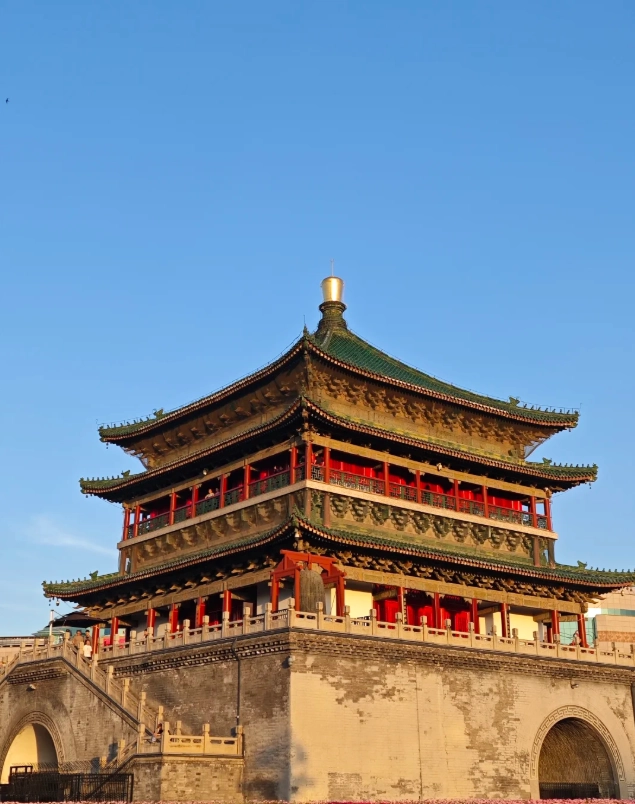
9. Climb the Bell & Drum Towers
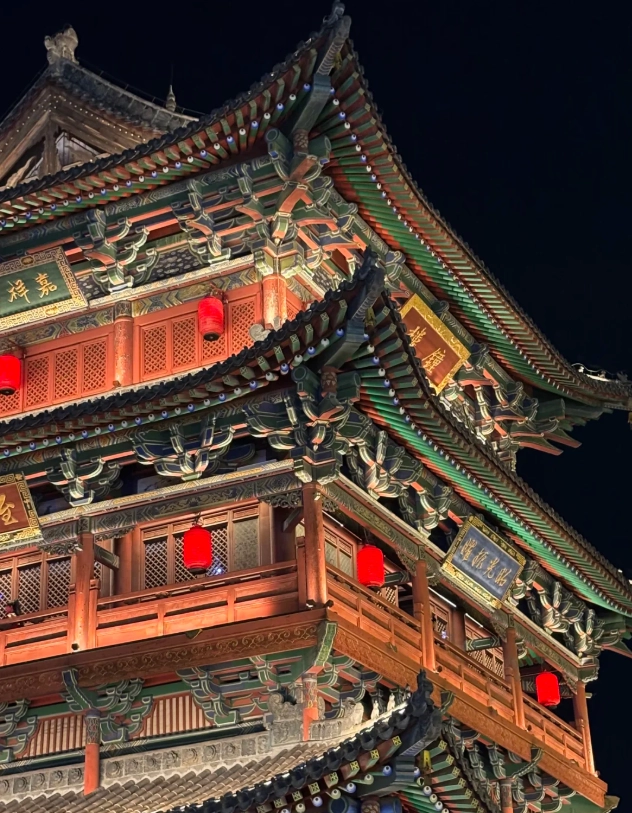
These two iconic towers sit in the dead center of Xi'an and offer a quick taste of history — plus some nice photo opportunities. The Bell Tower was used to mark time in ancient China, and the Drum Tower once held a huge drum that signaled the city's curfew. They're close to the Muslim Quarter, so you can combine them easily. The area around the towers is a vibrant hub, with shopping streets and historic architecture.
A combined ticket is about 50 RMB. Climb to the top for a broad view of the city's grid. I usually tell my clients to go at dusk — the lights come on, and you get a perfect shot of the street leading to the Bell Tower. The area is also a transportation hub, so it's not a detour. Skip factor: If you're tight on time, you can admire them from the ground. The interiors are not especially striking. But they make for great context for your trip. You'll see the four main streets radiating from the towers, and it's a great orientation point.
10. Witness the Mighty Hukou Waterfall
Hukou Waterfall is the only yellow waterfall on the Yellow River and a dramatic natural wonder — but it's a long haul from Xi'an (about 4 hours each way). It's where the Yellow River narrows and crashes into a rock gorge, creating a thundering spectacle. It's a bit touristy, but for nature lovers, it's a must. The fall's "yellow" color comes from the silt in the river, and the sound is powerful enough to be heard from a distance. You can even take a short walk to the edge — make sure to hold onto the railings.
There are two sides to the waterfall — the Shaanxi side (where you'll enter) and the Shanxi side. From Xi'an, you can take a bus from the city coach station or join a day tour. Entry is about 100 RMB, plus an optional boat ride. The best time to visit is summer or early autumn when the river is at full flow. Spring can be very dry, and the waterfall less impressive. Important: Bring rain gear — the mist gets you soaked. The viewing platforms are safe, but the ground is slippery. You'll spend about 1-2 hours here, and then a long drive back. It's a big time commitment, but the memory is worth it.
| Attraction | Est. Price (RMB) | Time Needed | Best Time to Visit |
|---|---|---|---|
| Terracotta Warriors | 120 | Half day | 2 PM – 4 PM |
| City Wall | 54 + bike ~45 | 2 hours | Sunset |
| Giant Wild Goose Pagoda | 50 | 2 hours | Evening |
| Huaqing Palace | 120 | 2–3 hours | Morning |
| Mount Huashan | 160 + cable | Full day | Early morning |
| Muslim Quarter | Free | 1–2 hours | Late afternoon |
| Shaanxi History Museum | Free (reserve) | 2–3 hours | Anytime (closed Mon) |
| Famen Temple | 120 | Full day | Weekend quieter |
| Bell & Drum Towers | 50 (combined) | 1 hour | Dusk |
| Hukou Waterfall | 100 | Full day trip | Summer/autumn |
How Can I Plan a Trip Around These Top Things to Do in Shaanxi?
You don't have to cram everything in. Here's how to plan based on your time and energy. The key is to group geographically close attractions to minimize travel time.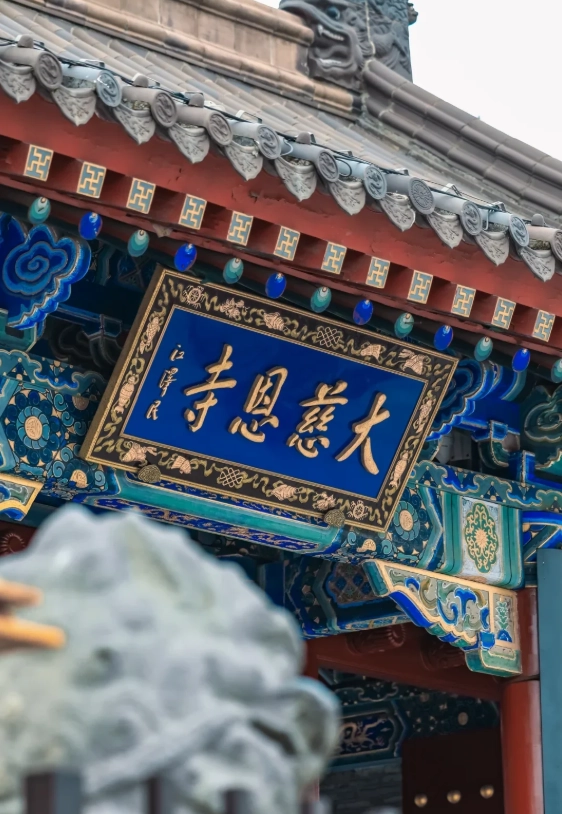
If you only have 24 hours: Prioritize the warriors in the morning, then walk the city wall at sunset, and finish with the Muslim Quarter. This gives you the highlights without burning out. Arrange a taxi to pick you up early to beat the crowds.
48 hours: Add the Giant Wild Goose Pagoda in the evening of day one, and swap the wall to day two morning. Or include Huashan as a day trip if you're active — take the high-speed rail. On day two, after the wall, visit a museum or the Bell & Drum Towers.
72 hours: Now you can include a longer day trip to Huaqing Palace or Hukou Waterfall. Use the high-speed rail for Huashan to save time. For Huaqing, combine it with the warriors in one day. For Hukou, be prepared for a full day on the road. Always check train times and book tickets in advance via China Railway's official site or an agent.
I always advise travelers to build in some downtime — the history can be overwhelming, and you'll enjoy it more if you're not rushed. Try to have a relaxed dinner in the Muslim Quarter one evening, and just stroll the streets.
What Are the Worst Mistakes Tourists Make in Shaanxi?
After years of guiding groups, I've seen the same mistakes over and over. Here are five big ones to avoid:
- Trusting your credit card everywhere. Many local eateries and even some ticket booths only take Alipay/WeChat or cash. Bring cash for small vendors. Set up Alipay in advance and link your international card.
- Following Google Maps. It doesn't work well in China. Download the app or use Baidu Maps, but make sure you have a VPN and a translation app. Or better yet, ask your hotel for a business card with Chinese text.
- Booking everything last minute. Popular attractions like the Terracotta Warriors and Shaanxi History Museum require advance booking with your passport. Book via official mini-programs or third-party sites to avoid disappointment.
- Wearing bad shoes in the mountains. If you plan to hike Huashan, the stone steps are slippery and steep. Use proper hiking boots. I've seen people in flip-flops attempting the plank road — never ends well.
- Falling for fake "official" tour buses. At Xi'an Railway Station, ignore people shouting "Terracotta Warriors" and only get on buses at the official tourist bus stop. Also, verify that the bus has a sign with the destination in Chinese and English.
FAQs About the Top Things to Do in Shaanxi
Verified and fact-checked by the editorial team. This content has been fact-checked to ensure informational precision. Prices and schedules may change; please confirm with official sources before traveling.





No comments yet.