 Yan Zhou
On this page - jump straight to the part you need
- Why Tianyi Pavilion Museum Matters
- Practical Essentials Before Your Visit
- How to Plan Your Walkthrough Inside
- The Best Time of Day to Visit (and When to Avoid)
- Getting to Tianyi Pavilion Museum in Ningbo
- Insider Secrets Locals Don’t Always Share
- FAQ: Ticket, Timing, and Tour Questions
- A Local Guide’s Final Verdict
Standing in a half-empty ticket queue at 8:40 a.m. — that was my lucky break. I usually bring my groups here at 9:30, but that morning my driver hit a delay. The result? I had the museum’s legendary library all to myself for twenty minutes. Here is the catch: most visitors show up at 10 a.m., so they spend their time shoulder-to-shoulder instead of actually seeing the collection. If you want a peaceful Tianyi Pavilion Museum guided tour, you have to bend your schedule around the crowds, not the other way around.
Booking your entrance ticket through Trip.com takes five minutes and lets you skip the mobile-phone headache. Even better, the digital confirmation works at the gate with your passport. That is the single most important tip I give every international visitor. Now, let me walk you through the rest of the practical details — I have been guiding tourists through this Ming-dynasty library complex for years, and these are the exact steps you need for a smooth visit.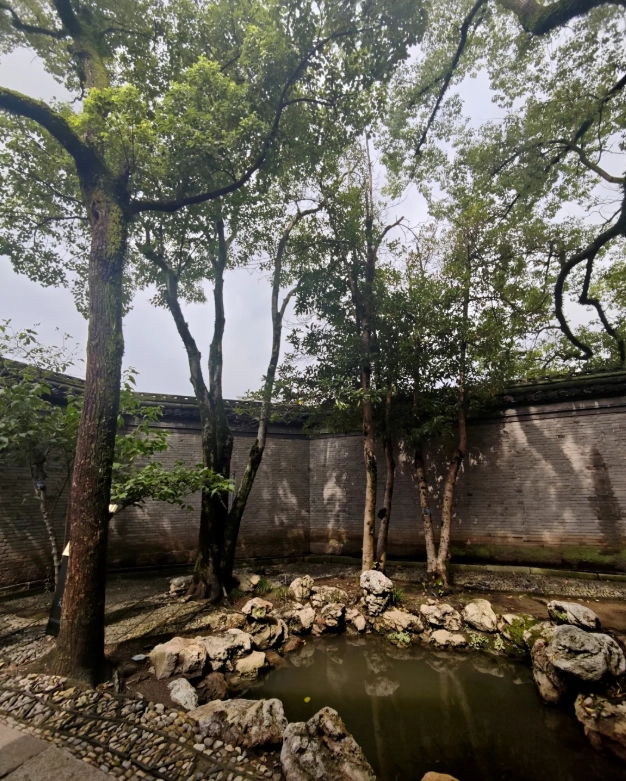
Why Tianyi Pavilion Museum Matters
Built in 1561 by a Ming-dynasty official named Fan Qin, Tianyi Pavilion is the oldest existing private library in China. It is not a grand palace or a massive complex — it is intimate, subtle, and wonderfully different from the Forbidden City or the Summer Palace. For many international visitors, this is the attraction that gives you the closest feel of what a scholar's life was actually like.
Here is the honest truth: some travelers find it underwhelming because they don't know what they're looking at. The ancient books on display are often behind glass, and most interpretations are in Chinese only. That is exactly why you need a plan before you walk in — without context, you will miss the genius behind the architecture (like the fact that the entire building was designed to protect books from fire, with a pond in front serving as an emergency water supply).
I always tell my guests: think of it as a time capsule, not a museum of artifacts. Once you start looking for those subtle details — the decorative carvings, the stone paths, the neat rows of wooden shelves — the place comes alive.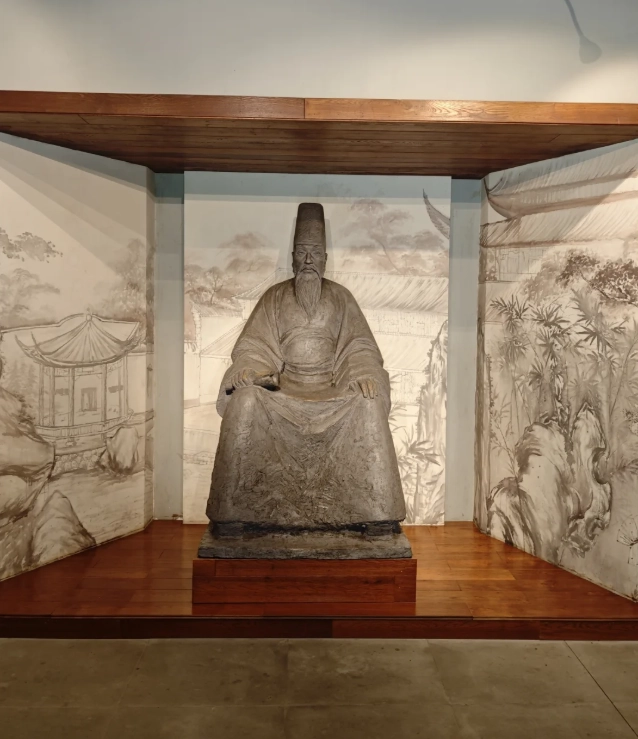
Practical Essentials Before Your Visit
Entry Fees and How to Book
The standard adult ticket costs around 30 yuan, and children under 1.2 meters are free, but the exact price can shift during special exhibitions. Bring your passport if you buy at the counter — they need the number for identity verification.
Now, let me save you a headache. The official booking channel is a WeChat mini-program, which is entirely in Chinese and requires a Chinese bank card for payment. For most foreigners, that's a dead end. Instead, I always recommend booking through Trip.com or Klook — they accept Visa/Mastercard, and you'll receive a QR code that you scan at the gate. The price is basically the same plus a small service fee, and you'll save yourself from a translation pain.
Opening Hours and Last Entry
The museum typically opens at 8:30 and closes at 17:30, with last entry at 17:00. From my experience, the best bet is to arrive by 8:30 when the doors open. On some public holidays they might extend hours, but to be safe, always confirm on the official page or your booking receipt.
One thing that surprises many: the museum is quieter on weekdays, especially Tuesday and Wednesday. Weekends see a lot of local families and tour groups, so if you can shift your visit to a weekday, do it.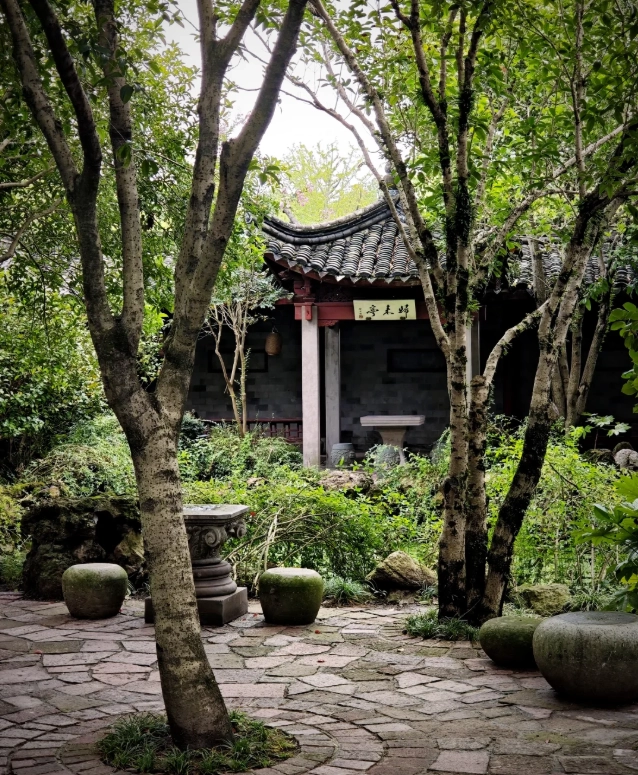
Payment, Phone, and Navigation Setup
Before you head out, make sure your Alipay or WeChat Pay is linked to your international card. Inside the museum, you'll need to pay for things like audio guides or the teahouse (if it's open), and almost none of these accept physical credit cards or cash — it's all scan-and-go.
Also remember: Google Maps is unreliable in China. Use Apple Maps instead (it works fine with English) or download AMap (also known as Gaode Maps). If you take a taxi, show the driver the characters for the museum: 天一阁. For public transport, I'll give you the exact route in a moment.
And don't forget a VPN — you'll need it for any Google services. And download a translation app like Apple Translate or Baidu Translate, because you'll encounter plenty of signs with no English.
How to Plan Your Walkthrough Inside
Start with the East Garden to Beat the Crowd
Most visitors follow the main path to the library building first, which means the East Garden is nearly empty during the first hour. I always tell my groups to go left when they enter the main gate, even though it feels counterintuitive. This garden has a lovely rockery, a pond, and the famous “Nine Lion” stone sculpture — you'll have it almost to yourself before the tour buses arrive.
After enjoying the garden, you can then circle back to the central hall. By the time you reach it, the queue at the entrance will have thinned out.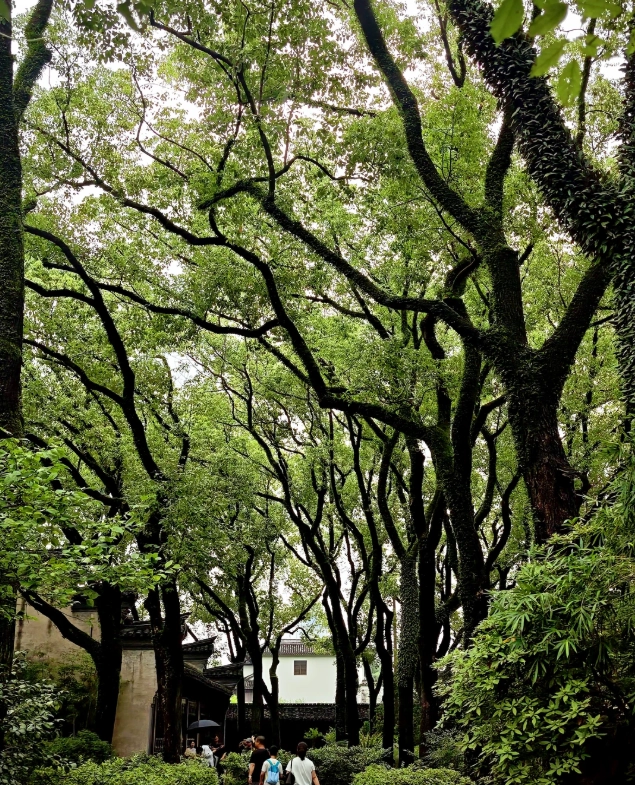
Must-See Highlights: The Library Hall, the Nine-Lion Garden, and the Stone Pavilions
The main library hall is where Fan Qin's original books were kept, and you'll see rows of wooden shelves that once held over 70,000 volumes. The collection was later moved for safety, but the space itself is remarkable for its fire-proof design — note the large pond outside, an architectural detail that saved the library from being destroyed in smaller fires.
The Nine-Lion Garden is small but easy to miss — it's tucked near the south side of the complex. Count the “lions” in the rockery; there are actually nine if you look closely. My clients often enjoy this little scavenger hunt.
Once you're done with the main courtyard, walk into the stone pavilion area, where you'll find ancient inscribed tablets and steles. This section is open-air and well-shaded, making it a good spot for a short break.
How Much Time Do You Need? A Realistic Pace
I suggest planning 2 to 2.5 hours for a relaxed visit. If you are a photography buff, add another half hour — the eastern walls catch beautiful afternoon light.
Don't try to rush. The museum feels compact, but every corner has a detail. I've often seen visitors sprint through in 40 minutes and then complain that there wasn't much to see. Take your time, read the signs (even if they're short), and you'll leave with a sense of what a Ming-era scholar's day felt like.
The Best Time of Day to Visit (and When to Avoid)
The magic window is between 8:30 and 10:30 in the morning. I’ve brought countless groups here, and without exception, the mornings are calm. After 10:30, school trips and tour groups start to pile in, especially around the main library hall.
The second quietest period is from 15:30 to 17:00. The light becomes softer and warmer, which is perfect for photos of the white walls and grey tiles. Downside: you'll have to submit to the heat in summer and the cold in winter, but the photography is worth it.
Try to avoid Chinese national holidays (Golden Week in October and May Day in early May). On those days, the museum can feel like a metro station during rush hour. If your schedule only allows those dates, book your ticket for the earliest slot to minimize the chaos.
One more tip: most people eat lunch at 11:30, so the rooms tend to empty out slightly between 12:00 and 13:30. If you can't come early, aim for that lunch lull.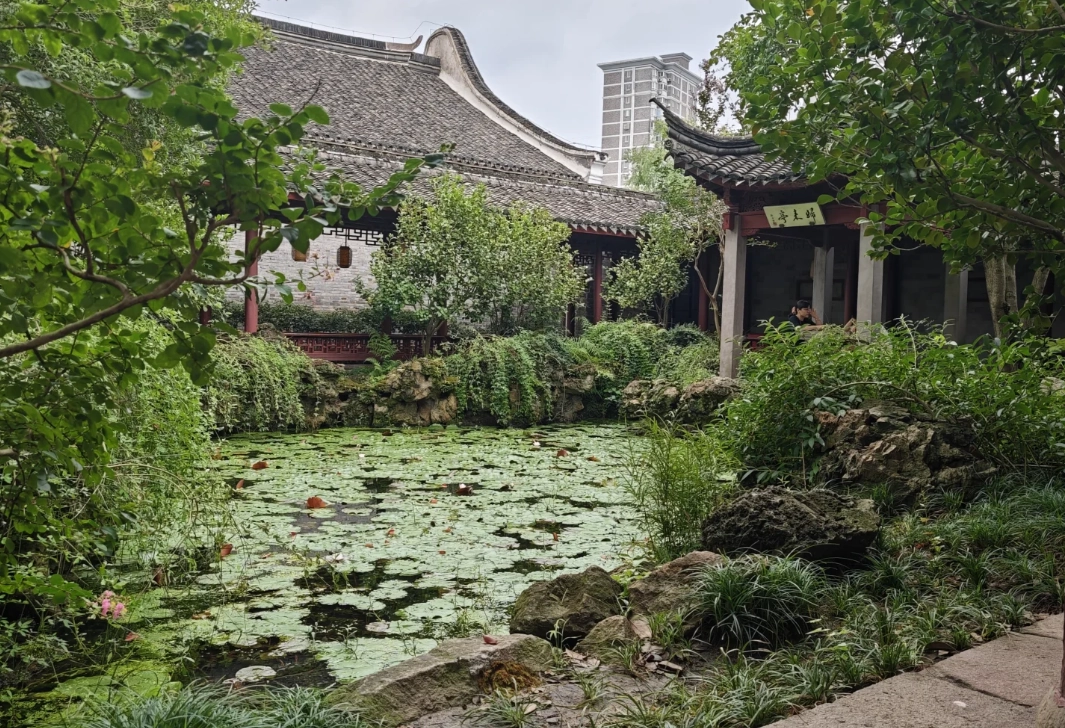
Getting to Tianyi Pavilion Museum in Ningbo
Tianyi Pavilion is located in the heart of Ningbo, near the historic Moon Lake area. The address is No. 10, Tianyi Lane, Haishu District (宁波市海曙区天一街10号). If you're using Apple Maps or AMap, search “Tianyi Pavilion Museum” or paste the Chinese address.
By Metro (Cheapest)
Take Line 1 to Gulou Station (鼓楼站) and leave from Exit B. From there, it’s about a 10-minute walk to the museum’s south gate. The walking route is partially shaded and passes by a stretch of old Ningbo houses — a nice warm-up. (Heads up: I’ve tested this walk several times, and it’s really 8 minutes without dawdling.)
If you have heavy luggage, don’t walk. Take a taxi instead — the station exit is a bit far from the museum entrance.
By Taxi or Ride-Hailing
The easiest way is to take a taxi or an online ride-hailing app (like Didi) and show the driver “天一阁”. From the Ningbo railway station (Ningbo Station), the ride costs about 10 yuan and takes roughly 10 minutes. From downtown Ningbo (Tianyi Square), expect a 5-minute drive.
Make sure the driver drops you at the south gate (正门). Some drivers may drop you at the west gate, which is less used but still accessible — you’ll know you’re in the right place when you see ticket offices.
By Bus (Alternative)
Several public buses stop at the Tianyi Pavilion stop (天一阁站), which is about 150 meters from the west gate. The fare is 2 yuan. It’s a good backup if your hotel is near a bus line, but for most travelers, the metro or taxi is more convenient. I’d skip the bus unless you’re already familiar with Ningbo’s network.
| Transport mode | From Ningbo Station | Cost | Best for |
|---|---|---|---|
| Metro (Line 1) | Approx. 20 min | 2 yuan | Budget travelers |
| Taxi | Approx. 10 min | About 10 yuan | Those with luggage |
| Bus | Approx. 25 min | 2 yuan | Local explorers |
Insider Secrets Locals Don’t Always Share
Now for the kind of advice that only comes from guiding groups here week after week.
Use the Restroom Before You Enter
The toilets inside the museum are sparse and can have long lines, especially near the main entrance. My trick is to stop at the Pinghe Mall (平和广场) right across the street — it’s clean, free, and usually empty. Do this before you scan your ticket; it’ll save you from standing in a queue later.
Look for the “Hidden” Stone Tablets
Many visitors miss the stone tablet pavilions on the west side of the compound. They’re easy to overlook because they’re tucked behind a small bamboo grove. Walk past the main hall, take the first left, and you’ll see them. These ancient steles carry inscriptions that predate the museum itself.
Skip the Audio Guide Rental
The official audio guide is available, but it often takes cash, and the device can be a bit old. For most foreign visitors, it’s easier to use a translation app and read about the history ahead of time. If you do want an audio guide, bring small change (RMB) — but don’t count on it being in English.
Photography Spots You Won’t Want to Miss
Head to the small pond behind the East Garden for a reflection shot of the white walls. In the early morning or late afternoon, the water is still and the reflections are crisp. Another spot is the covered corridor leading to the Stone Pavilions — the light plays beautifully on the wooden pillars. I always tell my clients not to waste their batteries on the main hall; the best frames are often off the beaten path.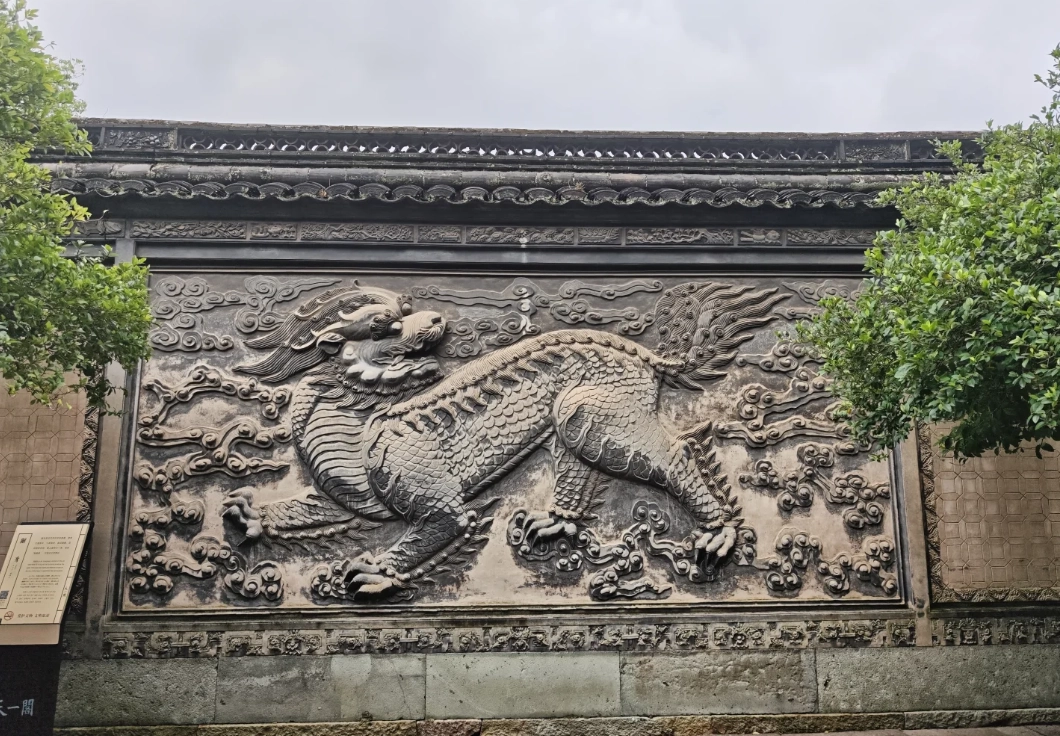
FAQ: Ticket, Timing, and Tour Questions
I'm only in Ningbo for a day. How can I see Tianyi Pavilion Museum and the nearby Moon Lake without wasting time on ticket queues?
Buy your ticket on Trip.com the night before. Arrive at the south gate at 8:20, and you’ll be first in line. Spend 90 minutes inside, then walk 5 minutes to Moon Lake (月湖). These two attractions are basically next-door neighbors – you’ll save transit time entirely. In the afternoon, you can add the nearby Ningbo Museum (also free) if you’re still hungry for history.
My wife is a wheelchair user. Are there accessible routes throughout Tianyi Pavilion Museum?
The museum has ramps for the main pathways, but some narrow interiors have steps. The East Garden and the main library hall are accessible via ramps. The stone pavilion area has a few uneven cobblestones, so you may need help. I’d suggest calling the museum a day ahead – they can sometimes provide a staff-assist service. The ticket office can confirm, but don’t rely on it in peak season.
I can't read Chinese. Will I be hopelessly lost inside the museum without a guide?
Not if you prepare. The main routes are simple, and you can follow the flow – just go left first, then right. For background, load the English Wikipedia page for ‘Tianyi Pavilion Library’ before you enter (offline mode works). There are also English labels on some key points, but they’re sparse. If you have a data connection, use a translation app for the Chinese descriptions.
Is it worth visiting Tianyi Pavilion Museum on a rainy day?
Actually, rainy days are one of my favorite times to bring clients. The garden looks lush, the reflections multiply, and the crowds drop dramatically. The only downside is that the walkways get slippery – wear shoes with good grip. Most of the key areas are covered, so you won't get soaked. Just bring an umbrella for the connecting paths.
Can I get a refund if I book through Trip.com and my plans change?
Yes, Trip.com offers free cancellation up to 24 hours before your selected time in most cases. I’ve had several clients do it without issues. The refund usually goes back to your original card within a week. For Klook, the policy is similar – check the specific listing.
A Local Guide’s Final Verdict
If you’ve made it to Ningbo, Tianyi Pavilion Museum is one of the few sites that genuinely rewards the effort of going off the beaten path. It’s not flashy, but it’s authentic. For a self-guided tour, the tips here will save you time, money, and a good amount of frustration.
My last piece of advice: keep your expectations modest, bring your curiosity, and let the quiet lanes of this ancient library do their magic. You won’t leave with dramatic photos of a grand palace, but you will have touched the world of a Ming-dynasty scholar – and that memory stays with you far longer.







No comments yet.