 Peng Gao
Your Dunhuang Weekend at a Glance
Dunhuang hits you with heat—then silence. I stood at Crescent Lake, camel bells fading, and thought: this is why I keep coming back. Here’s the thing: most guides tell you to spend three days in Dunhuang. And that’s great if you have time. But if you only have a weekend, don’t panic—you can absolutely do the essentials without losing your mind. The catch? You must pre-book Mogao Caves correctly, and skip the tourist traps that waste your afternoon. This is what to do in Dunhuang for a weekend, straight from a guide who’s escorted dozens of travelers through this Silk Road gem. Book the morning slot at Mogao, ride a camel at sunset, and I’ll show you the exact logistics.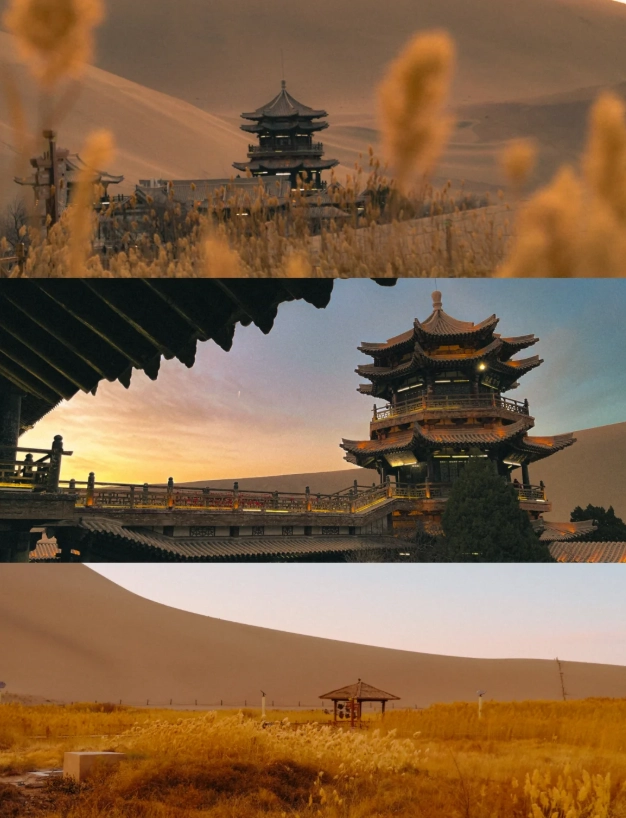
Why a Dunhuang Weekend Works
Dunhuang is a compact oasis town. The two heavyweights—Mogao Caves and Mingsha Mountain–Crescent Lake—sit close enough to each other to visit on separate days without wasting hours in transit. In fact, you can see both in a single day if you’re organized, but a relaxed two-day pacing is far more enjoyable for most travelers.
I’ve guided many people who tried to squeeze in Yumen Pass and Yadan National Geological Park. Nine times out of ten, they return exhausted and regret missing the calm of the caves and the desert’s sunset. My professional advice? Don’t do it. Yumen Pass is a two-hour drive one way, and Yadan needs a full day. Save those for a future trip or rearrange your schedule if you can stretch to three days.
What makes hanging back worthwhile: the intimate scale of the caves, the incredible light on the dunes, and the night market flavors you can only fully enjoy without a packed itinerary.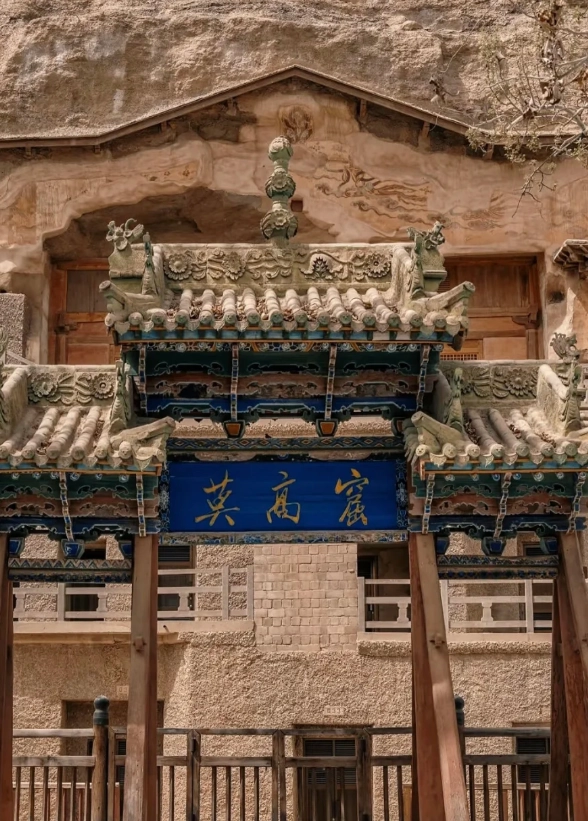
How to Plan Your Dunhuang Weekend
Getting There
Dunhuang is served by a small airport with flights from Xi’an, Lanzhou, and Beijing. The train from Lanzhou takes roughly 12–14 hours, which often lands you in Dunhuang in the early morning—perfect for a weekend start.
| From Lanzhou | Duration | Cost (approx.) | Best For |
|---|---|---|---|
| Flight | 1.5 hours | 600–900 RMB | Speed and comfort |
| Overnight sleeper train | 12–14 hours | 400–600 RMB hard sleeper | Budget and adventure |
| Long-distance bus | 15+ hours | 300–400 RMB | Not recommended |
Once in town, the core area is walkable. Taxis are cheap—the five-kilometer hop to Mingsha Mountain runs about 15 RMB.
Where to Stay
Stay near Shazhou Night Market (沙洲夜市). This puts you within walking distance of food stalls and is a 10-minute taxi ride to both Mogao and Mingsha. Budget rooms start around 200–300 RMB; decent hotels with breakfast cost 400–800 RMB. Use Booking.com or Agoda to compare. I like properties on the south side of the market—quieter at night.
Booking the Non-Negotiables
Mogao Caves must be reserved in advance, especially from April to October. The daily visitor cap is 6,000. Foreign visitors need your passport number. The easiest English-friendly route is via Trip.com or the official Mogao reservation platform. Do this at least a week before your trip—slots for specific time windows vanish quickly.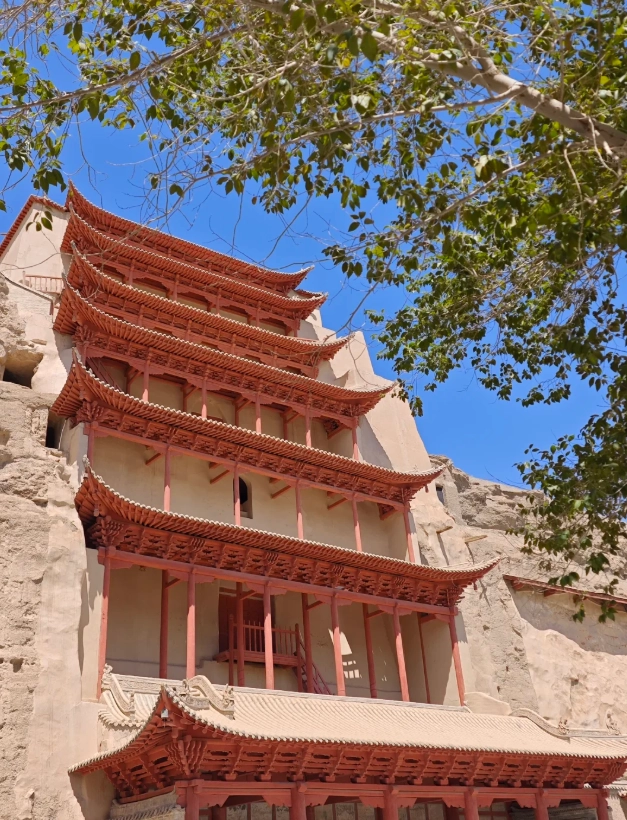
Insider Advice: When you book, choose the earliest slot (8:00–8:30am) or the last slot (3:00–3:30pm). Midday groups are larger, and the narrow cave corridors feel much more crowded.
What to Do in Dunhuang for a Weekend: The Top Experiences
1. Explore the Mogao Caves (莫高窟)
Location: Southeast of Dunhuang, about 25km from downtown. Taxi takes 30–40 minutes and costs around 80 RMB one-way. There is also a tourist bus from the tourist center.
Ticket: 238 RMB in peak season (April–November), 140 RMB off-season. Includes a digital cinema presentation and the cave tour with a mandatory guide. Every visitor must pass through a security check and carry a passport or ID.
Time: Plan 3 hours for the full visit.
Why it’s worthwhile: The UNESCO-listed caves hold 45,000 square meters of Buddhist murals and more than 2,000 painted sculptures. You’ll see the famous “Flying Apsaras” and the giant statue of the Maitreya Buddha—truly an art history eye-opener.
What to know: Photography inside the caves is prohibited. You’ll walk through a handful of representative caves, each with a story. The audio guide (in English) is included. Wear comfortable shoes—you’ll do a fair amount of walking.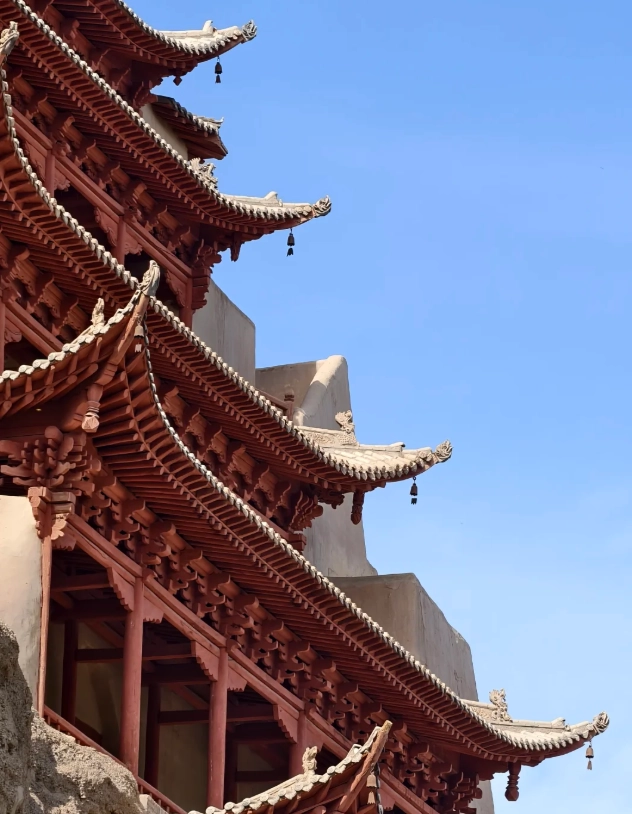
2. Ride Camels at Mingsha Mountain & Crescent Lake (鸣沙山月牙泉)
Location: 5km south of downtown. A taxi from Shazhou Night Market area is about 10–15 RMB.
Ticket: 110 RMB per person, valid for 3 days (yes, you can re-enter). Camel ride: 100 RMB for roughly a one-hour loop. You can also hike up the dunes for free—wear sport shoes.
Time: Half a day, but the true golden hour is from 4pm until sunset. The dunes catch warm light, and the temperature drops from the midday bake.
My ritual: I take every client on the camel at 5:30pm and pause at the top of the dunes to watch the sun set behind the Crescent Lake. The contrast of blue sky, amber sand, and the green spring is a memory that stays with you for years.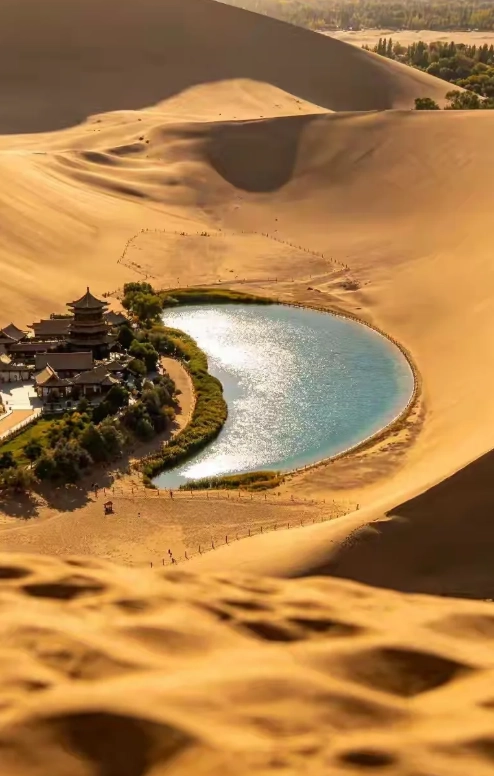
3. Taste Local Flavors at Shazhou Night Market (沙洲夜市)
When the sun goes down, Shazhou Night Market comes alive. It’s a network of stalls and small restaurants serving local specialties like donkey meat noodles (驴肉黄面) and cold apricot peel water (杏皮水). A plate of noodles costs around 20 RMB; mixed grilled skewers are about 5–8 RMB each.
Payment: Cash or mobile payment. Don’t expect to use a foreign credit card at the stalls. Keep small denomination bills (50 and 20 RMB) if you don’t have Alipay/WeChat set up.
Opening: Most stalls open around 6pm and stay until midnight in summer.
4. If You Absolutely Need a Desert Adventure: Yadan National Geological Park
Yadan is a Mars-like landscape of eroded rock formations, about 180km northwest of Dunhuang. Your transport options are joining a day tour (found on Trip.com) or hiring a driver for around 800–1,000 RMB. The visit itself takes 3 hours, plus the round-trip drive eats your whole day. Only consider this if your weekend is actually a long weekend.
Yumen Pass (which literally means “Jade Gate Pass”) lies along the same route. You can combine them, but again—a full day commitment. History buffs will appreciate the Han Dynasty fortress, but it’s nothing compared to the scale of Mogao.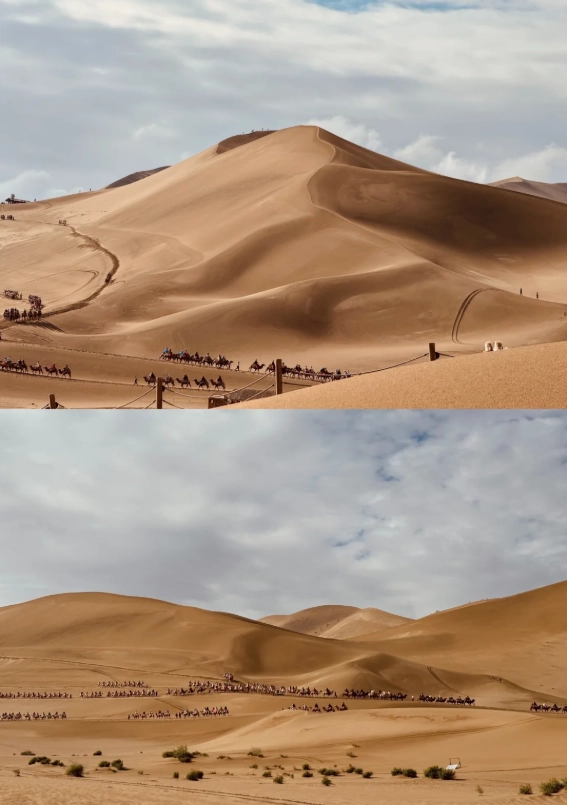
Day-by-Day Dunhuang Weekend Itinerary
Day 1: Mogao Caves & Desert Sunset
- 9:00am: Check in to your hotel and drop bags. If you arrived on the overnight train, grab breakfast at a noodle shop near the market.
- 10:30am: Taxi to Mogao Caves. Confirm the fare with the driver before starting (should be ~80 RMB).
- 11:00am–2:30pm: Complete the Mogao visit, including the digital theater and the caves.
- 3:00pm: Lunch near the tourist center—don’t worry, there’s a decent noodle place. Or save yourself and head straight back to the city for a proper meal.
- 4:30pm: Taxi to Mingsha Mountain (15 RMB). Pay the entrance fee (110 RMB) and walk to the camel caravans.
- 5:30pm: Ride the camel to the dune summit near Crescent Lake. Enjoy the sunset. This is the money shot.
- 7:30pm: After the sun dips, ride back, shake the sand out of your shoes, and take a taxi to Shazhou Night Market for dinner.
If you’re exhausted or the weather is bad, swap the camel ride for a visit to the Dunhuang Museum (free) to understand the treasures you’ve seen. Open until 5pm.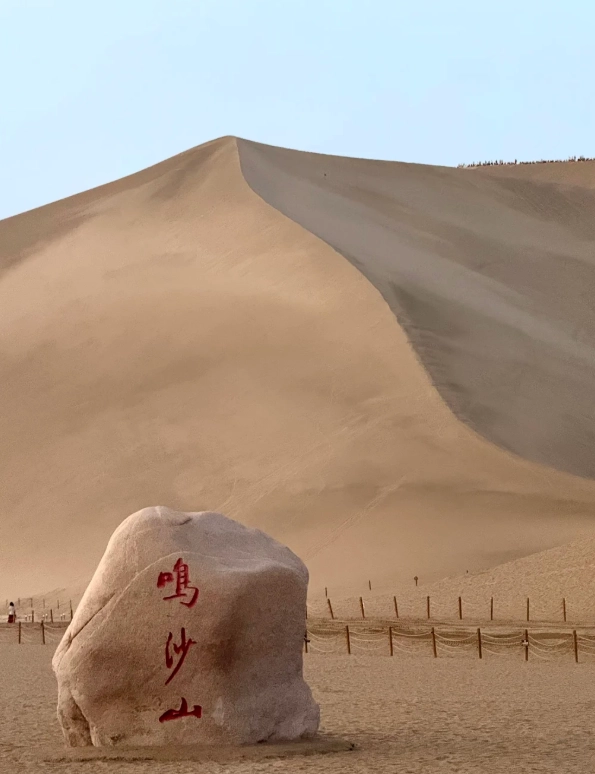
Day 2: Leisurely Morning, Extra Adventures or Departure
- 8:00am: Breakfast at your hotel. Try a local wheat porridge.
- 9:00am: Return to Mingsha Mountain if you bought the 3-day ticket and want a morning hike. The light is soft, and the temperature is mild. Or explore the Thousand Buddha Grottoes (independent caves, less crowded) if you have time.
- 12:00pm: Lunch at a local restaurant near the night market.
- 1:30pm: If your flight isn’t until evening, visit the Dunhuang Museum (Shazhou Road) for a quick cultural wrap-up.
- 3:00pm: Head to the airport/train station. Taxis to the airport are metered and cost about 30 RMB.
If you have a long layover and crave adrenaline, book a half-day tour to Yumen Pass—but you’ll need to leave by 8am and be back by 3pm.
Dunhuang Weekend Survival Guide: Payments, Navigation & More
- Payments: Alipay and WeChat Pay are everywhere. Link your international card or use a virtual tourist card in Alipay. Cash is secondary—but always keep 300–500 RMB in small bills for taxi fares and market stalls.
- Navigation: Google Maps is useless here. Use Apple Maps (works for basic navigation) or install AMap (also offers an English interface). You can show the Chinese address below to any taxi driver.
- Language: English is rare outside hotels. Download Google Translate and pre-download the Chinese language pack—you’ll need a VPN for Google services. Alternatively, use Apple Translate offline.
- VPN: Set up your VPN before board. This is essential for accessing Google Maps, Gmail, and social media.
- Booking: Tickets for every major attraction can be reserved via Trip.com or Klook, both of which have English-language support. Expect to input your passport details.
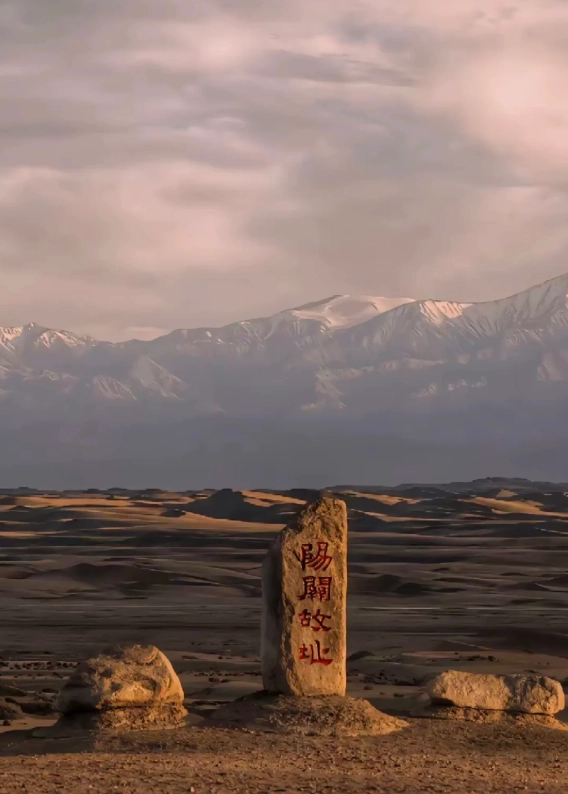
Chinese addresses to show your driver:
- 莫高窟 (Mogao Caves)
- 鸣沙山月牙泉 (Mingsha Mountain & Crescent Lake)
- 沙洲夜市 (Shazhou Night Market)
- 敦煌火车站 (Dunhuang Train Station) / 敦煌机场 (Dunhuang Airport)
FAQs: Dunhuang Weekend Questions Answered
This content has been fact-checked to ensure informational precision. Prices and opening hours are subject to change; always verify on official channels before you travel.





Finally a Dunhuang article that’s not just copied Wikipedia. I’m a photographer, so I liked that it gave exact angles and times—the 8am light over the Nine-Storey Pagoda, and the 5pm shadow lines on the Singing Sand Dunes. But the best part was the 'crowd-free' structure: I had plenty of space to set up a tripod, and no one walked through my frames. The only nitpick is it could use more food stalls in the night market section, but that’s not why I came. This guide made my weekend shoot feel effortless.
I booked my flight after reading this plan, and it exceeded everything. The writer clearly wants you to avoid the selfie-stick herds, and every suggestion felt doable. The 'reverse flow' idea for Yadan was pure gold: we arrived at 3pm when tour groups were leaving, had the wind-carved hills almost to ourselves, and watched the sunset from a quiet dune with zero background noise. The tips about ticket windows and exact parking spots were spot on. I’ll trust this site for my next Silk Road stop.
This is the only weekend guide you need for Dunhuang. I’ve used a lot of travel articles, and this one actually gets the timing right. Following their 'first shuttle to Mogao, then Mingsha at dusk' order, I walked onto the cave site without a single queue. The view from the sand ridge was unreal—silent, gold, and empty except for one monk silhouetted below the spring. The author’s tip about renting a camel only at the second station saved me both money and a long wait. Five stars, no hesitation.
I’m glad I found this before my weekend in Dunhuang. The route felt logical, and I loved that they pushed the 6:30am sand-dune walk. Standing by Crescent Moon Pool with only the sound of wind and a few birds was worth the early alarm. The only reason it’s not a five is that the link to the offline map download was broken, and the article doesn’t warn you to bring water for the Yadan stretch—there is nowhere to fill a bottle until you’re back at the visitor center. But overall, a solid, crowd-free plan.
Good plan on paper, but it doesn’t match reality as smoothly as promised. I used the weekend itinerary last October. The 'skip the noon crowd' advice for Mogao got me a 9am slot, fine—but then the plan puts the Shazhou Night Market on day one and the desert hike at sunrise on day two. I didn’t get back to my guesthouse until late, and the next morning felt like a blur. Also, the article says to take the local bus to the Yadan site, but that bus stops running at 4pm, even though sunset is after 8pm. I had to pay for a private car. Useful starting point, but I’d double-check everything before relying on it.