 Lei Li
- Beijing Must-Eat Dishes That Are Worth Every Bite
- How to Pick a Good Restaurant in Beijing (Without Getting Cheated)
- Beijing Street Food: Where to Find the Real Deal
- What to Drink in Beijing? (Beyond the Usual Tea)
- 24 Hours of Eating in Beijing: A Sample Food Itinerary
- Common Mistakes Tourists Make When Ordering Food in Beijing
- FAQ: Your Beijing Food Questions Answered
Your stomach is growling. You just landed in Beijing. And every food guide you've skimmed looks like it was written by a bot. Let me fix that.
I've been dragging tourists through Beijing's alleyways for a decade — and I've eaten at over 200 restaurants here. If you're asking 'what to eat in Beijing', you're probably scared of the unknown. You don't want to blow money on overpriced, mediocre dishes near the tourist spots. Here's the straightforward answer: start with Peking duck at a local chain (not the famous ones), grab a breakfast jianbing from a street cart, and slurp zhajiang noodles at a family-run spot. Skip the cash-grab restaurants on Wangfujing — they serve lukewarm food with insane prices. I'll walk you through exactly where to go, what to order, and how to pay — without getting ripped off.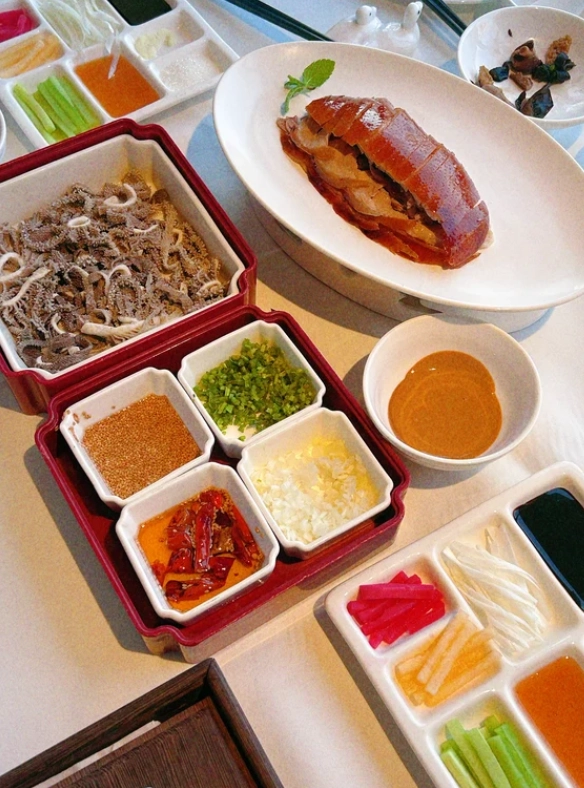
Beijing Must-Eat Dishes That Are Worth Every Bite
These are the dishes I actually eat when I'm off-duty. Most tour guides won't tell you this, but I'm tired of seeing foreigners overpay for soggy dumplings. Here's my list, in order of importance.
1. Peking Duck (北京烤鸭)
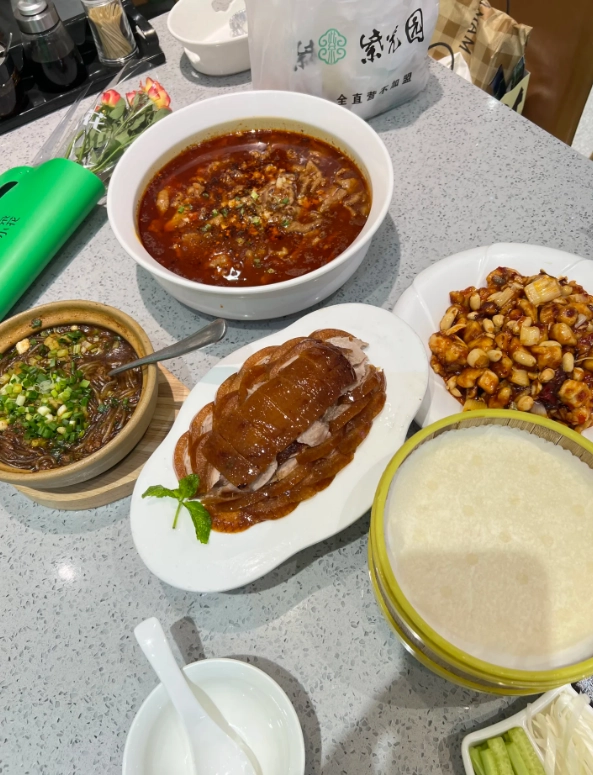
Peking duck is a must-order in Beijing, but skip the tourist-packed Quanjude flagship. I always take my friends to 四季民福烤鸭店 (Si Ji Min Fu), which locals actually flock to. The branch near Wangfujing has a glass wall overlooking the Forbidden City's moat — but expect a 30-minute queue even on weekdays. Address: No. 8 Dengshikou West Street, Dongcheng District (北京市东城区灯市口西街8号). Price: around 120-150 RMB per person for a full duck set. They accept Alipay, WeChat Pay, and some international credit cards (though the staff might be confused by foreign cards). Ask for the English menu — they have one. Lucky for vegetarians, the place also serves excellent veggie stir-fries, but the duck is the star.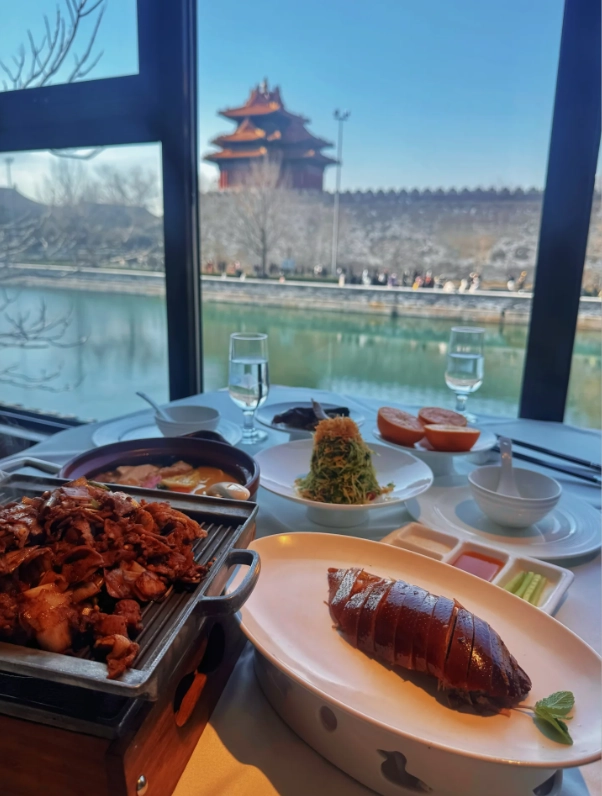
Pro Tip: Ask for the duck bones to be fried after the meat is carved — it's free and incredibly tasty.
2. Zhajiang Mian (炸酱面)
Zhajiang mian is Beijing's soul food — chewy wheat noodles topped with fermented soybean paste, minced pork, and julienned cucumbers. It's salty, earthy, and absolutely addicting. My go-to spot is 海碗居 (Hai Wan Ju) at Ganjiakou, which has been around since the 1990s. They serve it the traditional way: a big bowl of noodles with piles of toppings on separate plates. Address: 19 Zengguang Road, Haidian District (北京市海淀区增光路19号). A bowl costs around 35 RMB, and the servings are giant. The staff is used to foreigners — just point at the menu, which has pictures. Payment is mobile-only (Alipay/WeChat), so don't even try your card. Peak hours at noon are nuts; I once waited 40 minutes. Go at 1:30 PM to slide in.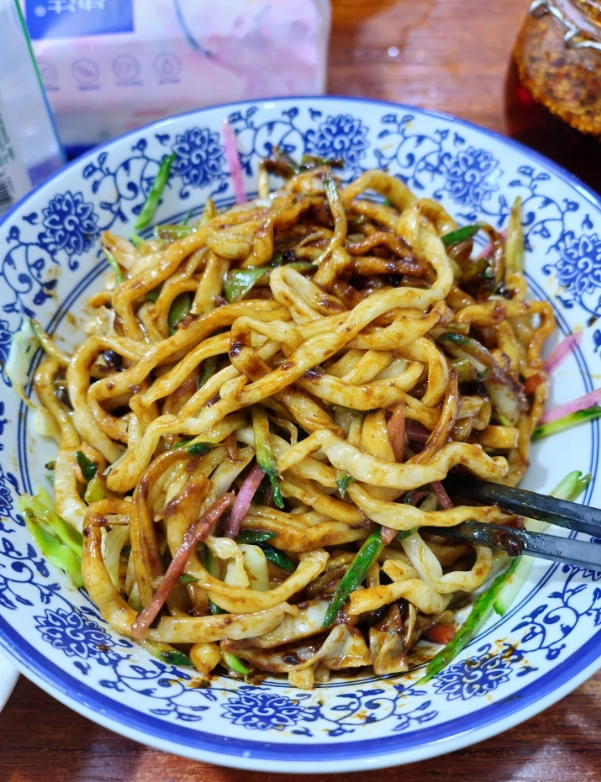
Insider Advice: Mix the sauce well before you eat — otherwise you'll get a clump of salt at the end. If you're with a group, order the 'jiachang' (home-style) version with more sauces.
3. Jianbing (煎饼)
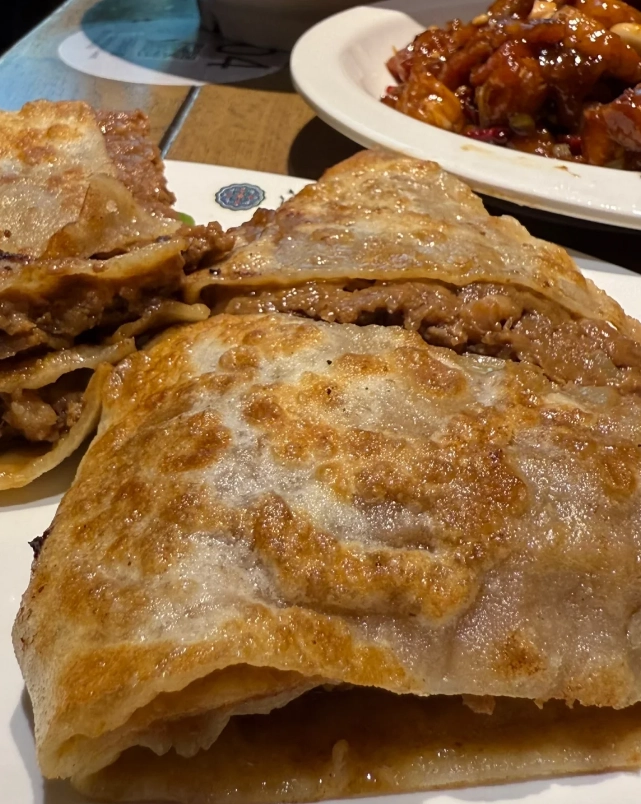
Jianbing is the breakfast king — a crispy crepe filled with egg, scallions, cilantro, and a crispy fried cracker. It's best eaten right off the street cart, not from a fancy restaurant. Head to the corner of Guijie Street (簋街) around 8 AM, where local vendors set up. Find the cart with the longest line — that's a good sign. Price: 8-12 RMB. Pay with your phone; the vendor will show you a QR code. Don't worry about asking to skip cilantro — they'll adjust it. It's not really vegetarian because of the lard, but you can ask for egg-only (still not vegan). There's no English menu, but just say 'jianbing' and point to what you want. If you're gluten-free, this isn't for you — but give it a shot anyway.
4. Instant-Boiled Mutton (涮羊肉) — Mongolian Hot Pot
Beijing's hot pot is all about the lamb — paper-thin slices that you swish in a pot of clear broth with sesame sauce. For a solid local experience, I recommend 东来顺 (Dong Lai Shun) on Wangfujing. It's a chain, but the quality is consistent. Address: 198 Wangfujing Street, Dongcheng District (北京市东城区王府井大街198号). Count on spending 150-200 RMB per person if you're stacking lamb plates. The place is huge and rarely packed at lunch, but dinner is a madhouse. They have an English menu and actually accept foreign credit cards at this branch. Order the 'shou qie' (hand-cut) lamb at least once — it's thicker and has more texture. Also, don't skip the sesame sauce — it's the star of the meal.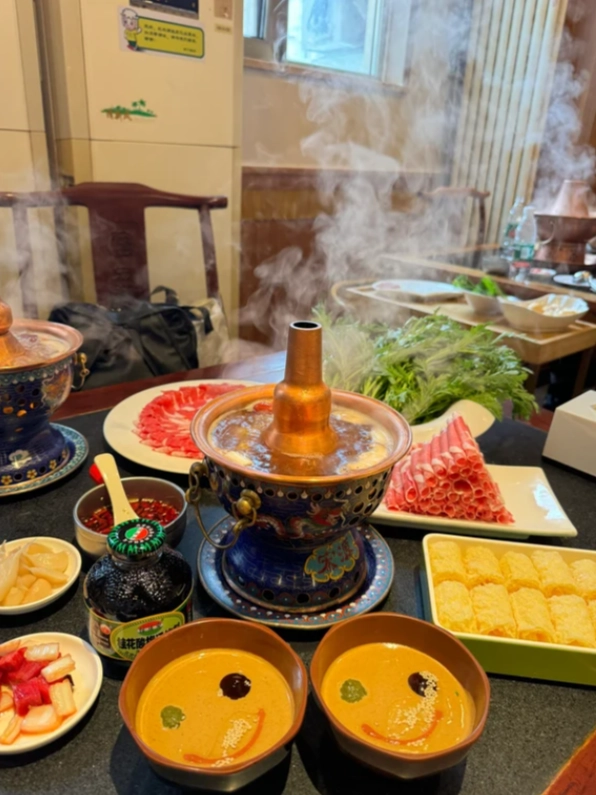
5. Lu Zhu (卤煮) — Offal Stew
Luzhu is a hearty stew of pork offal (intestines, lung, tofu) in a thick, spicy broth. It's not for the faint-hearted, but it's been fuel for Beijing workers for centuries. My favorite place is 老门框百年卤煮 (Lao Men Kuang) on Liulichang Road. Address: 92 Liulichang East Street, Xicheng District (北京市西城区琉璃厂东街92号). A bowl is 45 RMB and comes with a pile of chopped bread cubes soaked in broth. The smell is intense — like a spicy, meaty perfume. The shop is tiny and full of old-timers munching quietly. No English menu, so show them this: 卤煮. Payment is WeChat-or-Alipay-only. If you're squeamish about texture, try the tofu version first.
Insider Advice: Start with a half-order if you're new to offal.
6. Baodu (爆肚) — Quick-Fried Tripe
Baodu is a snack you'll often see at night markets — tripe blanched for seconds and served with a salty sesame sauce. The name literally means 'exploded stomach' because the flash-cooking makes it pop. Head to 北新桥爆肚王 (Bei Xin Qiao Bao Du Wang) near the Lama Temple. Address: 42 Yonghegong Street, Dongcheng District (北京市东城区雍和宫大街42号). A plate costs 40-60 RMB depending on the cut. They have a simple paper menu with Chinese characters only — but you can just point at the 'mao du' (毛肚) and 'san jian' (散丹) options. Dip it in the sesame sauce — don't overthink it. The textures range from crunchy to soft, so ask for a mix.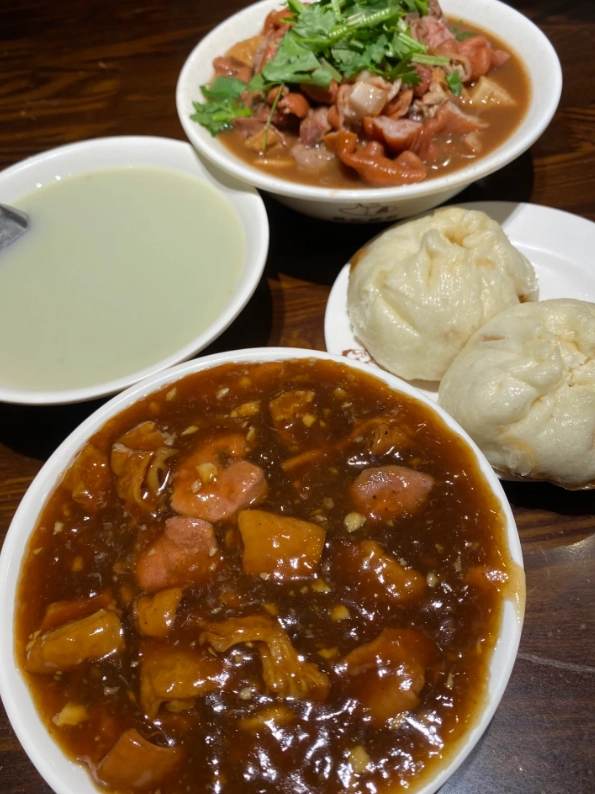
7. Douzhi (豆汁) + Jiaoquan (焦圈)
Douzhi is a fermented mung bean drink that smells... like sour socks. But it's a beloved Beijing classic. Locals pair it with jiaoquan (crispy fried rings) and pickled veggies. If you want to try it without committing, go to 护国寺小吃 (Huguosi Snacks) at Huguosi Street. Address: No. 93 Huguosi Street, Xicheng District (北京市西城区护国寺大街93号). A bowl is 5 RMB, jiaoquan 2 RMB. The taste is intensely sour and slightly effervescent. Many visitors gag on the first sip. My tip: take a tiny sip, then eat a bite of jiaoquan — that's how locals do it.
This is not an acquired taste for most foreigners, so don't feel bad if you dump it.
8. Tanghulu (糖葫芦)
Tanghulu is the iconic candied fruit on a stick — usually hawthorn berries coated in hardened sugar syrup. You'll see vendors by subway stations and tourist spots. The best version I've found is near the entrance of 后海 (Houhai) at 烟袋斜街 (Yandai Xiejie). A stick costs 10-15 RMB. Look for the vendor who makes it fresh — wait for the sugar to crack when you bite into it. There are also varieties with strawberries or oranges, but hawthorn is the classic. It's a perfect break between heavy meals.
How to Pick a Good Restaurant in Beijing (Without Getting Cheated)
Choosing where to eat in Beijing isn't hard if you follow a few rules my years of guiding have taught me.
- **Check if locals are eating there.** A restaurant packed with Chinese diners is almost always a safe bet. Tourist spots with empty tables are red flags.
- **Avoid any restaurant on the main tourist drags** like Wangfujing snack street or Qianmen street. The rent is sky-high, so they cut corners on ingredients. Walk 50 meters into a side hutong instead.
- **Use the app Dianping (大众点评)** — it's the Chinese Yelp. Many restaurants have photos of dishes and reviews. You can filter by 'nearby' and 'good for foreigners'. The app is in Chinese, but the visual layout is intuitive.
- **Ask your hotel concierge to write the restaurant name in Chinese.** Show it to the taxi driver or use it to search on your phone.
- **Be careful with 'tujia' (土家) food claims** — some places label anything as 'local specialty' to attract tourists. Stick to dishes that are actually Beijing classics like the ones I listed.
Beijing Street Food: Where to Find the Real Deal
Street food is where Beijing's culinary heart beats. But you need to know where to go.
- Niujie (牛街) — This is the Muslim quarter, famous for its lamb skewers, flatbreads, and the best jianbing in town. Go for breakfast or late afternoon. Closest subway: Guang'anmennei Station (Line 7).
- Guijie Street (簋街) — It's the 'Ghost Street' for late-night food. Lines of restaurants open until 5 AM serve crayfish, hotpot, and skewers. I recommend the spicy crayfish during summer, but beware — it's messy.
- Chaoyangmen Night Market (朝阳门夜市) — This is a small street market with stalls at the northeastern corner of Chaoyangmen. You'll find things like fried stinky tofu (yes, it's an acquired taste), grilled king oyster mushrooms, and sugar pancakes. It's a good spot to wander with a cheap beer.
One tip: always check if the food is cooked in front of you. If the vendor has pre-made stuff sitting out, skip it.
What to Drink in Beijing? (Beyond the Usual Tea)
You'll need something to wash down all that heavy food.
- Dark plum juice (酸梅汤) — Sweet, sour, and refreshing. It's the perfect counterpoint to fried food. Look for the bottled version at convenience stores, or fresh-squeezed at hot pot restaurants.
- Beijing Yogurt (酸奶) — Thick, tangy yogurt served in a clay pot. You'll see it at hutong shops and some restaurants. It's a great palate cleanser.
- Yanjing Beer (燕京啤酒) — The local lager, dry and crisp. Grab a few bottles at a barbecue stall. Yangjing is everywhere, and it pairs perfectly with lamb skewers.
- Wangzai Milk (旺仔牛奶) — This is a sweetened milk drink that's super popular with locals. It's oddly addictive, and kids love it. I always offer it to first-time visitors as a joke, but they end up liking it.
24 Hours of Eating in Beijing: A Sample Food Itinerary
Let's imagine you have just one day. This is how I'd spend it if I were you.
- 7:00 AM – Start with a jianbing from the street cart at the corner of Guijie and Dongzhimennei Street. Watch the vendor spread the egg and sprinkle scallions — it's a show. Enjoy it while it's hot.
- 9:30 AM – Walk over to the nearby Huguosi Snacks for a bowl of douzhi and jiaoquan if you're brave. Alternatively, grab a soy milk and fried dough stick at any locals' canteen.
- 12:30 PM – Take a taxi or subway to Ganjiakou for a late lunch at Hai Wan Ju. Order the zhajiang mian and a plate of mapo tofu (it's not Sichuan-style, but it's solid). Share a few dishes — the portions are huge.
- 3:00 PM – Head to Wangfujing and wander into the department store basement food court. It's a clean, air-conditioned place to rest. Buy a tanghulu from a vendor on the main street and sip a dark plum juice.
- 7:00 PM – Dinner at Si Ji Min Fu (the Dengshikou branch). Show up by 6:30 to beat the queue. Order the duck, and don't forget to ask for the fried bones afterward.
- 9:30 PM – End the night at Guijie Street. Find a barbecue stall, order 10 lamb skewers, and a bottle of Yanjing Beer. Sit on those stools and people-watch — it's the perfect finale.
Common Mistakes Tourists Make When Ordering Food in Beijing
- Assuming everything is spicy. Real Beijing food isn't that spicy — it's more salty and savory. If you can't handle heat, ask for 'bala' (not spicy) when ordering.
- Forgetting to specify portion size. Many restaurants default to huge portions. If you're alone, ask for a 'small' or 'half' order. Especially for dumplings and noodles.
- Paying with cash everywhere. Some smaller shops still accept cash, but you'll get weird looks and may not get change. Use Alipay or WeChat Pay exclusively.
- Not carrying your passport. Some restaurants require it for deposits or discounts for foreigners. Not often, but it's happened to me.
- Sitting at the first table available. In popular places, the host might try to seat you at a table with a minimum spend. Politely ask for a regular table or order from the menu freely.
FAQ: Your Beijing Food Questions Answered
One last thing: my favorite way to discover new food in Beijing is to pick a random hutong and walk until I see a joint with plastic stools, a worn menu, and steam rising from the kitchen. That's where the magic is. Trust your nose, not just the guide.
This content has been fact-checked to ensure informational precision.





Okay, this article deserves a review because it genuinely changed how I ate in Beijing. Before I left I was just going to wander and hope—but every recommendation I tried was a banger. The tip about how to order Peking duck like a local? Worth the download alone. We used the advice about eating street food early to avoid upset stomachs and it worked. My only regret is not finding this article sooner. If you're going to Beijing, save this.
I’ve lived in Beijing for a couple of years and I’m picky about food guides—most of them just recycle tourist-trap restaurants. This one stood out. It nailed the old-school chaogan, the crispy jianbing with the right amount of sauce, and even the unhurried vibe of the hutong snack stalls. The insider tip about going to the market in separate rounds? Genius. Also, it doesn’t romanticize the food: it tells you what’ll be too sour or too oily. That’s the kind of honesty I appreciate. Nice work.
Read this on the flight to Beijing and it became my unofficial food bible. The lamb skewer spot near Gulou? Insane. Charred edges, cumin, and a little fat dripping through the paper—exactly what I needed after the Forbidden City. The article told me to get there before 6 pm and I’m so glad I did; by 7 it was slammed. I liked that it didn’t just list fancy restaurants. Felt like advice from a friend who has actually eaten their way through the city. Can’t recommend this piece enough.
This article was a solid help on my short trip. I've never been to Beijing, so I appreciated the clear breakdown and the tip to go early for breakfast. The eagerness for the homemade yogurt with honey was real—that image of you know the one. The only reason I'm not giving 5 is that I wish it included price ranges and a few more vegetarian-friendly picks. Otherwise, a great starting point for a first-timer.
I was expecting a bit more from this article, honestly. A few of the 10 favorites are classics you’ll see on every list—Peking duck, zhajiangmian, jianbing. Maybe that’s useful if you’ve never been, but I came for the ‘insider tips’ and left wanting more specific directions. We went to one of the ‘hidden’ noodle spots and it was a 30-minute taxi ride from the subway, then a long line of tourists. The photos are pretty though, and the writing style is easy to follow. Just not as off-the-beaten-path as it promises.