 Qiang Huang
Burnt tongue. Every single time. You bite too fast, the soup explodes, and the roof of your mouth pays for it. I've guided enough first-timers through their inaugural xiaolongbao to know the drill — and I've also eaten my way through the city's most-hyped and most-hidden soup dumpling spots to separate the real deal from the tourist traps.
So if you're searching for the best xiaolongbao in Shanghai — where locals actually queue, where the wrapper is thin enough to see the soup swirling inside — this guide is for you. I'll give you exact addresses, price ranges, ordering tricks, and the one piece of advice most travel blogs skip: avoid the famous spot at 12:30pm on a Saturday unless you enjoy eating your dumplings while standing on a plastic stool.
Here's the short version of what took me years to figure out: the best soup dumplings aren't always at the oldest or fanciest places. Some legendary spots have gone downhill. And the absolute top pick for first-timers is not the place your taxi driver will suggest. Let me show you the six places that still earn their reputation — and how to eat there without the chaos.
My Quick Picks — Jump to Any Spot
1. Jia Jia Tang Bao (佳家汤包) — The Benchmark
Address: 90 Huanghe Road, near People's Square (黄浦区黄河路90号). This is the spot I take every single guest who asks for “the real Shanghai xiaolongbao.” The pork-only version is about 25 RMB for 12 pieces. The crab-and-pork mix runs around 45 RMB. Cash and WeChat Pay work. English menu exists but it's just a laminated sheet with photos — point and nod.
Open roughly 7:30am–8pm daily, but arrive before 11am or after 2pm. At peak weekend lunch, the queue spills onto the sidewalk and you'll wait 40 minutes minimum. I once watched a couple give up after 20 minutes and walk into the mediocre noodle shop next door — bad move.
My go-to order: one basket of pure pork, one of crab-pork. The crab version is sweeter and more delicate, and the soup inside is noticeably more golden. The wrappers here are thin enough to read a newspaper through. Dip in black vinegar with julienned ginger — not soy sauce. Soy sauce overwhelms the pork flavor; locals will silently judge you.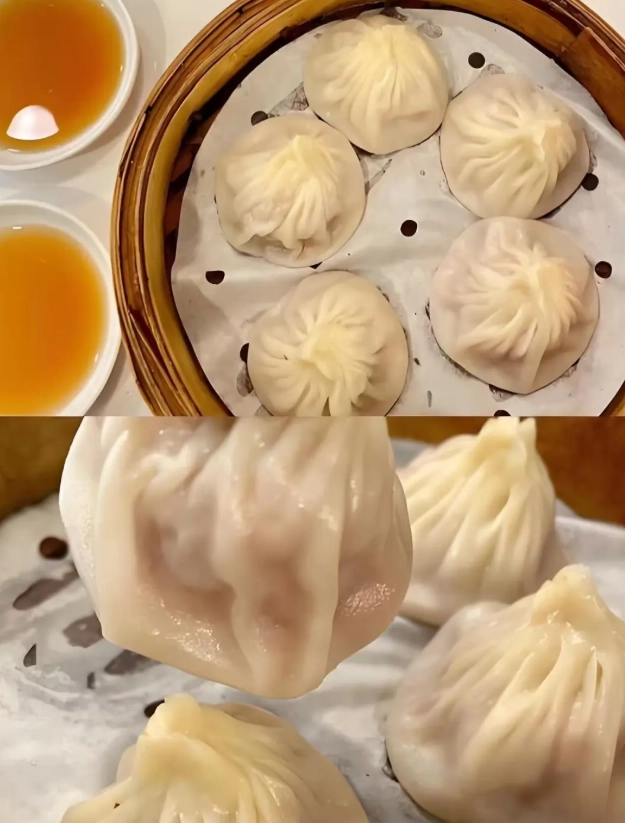
Pro Tip: The tables are tiny and shared. Don't be shy — sit wherever there's a spot. And use the metal spoon to lift the dumpling onto your soup spoon, then nibble a tiny hole in the side to let steam escape. That's the 3-second version of “how to eat xiaolongbao without burning yourself.”
2. Din Tai Fung (鼎泰丰) — Reliable, English-Friendly, and Worth It
Location: multiple branches, but the Xintiandi branch (Unit 11, House 6, Lane 123, Xintiandi, Huangpu District) is the most tourist-friendly. Yes, it's a global chain. Yes, it's more expensive — around 80–100 RMB for a basket of pork xiaolongbao. And yes, I still recommend it for first-timers who are nervous about hygiene, language barriers, or navigating a chaotic local shop.
The dumplings are consistently good: 18 pleats, thin skin, clean pork flavor. The Xintiandi branch has English menus, credit card acceptance, and air conditioning that actually works. That last point matters more than you think in July.
Service is polished but a bit robotic. Don't expect a warm chat with the server. And avoid the dinner rush after 7pm on Fridays — the wait can exceed an hour. Lunch on a weekday is calm and pleasant.
3. Fu Chun Xiao Long (富春小笼) — The Old-School Contender
Address: 650 Yuyuan Road, Jing'an District (静安区愚园路650号). This place has been slinging soup dumplings since the 1920s. The vibe is pure old Shanghai — tiled floors, harried aunties shouting orders, and a queue that moves faster than it looks. A basket of pork xiaolongbao costs around 20 RMB.
Here's the non-consensus take: the dumplings here are slightly heavier and doughier than Jia Jia's. The soup is rich and porky, but the wrapper is thicker by a millimeter or two. I still love it — it feels more “Shanghai grandmother” than “delicate dim sum.” But if you want paper-thin skins, stick with Jia Jia.
Open 6:30am–8pm. Go for breakfast around 8am when the morning light hits the wooden tables and the crowds haven't formed. It's a five-minute walk from Jiangsu Road metro station (Line 2/11), Exit 4.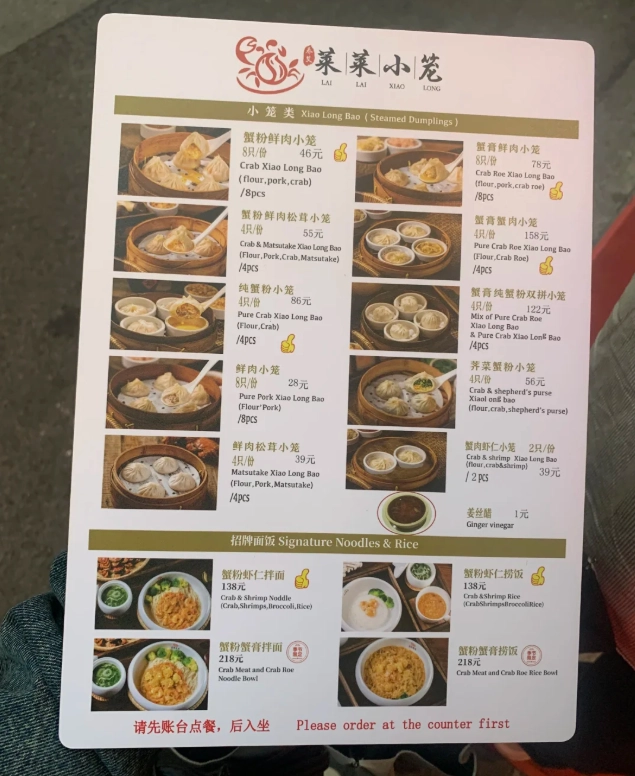
4. Yang's Dumpling (小杨生煎) — The Non-Soup Alternative
Location: chains all over the city; the Huanghe Road branch (97 Huanghe Road) is the most central. Wait — these are shengjian (pan-fried pork buns), not xiaolongbao. But I'm including them because every foreign visitor I meet confuses the two. Xiaolongbao = steamed, thin skin, soup inside. Shengjian = pan-fried, thick doughy bottom, also juicy inside. Yang's is the most famous shengjian chain and a great introductory bite before you graduate to the delicate stuff.
Four shengjian cost about 8 RMB. They're greasy, crunchy on the bottom, and explosively hot. Bite a tiny hole first, or you'll squirt pork juice down your shirt. Trust me — I've ruined a linen shirt on a client's behalf.
Yang's accepts WeChat and Alipay, but foreign credit cards often fail. Bring cash as backup. The Huanghe Road branch gets packed at lunch; use the self-order kiosk if you can figure out the Chinese interface — or just point at the picture menu.
5. San Lin Tang Bao (三林塘汤包) — The Neighborhood Legend
Address: 15 Sanlin Road, Pudong New Area (浦东新区三林路15号). This is off the tourist track, and that's exactly why I like it. It's a 10-minute walk from Sanlin metro station (Line 11), Exit 2, then look for the unassuming storefront with a red awning and a stack of bamboo steamers out front.
A basket of pork xiaolongbao is 15 RMB — the cheapest on this list. The skin is slightly thicker than the top-tier spots, but the soup is clean and the pork filling tastes like it was ground that morning. Locals from the neighborhood stream in from 6am to 9am for breakfast. This is where you see actual Shanghai residents, not tour groups.
No English menu. No photos on the wall. Just a Chinese menu board and a friendly auntie who will gesture at the pork option if you say “xiao long bao.” Cash only on my last visit — though WeChat Pay might work now. Bring small bills.
6. Wu You Xian (五有鲜) — The Underrated Gem
Address: 612 Weihai Road, Jing'an District (静安区威海路612号). I stumbled on this place by accident three years ago — I was lost, hungry, and saw a line of office workers outside. Turns out it's one of the best-kept secrets among locals who work in the area. The crab-and-pork xiaolongbao (around 35 RMB for eight pieces) are extraordinary: briny, sweet, and the soup is almost translucent with crab essence.
The shop is tiny — maybe six tables. Go at 2pm on a weekday and you'll have the place almost to yourself. The owner speaks a few words of English and is patient with pointing. No credit cards, but WeChat Pay and Alipay work if you've got them set up.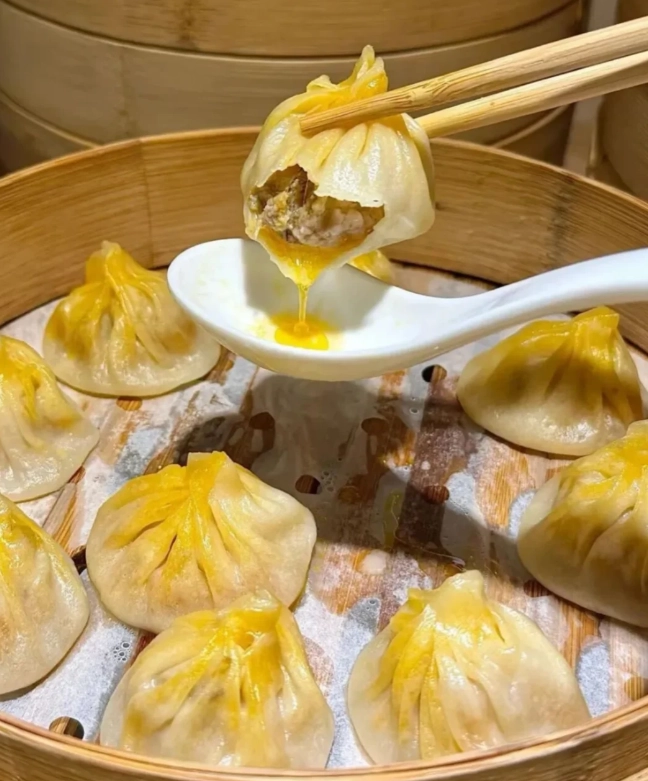
How to Order Xiaolongbao Without Panicking
First, know your numbers. A “long” (笼) is one bamboo steamer basket, usually holding 6–12 dumplings depending on the shop. When the server asks “几笼?” (how many baskets?), just hold up fingers. Two baskets feed two hungry people.
Second, understand the payment situation. Most of these shops run on WeChat Pay or Alipay linked to a Chinese bank account — which foreign visitors rarely have. Your international Visa or Mastercard will fail at Jia Jia, Fu Chun, San Lin, and Wu You Xian. Bring cash (Chinese yuan) for those. Din Tai Fung and Yang's are the only spots on this list that reliably accept international cards.
Insider Advice: Google Maps is useless in Shanghai. It'll show you a building across the street from the actual shop or freeze entirely. Use Apple Maps or download Amap (高德地图) — the English interface is decent. Better yet, screenshot the Chinese address and show it to a taxi driver. Every ride-hailing app (DiDi) has an English version now, which is a lifesaver.
Third, master the eating technique. Lift the dumpling gently with chopsticks onto your soup spoon. Nibble a small hole in the side. Blow. Slurp the soup through the hole. Then dip the dumpling in black vinegar with ginger and eat it in one bite. If you dunk the whole thing in vinegar first, the soup leaks out and you've wasted the best part.
Fourth, timing is everything. Noon on a weekend is amateur hour. Aim for 10am or 2pm. Avoid the first week of October (National Day holiday) — every shop is slammed from opening to closing. And here's something most guides won't tell you: winter months are better for soup dumplings. The soup is hotter, richer, and you don't feel like you're eating inside a sauna.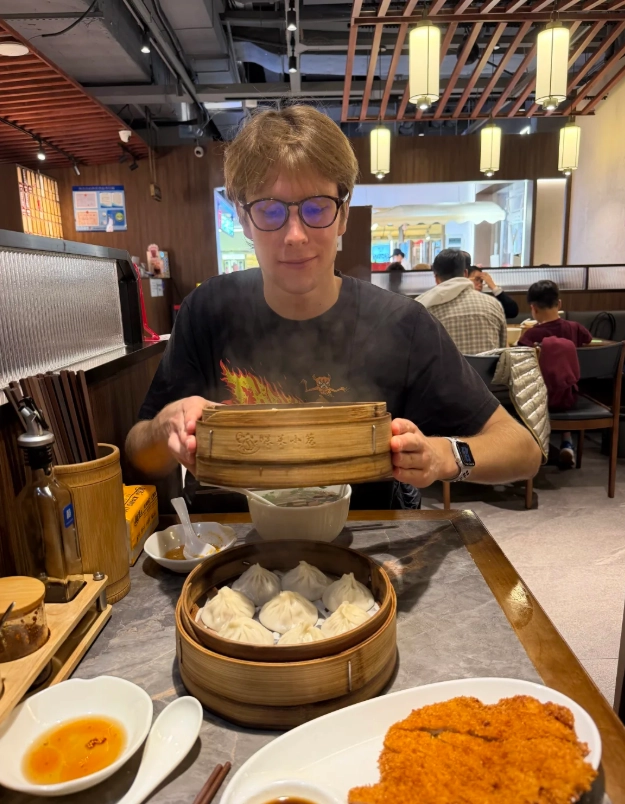
FAQ — Real Questions from My Tours
Verified and fact-checked by the editorial team to ensure informational precision. Prices and hours reflect standard operations but can shift; confirm on-site or via the restaurant's official channels before making a special trip.




No comments yet.