 Hong Ma
Quick Look: What You'll Find Ahead
- Top Things to Do in Dunhuang: An Overview
- 1. Explore the Mogao Caves
- 2. Crescent Lake & Mingsha Mountain
- 3. Yadan National Geological Park
- 4. Shazhou Night Market
- 5. Dunhuang Museum
- 6. Yangguan Pass
- 7. Yumen Pass & Han Great Wall
- 8. Desert Camping Under the Stars
- How to Plan Your Time
- Getting Around
- Practical Tips
- FAQ
Staring at the endless sand dunes, I can almost hear the ancient camel bells. But let's be real: your first trip to Dunhuang can turn into a sweaty mess if you follow the generic online itineraries.
I've had clients cry at the Mogao Caves entrance — not from emotion, but because they booked the wrong ticket category and couldn't get in. The top things to do in Dunhuang aren't just about checking boxes; they're about timing, booking, and knowing exactly where to go.
After leading tours here for years, I've boiled it down to 8 experiences that never disappoint. Here's the honest breakdown — including the mistakes you should avoid.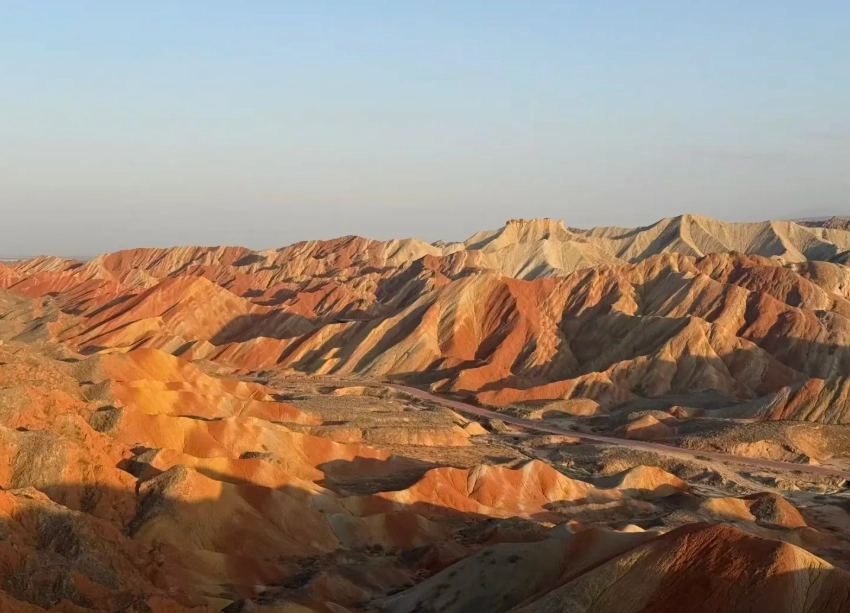
Top Things to Do in Dunhuang: An Overview
Before we plunge into the details, here's a snapshot of the eight experiences that make Dunhuang unforgettable. This table gives you the essentials — use it to plan your day at a glance.
| Attraction | Best For | Time Needed | Adult Ticket (RMB) | Booking Needed? |
|---|---|---|---|---|
| Mogao Caves | History & art lovers | Half day | 238 (A-class) | Yes, at least 3 days ahead |
| Mingsha Mountain & Crescent Lake | Sunset, camel rides | 3–4 hours | About 110 | No, but recommended in peak season |
| Yadan National Geological Park | Geology, photography | Full day | About 120 (incl. shuttle) | No, but book a driver |
| Shazhou Night Market | Street food, souvenirs | 1–2 hours | Free | No |
| Dunhuang Museum | Quick cultural intro | 1–2 hours | Free (passport required) | No |
| Yangguan Pass | Silk Road history | Half day | About 50 | No |
| Yumen Pass & Han Great Wall | Remote atmosphere | Full day | About 40 | No |
| Desert Camping | Night sky, unique stay | 1 night | 300–500 per person | Yes, in advance |
1. Explore the Mogao Caves
The Mogao Caves are the crown jewel of Dunhuang, and they deserve every ounce of hype. These 735 caves hold centuries of Buddhist art, and many are off-limits unless you join a guided tour. I always tell my clients to book the A-class ticket — it includes a 20-minute movie and access to 8 caves, whereas the B-class only lets you see 4. The catch? A-class tickets for the morning slots sell out days ahead, especially in summer. My advice: reserve at least 3 days in advance through the official Dunhuang Academy website or Trip.com. You'll need your passport number, and you must collect the physical ticket with the same passport at the visitor center.
The caves open at 8:00 in summer, and the first slots are the least crowded. I tried visiting at noon once — bad idea. The sun is brutal, and the queues snake for an hour. Payment at the site? The ticket office takes cash and card, but honestly, pre-booking online is the only stress-free way.
The caves are about 25 km southeast of downtown. A taxi costs around 80–100 RMB one way; if you're short on time, tack it onto a day trip with the Yadan park. There's no direct bus from the city, but some hotels arrange shuttles. Once inside, photography is strictly prohibited — so leave your phone in your pocket and let your eyes absorb the faded pigments.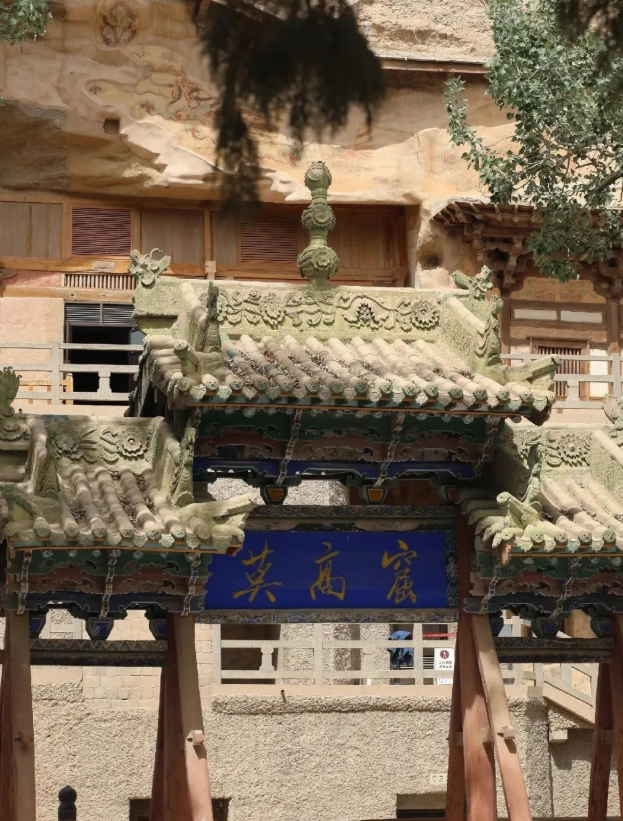
2. Witness the Crescent Lake and Mingsha Mountain
The image of a crescent-shaped lake surrounded by golden dunes is the postcard you've seen everywhere. And it's real. Mingsha Mountain is just 6 km south of the city, so you can grab a taxi (15–20 RMB) or even cycle in good weather. The entrance fee is around 110 RMB, which includes the area, but camel rides cost extra — about 100 RMB per person.
Here's my insider tip: go in the late afternoon, around 4 or 5 PM. The sand hasn't heated up yet, and you'll catch the sunset from the dunes. By 7 PM, the crowds thin out, and the light turns everything pink and gold. If you're planning to climb the sand, wear closed shoes. I've seen too many tourists with burning feet — the sand easily reaches 60°C in summer. And for the love of your camera, seal it in a ziplock bag; fine sand gets everywhere. The lake itself is beautiful, but you can't swim in it, so manage your expectations.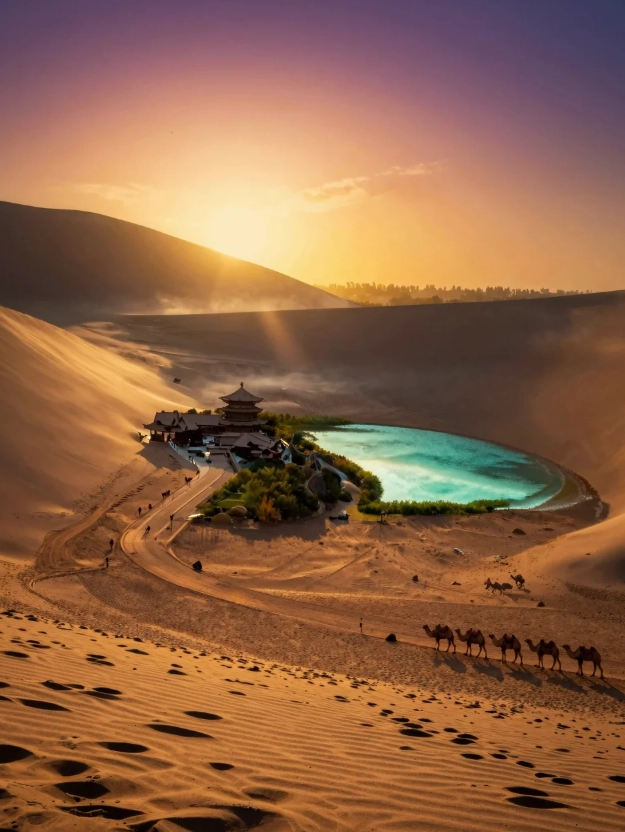
Pro Tip: Climb the dune directly opposite the lake for the classic photo angle. Most visitors turn right from the entrance; the left path is far less crowded and gives you the exact postcard view.
3. Chase the Sunset at Yadan National Geological Park
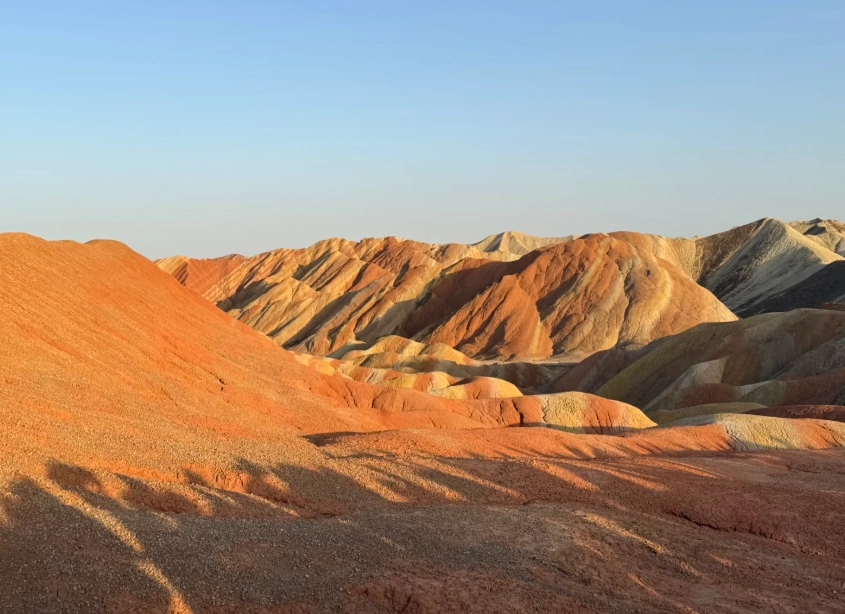
This is where you go when you want to feel like an astronaut on Mars. The Yadan landforms — wind-carved rock formations in the shape of castles and ships — stretch for miles. It's a full-day trip from Dunhuang, about 180 km one way. Your best bet is to join a group tour or hire a private driver for the day; expect to pay around 400–500 RMB for a car. The park entrance fee is about 50 RMB, with an additional 70 RMB shuttle, so budget around 120 RMB.
The shuttle takes you to the main viewpoints, and the sunset is jaw-dropping. But — and this is a big one — the park is huge and exposed. The wind can be ferocious, so bring a windbreaker, sunglasses, and water. And if you suffer from vertigo, stick to the flat trails. I remember one client who spent the whole time hiding behind a rock, missing the view. That's why I now always recommend the late-afternoon slot (around 3 PM) — you see the formations in full light and then stay for sunset.
4. Stroll Through Shazhou Night Market
After a day of desert heat, nothing beats the buzz of Shazhou Night Market. It's in the city center, a 10-minute walk from most hotels. Open from around 6 PM to midnight, this is where you'll find everything from dried apricots to sizzling lamb skewers. My personal ritual is to head straight for the stall selling xing pi shui, a local sour-plum drink that cools you down instantly.
For food, try the 'outside-in' noodle soup — it's a local specialty with a fascinating backstory. If you're vegetarian, there are plenty of stalls with vegetables and flatbread. Payment is easy — almost all vendors accept Alipay or WeChat, and a few take cash. English is limited, so having a translation app is a game-changer. And don't fall for the souvenirs at the entrance — walk to the back lanes for better prices.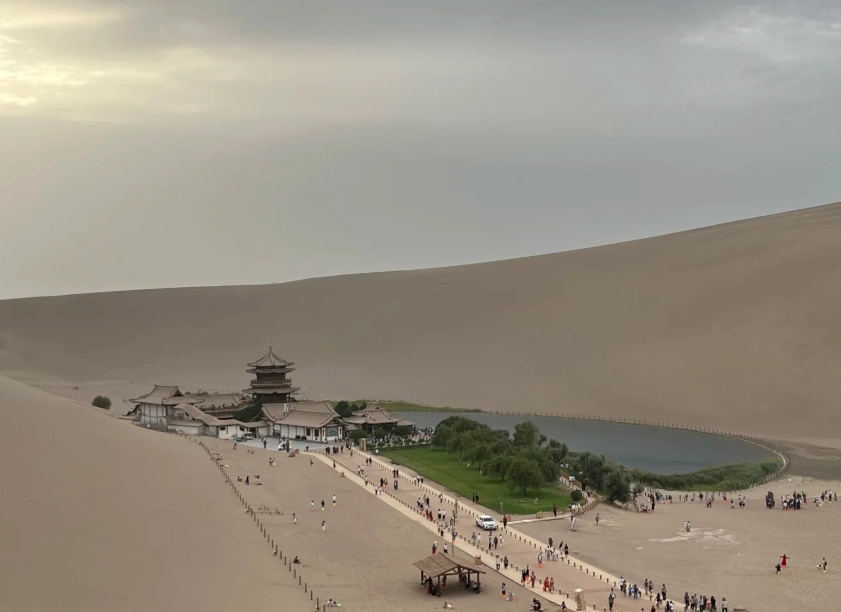
5. Dig Into History at the Dunhuang Museum
This is the perfect indoor plan for a scorching afternoon. Dunhuang Museum is free, but you must show your passport to get in. It's compact, well-curated, and tells the story of the Silk Road through artifacts from the surrounding region. Plan to spend about 1–2 hours. The museum is at the south of the city, an easy 15-minute walk from the night market area.
It closes on Mondays, and the last entry is 30 minutes before closing, so don't show up at 5 for a 5:30 close. I always bring clients here before a Mogao Caves visit — the context makes the cave art so much richer. There's no English audio guide, but the displays have English descriptions, so you're fine.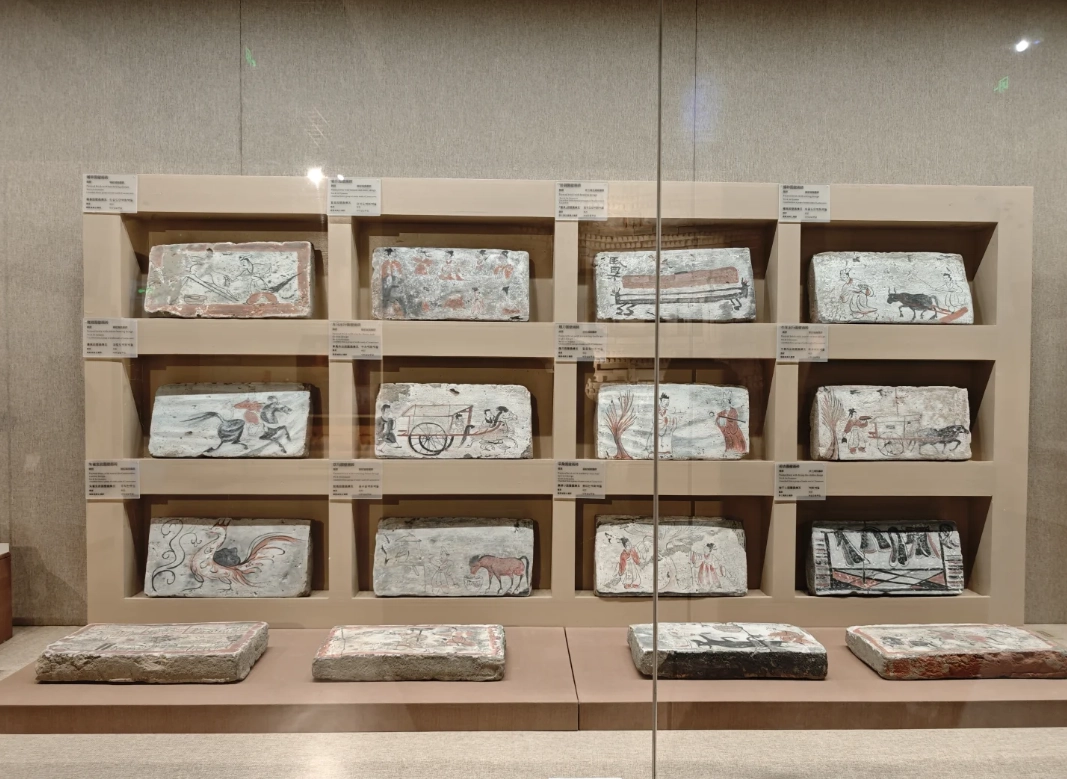
6. Climb the Ancient Yangguan Pass
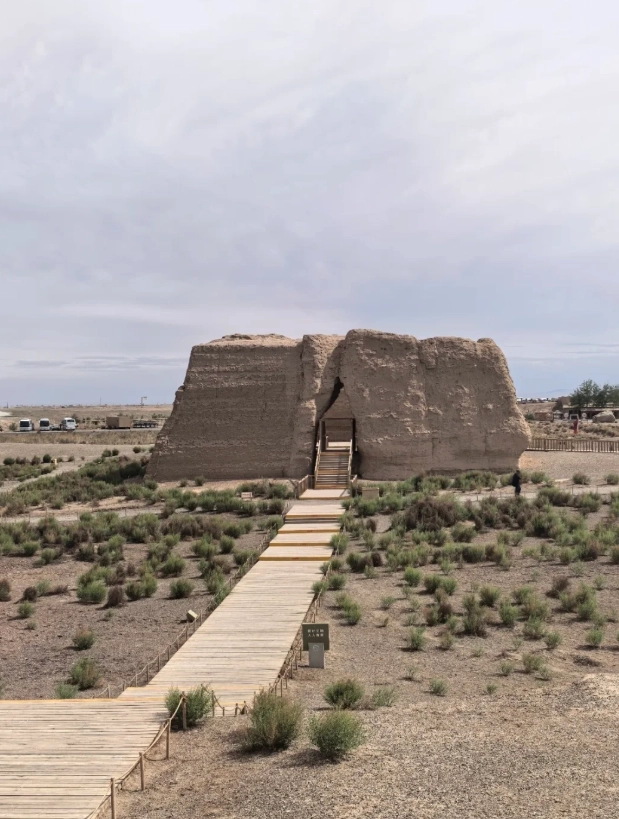
Yangguan Pass is one of the legendary frontier gates of the Silk Road. It's about 70 km west of Dunhuang, and most travelers combine it with Yumen Pass on a day trip. The site is a little underwhelming from the outside — an old beacon tower and a restored fort — but the museum inside is surprisingly good. It tells the story of the soldiers and merchants who passed through.
The ticket is around 50 RMB, and the site is open until 17:30 or 18:00, depending on the season. Go in the late afternoon; the golden light over the vast desert is exactly what the poets wrote about. Wear a hat and sunscreen — there's no shade. And here's a pro tip: the bus tour from the city will rush you through in an hour, but if you can, hire a driver who'll wait so you can take your time.
7. Walk the Remote Yumen Pass and Han Great Wall
Yumen Pass is even farther — about 90 km west. Together with the Han Great Wall remnants, it's a stark, haunting place that gives you a real sense of isolation. The ticket is about 40 RMB including a shuttle that takes you between the pass and the wall segments. Don't expect dramatic structures — most of the wall is just crumbling mounds of earth. But that's exactly what makes it special.
I always tell my clients: stand there quietly for a minute, and you'll feel the weight of history. The trip takes most of a day, and there are no restaurants nearby, so pack water and some snacks. The wind is relentless, so bring a scarf. It's not the most comfortable sightseeing, but it's the one that leaves a lasting impression.
8. Go Desert Camping Under the Stars
For the ultimate finale, spend a night in the desert. Several operators set up camps at the edge of Mingsha Mountain, offering tents, dinner, and a bonfire. I did this with a small group last spring, and it was pure magic — the sky turned velvet black and the Milky Way appeared overhead like a cosmic river. Prices vary, but expect to pay around 300–500 RMB per person for a basic package that includes transport, dinner, and a tent.
You'll need to book in advance — try contacting your hotel or using a site like Klook. The caves might be the heart of Dunhuang, but this is the heart of the experience. One caveat: the camps are basic, with shared facilities. If you need a real bed, you can book a 'glamping' style instead, but it's pricey. Either way, don't miss it.
How to Plan Your Time for the Best Things to Do in Dunhuang
If you only have 24 hours, here's how I'd spend it: hit the Mogao Caves first thing in the morning (8 AM slot), grab a quick lunch back in town, then head to Mingsha Mountain & Crescent Lake for sunset. That's tight but doable. For a more relaxed pace, use two days: Day 1 for Mogao Caves and the museum, Day 2 for Yangguan and Yumen passes or Yadan park.
And always keep a buffer for transport — getting to the far sites can eat up half a day. One thing I always tell my clients: don't try to do Yadan, Yangguan, and Yumen in one day. It's a 12-hour marathon, and you'll spend more time in the car than actually seeing anything. Choose two far sites max.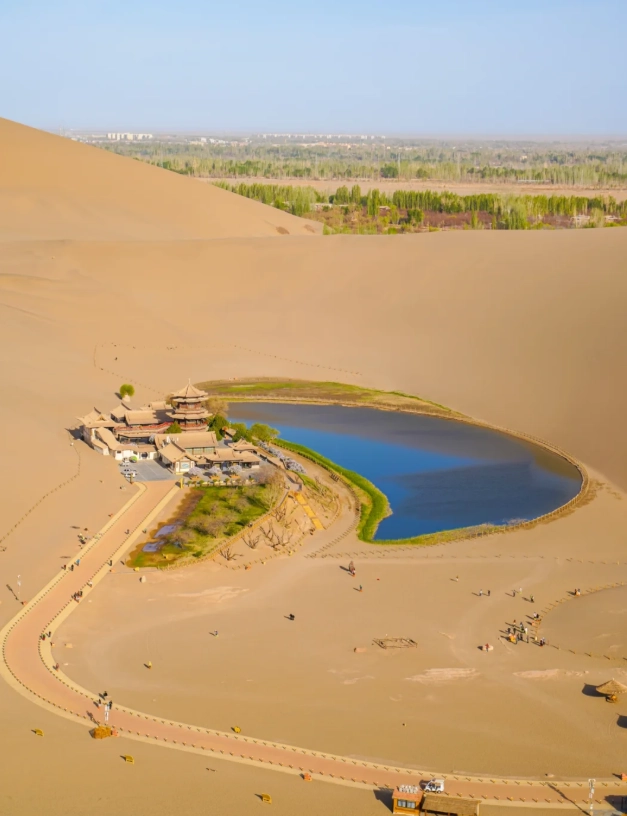
24-Hour Blitz
Time is tight, but you can still hit the downtown must-dos.
- Book a early Mogao Caves slot (ideally 8:00 AM).
- Have a quick lunch at a local noodle shop like Shun Zhang Zhang.
- Spend the late afternoon at Mingsha Mountain & Crescent Lake — sunset is around 7 PM.
- Finish with Shazhou Night Market for dinner and snacks.
Two-Day Comfort
This pace lets you actually breathe between sites.
- Day 1: Mogao Caves in the morning, Dunhuang Museum in the afternoon, night market for dinner.
- Day 2: Hire a driver for Yangguan and Yumen passes (or Yadan park if you prefer landscapes).
Getting Around Dunhuang: Transport Tips for Foreign Travelers
Forget about Google Maps here — it often shows wrong locations. Use Apple Maps or download AMap Global before you arrive. For taxis, just show the Chinese address to the driver; most won't speak English. Didi (the Chinese Uber) is another option, and many tourists successfully connect their international card. But be aware: some older drivers only accept cash or Alipay, so always have some cash as backup.
My honest take: for the outer sites like Yadan or Yangguan, a private driver is the safest and most convenient. Negotiate a flat rate for the day — you can find drivers near your hotel or through your accommodation. A full-day hire should be between 400 and 600 RMB, depending on the distance. Here's a quick comparison:
| Route | Approx. Distance | Taxi / Didi Cost | Time |
|---|---|---|---|
| Downtown → Mogao Caves | 25 km | 80–100 RMB | 30–40 min |
| Downtown → Mingsha Mountain | 6 km | 15–20 RMB | 15 min |
| Downtown → Yadan Park | 180 km | Private car 400–500 RMB | 4+ hours round trip |
| Downtown → Yangguan Pass | 70 km | Private car (shared day) 300–400 RMB | 1.5 hours one way |
Practical Tips for Visiting Dunhuang
Now for the nuts and bolts that make the difference between a smooth trip and a frustrating one. Let's break it down.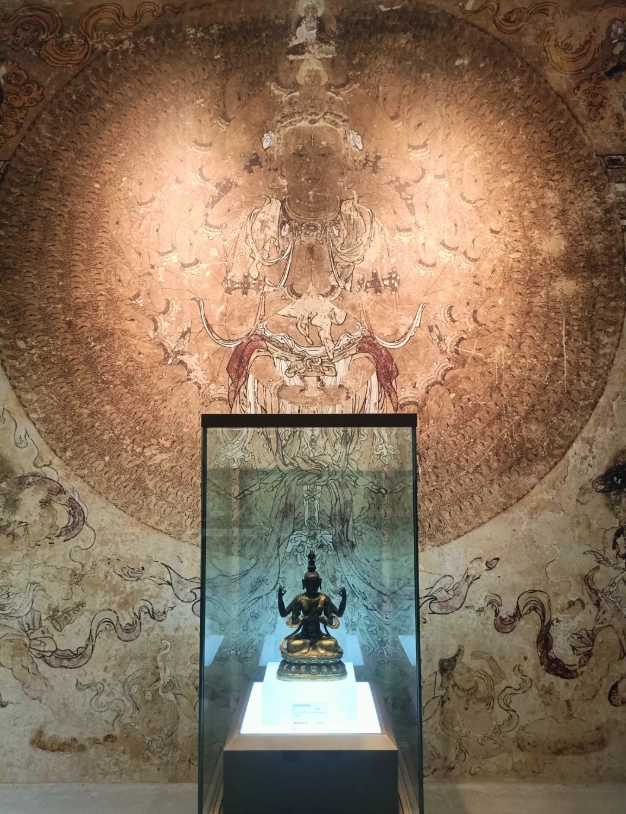
Payments and Cash
Most attractions and restaurants accept Alipay and WeChat Pay, but international credit cards often fail at smaller spots. Carry about 200–300 RMB in cash for taxis, market stalls, and emergency. ATMs are available downtown but not at remote sites.
Booking and Reservations
Avoid the walk-up trap at Mogao Caves — they sell a limited number of on-the-day tickets, and queues start at dawn. Pre-book through the official Dunhuang Academy site or Trip.com. For desert camping, reserve via Klook or your hotel. Always have your passport ready when collecting tickets.
Navigation and Connectivity
Google Maps is unreliable in China, so download Apple Maps or AMap for turn-by-turn directions. You'll also need a VPN to access Gmail, Google, and various social media. For translation, Apple's offline translator works well; Baidu Translate is another handy backup.
Weather and What to Pack
Dunhuang is hot by day and chilly after sunset, even in summer.
- Sunblock, lip balm, and sunglasses.
- A windbreaker or scarf for sandstorms.
- Closed-toe shoes for climbing dunes.
- A ziplock bag for your phone and camera.
- Cash (at least 300 RMB) for emergencies.
Frequently Asked Questions About Dunhuang Travel
This content has been fact-checked to ensure informational precision.





No comments yet.