 Bo Wu
Bo Wu
Quick Lookup
- Why Most Foreigners Miss the Online Check-In Window
- What Documents Do You Need for Domestic Flight Check-In in China?
- Step-by-Step: How to Check In for a China Domestic Flight
- Airport Check-In vs. Online Check-In: Which One to Choose?
- Baggage Rules: What You Must Know Before You Pack
- Common Mistakes and How to Avoid Them
- FAQ
I still remember the first time I tried to check in for a domestic flight in China. The app was all in Chinese, my passport number wouldn't fit, and the machine at the airport wouldn't take my foreign credit card. Pure chaos. But after guiding dozens of travelers through this maze, I've got the shortcuts down. Here is the thing — most Chinese travelers never even use a paper ticket anymore. Yet foreigners keep getting stuck at the same spots.
One tip upfront: If you have luggage, the online check-in won't save you much time unless you skip the baggage drop. But for hand-luggage only flyers, online check-in is a lifesaver. More on that below.
Why Most Foreigners Miss the Online Check-In Window
China's domestic flight check-in systems are designed for Chinese ID numbers — 18 digits. Your passport? It's trickier. Many airline apps and mini-programs (those WeChat things) simply don't accept foreign passport numbers correctly, or they ask for a Chinese phone number to receive the verification code. And guess what? Your T-Mobile roaming number might not work for SMS.
The real kicker: most Chinese airlines open online check-in exactly 24 hours before departure and close it 30-60 minutes before. If you sleep through that window, you're stuck at the airport counter. I once had a traveler from Australia miss her online window because her airline app denied her passport. She ended up at the airport 2 hours early anyway.
My advice: Use third-party platforms like Trip.com (they handle foreign passports smoothly) or the Chinese app Umetrip (航旅纵横) — but Umetrip requires Chinese app store download and Chinese language skills. For most foreigners, the safest bet is to check in via the airline's website (desktop version) or simply go to the airport early. Yes, it's 2025 and that's still the reality.
What Documents Do You Need for Domestic Flight Check-In in China?
Only your passport. No visa page required for domestic flights, just the passport itself. But here's a detail that tripped me up once: some smaller airports (like those in Tibet or Xinjiang) may ask for an additional police registration slip or a temporary residence permit if you're entering certain regions. For standard domestic routes (Beijing-Shanghai, Guangzhou-Chengdu, etc.), passport is fine.
| Document | Required? | Notes |
|---|---|---|
| Original Passport | Yes | Must match the name on your booking exactly. Middle name issues? Contact airline beforehand. |
| Chinese Visa Page | No | Not needed for domestic travel, but carry it anyway in case of random checks. |
| Airline Booking Confirmation | Helpful but not mandatory | They can look it up with your passport number. |
| Police Registration Slip | Only for certain regions | Tibet, Xinjiang, border areas. Check local rules. |
One more thing — your e-ticket number starts with 999 (Air China), 781 (China Eastern), 784 (China Southern), etc. Keep that in your email. If the system glitches, the agent can manually find your reservation.
Step-by-Step: How to Check In for a China Domestic Flight
Let's walk through two scenarios: online check-in and airport counter check-in. Assume you booked through Trip.com or directly on the airline website.
Online Check-In (the "smooth" path)
1. 24 hours before departure, open the airline's official website (not the mobile app if you have issues). Look for "Online Check-In" or "值机".
2. Enter your booking reference (PNR) and last name. Use your passport number if asked.
3. Select your seat. Windows are popular but exit rows have more legroom — though Chinese airlines usually assign exit rows at the counter only.
4. Get the mobile boarding pass or PDF. Save it to your phone. The airport scanners in most major cities accept electronic passes. But smaller airports? They might insist on paper. Print it at the airport kiosk if needed.
5. If you have checked baggage, you still need to drop it at the baggage drop counter. Look for "Bag Drop" or "行李托运" signs. This often takes 5-10 minutes.
Personal gripe: The Chinese airline websites often time out if you don't complete within 10 minutes. And they hate Safari. Use Chrome or Edge. And yes, you need a reliable VPN — Google is blocked, but most airline sites work without VPN oddly.
Airport Counter Check-In (the "safe" path)
Arrive at least 2 hours early for domestic flights. Even if you're elite status, the queues for foreigners can be slow because the staff may need to manually enter your passport details.
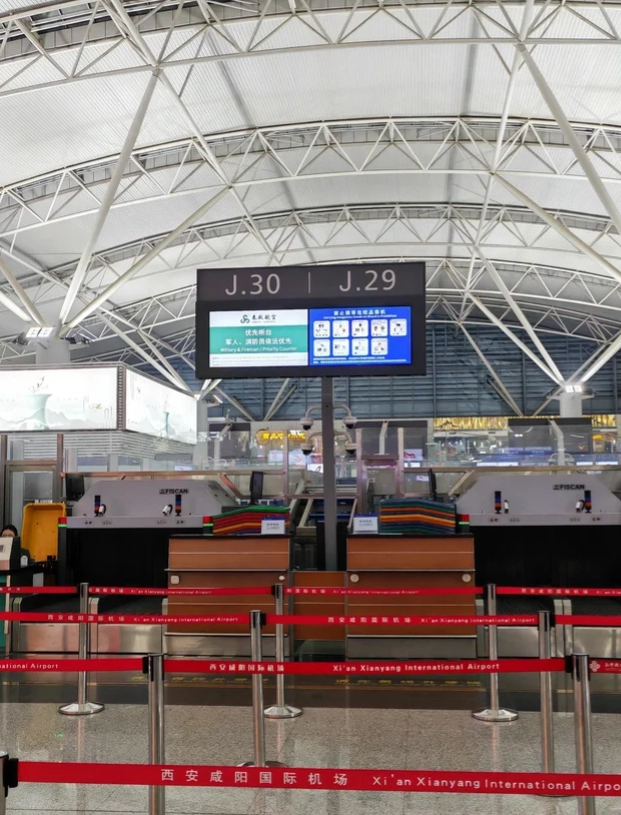
1. Find your airline's counter cluster. Huge screens display flight numbers.
2. Show your passport. They'll print a paper boarding pass. Keep it safe — you'll need it again at the gate and sometimes at security.
3. Baggage goes on the belt. Make sure your luggage tag is attached securely. I once saw a tag fall off and the bag went to Guangzhou instead of Beijing.
4. Security check: laptops out, liquids under 100ml, power bank in hand luggage only. They're strict about power banks — no loose batteries, capacity must be under 100Wh and clearly marked.
Airport Check-In vs. Online Check-In: Which One to Choose?
Let me break it down with a quick comparison table based on my experience.
| Method | Best For | Time Saved | Pain Points |
|---|---|---|---|
| Online Check-In | Hand luggage only, tech-savvy, booked via Trip.com | 20-40 minutes at airport | Passport number mismatch, app language, VPN needed |
| Airport Counter | Checked baggage, first-time, complex itineraries | 0 (but avoids online frustration) | Long queues, limited English, paper boarding pass required |
| Self-Service Kiosk | Frequent flyers with Chinese ID – not for foreigners usually | Minimal if it works | Kiosks often reject foreign passports; staff needed anyway |
My verdict: If you have checked luggage, just go to the counter. The online check-in plus bag drop usually doesn't save enough time to justify the headache. But if you're traveling with only a backpack, do online check-in and head straight to security. I always tell my clients to aim for the airport 2.5 hours early regardless — you can grab a coffee or explore the airport shops without stress.
Baggage Rules: What You Must Know Before You Pack
Chinese domestic airlines are notorious for strict baggage enforcement. Budget carriers like Spring Airlines (春秋航空) make you pay extra for any overhead bin bag. Full-service airlines (Air China, China Southern, China Eastern) usually allow one carry-on (7kg) and one personal item. But here's the catch — they weigh your carry-on at the gate. If it's 8.5kg, they'll force you to check it in, and that can cost you.
Pro tip: Wear your heaviest jacket, put heavy items in your pockets, and keep a shopping bag ready to redistribute weight if needed. I've done this dozens of times. Also, power banks must be under 100Wh and in carry-on only. No exceptions. If your power bank has no clear capacity label, it will be confiscated.
Common Mistakes and How to Avoid Them
After seeing hundreds of foreigners mess this up, here are the top 5 mistakes and my fixes.
- Mistake #1: Using Alipay or WeChat Pay at the airport kiosk. Many self-service kiosks accept payment only through Chinese payment apps. If you need to pay for excess baggage or seat selection, have cash (RMB) or a physical Visa/Mastercard ready. Amex is rarely accepted in domestic terminals.
- Mistake #2: Not having the booking reference handy. Save your Trip.com confirmation email as a screenshot. The airport Wi-Fi can be flaky, and you may not access email quickly.
- Mistake #3: Ignoring the security rules for liquids. Chinese airports follow the 100ml rule strictly. And don't try to bring a half-empty bottle of water through—they'll make you throw it away. Empty bottle? You can refill after security.
- Mistake #4: Expecting English signs everywhere. Major airports (Beijing Capital, Shanghai Pudong, Guangzhou Baiyun) have good English signage. But second-tier city airports often have Chinese-only signs for check-in counters. Use your airline's logo on the screen to find the right counter.
- Mistake #5: Arriving exactly 1 hour before departure. Domestic flights in China close check-in 30 minutes before departure, but if you're at the counter at 30 minutes, they may refuse you. Be there at least 1.5 hours early, especially if you need to sort out passport issues.
FAQ
Final piece of advice: Every time I fly domestically, I mentally prepare for a small hiccup. The system is just not built for foreign passports yet. Pack patience, bring a printed copy of everything, and if something goes wrong, smile at the counter agent — they deal with this daily and usually try to help.
Verified and fact-checked by the editorial team.






No comments yet.