 Yan Zhou
Three missed trains in one week. Two sold-out cable cars. One very unhappy taxi driver in Qufu.
That was my first Shandong run as a guide, and it taught me more than any itinerary I have read online. On paper this province looks simple — one coastline, one mountain, one philosopher, fast trains between all of them. In practice, the timing traps here will quietly eat two days of your holiday if nobody warns you.
So when travelers ask me how to build a Shandong travel guide plan that does not end in exhaustion, I give them the same answer I give my own clients: anchor the route on Tai'an and Qufu first, and save Qingdao for last. Almost everyone does it backwards. They fly into Qingdao, spend three lazy days eating clams by the sea, then realise Mount Tai is a two-hour train ride west and the good cable car slots are already gone.
Flip the order and the whole province opens up. Here is the full breakdown, including the parts most guides skip.
Grab the Route First — My Shandong Cheat Sheet
- What Makes Shandong Different From Any Other China Trip?
- How Do You Move Around Shandong Without Losing a Day?
- A 5-Day Shandong Itinerary With Real Transit Times
- What Should You Actually Eat in Shandong?
- Where Should You Stay in Each Shandong City?
- What Are the Real Pain Points for Foreign Visitors?
- Questions I Get Asked Before Every Shandong Trip
What Makes Shandong Different From Any Other China Trip?
Shandong is where Chinese history becomes physical. This is the province of Confucius, of the emperors who climbed Mount Tai to prove they had the mandate of heaven, and of a coastline that has been trading with foreign ships since the German concession era.
Practically speaking, that gives you four completely different travel experiences sitting inside a rail corridor you can cross in under three hours.
- Jinan — a spring-fed capital that is cheap, unhurried and almost entirely domestic tourists
- Tai'an — a working town whose whole economy orbits one mountain
- Qufu — a small city built around a single family's ancestral estate
- Qingdao — red roofs, cold beer, beaches and a very European waterfront

The Three-City Spine: Jinan, Tai'an, Qingdao
The Jinan-to-Qingdao high-speed line is the spine of any Shandong trip, and Tai'an sits right in the middle of it. That single fact is what makes this province so easy to plan — and so easy to plan badly.
Jinan West to Tai'an takes about 20 to 25 minutes. Tai'an to Qufu East is another 25 to 30 minutes south. Qufu East to Qingdao runs roughly two hours east. If you go straight from Jinan to Qingdao without stopping, you are looking at around 1 hour 40 minutes to 2 hours 10 minutes depending on the train.
Here is the catch nobody mentions: Tai'an has two railway stations, and they serve different purposes. Tai'an Station handles the high-speed trains and sits west of the city. Taishan Station is the older conventional station on the north side of town, and it is noticeably closer to the Red Gate entrance, the start of the classic stairway climb. If you are planning to walk up the mountain at dawn, book to Taishan Station when a train is available.
Why Qufu Earns a Full Day, Not a Half Day
Most travelers give Qufu three rushed hours and regret it — the Cemetery of Confucius alone needs ninety minutes, and it sits well outside the old town.
The three sites, known together as the Three Confucius Sites, are the Temple of Confucius, the Kong Family Mansion directly next door, and the Cemetery of Confucius, called Kong Lin locally. The Temple and the Mansion are inside the old town walls and connect on foot in a two-minute walk. The Cemetery is a short drive north, and a free shuttle bus runs between the Temple area and the Cemetery gate during opening hours.
The Temple is the part people photograph. The Cemetery is the part people remember. You walk a long cypress-lined avenue with stone animal statues on both sides, past graves that have been tended by the same family line for an absurd number of generations. It is genuinely quiet, which is rare at a UNESCO-listed site in China.
Both Mount Tai and the Confucius sites carry UNESCO World Heritage status, and the listing details on the UNESCO World Heritage Centre site are worth a read before you go — they explain why the mountain was considered sacred rather than merely scenic.
Pro Tip: Buy the combined Three Confucius Sites ticket rather than three separate ones. Combo pricing shifts between peak and low season, so confirm the current rate at the ticket window or on the official Qufu tourism account the morning you arrive. If a tout near the Temple offers you a "skip the line" pass, walk away — the Temple queue moves quickly and there is no fast lane to buy.
How Do You Move Around Shandong Without Losing a Day?
Trains do the heavy lifting. Everything else is a short Didi ride, and in Qingdao the metro is genuinely useful.
| Route | High-Speed Rail Time | Approx. 2nd-Class Fare | What to Know |
|---|---|---|---|
| Jinan West to Tai'an | 20 to 25 min | around 30 CNY | Book morning departures; afternoon trains fill with tour groups |
| Tai'an to Qufu East | 25 to 30 min | around 35 CNY | Qufu East is far from the old town, allow 40 min buffer |
| Qufu East to Qingdao | around 2 hours | around 130 CNY | Fewer departures than the Jinan route, book early |
| Jinan to Qingdao direct | 1 h 40 m to 2 h 10 m | 130 to 160 CNY | Skips Tai'an and Qufu entirely |
| Qingdao to Qingdao North | 10 to 15 min | under 20 CNY | Useful if you are connecting to the airport metro line |
High-Speed Rail: Passports, Booking Windows and the 12306 Trap
Your passport is your ticket — most Shandong stations no longer issue paper tickets, and the gate reader scans your passport directly.
Booking typically opens roughly two weeks ahead of departure. The official channel is China Railway 12306, and the English version does work, though it can be fussy about passport number formatting and sometimes rejects foreign phone numbers during verification. If it fights you, Trip.com sells the same seats with a small service fee and a much friendlier interface for foreigners.
Two things catch people out at the station. First, you need your physical passport, not a photo of it. Second, security screening at Chinese rail stations is thorough and slow at peak hours — arrive 45 minutes before departure if you are carrying a large suitcase.
Didi, Metro and the Last-Mile Walk
In Jinan and Qingdao, Didi is cheap enough that you should stop agonising over public transport — a 15-minute ride usually costs less than a coffee back home.
Didi works through Alipay with an English interface, and drivers almost never speak English. Save your destinations in Chinese characters before you leave the hotel, or have the front desk write them down. This is not optional. I have watched a very capable traveler lose 40 minutes because the driver could not read a romanised street name.
Jinan's metro network is still thin in the historic core, so Baotu Spring and Daming Lake are best reached on foot or by Didi. Qingdao is the opposite — Line 3 covers the Old Town and the waterfront, and Line 2 covers the modern city. Both accept the Alipay metro QR code. Just remember that Qingdao's old town is hilly with one-way streets, so your Didi will often drop you 200 metres from the actual entrance. Look up, find the church spire or the pier, and walk.
A 5-Day Shandong Itinerary With Real Transit Times
This is the sequence I run with clients. It assumes you land in Jinan and fly out of Qingdao. Reverse it if your flights demand it, but keep Mount Tai in the first half.
Day 1 — Jinan: Springs, a Free Lake and One Overrated Street
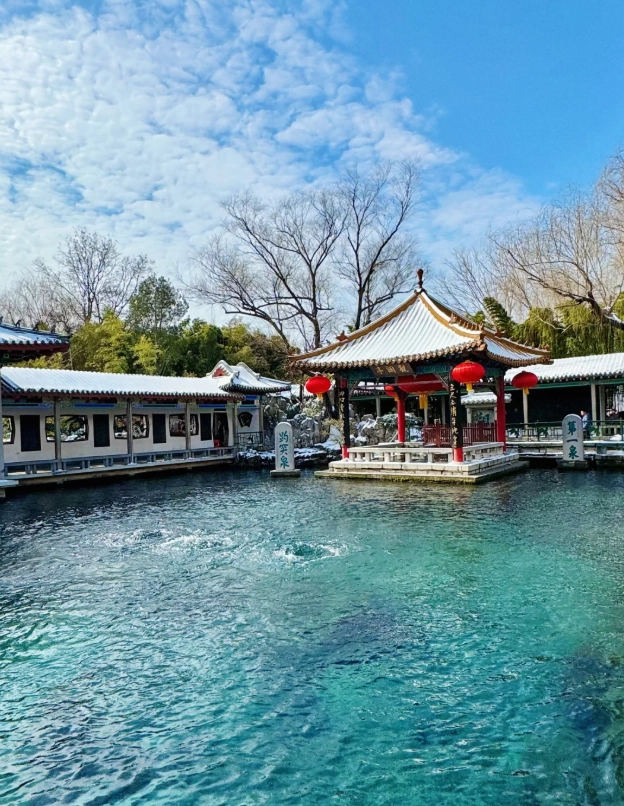
Start at Baotu Spring Park on Baotu Spring South Road in Lixia District. Entry is around 40 CNY for adults with discounts for children and seniors, and opening hours run longer in summer than winter. Go at 8:30 a.m. The park is small, and by 10 a.m. the tour flags arrive.
From the north gate it is a 15-minute walk to Daming Lake, which costs nothing to enter and is where locals actually spend their weekends. Budget 90 minutes. Then take a Didi to Kuanhouli for lunch.
If it rains, swap the lake for the Shandong Museum, which is free but requires an advance reservation through its WeChat account and closes on Mondays. The museum's Han dynasty gallery alone justifies the trip.
Furong Street gets recommended everywhere. I will be blunt: it is a crowded snack lane selling the same squid skewers at every stall. Walk it once for the atmosphere after dark, then eat dinner somewhere else.
Transit note: Jinan West Railway Station to the city centre is about 30 minutes and 35 to 50 CNY by Didi. From Jinan Yaoqiang Airport, allow 45 to 60 minutes to the centre — the airport shuttle and Didi remain the practical options.
Day 2 — Mount Tai: The Climb, the Cable Car and the Sunset Nobody Mentions
Two entrances matter. The Red Gate is the base of the classic stone stairway, and it is the route for people who want to say they climbed it. Tianwai Village is where you catch the shuttle bus that removes most of the suffering.
The mountain ticket runs around 115 CNY in high season with lower pricing in the colder months. The shuttle bus to the midway point costs roughly 30 CNY, and the cable car from there to the summit ridge is about 100 CNY one way. Prices move, so verify at the window or on the official scenic area account before you commit.
My recommended rhythm: bus up around 7:30 a.m., cable car to the ridge, then walk the summit loop for 90 minutes to two hours. You will pass the Bixia Temple and the summit Confucius shrine, and the views across the plains are the reason emperors came here.
Insider Advice: The cable car shuts down completely in high wind, and it stops running in the late afternoon. Check the operating status at the lower station before you buy your uphill ticket. If it is closed, take the bus to the midway point and walk the rest — you still get the ridge views without the full stairway. And use the toilet at the lower station. The ones near the summit are a queue, a smell and a memory you did not ask for.
On the sunrise question, I will disagree with most guides. Climbing overnight to watch the sunrise means standing shoulder to shoulder on a cold concrete platform with several thousand people, and cloud cover ruins it more often than anyone admits. If you are not a serious hiker, sleep properly, take the morning bus, and enjoy the mountain in daylight with your knees intact.
If the weather turns, the Dai Temple in Tai'an town is the indoor-friendly alternative and costs around 30 CNY.
Day 3 — Qufu: The Three Confucius Sites in One Clean Loop
Morning: Temple of Confucius and the Kong Family Mansion, two to two and a half hours at an easy pace. The Temple's ancient cypress trees and the stone steles are the highlights, and the Mansion gives you a sense of how a single family lived at the centre of Chinese state ritual for an extraordinary stretch of history.
Lunch in the old town, then take the free shuttle to the Cemetery of Confucius for 90 minutes. Back in town by late afternoon.
Qufu East Railway Station is roughly 20 to 25 minutes from the old town and costs 30 to 40 CNY by Didi. Leave a 40-minute buffer — the station is bigger than you expect and the taxi queue after 5 p.m. is real.
Days 4 and 5 — Qingdao: Coast, Beer and a Rain Plan
Day 4 belongs to the Old Town. Zhanqiao Pier is free and mobbed by midday, so go at 7 a.m. when it is just fishermen and swimmers. St. Michael's Cathedral is a short walk up Zhongshan Road and charges about 10 CNY to enter. Then move east to Badaguan, a free neighbourhood of tree-lined lanes and villas where the light is best before 10 a.m.
For the classic red-roof view, Signal Hill Park or Little Fish Hill both charge around 15 CNY and both are steep. Pick one. Signal Hill has the better panorama; Little Fish Hill is quieter.
Day 5 is the Beer Museum on Dengzhou Road in Shibei District, with entry from around 60 CNY and higher-tier tickets that include tasting flights. The tour is more entertaining than it has any right to be. Finish with May Fourth Square at night when the skyline lights up.
Rain plan: pair the Beer Museum with the Qingdao Municipal Museum. Both are indoor, both take about two hours, and both are warm. Do not plan a Laoshan day trip in bad weather — the mountain roads get foggy and the shuttle system inside the park is confusing enough on a clear day.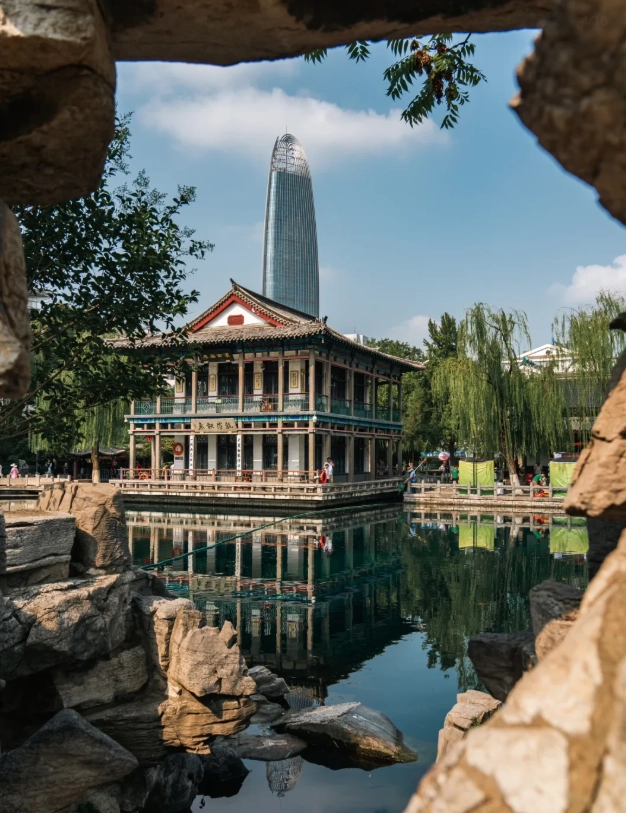
What Should You Actually Eat in Shandong?
Jinan: Braised Pork Over Rice and a Soup With a Misleading Name
Order the ba zi rou — a slab of soy-braised pork belly served over rice — and you will understand why Jinan locals ignore every trendy restaurant in town.
A bowl runs 15 to 25 CNY. The flavour is deep, slightly sweet and heavy on star anise. Add a you xuan, a flaky spiral pastry with scallion, for 5 to 8 CNY, and a bowl of tian mo for 5 to 10 CNY. Here is the trick: tian mo translates roughly to sweet foam, but it is a savoury millet and peanut soup with a peppery finish. Every foreign guest I have taken there has been surprised. Order it anyway.
Kuanhouli near Quancheng Square is the comfortable option with seating. Furong Street is the crowded one. Small vendors here are Alipay and WeChat Pay only — cash is legal tender but a 100 CNY note will genuinely stump a stallholder at 8 a.m.
Qingdao: Buy the Seafood, Then Pay a Kitchen to Cook It
The best seafood meal in Qingdao is one you assemble yourself: buy your fish and shellfish at a wet market, then hand it to a nearby beer house and pay them to cook it.
Head to the Yingkou Road area in Shibei District. The market sells live clams, scallops, mantis shrimp and whatever came off the boats that morning. Cooking fees run roughly 15 to 30 CNY per dish depending on the style — spicy fried clams, steamed scallops with garlic, salt and pepper prawns. Then buy beer by the jin in a plastic bag, which is exactly how locals drink it.
Also order bayu jiaozi, the mackerel dumpling. It is light, faintly sweet and has none of the fishiness foreigners expect.
Skip Pichai Yuan if you want real food. It is a photo stop now.
Zibo: The Do-It-Yourself Barbecue Wrap
Zibo sits on the Jinan to Qingdao rail line, which makes it a realistic detour. The local barbecue style has you grill skewers at your own table, then wrap the meat in a small pancake with a scallion and a dab of peanut dip. Expect 50 to 80 CNY per person. It is fun, it is messy, and it is the single easiest way to add a night to a Shandong trip without adding a train day.
Where Should You Stay in Each Shandong City?
Pick your base by what you are doing the next morning, not by star rating. In Tai'an, that means the north side of town near the mountain entrances. In Qingdao, it means the Old Town if you want atmosphere and the modern city if you want convenience.
| Hotel or Area | City and District | Est. Price Per Night | Best For |
|---|---|---|---|
| Hyatt Regency Jinan | Jinan, Shizhong District | 700 to 1100 CNY | Families and business travelers needing a reliable English-speaking front desk |
| Atour Hotel chain | Jinan, Quancheng Square area | 400 to 600 CNY | Solo travelers and couples who want clean, quiet, walkable |
| Guesthouses near Tianwai Village | Tai'an, north side | 200 to 500 CNY | Early mountain starts and sunrise climbers |
| Courtyard inns inside the old town | Qufu, near the Temple | 300 to 600 CNY | Couples and culture-focused travelers who want to walk to the sites |
| Shangri-La Qingdao | Qingdao, Shinan District, Xianggang Middle Road | 900 to 1500 CNY | First-timers and families wanting a pool and full international card acceptance |
| InterContinental Qingdao | Qingdao, Shinan District, Aomen Road | 800 to 1400 CNY | Couples who want to walk to May Fourth Square and the waterfront |
| Hostels around Zhongshan Road | Qingdao, Old Town | 150 to 350 CNY | Backpackers who value location over quiet |
Two practical checks before you book anywhere in Shandong. Ask whether the hotel has an elevator, because some older courtyard properties do not and you will be carrying bags up narrow stairs. And confirm that the front desk can help with WeChat mini-program bookings — that single amenity is worth more than a breakfast buffet.
Hostels and smaller inns in Qingdao's Old Town are usually fine with luggage storage after checkout, which matters if your flight is late. Ask by message before you arrive rather than at the desk.
What Are the Real Pain Points for Foreign Visitors?
Payments: Alipay Works, Cash Barely Does
Link your Visa or Mastercard to Alipay before you fly, because doing the in-app identity verification while twenty people queue behind you in a Jinan noodle shop is a special kind of misery.
Once set up, Alipay and WeChat Pay cover almost everything: street food, metro gates, temple tickets, Didi. International cards work at large hotel front desks and some big department stores, and that is roughly the limit. Cash is accepted in theory, but small vendors often cannot make change for a large note. Carry 200 to 300 CNY in small bills as a backup and treat it as emergency money, not your main wallet.
Navigation: Google Maps Will Lie to You
Google Maps is unreliable inside mainland China, and the errors are worst exactly where you need accuracy — pedestrian lanes in Qingdao's Old Town and the mountain bus stops in Tai'an.
Use Apple Maps, which works well and displays English place names, or Amap in its English mode. Before each day, screenshot your destinations with the Chinese characters visible so you can show them to a driver without relying on signal. Download an offline translation app too, and install your VPN before departure rather than after arrival, because the app stores you need may not load once you are there.
Tickets: Passport, Reservation, WeChat
Most Shandong attractions now require advance booking with a passport number, and the booking channel is usually a Chinese-language WeChat mini-program.
Yes, navigating that in pure Chinese is a nightmare even for me. The workaround is simple: ask your hotel reception to book it for you, or use an English-friendly platform like Trip.com or Klook where the listing exists. Museums commonly close on Mondays, so build your week around that. If you are checking entry rules or visa-free arrangements, the National Immigration Administration publishes the current policy and it changes more often than most travel blogs update.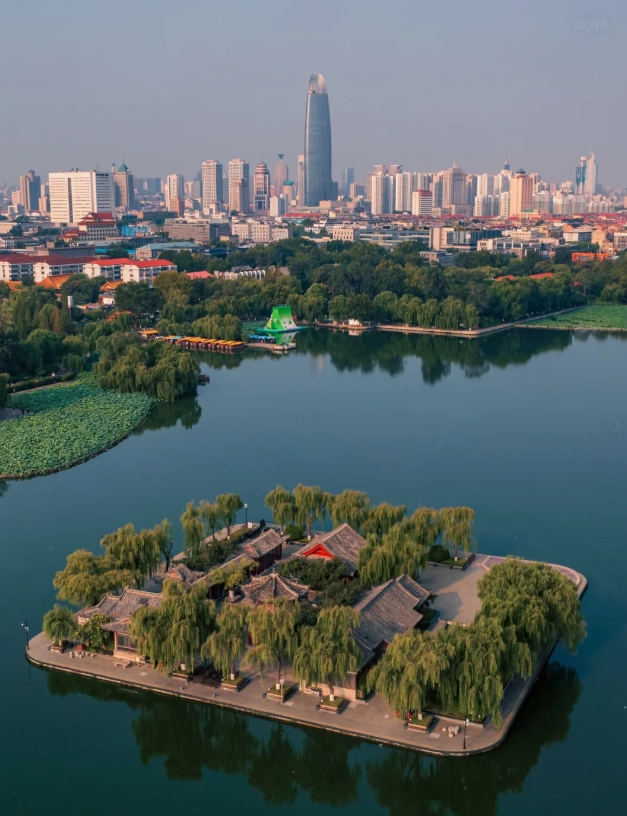
Questions I Get Asked Before Every Shandong Trip
Should I fly into Qingdao or Jinan for a Shandong travel guide route?
Land in Jinan and fly out of Qingdao if Mount Tai is on your list. Qingdao's airport connects to the city by a two-line metro ride that takes over an hour to the Old Town, and starting on the coast means you spend the back half of your trip racing trains west to make a mountain slot. Jinan's airport is 45 to 60 minutes from the centre by shuttle or Didi, and from there the rail line runs east in your favour the entire way.
Can I pay for everything in Shandong with a foreign credit card?
Not at the level you are used to. Your card will work at hotel front desks and a handful of large stores, and nowhere else. The realistic setup is Alipay or WeChat Pay with your international card linked, plus a small cash reserve for the rare stall that cannot scan. Set this up at home, not at the airport, because the verification step sometimes takes a day to clear.
Is Mount Tai doable as a day trip from Jinan?
It is, and plenty of people do it, but you will move fast and skip the Dai Temple in town. Take an early train from Jinan West to Tai'an, use the Tianwai Village bus and cable car route up, walk the summit loop, and be back at the lower station by mid-afternoon. What you should never do is attempt Mount Tai as a day trip from Qingdao — the return journey alone will consume five hours.
How many days does Shandong actually need?
Five days covers the four-city spine without rushing. Seven lets you add a Laoshan day in Qingdao or a Zibo barbecue night on the way east. Three days is technically possible if you only want Jinan and the mountain, but you will spend a disproportionate share of it standing in stations waiting for gates to open.
What is the single biggest mistake people make with a Shandong travel guide plan?
Treating Qingdao as the base. Qingdao is lovely, but it sits at the far eastern edge of the province and every other highlight is west of it. Base yourself in Jinan or Tai'an for the first half of the trip, then finish in Qingdao with nothing left to chase and a beer in your hand.
Verified and fact-checked by the editorial team. Ticket prices, opening hours and transport schedules in Shandong change frequently — confirm current details through official channels or your hotel before you travel.


No comments yet.