 Ting Chen
What's in this guide
I've been guiding lost tourists through China for seven years. And honestly? The internet is full of outdated advice. Let me save you the pain I see every week.
Here's the brutal truth: Google Maps is useless here. Your Visa card will fail at 8 out of 10 terminals. And that 3-day Beijing itinerary you found online? It expects you to run like a marathon. No.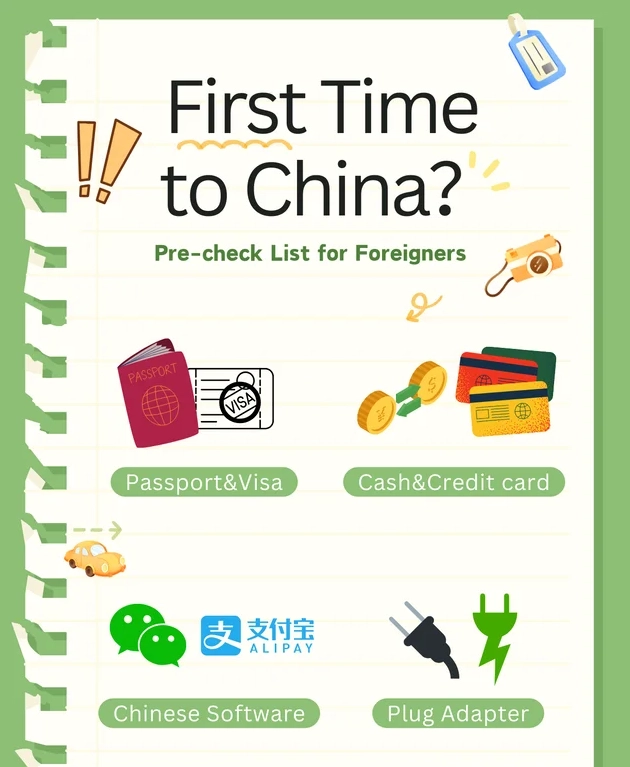
This guide is built from real screw-ups and saved trips. No fluff. Let's go.
Getting Your Visa Without the Headache
Most nationalities need a tourist visa (L-visa) before arrival. Don't try the visa-on-arrival trick—it rarely works for tourists unless you hold certain passports (like Singapore or Japan).
Apply 30 days ahead
Go to the Chinese embassy website in your country. Fill out the form, print it, and bring a passport photo (48mm x 33mm). You'll also need flight + hotel confirmations. I always tell my clients to use Trip.com for refundable bookings—then cancel after the visa is issued.
Transit without visa? Only if…
24-72 hour transit without a visa is allowed in 18 cities (Beijing, Shanghai, Guangzhou, etc.) if you're from a list of approved countries. But you must fly into one city and out to a third country. Example: London → Beijing → Bangkok works. London → Beijing → Shanghai doesn't. Details at Visa for China.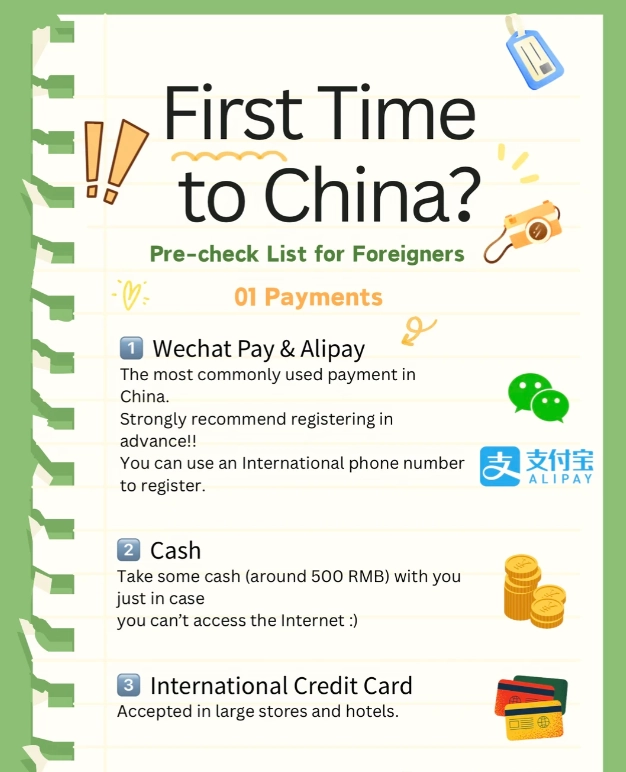
Alipay, WeChat Pay & the Cash Myth
Every blogger says "China is cashless." True. But no one tells you how hard it is to set up as a foreigner. Here's what actually works.
Before you leave home
Download Alipay and WeChat. Link your international credit card (Visa/Mastercard). In 2024, Alipay allows linking foreign cards directly—but many merchants still can't scan those QR codes. WeChat Pay is slightly better for cards. Test both before your flight.
Carry ¥500–1000 in cash
Small restaurants, street stalls, and taxi drivers often only take local payments. ATMs at Bank of China accept foreign cards (fee ~¥12 per withdrawal). Always ask the bank for small notes (¥10, ¥20) because ¥100 notes are hard to break.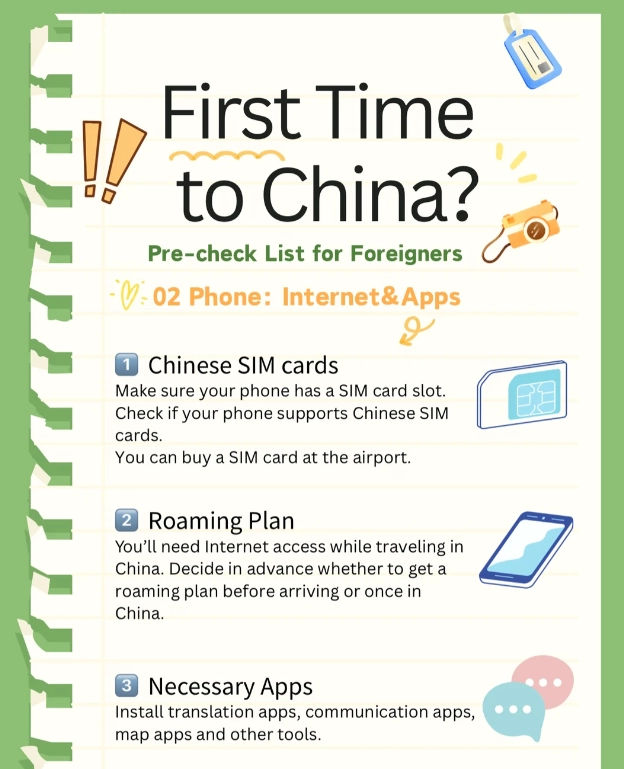
VPN: The Absolute Must-Have
Facebook, WhatsApp, Instagram, Google, YouTube—all blocked. Install a reliable VPN before you go. Free VPNs get blocked within hours. I've used ExpressVPN and Astrill for years. Astrill has a dedicated China server setting. Test your VPN before entering. Once you land, you can't download it.
Translate apps are your lifeline
Apple Translate works offline for Chinese. Baidu Translate (not Google Translate) has better accuracy for Chinese to English. Screenshot the translation before showing a taxi driver—they can't read English.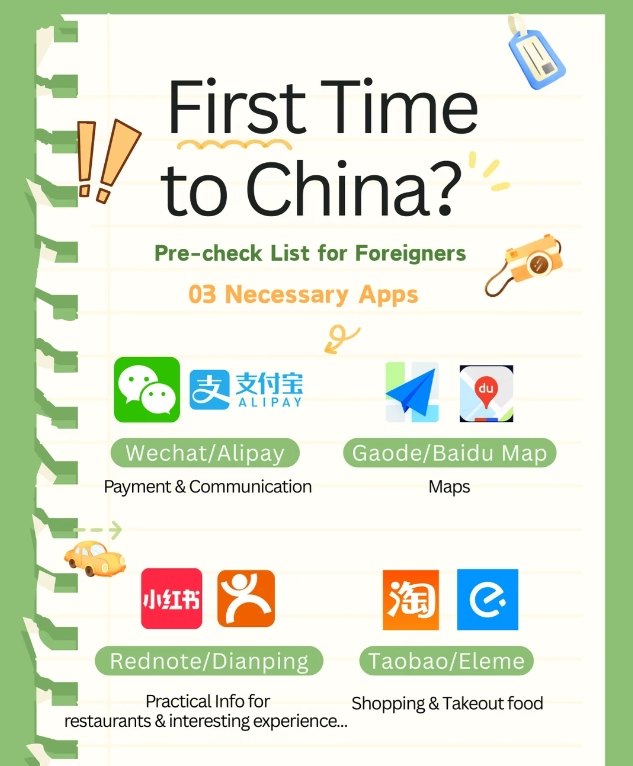
Trains, Planes & Didi (Not Google Maps)
Forget Google Maps. It's illegal in China and shows wrong locations. Use Apple Maps (surprisingly accurate) or Gaode Maps (Chinese interface but can show English place names). For navigation, I use Apple Maps with address in Chinese characters saved in my notes.
High-speed trains: book via Trip.com
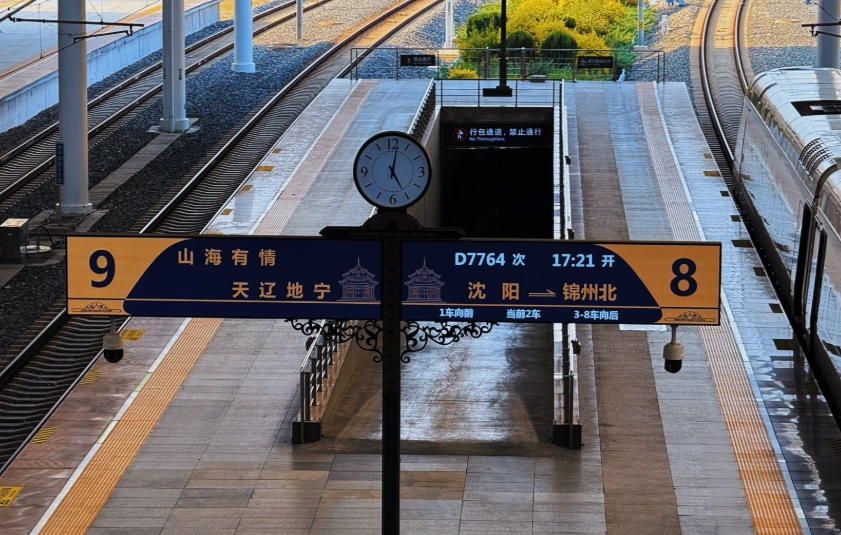
Train tickets sell out fast. Use Trip.com (English) to book everything. They add a small fee but save you the nightmare of navigating 12306.cn in Chinese. You'll need your passport number. At the station, go to the manual ticket counter (they speak zero English) or use the e-gate if you have a chip passport.
Didi: the Uber of China
Download Didi (international version accepts foreign cards). You can input destination as English or Chinese. Never flag down a taxi; they often refuse foreigners. Didi is cheaper and shows real-time tracking.
Planes: budget carriers have strict luggage rules
Spring Airlines, Lucky Air—they weigh carry-on bags. I've seen tourists forced to pay ¥200 extra for being 2kg over. Stick with China Southern or Air China for better baggage allowance.
Where to Stay: Hotels vs Hostels
Only certain hotels are allowed to host foreigners (those with a "foreign guest" license). Budget hostels in old buildings often reject you. Book through Booking.com or Agoda—they filter licensed properties.
For first-timers: stick to international hotel chains
Hilton, Marriott, Holiday Inn—they have English-speaking staff, stable Wi-Fi, and Western breakfast. A room in a 4-star costs ¥400–800/night. For a local experience, try Yha Chinese Courtyard Hostel in Beijing (address: 51 Nanluoguxiang, Dongcheng District). They accept foreigners and have a bar with English speaking guides.
| City | Recommended Area | Wallet-Friendly Option |
|---|---|---|
| Beijing | Dongzhimen (near Metro Line 2) | Zhong'an Inn, ¥120/night |
| Shanghai | Jing'an Temple (Line 2 & 7) | Mingtown Etour Youth Hostel, ¥90/night |
| Xi'an | South Gate area (Muslim Quarter walkable) | Xi'an YHA, ¥80/night |
Sample 7-Day Itinerary for First-Timers
This assumes you fly into Beijing and out of Shanghai. I've built in buffer for your jet lag and heat.
Day 1: Arrive in Beijing
Land at PEK. Take a Didi to your hotel (¥120, ~40 min). Don't try the metro with luggage—it's a maze. Eat at Donglaishun (address: 5 Qianmen Street) for authentic hotpot. They have picture menus. Sleep early.
Day 2: Forbidden City & Jingshan Park
Must pre-book on Trip.com (¥60). Enter from the south gate. Ignore the rental audio guide—it's boring. Instead, download the app "Forbidden City Audio Tour" on the App Store (English, ¥18). Spend 3 hours inside. Then exit the north gate straight into Jingshan Park (¥2, cash). Climb the hill for the best skyline photo. Afternoon: Plan B if it rains — Capital Museum (free, need passport).
Day 3: Great Wall at Mutianyu
Leave hotel by 7am. Take a Didi (¥350 round trip, wait for driver return) or book a shared van on Trip.com (¥200/person). Go up the cable car (¥100) and down the toboggan (¥80). Don't walk—it's 2km uphill. Bring water. I usually stop at a farmhouse restaurant near the base, it's cheaper than the official dining.
Day 4: Train to Xi'an (High-speed, 4.5h)
Book train G-series from Beijing West. Price ~¥515 second class. Show your printed ticket (printed by hotel concierge) to enter. Taxi from Xi'an station to hotel in Muslim Quarter (¥25). Walk to Defachang (address: 108 Dongdajie) for dumpling banquet—they have English menu and card accepted.
Day 5: Terracotta Warriors & Tang Dynasty
From Muslim Quarter, take bus 306 at Xi'an Railway Station (¥8, cash only). Bring your passport for ticket purchase (¥120). Hire a licensed guide inside—about ¥150 for 1 hour, worth every yuan. The best photos are in Pit 1, but crowds peak 10am-2pm. Arrive at 8am. Evening: watch the Tang Dynasty Music and Dance Show (¥280 on Trip.com) at Tang Palace Theatre.
Day 6: Fly to Shanghai (2h)
Budget airlines from Xi'an Xianyang Airport to SHA or PVG (¥500-700, check luggage allowance). Stay near Nanjing Road. Visit The Bund at sunset—arrive at 4pm to get a spot. Dinner at Din Tai Fung (address: 3/F, 99 Huaihai Middle Road)—Michelin star dumplings, about ¥150 per person, they take foreign card.
Day 7: Yu Garden & Departure
Yu Garden opens at 9am (¥50, queue at ticket booth with cash). Two hours max. Then visit nearby City God Temple market for souvenirs (bargain hard—they triple prices for foreigners). Head to PVG 3 hours before flight. Use WeChat's mini-program "Shanghai Airport Express" to check in.
Eating Without Getting Stuck
Street food is safe if it's cooked in front of you. But many stalls only take WeChat Pay. Carry cash for them. Tips:
- At a dumpling stall? Point at what others are eating and hold up fingers for quantity. No English needed.
- For sit-down restaurants, look for "英文菜单" (English menu) sign. Or use Baidu Translate to snap the Chinese menu.
- Vegetarian? Most "vegetable" dishes are cooked in lard or chicken broth. Say "wǒ chī sù" (I eat vegetarian) and stress "bù yào ròu" (no meat).
My favorite beginner-friendly eats
| Dish | Where to try | Average price |
|---|---|---|
| Beijing Roast Duck | DaDong (88 Jinbao St, Beijing) | ¥280 per duck |
| Xi'an Biangbiang noodles | Muslim Quarter, stall 89 (no English name) | ¥15 |
| Shanghai Soup Dumplings (Xiaolongbao) | Jia Jia Tang Bao (252 Huanghe Rd, Shanghai) | ¥30 for 8 |
Quick Answers to Beginner Panics
Verified and fact-checked by the editorial team.







No comments yet.