 Hua Sun
Start Here: The Sections That Actually Matter
- What Makes the Bullet Train to Liaoning Different From Flying
- How to Book a Bullet Train to Liaoning as a Foreigner
- Which Liaoning Station Should You Get Off At
- Inside Shenyang North: A Station Walkthrough
- A 3-Day Liaoning Rail Itinerary You Can Actually Finish
- What the Whole Trip Costs
- Where to Eat and Sleep Near the Stations
- FAQ: The Questions I Get Every Single Week
Two hours and forty minutes. That is the entire trip.
I still think about the German couple I found sweating outside the ticket hall at Beijing South. They had booked a bullet train to Liaoning, arrived two hours early, and were standing at completely the wrong station. Their train left from Beijing Chaoyang, on the other side of the city. They made it. The husband was still mopping his forehead when he messaged me a thumbs-up from the platform.
If you are reading this, you are probably in a similar spot. You have a bullet train to Liaoning on your mind, and you are not sure whether the booking app will accept your card, whether your passport is enough, or whether you should just fly and be done with it. The train itself is the easy part. The friction lives around it — a ticketing system designed for Chinese ID cards, two stations with confusingly similar names, and an international credit card that quietly turns into decoration the moment you reach the counter.
Here is the short version, and the rest of this page exists to prove it. Book through Trip.com or a passport-registered 12306 account, never at the counter on the day of travel. Board from Beijing Chaoyang if you are coming from the capital. Get off at Shenyang North only if you want the airport metro line, because Shenyang Station sits closer to the old city. And never build a connection tighter than ninety minutes.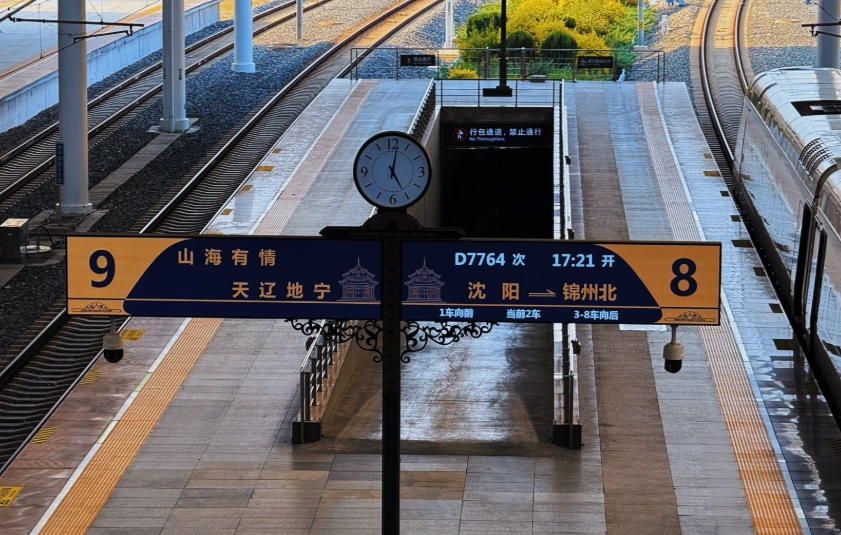
What Makes the Bullet Train to Liaoning Different From Flying
The pitch for Chinese high-speed rail sounds like marketing until you do the math on a northeast trip.
For Beijing to Shenyang, the train wins on total door-to-door time, and it is not close. The flight is roughly an hour and twenty minutes in the air. Add the drive out to Capital or Daxing, two hours of airport buffer, baggage claim, and the run from Taoxian Airport into central Shenyang, and you have burned five hours. The train leaves Beijing Chaoyang and rolls into Shenyang North in about two and a half hours. You walk out into the metro. No transfer bus, no taxi queue, no arguing about the fare.
Where the plane still wins: anything from Shanghai or further south. An eight to ten hour ride is a genuine day of your holiday. Fly that leg, then let the rails do the work inside Liaoning. This is the split most people get wrong — they either fly everything or train everything, when the smart play is usually one long flight plus three short rail hops.
| Route | Fastest rail time | Rough second-class fare | My verdict |
|---|---|---|---|
| Beijing Chaoyang to Shenyang North | About 2h 30m | Roughly 250 to 330 RMB | Take the train, every time |
| Beijing to Dalian North | About 4h to 4h 30m | Roughly 330 to 420 RMB | Train if you are skipping Shenyang |
| Shenyang North to Dalian North | About 2h to 2h 30m | Roughly 150 to 200 RMB | The best-value hop in the province |
| Shenyang North to Dandong | About 1h 15m to 1h 40m | Roughly 70 to 100 RMB | Perfect day trip, no flight needed |
| Shanghai Hongqiao to Shenyang North | About 8h to 10h | Roughly 700 to 900 RMB | Fly this one and save your legs |
Fares move with the train type, the season, and how early you book. Treat those numbers as a planning range and confirm the real price on the official China Railway ticketing site at 12306.cn before you commit.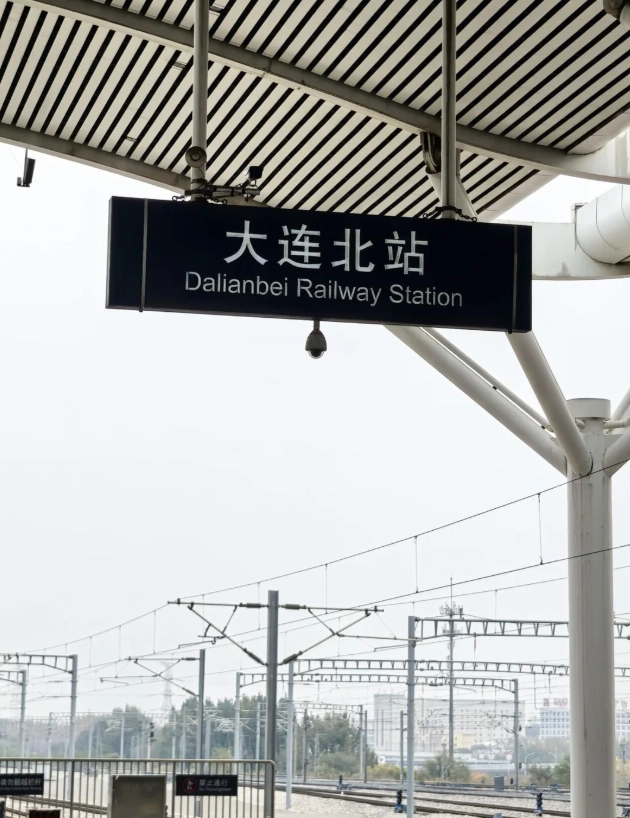
Where the Northeast Trains Actually Leave From in Beijing
Almost every high-speed departure toward Liaoning uses Beijing Chaoyang Station, not Beijing South. Beijing South is the Shanghai and Tianjin hub. Travelers see the word Beijing on their ticket, assume South because that is the famous one, and end up sixty to ninety minutes away from the correct platform with no realistic way to recover.
Beijing Chaoyang is on Metro Line 3 and Line 12, and the station is enormous — think of it as an airport terminal that happens to have rails. If you are coming from a hotel near Wangfujing or Sanlitun, budget forty-five minutes by taxi in normal traffic, and closer to seventy minutes between 7am and 9am. The metro is more predictable, and I now tell everyone with a morning train to just take the metro and eat breakfast at the station.
Pro Tip: Check the departure station printed on your ticket the night before, not on the morning of travel. If it says Beijing Chaoyang, leave your hotel with the same urgency you would use for an international flight. There is no shortcut across the city when the ring roads lock up.
How Much Time the Airport Transfer Really Eats
The hidden cost of flying into Liaoning is the last twenty kilometres, not the flight itself. Shenyang Taoxian International Airport sits well outside the city, and the taxi ride downtown can stretch past forty minutes in evening traffic. Dalian Zhoushuizi is friendlier, closer in, but still a proper transfer.
Both airports are covered by China's transit visa-free policies for eligible nationalities, and the rules have expanded several times in recent years. The National Immigration Administration at nia.gov.cn publishes the current list of qualifying ports and nationalities, and it is worth ten minutes of reading before you book anything.
How to Book a Bullet Train to Liaoning as a Foreigner
This is where most independent travelers lose an evening. Not because the system is broken, but because the system was never designed with you in mind.
The Passport Registration Step Nobody Warns You About
Your passport number has to be verified inside the system before your first ticket will issue, and that verification is not instant. Register on the 12306 app, upload your passport photo page, and then wait. Sometimes it clears in twenty minutes. Sometimes it takes a day. People who try to register an hour before departure and then panic at the counter are the single largest group of stressed travelers I meet at Shenyang North.
Do the registration the same week you book your flights. It costs you nothing and it removes the only genuinely hard step in the whole process.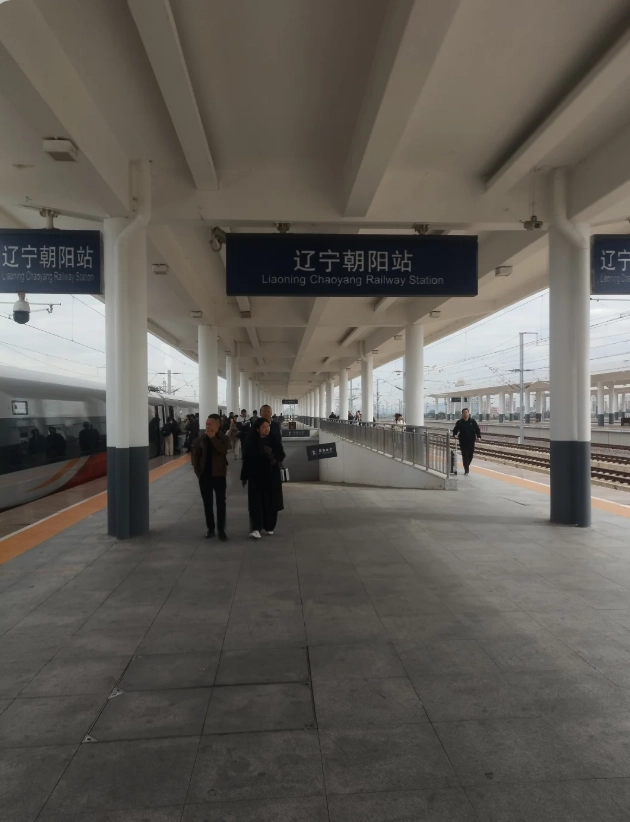
Trip.com vs. the 12306 App vs. the Station Counter
Trip.com charges a small booking fee and is worth every yuan for a first trip. The interface is in English, it accepts international cards, it stores your passport details, and it sends you a QR-style confirmation that the gate staff recognise. I use it when I am booking for clients who do not read Chinese.
The 12306 app is cheaper and gives you more seat choice, but the English version is thin in places and payment sometimes rejects foreign cards for no obvious reason. My honest advice: try 12306 first, and if the payment fails twice, stop fighting it and switch to Trip.com. The counter is a last resort. You will queue, you may hit a language wall, and popular morning departures are frequently sold out by the time you reach the window.
Yes, navigating a Chinese-language mini-program to reserve a seat is a nightmare even for me, and I do this for a living. The workaround that always works: hand your phone to the front desk at your hotel and ask them to complete the booking. Reception staff do this weekly for foreign guests and it takes them four minutes.
Second Class, First Class, and Business Class: What You Actually Get
Second class on a Chinese G-train is roughly equivalent to a decent European intercity seat, and it is what I book for myself. Five seats across, generous legroom, a fold-down table, power at every seat, and a luggage rack above your head plus a larger rack at the carriage ends.
- Second class: the value pick for anything under four hours. Book a window if you want the Liaoning countryside — the flat farmland and low hills between Shanhaiguan and Shenyang are quietly beautiful.
- First class: four seats across, wider armrests, quieter carriage. Worth the upgrade on the long Shanghai leg, unnecessary on short hops.
- Business class: lie-flat-ish recliners and lounge access at major stations. Genuinely lovely, genuinely hard to justify unless someone else is paying.
One thing nobody mentions: the quietest carriages on Chinese high-speed trains are usually car 1 and car 16, because they sit furthest from the dining car and the boarding crush at intermediate stops.
Which Liaoning Station Should You Get Off At
Choosing the wrong station in Shenyang or Dalian can add a forty-minute taxi ride to a trip that should have ended at a metro gate. The names look interchangeable. They are not.
| Station | Metro access | Best for | Watch out for |
|---|---|---|---|
| Shenyang North | Metro Line 2 directly beneath the concourse | Airport connections, onward trains to Dalian or Dandong | Feels like an airport, so allow real walking time |
| Shenyang Station | Metro Line 1 nearby | The Imperial Palace, Zhongjie pedestrian street, old-city hotels | Older building, fewer English signs |
| Dalian North | Metro links toward the centre | Pure transit, cheap hotels | It is nowhere near the sea or the harbour |
| Dalian Station | Central, walkable to Zhongshan Square | Harbour, trams, seafood, waterfront | Fewer high-speed services stop here |
| Dandong | Short taxi to the riverfront | The Yalu River and border views | Small station, limited left luggage |
Shenyang North vs. Shenyang Station
If your next move is a flight home, book Shenyang North. If your next move is the Imperial Palace, book Shenyang Station. Line 2 runs from Shenyang North toward the airport side of the network, which means you can roll off a train from Beijing and reach Taoxian without ever surfacing into traffic.
Shenyang Station drops you into the older grid, minutes from Zhongjie and the Mukden Palace — the Qing dynasty palace that UNESCO lists alongside the Forbidden City under its World Heritage programme at whc.unesco.org. I have walked from Shenyang Station to the palace gate in under half an hour with a rolling suitcase. Not elegant, but completely doable.
Dalian North Is Not Dalian
Dalian North sits at the top edge of the city, and there is no sea anywhere in sight. Every week I see travelers book a cheap hotel beside Dalian North because the map made it look central, then discover they need a substantial taxi ride to reach the harbour, the old tram line, or anything resembling the Dalian they came for.
If the coast is the point, ride past Dalian North and continue to Dalian Station, then walk to Zhongshan Square. If you are only changing trains, Dalian North is perfectly efficient and I have no complaints about it.
The Small Stops Worth Building a Day Around
Benxi, Jinzhou South, and Fuxin all sit on the network and all get skipped by most itineraries. Benxi is the one I would actually detour for — the karst caves outside town are a genuine surprise, and the ride from Shenyang is barely more than half an hour. Jinzhou has an old town and a very good regional museum. Fuxin, honestly, is a mining city and I would not send a first-time visitor there. That is a real opinion, not a diplomatic one.
Inside Shenyang North: A Station Walkthrough
Shenyang North is one of the better-designed stations in northeast China, but the first ten minutes can still rattle you. Here is the sequence, in the order it happens.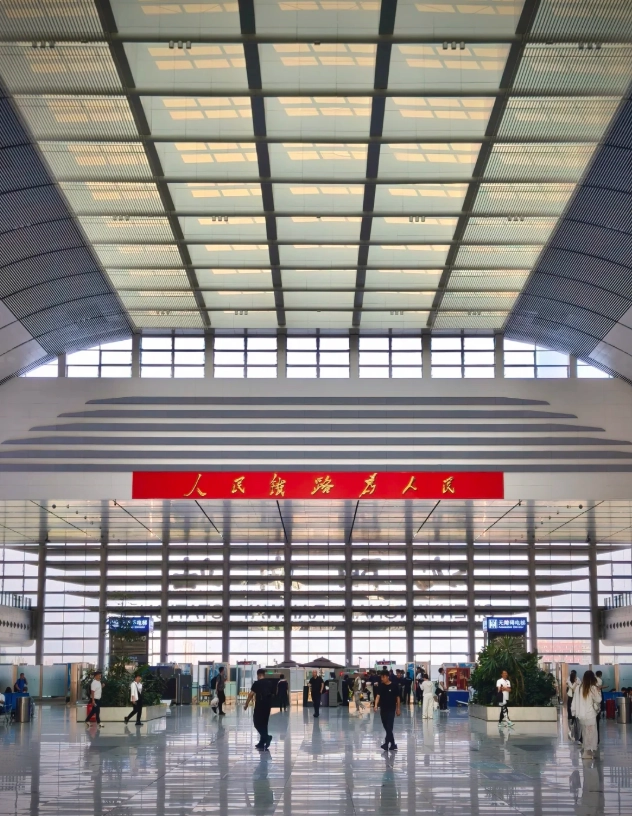
Arriving, Security, and the Passport Lane
You enter at concourse level, pass a security screening for bags, then reach the departure hall. Ticket gates open roughly twenty to thirty minutes before departure and close a few minutes before the train leaves. Miss that window and there is no negotiation.
Most Chinese travelers tap through with an ID card. Foreign passports often fail on the automated gates. Do not stand there trying it four times. Look for the staffed lane, usually at one end of the gate bank, and show the attendant your passport and booking. It takes fifteen seconds once you are in the right line.
Insider Advice: Arrive forty-five minutes early if you are carrying large luggage, and ninety minutes early on the first day of a national holiday week. I have watched the security queue at Shenyang North stretch out the doors during peak periods. There is no fast track for foreign travelers, so time is your only lever.
Food, Toilets, and Left Luggage
Eat before you board if you care about your meal. Station food in China is improving but still leans toward instant noodles and packaged snacks. There are usually a few noodle shops and a convenience store upstairs.
- Left luggage counters exist at major stations, typically a few yuan per bag per day. Bring your passport — they record it.
- Toilets on the departure level get busy right before major departures. The ones near the far ends of the hall are consistently cleaner and emptier.
- Boarding is orderly and quick. You do not need to queue twenty minutes early unless you have oversized bags.
A 3-Day Liaoning Rail Itinerary You Can Actually Finish
Three days, three cities, and zero 5am alarms. This is the version I give clients who want to see the province without collapsing.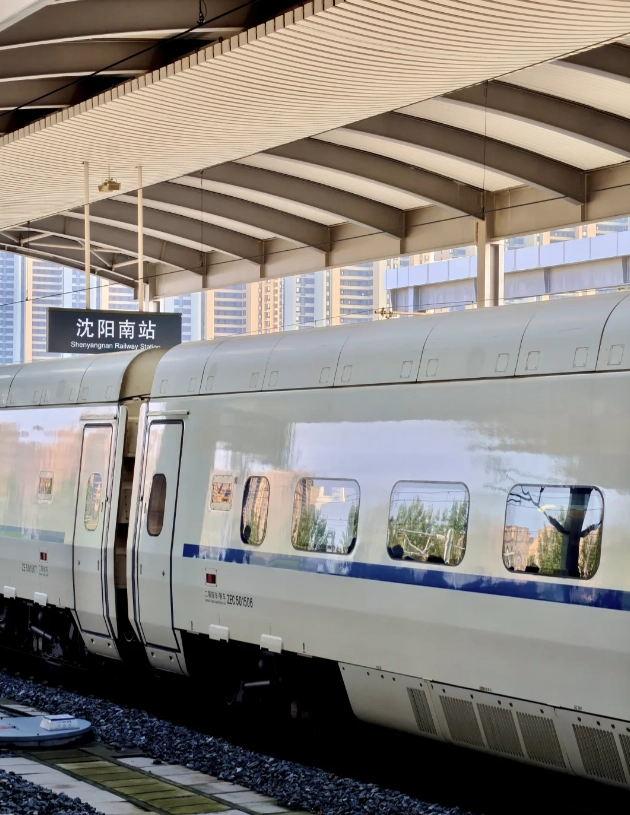
Day 1 — Shenyang on Foot
- Morning: Mukden Palace and the surrounding old city. Buy tickets in advance through Trip.com if the Chinese mini-program defeats you, and bring your passport for the entry check.
- Midday: Zhongjie pedestrian street for lunch. Laobian Dumpling House on Zhongjie is the classic stop — expect roughly 60 to 100 RMB per person, and expect a queue at peak lunch hours.
- Afternoon: Marshal Zhang's Mansion, a fifteen-minute walk or a short taxi from the palace.
- Evening: Chicken rack — the Shenyang street snack of choice — with a cold local beer. Cheap, messy, unforgettable.
Day 2 — Dandong and the Yalu River
Take an early train from Shenyang North to Dandong, roughly an hour and twenty minutes. Walk or taxi to the riverfront, where the broken bridge and the view across to North Korea are the whole reason you came. Give yourself four to five hours in the city, then ride back the same evening. There is no need to overnight here unless you want the slower riverside version.
Day 3 — Dalian, Trams, and Seafood
Morning train from Shenyang North to Dalian, about two to two and a half hours. Drop your bag, then take the historic tram line through the old streets — it is slow, it rattles, and it is the best two yuan you will spend in the province. Finish at the waterfront with a seafood dinner. If you have an evening flight, allow a generous buffer; Dalian's traffic around the harbour can be stubborn.
Rain Plan and the 24-Hour Version
If the weather turns, swap the riverfront and the coast for museums and covered streets. Shenyang has strong provincial museums, and the underground shopping areas around the main commercial streets will absorb an entire wet afternoon.
If you only have twenty-four hours, do not attempt three cities. Land in Shenyang, see the palace in the morning, eat dumplings at midday, and take the late afternoon train to Dalian for the evening. That is a tight but genuinely satisfying day, and it beats sprinting through three cities in a blur.
What the Whole Trip Costs
Rail travel in Liaoning is one of the best-value experiences in China, and the fares are rarely the thing that breaks your budget. Here is the shape of a realistic day.
- Second-class rail between major Liaoning cities: roughly 70 to 200 RMB per leg.
- Mid-range hotel near a station: roughly 250 to 600 RMB per night, higher during national holiday weeks.
- Three solid meals a day, local style: roughly 100 to 200 RMB.
- Metro and short taxi rides: roughly 20 to 60 RMB.
Payment is the real adjustment. Set up Alipay or WeChat Pay with an international card before you land, because most stalls, noodle shops, and metro gates will not take a physical foreign card. Cash is technically accepted everywhere, but you will be waiting while someone finds change. Carry a few hundred yuan in notes as backup and treat mobile payment as your default.
Pro Tip: Download a VPN before you fly, not after. Google Maps is unreliable inside China, so install Apple Maps or AMap Global and save your hotel address in Chinese characters. Handing a driver a screen with Chinese text solves ninety percent of taxi communication problems instantly.
Where to Eat and Sleep Near the Stations
Shenyang: Chicken Racks, Noodles, and Dumplings
Shenyang food is northern Chinese comfort food — salty, generous, and cheap. Lao Siji noodles is the local institution, a bowl of hand-pulled noodles in beef broth for pocket change, usually under 30 RMB. Do not expect a romantic atmosphere. Expect a queue, plastic stools, and some of the best value eating in the northeast.
Laobian Dumpling House on Zhongjie handles the classic boiled and steamed dumplings. I always order the pork and cabbage, and I always regret ordering three baskets instead of two. English menus exist but are patchy, and photos on the wall do most of the work. Vegetarian travelers will find mushroom and vegetable fillings, though the broth is often meat-based, so ask clearly. Halal options cluster around the old Hui quarter near the South Mosque on Xiaoxi Road.
Dalian: Seafood Without the Tourist Markup
The trick in Dalian is to eat slightly inland from the waterfront. Restaurants with a harbour view charge a harbour-view premium for the same scallops. Walk two or three streets back and the price drops noticeably.
Order grilled scallops, sea cucumber if you are feeling extravagant, and the local boiled shrimp. Dalian seafood is generally light on chilli and heavy on natural sweetness, quite different from Sichuan-style cooking. Peak dinner hours run from around 6pm, and a weekend table without a reservation can mean a thirty-minute wait. Budget roughly 120 to 250 RMB per person for a proper seafood meal.
Hotels That Make Sense for Rail Travelers
| Area | Why rail travelers like it | Rough nightly rate | Best for |
|---|---|---|---|
| Shenyang North station area | Five to ten minutes on foot to the platforms, metro downstairs | 300 to 550 RMB | One-night stopovers and early departures |
| Shenyang old city near Zhongjie | Walk to the Imperial Palace and the main food streets | 250 to 500 RMB | Sightseers who hate taxis |
| Shenyang Qingnian Street | Big international-standard rooms, metro Line 2 access | 700 to 1100 RMB | Comfort seekers and families |
| Dalian Zhongshan Square | Trams, harbour, seafood, walkable historic streets | 350 to 700 RMB | Couples and first-time Dalian visitors |
| Dalian North station area | Cheap and close to the platform | 200 to 350 RMB | Late arrivals with an early connection |
Rates swing hard during national holidays, sometimes doubling. Check whether the property has a lift — older Chinese buildings sometimes do not, and hauling a suitcase up four flights is a memorable way to end a travel day. Front desks at mid-range and above properties generally manage basic English, and almost all will help you book train tickets or call a taxi.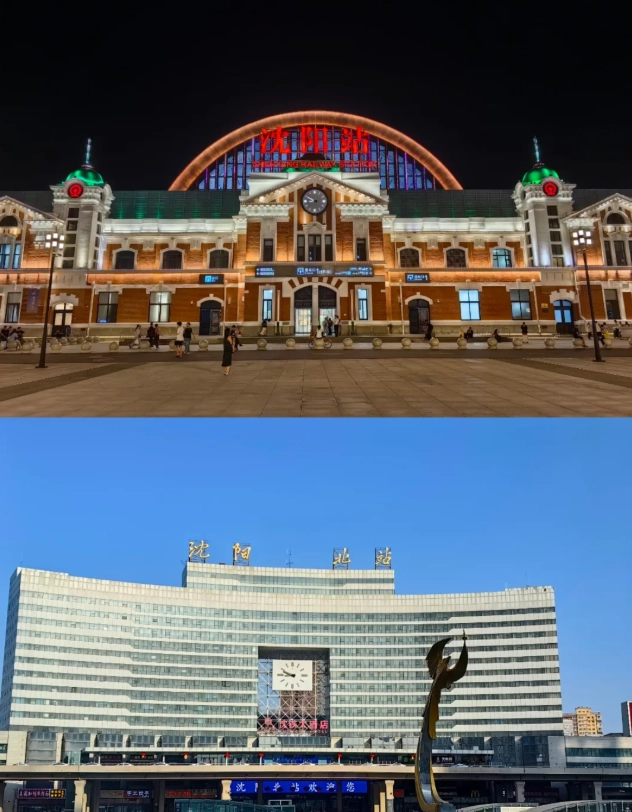
FAQ: The Questions I Get Every Single Week
Can I board a bullet train to Liaoning with just my passport, or do I need a printed ticket?
Your passport is your ticket. There is no need to print anything, and the booking reference alone will not get you through. The catch is that automated gates frequently reject foreign passports, so skip the self-service lane entirely and head straight for the staffed gate at the end of the row. Staff scan your passport, glance at their screen, and wave you through. Budget an extra five minutes for this and you will never be stressed about it.
Why does my international card get declined when I try to pay on the 12306 app?
Chinese ticketing platforms route foreign card payments through gateways that are far stricter than Alipay or WeChat Pay. Some cards work one day and fail the next. If you get two rejections, stop retrying — repeated failed attempts can temporarily flag the account. Switch to Trip.com, which handles international cards as its normal flow, or ask your hotel reception to complete the purchase with a domestic payment method and settle up with them in cash.
Should I break the journey at Shanhaiguan on the way to Liaoning?
Only if you are genuinely interested in the Great Wall's eastern end and the old fortress town. Most travelers treat it as a photo stop and lose half a day doing it. The practical problem is luggage: station storage is limited and the good walking routes involve stairs. My honest recommendation is to ride straight through on your first trip and save Shanhaiguan for a return visit when you have more time and lighter bags.
How early should I arrive at Shenyang North with luggage?
Forty-five minutes is comfortable for a normal day. On the first day of a national holiday week, make it ninety. The bottleneck is not the ticket gate, it is the security screening line, which backs up fast once tour groups arrive. If you are connecting from an incoming flight, do not build a connection shorter than three hours between landing and departure — Chinese domestic delays are common in winter weather.
Are there vegetarian or halal options on the trains and at the stations?
On board, the dining car is limited and mostly meat-based, so bring your own food if you have restrictions. At stations, convenience stores stock fruit, bread, and packaged snacks that are reliably vegetarian. For halal meals, Shenyang's Hui quarter near the South Mosque is the reliable option, and Dalian has several halal restaurants near the older commercial streets. Do not assume the noodle shop on the concourse can accommodate you — the broth almost always contains meat.
Verified and fact-checked by the editorial team. This content has been fact-checked to ensure informational precision.



No comments yet.