 Wei Zhang
Quick Navigation: My Insider Picks
- What to Eat in Sichuan: The Essential Dishes You Must Try
- Where to Eat in Sichuan: Top Neighborhoods for Every Budget
- How to Plan a Day of Eating in Chengdu: A Sample Itinerary
- How to Order Like a Local: Sichuan Food Etiquette and Tips
- Street Food vs. Sit-Down Restaurants: Which Is Better in Sichuan?
- Sichuan Hot Pot: Chengdu vs. Chongqing Style
- A Quick FAQ About Eating in Sichuan
Every time I bring a group to Chengdu, the first question is always: 'What do we eat?' — And I get it. The menus are overwhelming, the spice levels are terrifying, and your hotel's English guidebook won't save you from that suspicious-looking intestine skewer.
So here's the truth: what to eat in Sichuan isn't just one dish. It's a strategy. You need to balance the numbing heat with something sweet, and you need to know exactly where to sit in a hotpot place so the air conditioner hits you before the chili does.
Let me save you the trial-and-error. Skip the overpriced food street in Jinli (tourists pay triple) and start at a proper local canteen. But first, let's map out the essentials.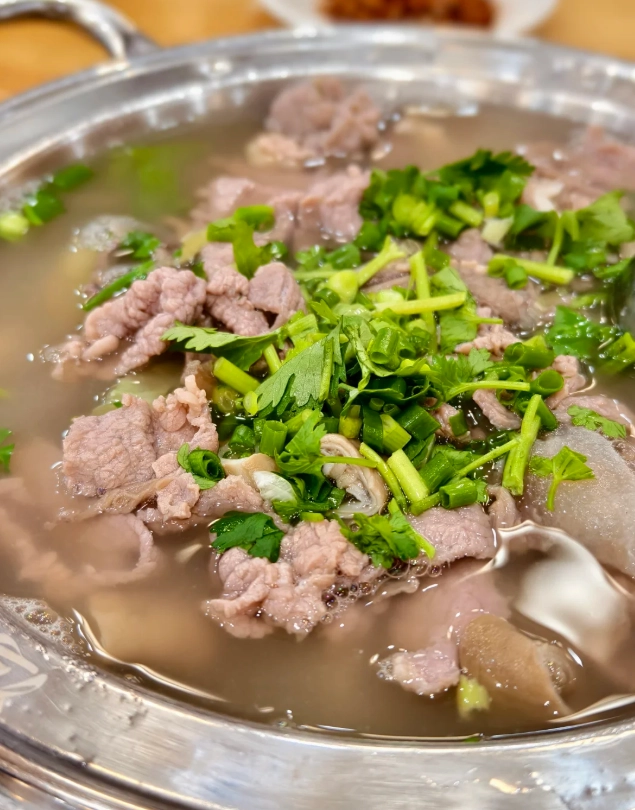
What to Eat in Sichuan: The Essential Dishes You Must Try
Walk into any Sichuan restaurant and you'll face a menu with hundreds of items. Don't panic. These six dishes are the foundation. Order them, and you'll leave happy.
Mapo Tofu: The Numbing Classic
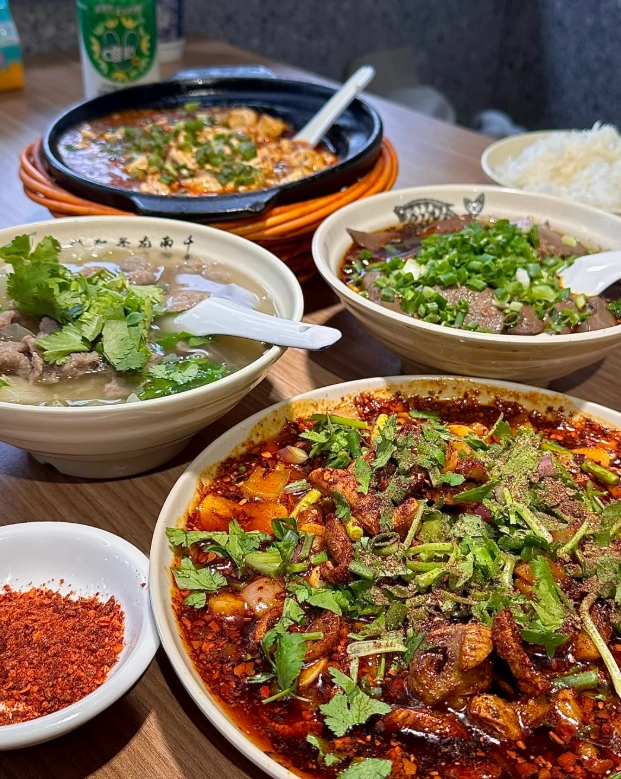
Mapo tofu might look humble — a bowl of soft tofu in red oil — but it's the ultimate test of a Sichuan chef. The real deal has a malty, numbing kick that hits your lips first, then a slow burn. I always tell my guests: skip the fancy tourist places. Go to a local canteen where the oil looks dark and the chilies are obscene. My personal rule: if the tofu is cut into big, uneven cubes, it's authentic. Also, never order it without rice. The sauce is too good to waste.
Find it at Chen Mapo Tofu, a legendary chain in Chengdu. Use AMap to search '陈麻婆豆腐'. Expect a queue at lunch, but turnover is fast. Price: around 28-35 RMB. Pro tip: ask for '少麻' if you want less numbness.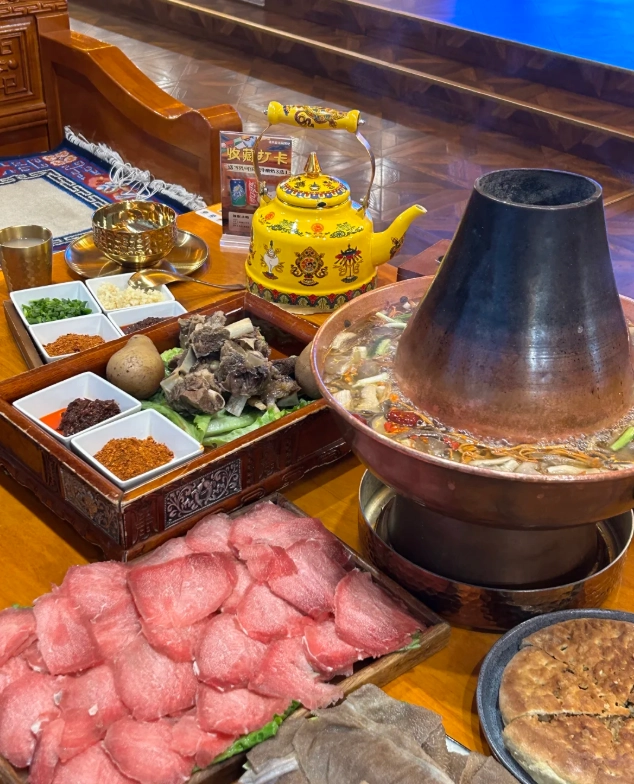
Kung Pao Chicken: The Safe Entry Point
Kung Pao Chicken is often listed as a sweet-sour dish in America, but the Sichuan version is a completely different beast. You get the numbing pepper, crisp peanuts, and tender chicken, with a sour-sweet sauce that won't scare your taste buds. It's the answer when your travel buddy says 'I can't handle spicy.' I once brought a pair of retirees who lived on this dish for a week.
Best at nearly any 川菜馆. Look for one that uses fresh chilies, not chili powder. For a great version near Kuanzhai Alley, try 成都映象. Price: 35-45 RMB.
Dan Dan Noodles: The Street Staple
These sesame-sauced noodles are named after the carrying pole street vendors used to hawk them. Today you'll find them everywhere from food courts to upscale restaurants. The classic version is a small bowl tossed in chili oil, Sichuan pepper, and a silky tahini-like paste. I always add a spoonful of zhacai (pickled mustard) for crunch.
One warning: the version at tourist spots is usually dumbed down. Head to 玉林路, north of the city center, where locals line up for a bowl. Use AMap to search '担担面'. Price: 10-15 RMB.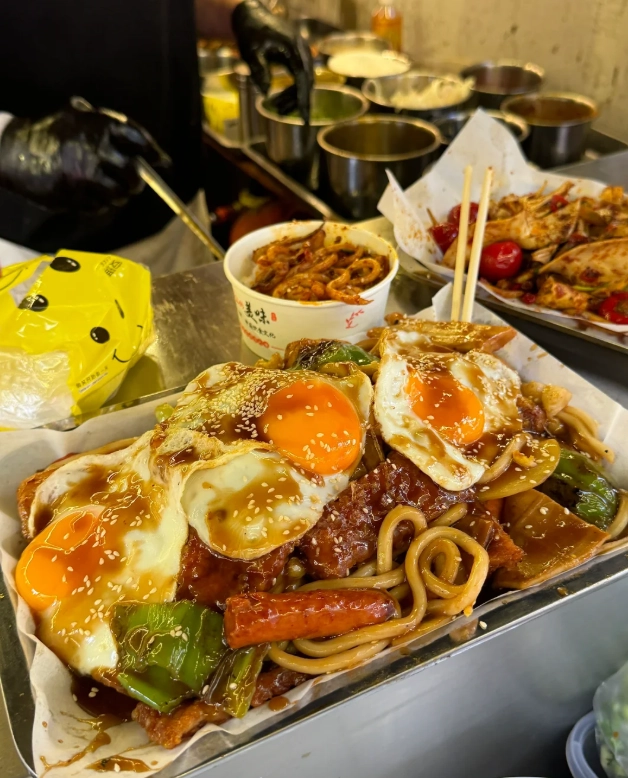
More Dishes Worth Your Attention
Here's a cheat sheet for other dishes you'll encounter. I've included spicy ratings based on my own pain tolerance — which is high, by the way.
| Dish | Flavor Profile | Spice Level | Try It At | Price Range |
|---|---|---|---|---|
| Twice-Cooked Pork (回锅肉) | Savory, slightly sweet, fatty | Medium | Any local restaurant | 30-40 RMB |
| Water-Boiled Beef (水煮牛肉) | Numbing, fiery, topped with chilies | High | Most 川菜馆 | 45-60 RMB |
| Husband and Wife Offal (夫妻肺片) | Chilled, spicy, tangy | Medium | Traditional cold dish shops | 30-50 RMB |
| Zhong Dumplings (钟水饺) | Sweet-sour chili oil, small dumplings | Mild | Near 春熙路 | 12-18 RMB |
Where to Eat in Sichuan: Top Neighborhoods for Every Budget
Not all food areas are created equal. Let me break down the real spots — and the ones I'd skip.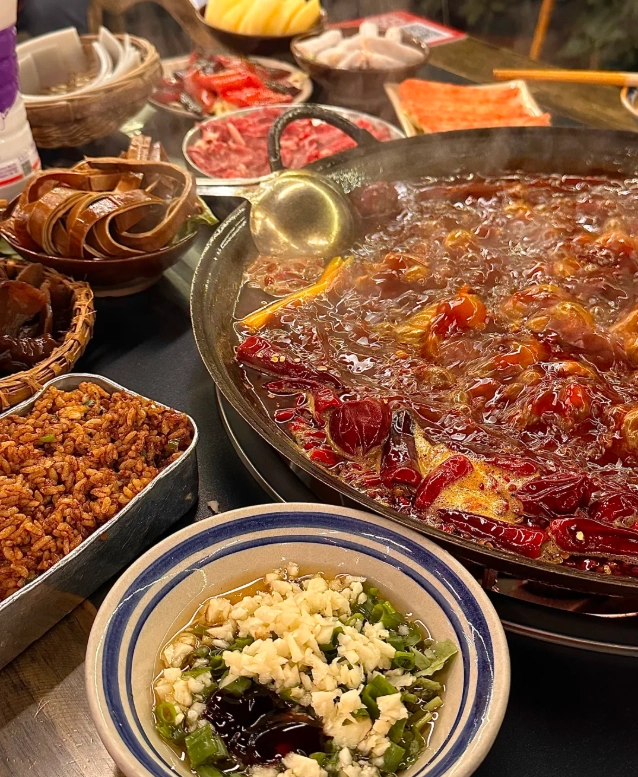
- 春熙路 (Chunxi Road): The central shopping hub. Great for first-time visitors because you'll find everything from upscale hotpot to street snacks. Expect tourist prices, but the convenience wins. Take Metro Line 2 or 3 to Chunxi Road Station, exit C. You'll be right in the middle of the action. For a quick bite, head to the food court on the 8th floor of the International Finance Square (IFS) — it's popular with locals.
- 玉林路 (Yulin Road): This is where locals actually go. It's a grid of small streets filled with hole-in-the-wall places. My pick: try the 串串 (chuanchuan) here — skewers you cook yourself in boiling broth. Take Metro Line 1 to Niwashi Station, then walk north for about 10 minutes. Use AMap to guide you.
- 建设路 (Jianshe Road): Famous for night markets. Go around 7 PM. The air smells like cumin and chili. Don't miss the 锅盔 (crispy meat pocket) stall at the east end. As BBC Travel has noted, this area is a must-visit for street food enthusiasts. Take Metro Line 6 to Jianshe Road Station, exit B. The night market starts around 6 PM and runs until late.
- 锦里 (Jinli): I'll be blunt: it's a tourist trap. The food is overpriced and often pre-cooked. Go for atmosphere, not for taste. If you're short on time, a half-hour visit is enough.
Insider Advice: For the best street food, follow the scooters. Wherever the delivery drivers are parked in the evening, good food is nearby.
How to Plan a Day of Eating in Chengdu: A Sample Itinerary
Starting in the morning, I always tell my groups to head to 玉林路 for breakfast. The streets are quiet before 9 AM, and you'll see locals pulling up stools for a bowl of 担担面. Grab a seat at a spot with an old wok — that's a good sign.
By 11 AM, take a taxi or Metro Line 1 to 春熙路 for an early lunch. The restaurants open at 11:30, so line up before that. Order mapo tofu and kung pao chicken to share.
After lunch, walk south to 人民公园 and spend an hour at the 鹤鸣茶社. It's a classic Chengdu experience — a bamboo chair, a cup of jasmine tea, and a quiet moment before the spice.
For dinner, head to 建设路 as the sun sets. The stalls come alive at 6 PM. Try 锅盔 and 龙抄手 (dumplings) before ending with a hotpot place on the same street. If you're not exhausted, finish with a bowl of 冰粉 (ice jelly) to cool your mouth.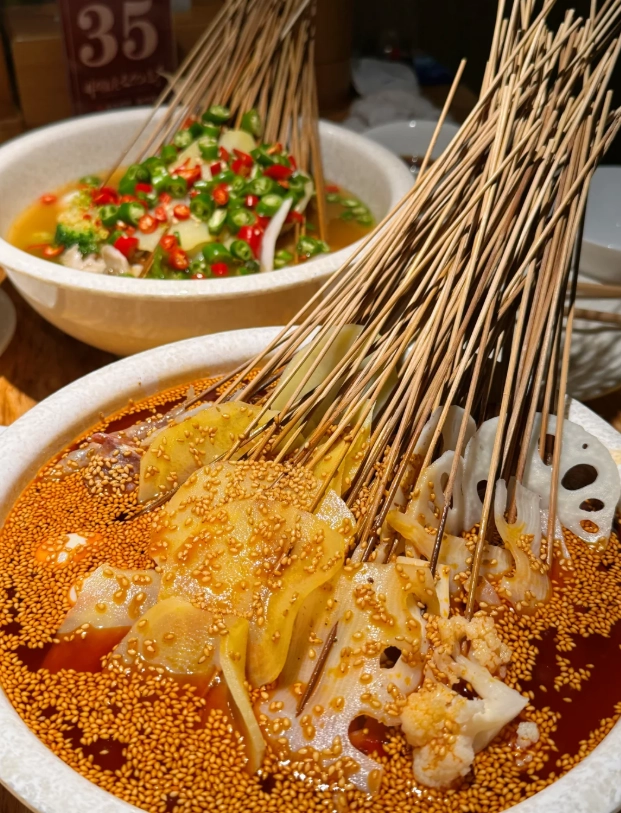
How to Order Like a Local: Sichuan Food Etiquette and Tips
You know what you want, but how do you get it without accidentally ordering a fish head? Here's the crash course.
- Spice level: Say '少辣' (shao la) for less spicy, or '不辣' (bu la) for no spicy. But for certain dishes like mapo tofu, some heat is essential.
- Portion size: One dish per person, plus rice. It's common to share, so don't order too much.
- Chopsticks: You'll be eating family-style. Use the serving spoons provided, not your own chopsticks, to take food from shared plates.
- Ordering: Point at the menu if you can't read Chinese. Also, many restaurants have picture menus — use them.
- Tipping: Not expected. Leave the change if you're generous.
Street Food vs. Sit-Down Restaurants: Which Is Better in Sichuan?
Both. Here's how to decide, depending on your mood.
- Street food: Cheap, fast, and perfect for sampling. But watch out for hygiene — stick to stalls that are busy with locals. If the stall looks empty, keep walking.
- Sit-down restaurants: More comfortable, better for groups, and you'll find more dishes beyond noodles. But you'll need to pay a bit more, and some places add a 10% service charge.
My rule: try street food in the evening, and find a proper sit-down spot for lunch. You'll get the best of both worlds.
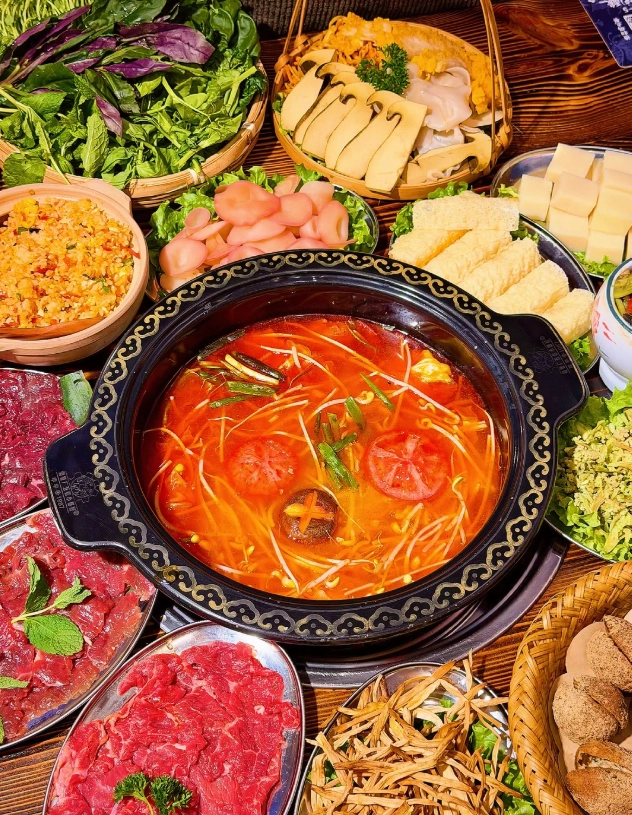
Sichuan Hot Pot: Chengdu vs. Chongqing Style
Hot pot is a religion in Sichuan. But not all hot pot is the same. Here's the breakdown.
| Feature | Chengdu Style | Chongqing Style |
|---|---|---|
| Broth | Less oil, more herbal and numbing | Thick, oily, heavily spiced with dried chilies |
| Heat | Medium to strong | Extreme |
| Dipping sauce | Sesame paste, garlic, oil | More oil and additives, sometimes 'dry' powdered mix |
| Best at | 蜀大侠, 小龙坎 | 德庄, 小天鹅 |
Visitors often make the mistake of ordering everything spicy. Always get a splitting pot — one half spicy, one half clear broth. And don't forget the 油碟 (oil dip) — it cools people down and adds flavor.
Insider Advice: When you cook meat in hotpot, let it sit longer than you think. The thin slices cook in seconds, but the organs need at least a minute. When in doubt, ask a local.
A Quick FAQ About Eating in Sichuan
Is all Sichuan food spicy?
No. Many dishes are not spicy, like boiled vegetables or sweet and sour fish. But the famous ones are. Always ask for 少辣.
How do I handle the numbing sensation?
The numbing comes from Sichuan pepper. It fades after a few minutes. Eat some rice or drink a sweet drink to counter it. You'll actually start craving it after a few days.
Can I find vegetarian food in Sichuan?
Yes, but be explicit. Ask for 素菜 (su cai). Most restaurants have vegetable dishes. Watch out for hidden meat in sauces.
How do I pay for food in this area?
Mobile payments are everywhere. Alipay and WeChat Pay work if you have a foreign credit card linked. Cash is accepted in small stalls, but you might not get change. Keep a 50 RMB note for emergencies.
Is it safe to eat street food?
Generally yes if the stall is busy. Look for high turnover — the oil is hot and food is cooked quickly. Avoid anything that looks stale.
Ready to plan your food trip? You'll need to arrange transport. I always book high-speed rail tickets through the official China Railway 12306 website to avoid middleman fees.
Verified and fact-checked by the editorial team.





No comments yet.