 Ming Yang
Quick Peek: My Go-To Guizhou Food Map
I once watched a Texan sweat through three tissues after a single spoonful of Guizhou sour soup. He wasn't embarrassed — he was just meeting the province's signature chili for the first time.
When friends ask me what to eat in Guizhou, I never hand over a lazy list. I give them a survival plan. Because the real challenge isn't finding great food — it's keeping your taste buds alive while ordering it without speaking a word of Chinese.
Here's the blunt truth: Start with the sour fish soup, skip the 'mild' option — it doesn't exist — and carry an extra shirt. Now, let's break down everything you need to know.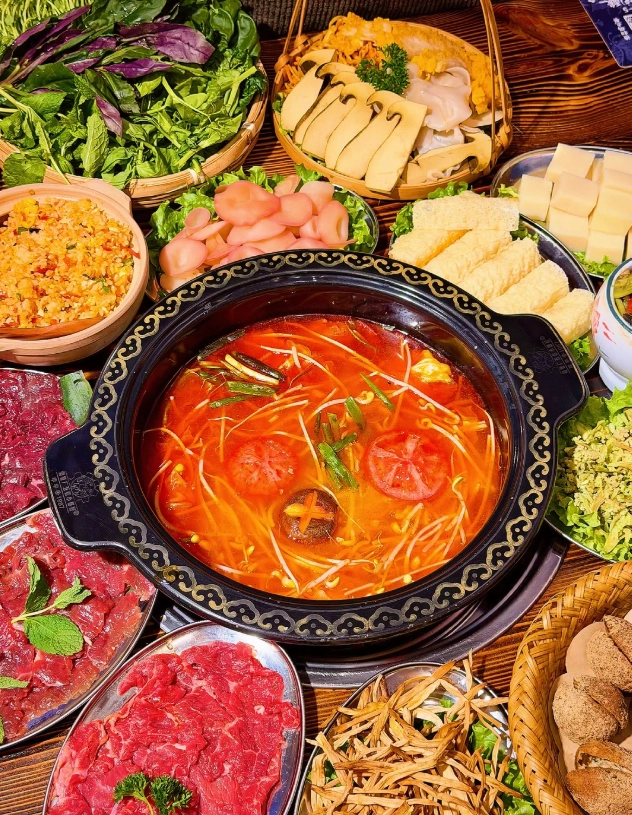
Why Guizhou Food Deserves a Spot on Your China Itinerary
Guizhou may not be the first province on your radar, but its food scene is one of China's most fascinating. The Miao, Dong, and Buyi ethnic groups have crafted a culinary identity that balances sour, spicy, and street-smart — unlike anywhere else in the country.
I've been guiding travelers through China for years, and I've never seen a province that makes people sweat and smile at the same time. The biggest myth is that Guizhou food is just 'hot'. In reality, it's the sourness — from fermented tomatoes and wild herbs — that sets the stage. The chili comes second, as an exciting friend rather than a bully.
And don't just take my word for it. The province is home to several UNESCO World Heritage Centre sites, like the South China Karst landscape — but while the scenery gets the fame, the food is the real reason I keep going back.
What to Eat in Guizhou: The 12 Essential Dishes
These twelve dishes have never failed me — even with the most cautious eaters. I've grouped them by how you'll encounter them on the street.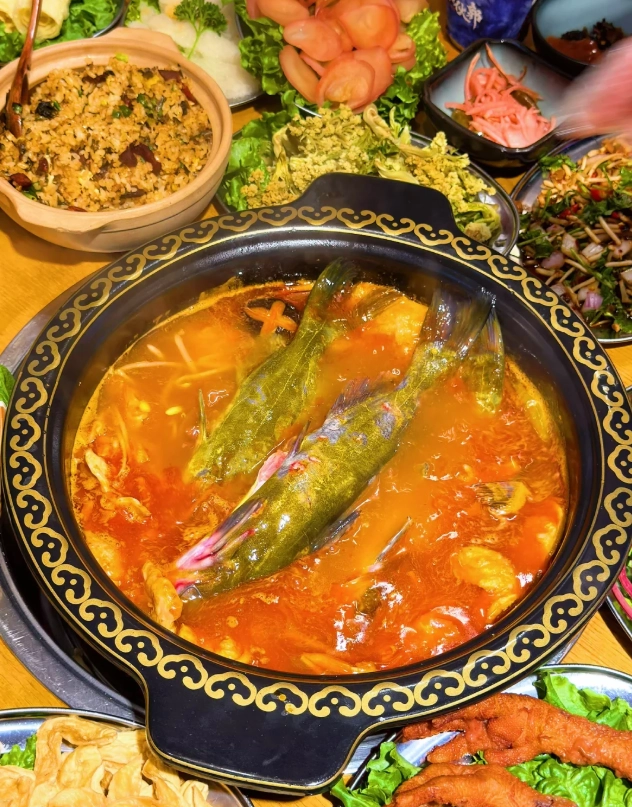
Three Soups That Define Guizhou
Start with a spoon of sour fish soup. That's the rule I give every traveler. The table below? No table — just let me walk you through them.
- Kaili Sour Fish Soup (凯里酸汤鱼) — The signature. Fermented tomatoes and chili create a tart broth; choose your fish at the tank. Expect to pay around ¥80–120 per person at a mid-range spot. I always order extra fish mint leaves to dip — it's an acquired taste but adds a zing.
- Sour Beef Soup (酸汤牛肉) — Same mind-blowing sour base, but with tender beef slices. Often served as a hotpot. Ask for the dried chili dip — it deepens the flavor. Count on ¥60–90 per person.
- Huaxi Beef Noodles (花溪牛肉粉) — A warm hug in a bowl. Clean beef broth, rice noodles, and hand-pulled beef? Actually it's the clear soup that makes it memorable. Famous in Huaxi district of Guiyang. A bowl runs ¥15–25 from a street stall.
Street Snacks You’ll Crave
These are the bite-sized heroes of Guizhou night markets. Track them down after 6 PM.
- Siwawa (丝娃娃) — A DIY wrap made of thin rice pancakes and a dozen veggie fillings — pickled carrots, cucumbers, bean sprouts. You wrap them and pour a cold, garlicky sauce into the top. It's not spicy unless you want it to be. At night markets, a plate of 10 costs about ¥15–20.
- Love Tofu (恋爱豆腐果) — Halves of tofu grilled until puffed, then split and stuffed with a fiery chili-herb blend. The name literally means 'love tofu' — because couples often share it. About ¥5–8 per serving.
- Grilled Fish in Chili (烤鱼) — Whole fish butterflied, laid on a sizzling tray, and drowned in such a spicy sauce that your eyes will water. You choose your chili level — but even level 1 is a warm rush. Share it between two people for ¥80–100.
- Potato Cakes (洋芋粑) — Mashed potatoes pan-fried until crispy, then topped with pickled cabbage and chili powder. A comfort snack. ¥5–8.
- Sticky Rice with Soy Sauce (糯米饭) — A breakfast staple sold from bamboo steamers. The rice is tinted dark and topped with crunchy peanut, pickled radish, and sometimes a bit of chili. It’s chewy, savory and fills you up for a morning hike. ¥5–10.
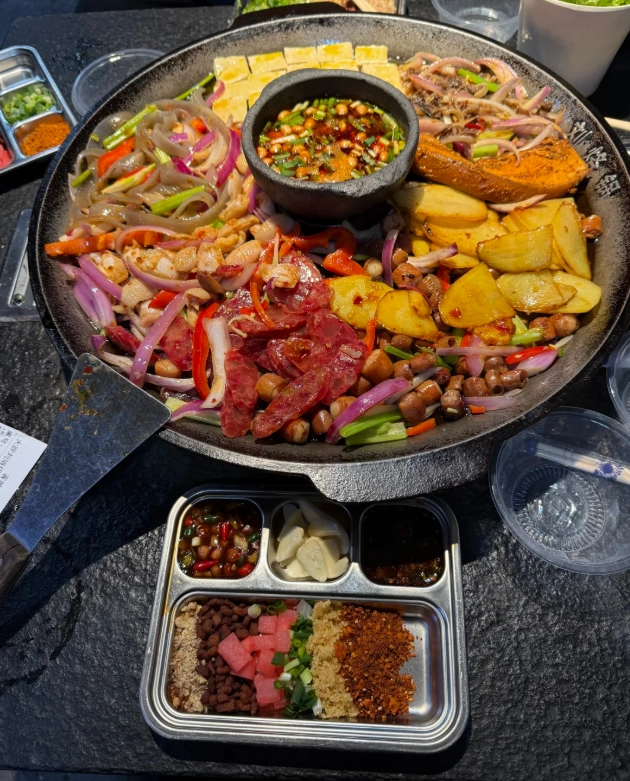
Mains and Unique Treats Worth a Detour
These dishes require a sit-down meal — but they're worth planning around.
- Chang Wang Noodles (肠旺面) — A Guiyang breakfast legend. Egg noodles in a rich broth with pork intestine, blood curd, and a crispy pork crackling. The name 'chang wang' means 'intestines and prosper' — a playful take on good luck. A standard bowl is ¥15–20, often with a side of pickled vegetables.
- Spicy Chicken (辣子鸡) — Contrary to famous Sichuan version, Guizhou's is less numbing but more smoky, with pickled chilies. The chicken is fried until dry and chewy. Highway stop near Kaili? Better in a restaurant. Allow ¥50–70 per person.
- Ash Zongzi (灰粽) — A dark, sticky rice dumpling wrapped in bamboo leaves, made with ash from straw — giving it a smoky, earthy taste. Usually savory, sometimes with a chunk of pork. Vegetarian-friendly versions exist. Buy them at Qingyan Ancient Town or during Dragon Boat Festival. ¥3–6 each.
- Tofu Balls (豆腐圆子) — Crumbled tofu formed into balls, deep-fried until golden, then served with a spicy peanut dip. Crunchy outside, soft inside. A classic Qingyan snack. A plate of 6 is about ¥10.
How Do You Order Guizhou Food Like a Local?
Your phrasebook is simple — but your patience needs training. Here's the playbook I give everyone.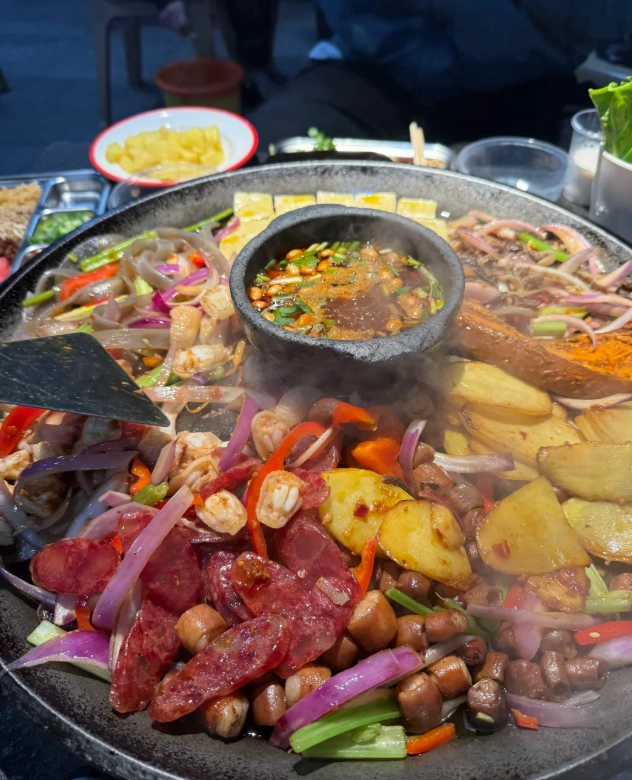
First, master the phrase 'te bie bu la' (特别不辣) — it means 'extra mild.' Just saying 'bu la' often results in a chef quietly adding 'just a little' chili. Works in most restaurants, but in Guizhou, the marinade itself is spicy, so also ask for sauce on the side: 'tang shao' (汤少) doesn't help — instead say 'liao ban du li' (调料独立) if you want a separate dipping bowl.
Second, use the display cabinets. Most street stalls and many restaurants show raw or cooked ingredients. Pointing at what you want isn't rude — it's the universal language. If it's a hotpot place, walk to the fridge and pick your vegetables yourself.
Third, payment. Cash is almost useless at night markets. Vendors expect WeChat Pay or Alipay, QR-code style. If you haven't set up mobile payment, withdraw cash at a bank ATM before coming. But even then, many stalls won't accept large bills — keep ¥20s and ¥10s.
For navigating to food spots, forget Google Maps. Download AMap (高德地图) in English or use Apple Maps. They work reliably in China. When in doubt, show the taxi driver the Chinese name of the street — I always pull it up on my phone screen.
Where to Eat in Guizhou: Streets, Stalls, and Restaurants
No single street sums up Guizhou's food — but these four get you close. I've ranked them by how often I take first-timers there.
| Food Destination | Must-Try | Best Time | Price per Person | Insider Note |
|---|---|---|---|---|
| Erqi Road Snack Street, Guiyang | Siwawa, Grilled Fish, Chang Wang Noodles | 6 PM – 11 PM | ¥30–60 | Touristy but huge variety. Try the sample-size portions before committing. |
| Qingyun Road Night Market, Guiyang | Love Tofu, Potato Cakes, Sticky Rice | 8 PM – Midnight | ¥40–80 | More locals, less English. Bring your translator app. |
| Kaili Old Street | Sour Fish Soup, Sour Beef Soup | Lunch or Dinner | ¥50–100 | The real deal. Ask for the house-made sour broth — it's a family secret. |
| Qingyan Ancient Town | Ash Zongzi, Tofu Balls, Rose Sugar | Morning or Afternoon | ¥30–50 | About 1 hour from Guiyang. Great for a day trip and food crawl. |
To get to Kaili, take a high-speed train from Guiyang North Station — it's about 30 minutes. Book tickets via the official China Railway 12306.cn website; it has an English version that's been stable for tourists.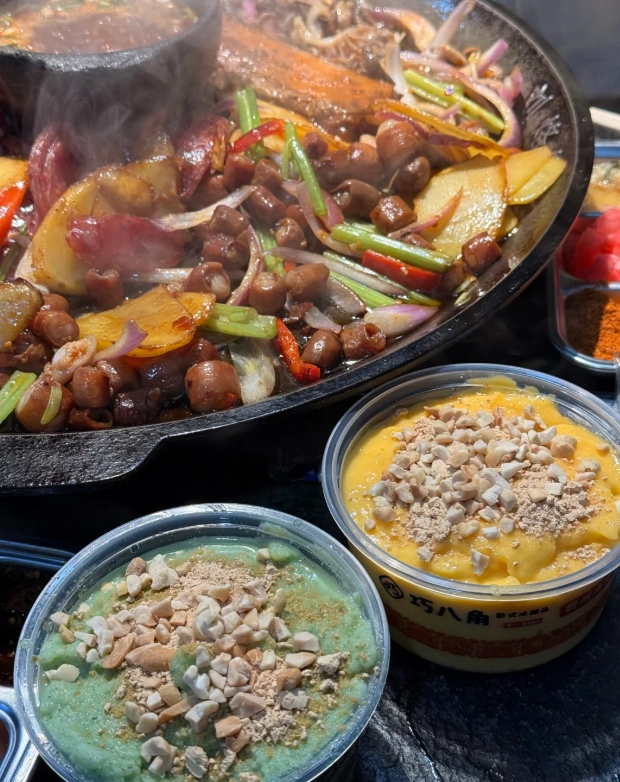
Is Guizhou Food Too Spicy for Foreigners?
Almost never — if you respect the sour. That's the biggest misconception I encounter. Guizhou chili is different from Sichuan's numbing heat or Hunan's aggressive burn. It builds slowly and saturates your taste buds rather than terrorizing them.
Still, here's my honest advice: Start with a bowl of sour fish soup at lunch. The broth's acidity neutralizes some heat. Then order a plate of sticky rice to eat between bites. If you're seriously struggling, scoop a spoonful of fermented bean curd (腐乳) into your dipping sauce — the saltiness interrupts the burn like magic. Locals also sip cold soy milk, which works better than water.
And one more tip: don't equate 'no chili' with 'no flavor.' Guizhou's chefs use pickled greens and wild herbs, so ask for a dish with 'no chili powder but with pickled vegetables' — that's often the most delicious version.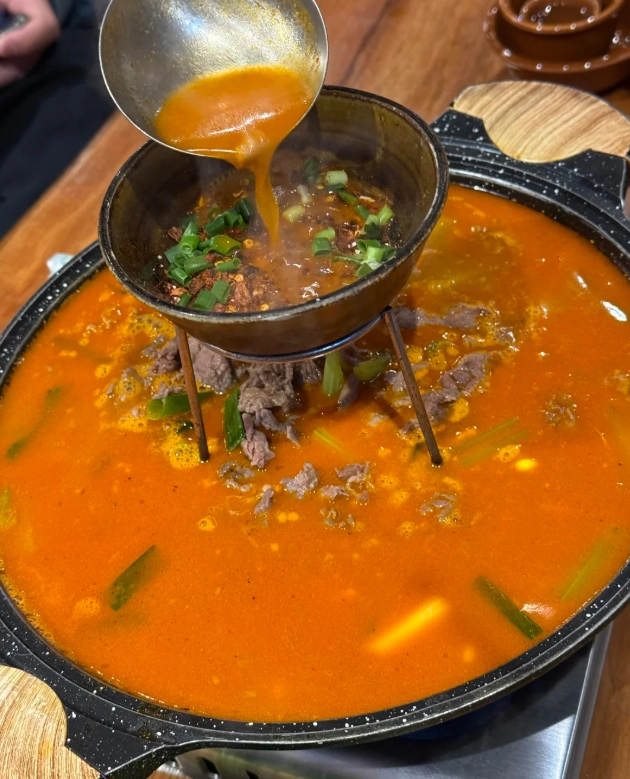
FAQs About What to Eat in Guizhou
This content has been fact-checked to ensure informational precision. Restaurant prices and opening hours may vary — always confirm locally.





No comments yet.