 Chen Liu
What's Inside
I've been guiding travelers through southern China for years, and the Guangzhou-Shenzhen train is my secret weapon. You read that right — it's fast, cheap, and stress-free, if you know the ropes.
Most visitors overcomplicate this 140-kilometer journey. They worry about missed trains, confusing stations, and language barriers. Here's the truth: this is one of the easiest train rides in China — once you understand a few key details.
In this guide, I'll walk you through everything from picking the right station to buying tickets with your passport, plus insider hacks that save you time and money. No fluff, just practical advice from someone who's made this trip hundreds of times.
Why the Train Beats Everything: Speed, Cost, and Convenience
Let's face it: flying is overkill, buses are slow, and driving only works if you love traffic. The high-speed train from Guangzhou to Shenzhen is simply the smartest option. I've taken it more times than I can count, both for work and with clients, and it rarely disappoints.
Here's the breakdown I give every client when they compare transportation options:
| Mode | Duration | Cost (approx.) | Best For |
|---|---|---|---|
| High-speed train (G/C) | 30-50 mins | 75-105 RMB | Speed and comfort |
| Bus | 2-2.5 hours | 60-80 RMB | Budget travel |
| Driving | 1.5-3 hours | 50 RMB toll + parking | Flexibility, but traffic is brutal |
The train isn't just faster — it's more predictable. You won't get stuck in gridlock on the G4 Expressway, and you don't have to hunt for parking in Shenzhen, which is notoriously expensive. Plus, with trains running every 10-20 minutes, you have total flexibility.
One thing I always tell first-timers: book a G or C train if you want the absolute fastest ride. D trains are slightly slower but cheaper, and they're perfectly fine if you're not in a rush.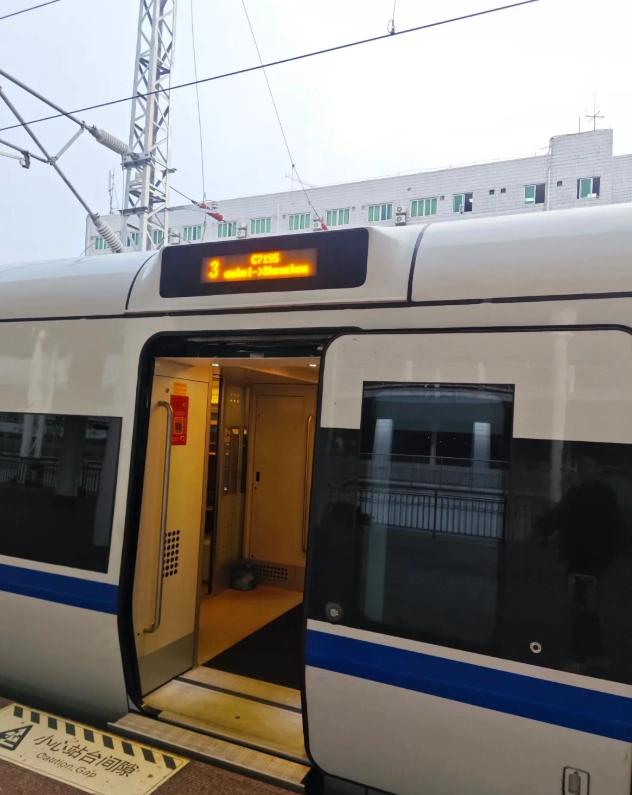
Which Stations to Use: Guangzhou South, Guangzhou East, Shenzhen North, or Shenzhen?
Choosing the right departure and arrival stations can make or break your trip. Many tourists default to Guangzhou South, but it's not always the most convenient. Let me guide you through the options.
Guangzhou South vs. Guangzhou East: Choose Based on Your Departure Point
Guangzhou South Railway Station is the main hub for high-speed trains, but it's located in Panyu, a bit outside the city center. If you're staying near Tianhe or Zhujiang New Town, Guangzhou East Railway Station is much closer, though it mainly handles D trains that take a bit longer.
Here's a quick comparison:
- Guangzhou South Railway Station — Address: No. 2, Zhongyuan Avenue, Panyu District (番禺区钟源大道2号). Accessible via Metro Line 2 and 7. More high-speed trains.
- Guangzhou East Railway Station — Address: No. 1, Lique Road, Tianhe District (天河区林和中路1号). Accessible via Metro Line 1 and 3. Mainly D trains to Shenzhen, taking about 60-70 minutes.
I usually tell clients staying in the north or east of Guangzhou to use East Station, while those south or near the Guangzhou South Airport area should use South. If you're not sure, take the metro — both stations are well-connected.
Shenzhen North vs. Shenzhen Railway Station (Luohu): Where Do You Want to Arrive?
Shenzhen North Railway Station is the modern high-speed rail hub, but it's outside the city center. Shenzhen Railway Station, also called Luohu Station, sits right at the border with Hong Kong and is very central.
- Shenzhen North Station — Address: 2nd Minzhi Road, Longhua District (龙华区民治路2号). Metro Lines 4, 5, and 6. Many G trains stop here, and it's about 30 minutes from downtown by metro.
- Shenzhen Railway Station (Luohu) — Address: 1 Zhanhe Road, Luohu District (罗湖区站河路1号). Metro Line 1 and 9. If you're heading to the Hong Kong border or the Dongmen shopping area, this is perfect.
Most high-speed trains end at Shenzhen North. But don't worry — the metro connection is excellent. I usually recommend arriving at Shenzhen North if you need speed, and Luohu if you're going straight to the border.
How to Book Tickets Without Tears: Passport, Alipay, and Trip.com
The Chinese railway booking system isn't foreigner-friendly, but there's a workaround. Below is the step-by-step method I recommend to all my clients.
Step-by-Step: Booking via Trip.com
- Open Trip.com website or app, select 'Trains'.
- Enter 'Guangzhou' to 'Shenzhen' and choose your travel date.
- Pick a train time and class (Second Class is perfect).
- Add passenger details — use your passport number exactly as it appears.
- Pay with an international credit card, Alipay, or WeChat Pay.
- You'll get an e-ticket with a QR code. Save it on your phone.
Why not use the official 12306? Because it requires a Chinese phone number and a complicated verification process. Trip.com handles everything in English and even lets you change bookings online, though there may be a small service fee. Klook is another good option, but I find Trip.com more reliable for mainland train tickets.
A critical note: when you board, always use the passport manual-check lane at the gate. The automatic gates often fail with foreign passports. Show your passport and the QR code from your e-ticket, and you're through.
Pro Tip: Do not wait until the last minute to book. While this route has frequent trains, peak times (Friday evenings and Sunday afternoons) sell out fast. Book at least a day ahead if you can.
Guangzhou to Shenzhen Train Schedule and Fares: What to Expect
Trains leave from around 6:00 am to 11:00 pm, every 10-20 minutes. You'll almost never be stranded. Here's what the different services look like:
| Train Type | Departure Stations | Approx. Duration | Second Class Fare | Frequency |
|---|---|---|---|---|
| G (High-speed) | Guangzhou South to Shenzhen North | 30-40 mins | 74.5 RMB | Every 10-15 mins |
| C (Intercity) | Guangzhou East to Shenzhen | 60-70 mins | 79.5 RMB | Every 15-20 mins |
| D (Electric multiple unit) | Guangzhou East to Shenzhen | 70-80 mins | ~79.5 RMB | Less frequent |
Prices are fixed but may adjust slightly during holidays. First class costs about 25 RMB more. The fares are far cheaper than renting a car, and you'll save hours.
I always tell clients to choose the G train if they can. The 30-minute hop is surreal — you'll barely have time to finish your coffee before arriving. Just remember to check whether your ticket says 'South' or 'East' — mixing them up is a classic rookie mistake.
Insider Tips for a Smooth Ride: Navigation, Timing, and Avoiding Common Mistakes
After guiding hundreds of tourists, I've learned where the trip gets tricky. Here are my hard-earned tips to prevent you from making the same errors.
Don't Rely on Google Maps — Use Apple Maps or AMap
Google Maps is notoriously unreliable in China, especially for public transit. Instead, use Apple Maps (which works fairly well) or download AMap (the Chinese equivalent, with an English toggle in the app). When you need to show a taxi driver your destination, save the Chinese address or point to it on your phone.
Arrive at the Station at Least 30 Minutes Early
Security checks and passport verification eat up time. Guangzhou South and Shenzhen North are massive, and walking from the metro to your platform can take 10-15 minutes. For your first trip, give yourself a 30-minute buffer. I've seen people sprint through the maze of hallways after underestimating the walking time.
The Best Time to Ride if You Hate Crowds
If you can, avoid the 5-8 pm weekday rush and Sunday afternoons. Trains are packed with commuters, and you might be standing in the aisle if you booked a seated ticket too late. Early mornings (before 8 am) and late evenings (after 8 pm) are blissfully quiet. I often catch the 6:30 am train from Guangzhou South — it's almost empty, and I get a full seat to myself.
What to Do If You Miss Your Train
Don't panic — your ticket isn't automatically void. You can visit the service counter to 'change' your ticket to the next available train, usually for a small fee (around 10 RMB). A staff member can assist if you show your passport. This is exactly why I always arrive early, but if you miss it, this is your backup plan.
Payments and Connectivity Inside the Station
Most food and drink kiosks accept Alipay and WeChat Pay, but some don't accept international credit cards. Keep cash as a backup, but note that card acceptance is spotty. Free Wi-Fi is available, but it often requires a Chinese mobile number to access. If you don't have a SIM with a local number, grab a pocket Wi-Fi before you go or rely on your international data plan.
FAQ: Your Guangzhou-Shenzhen Train Questions, Answered
A Quick Word from Your Guide
After dozens of trips between these two mega-cities, I've come to view the train as a lifeline. It's reliable, surprisingly affordable, and efficient. Sure, the stations are busy and the digital systems can be intimidating, but with the right preparation, you'll feel like a pro.
I hope this guide saves you from the little hiccups I've seen travelers experience. If you're still unsure about anything, drop me a comment — I'm happy to help. And when you're ready, book that ticket, hop on board, and enjoy the smooth ride. You've got this.








No comments yet.