 Ling Wu
What's inside this guide
I've seen it a hundred times. A tourist lands in Beijing, exhausted. They plug in their laptop — nothing. Dead. Then they panic. Don't be that person. China uses a different plug and voltage than most of the world. But it's an easy fix if you know what to bring.
Here is the catch: you can't just grab any adapter from Amazon. You need to understand plug types, voltage, and where to buy once you're in China (if you forget). I've been guiding travelers for years, and I've seen every mistake. Let me save you the hassle.
Let me cut to the chase: the best solution is a universal travel adapter with USB ports, and do not rely on hotel USB chargers (they're often slow or broken). Now, let's dive into the details.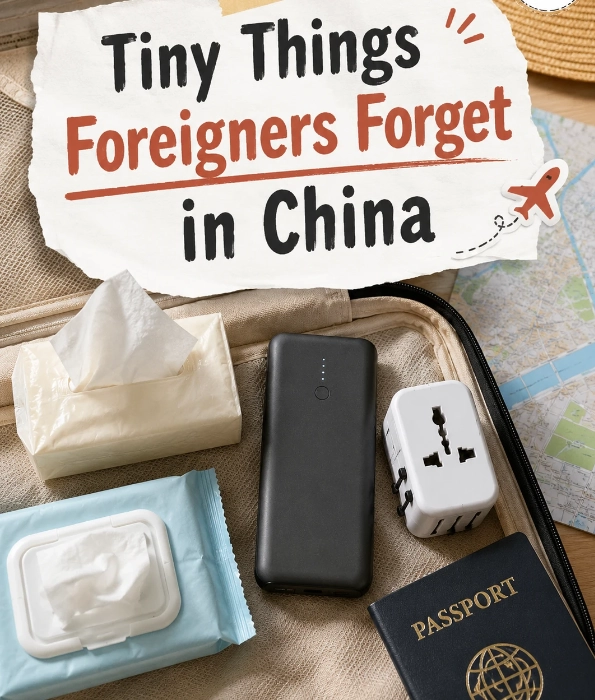
Understanding China's Power System
China operates on 220V voltage and 50Hz frequency. The plug standard is the Chinese Standard GB 2099.1, which has two flat parallel pins (Type A) or three flat pins (Type I). Most outlets accept both two- and three-pin plugs. Here's a quick comparison:
| Region | Plug Type | Voltage | Frequency |
|---|---|---|---|
| China | A (two flat pins), I (three flat pins) | 220V | 50Hz |
| USA | A, B | 120V | 60Hz |
| Europe | C, F | 220-240V | 50Hz |
| UK | G | 230V | 50Hz |
Most modern phone chargers and laptop power supplies are dual voltage (100-240V), so you only need a plug adapter. But check the label: if it says "INPUT: 100-240V", you're fine. If it only says 110V, you'll need a voltage converter — and those are heavy and expensive. I always recommend buying a universal adapter with surge protection before you leave.
Why You Need More Than a Plug Adapter
So you bought a little adapter that converts your plug to the Chinese shape. Great. But here's what most guides won't tell you: hotel rooms in China often have very few outlets. I've stayed in many where there's only one socket near the bed. If you're traveling with a phone, laptop, camera, and maybe a portable battery, you'll be fighting over outlets.
My personal recommendation: Bring a power strip with USB ports (with a Chinese plug or a universal adapter). I always carry a compact one with two AC outlets and three USB ports. It's a lifesaver. Just make sure your power strip is rated for 220V.
Another thing: Chinese sockets often have a safety shutter that prevents inserting a single pin. If your adapter has only two pins, you might need to push harder or use a three-pin adapter that forces the shutter open. Some cheap adapters don't work because the pins are too short. Look for adapters with longer, rounded pins.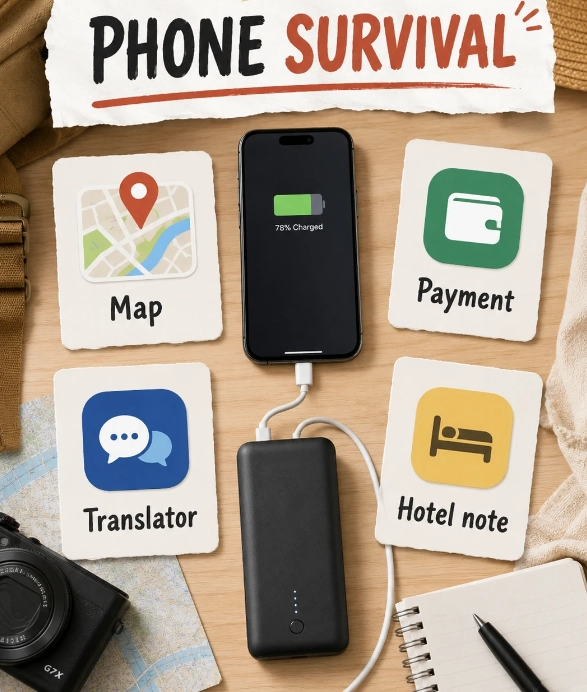
Where to Buy a Power Adapter in China
Let's say you arrive and realize you forgot your adapter. Don't panic. You can buy one in China easily, but you need to know where. Most hotel front desks do not loan adapters (I always ask anyway, but don't rely on it). Here are your best options:
- Convenience stores: FamilyMart, 7-Eleven, Lawson — especially in bigger cities. They stock basic two-pin adapters.
- Electronics markets: In Shenzhen, go to Huaqiangbei (华强北). Massive selection, cheap prices. In Beijing, try Zhongguancun. In Shanghai, Metro City on Xizang Road.
- Online: Taobao or JD.com (but you need a Chinese account and payment). If you have a hotel concierge, ask them to order one for you.
- Airport shops: Expensive but available. In Beijing Capital Airport, there's a shop in the international arrivals hall that sells universal adapters for about 100 RMB.
One thing that drives me crazy: many adapters sold in China are Type A (two flat pins) but they don't have a hole at the end of the pin. Some Chinese sockets require the pin to have a small hole for locking. If your adapter pins are solid, it might still work but could be loose. Look for adapters with perforated pins (small hole near the tip) for a snug fit.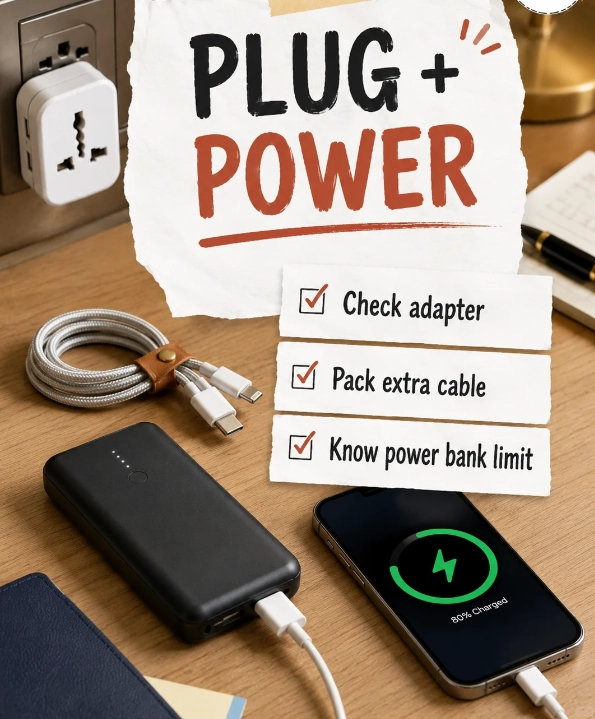
How to Use Your Adapter Safely
Safety first. Chinese electricity is not dangerous if you respect it. But here are things I've seen go wrong:
- Overloading a cheap adapter: Those tiny 10 RMB adapters are not rated for high power. Don't plug in a hair dryer and a kettle at the same time through a cheap adapter. It can melt.
- Using a voltage converter for electronics: Most voltage converters are for resistive loads like hair dryers. Using them for electronics can damage your device. Instead, just use a plug adapter if your device is dual voltage.
- Polarity: Chinese outlets are not polarized (both slots are same). But if your device expects a specific polarity (like some audio gear), you may need a polarized adapter which is rare. Most consumer electronics won't care.
Common Mistakes Foreigners Make
I've been guiding for 8 years, and I keep seeing the same blunders. Save yourself the trouble:
- Assuming all hotels have universal sockets. Some high-end international hotels do, but many local ones don't. Always bring your own adapter.
- Forgetting that USB ports in China may charge slowly. Many hotel USB ports are 0.5A or 1A. For fast charging, use the adapter that came with your phone, plugged into the wall.
- Not bringing a power bank. You'll use your phone for maps, translation, and payments. A 10000mAh power bank is essential. But note: power banks over 20000mAh are not allowed on flights in China (check airline rules).
- Thinking Google Maps works offline. It won't. Use Apple Maps or Amap (高德地图). But those eat battery. See why a good adapter and power bank matter?
- Relying on WeChat or Alipay without a charged phone. You need your phone for everything in China. If it's dead, you're stuck. Keep it charged.
If you're planning to visit multiple Asian countries, get a universal adapter that includes the Chinese plug. Many sets labeled "Worldwide" include the Type A and Type I that work in China.
FAQ: Power Adapter for China Travel
This content has been fact-checked to ensure informational precision. Verified and fact-checked by the editorial team.








No comments yet.