 Yan Zhou
The Short Answer: How Many Days Do You Really Need in Shandong?
Five days. That's it. Don't overthink it. I've guided hundreds of travelers through Shandong, and five days gives you enough time to see the highlights without feeling like you're on a cattle run. So, when you're wondering how many days to spend in Shandong, the answer depends on your travel style. But for most first-timers, five days hits every major highlight — from the coastal breezes of Qingdao to the sacred summit of Mount Tai. Here's the catch: if you skip the rushed 3-day tour and instead budget 5 days, you can dodge the tourist traps and still catch the sunrise on Mount Tai. Stay tuned — I'll show you the exact plan.
The real question isn't "how many days" — it's "how do you connect the dots." Shandong is a province of dispersed gems. Distances between Qingdao, Jinan, Qufu, and Tai'an are big enough to eat up an entire afternoon if you plan poorly. That's why I always tell clients to build in at least one day of buffer.
In the table below, I've laid out the three most common trip lengths. Use it as a starting point.
| Trip Length | Pros | Cons | Best For |
|---|---|---|---|
| 3 Days | Short and cheap; you'll tick off the big three | Rushed; only time for one day in Qingdao and a rushed Mount Tai | Travelers adding Shandong to a bigger China loop |
| 5 Days | Balanced; covers Qingdao, Tai'an, and Qufu without burning out | Need to move fast between cities | Most first-timers |
| 7 Days | Relaxed; you can add Weihai or Jinan and have quiet beach time | More vacation days needed | Beach lovers, honeymooners, or slow travelers |
3, 5, or 7 Days? How to Choose Your Shandong Itinerary Length
Let me walk you through each option so you can decide without second-guessing.
3-Day Quick Hit: Only If You're Pinched
This is a sprint. You'll fly into Qingdao, spend one day there, take a high-speed train to Tai'an that evening, hike Mount Tai at sunrise, then go down and train to Qufu in the afternoon, and fly out that night. It's doable, but you'll miss the beach vibe and probably need a week to recover. I've had clients cry on Mount Tai because they were too exhausted to enjoy it.
5-Day Sweet Spot: The Most Practical Choice
This is my default recommendation. You get:
- Two full days in Qingdao — one for the coastline and one to just wander
- One late afternoon and sunrise on Mount Tai
- A full day in Qufu to properly absorb Confucius
- One flexible day for rest or a detour
It's the perfect amount to feel like you've "done" Shandong without needing a vacation after your vacation.
7-Day Extended Version: For Beach Lovers
If you love coastal cities, add a day in Weihai or Yantai. These are where Chinese families go for summer escapes — less crowded than Qingdao, with even cleaner water. You can also stretch Jinan, the provincial capital, to a full day for its springs. Seven days lets you slow down, take a nap, and actually enjoy the famous Shandong cuisine rather than grabbing a rushed bowl of noodles between trains.
Day-by-Day: A Realistic 5-Day Shandong Itinerary
Here's the plan I've fine-tuned over countless trips. It's heavy on practical details, so copy it into your notes.
Day 1: Arrive in Qingdao — Get Your Bearings
Land at Qingdao Jiaodong International Airport (the new one, not the old Liuting). Take the metro line 8 to the city center — it takes about 45 minutes and costs around 8 RMB. Check into a hotel near the May Fourth Square (五四广场) or the Olympic Sailing Center. This area is safe, walkable, and full of restaurants.
In the late afternoon, head to Zhanqiao Pier (栈桥). It's the symbol of Qingdao. Walk to the end, look back at the city skyline, and watch the tide. Note: the pier is free, but if you want a good photo spot, climb the small hill at Xiaoyushan Park (小鱼山公园) after. The entry is 10 RMB and it's open until 8pm in summer.
Pro Tip: Avoid the seafood stalls right on the pier — they're overpriced and touristy. Walk 10 minutes inland to Pichai Courtyard (劈柴院) for street food, but go before 7pm to beat the crowd. I always tell my clients to look for the stall with the longest queue — that's where the locals are buying.
Dinner: treat yourself to a proper seafood meal at a place called "前海沿" (Qian Hai Yan). It's a local chain with reasonable prices. The spicy clams and grilled oysters are my go-tos. Expect to pay about 80-120 RMB per person. They have a picture menu, so ordering is painless. All major Chinese payment apps work; international cards are a no-go, so connect Alipay before you arrive.
Day 2: Qingdao — Coastal Walk and a Beer Museum
Start early to beat the crowds. Stroll along the Badaguan Scenic Area (八大关), a seaside neighborhood with 26 tree-lined streets and colonial-era villas. The most beautiful part is the southern path near the Second Bathing Beach. Go at 7-8am when the light is golden and the streets are quiet. Entry is free.
From there, walk north to the Qingdao Beer Museum (青岛啤酒博物馆). It's at 56 Dengzhou Road. The entry fee is 60 RMB, including one glass of beer. Yes, you drink at 10am — it's tradition. The museum gives you a peek at the old brewing process and the modern factory lines. I recommend booking via Trip.com or Klook to skip the ticket line, but you can also buy at the entrance if you show your passport.
Lunch: near the museum, head to "市北老院子" (Shi Bei Lao Yuan Zi) for authentic pork ribs and sticky rice. It's a no-frills place, but the ribs are fall-off-the-bone soft. The owner doesn't speak English, so bring a translation app.
After lunch, take a rest at your hotel during the hottest part of the day (if you're traveling in summer). Or, if you're up for it, walk the Olympic Sailing Center promenade — it's free and has great views of the skyline.
Sunset: head to the Signal Hill Park (信号山) for a panorama. The observatory costs 10 RMB and closes at 5pm, so get there by 4pm. The view over the red rooftops and the sea is unforgettable.
For dinner, go to "船歌鱼水饺" (Chuan Ge Fish Dumplings). This place specializes in dumplings stuffed with whole fish and squid ink. The dumplings are pricey but worth it — about 90 RMB per person. Try the squid ink version: it's black, a bit briny, and absolutely delicious.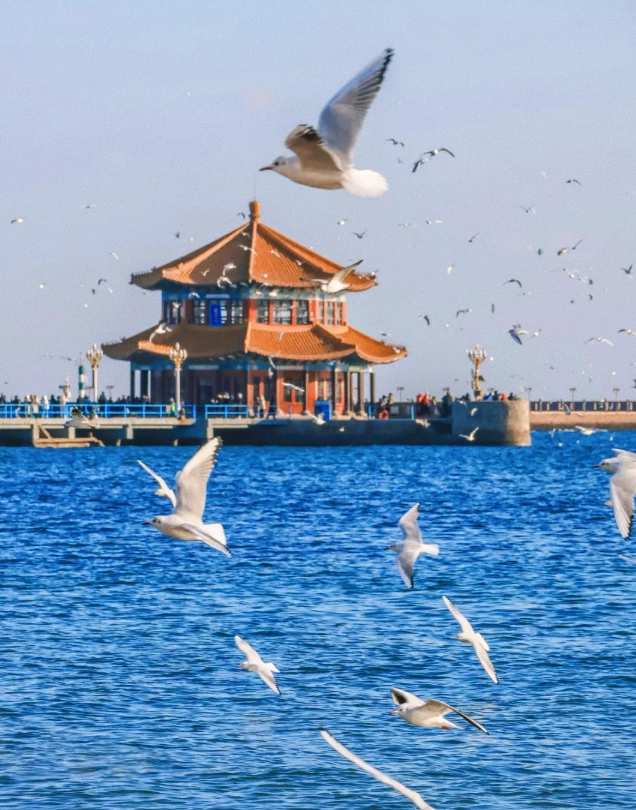
Day 3: Train to Tai'an and Climb Mount Tai for Sunrise
Take the morning high-speed train from Qingdao to Tai'an. The trip takes about 2.5 hours and tickets start at 119 RMB for second class. Book your train ticket in advance via the official 12306 website or app — the same site handles all Chinese trains. If the app is a pain, use Trip.com to book; they add a small fee but the English interface is simple.
Arrive in Tai'an around noon. Check into a hotel near the East Gate of Mount Tai (泰山), not the city center. The area around Hong Men (红门) is the traditional starting point for hikers. There are plenty of budget hostels and midrange hotels. I usually stay at the "泰安香榭客舍" (Xiangxie Hostel) — clean, cheap, and a 5-minute walk to the hiking trail.
Spend the afternoon relaxing and eating a proper meal — you'll need the energy. I like "泰山第一笼" (Tai Shan First Steamed Bun) at the foot of the mountain. The soup-filled buns are legendary. Then, at around 5pm, start your climb via the Hong Men route. It takes 4-6 hours to reach the top, depending on your fitness. The stone steps are steep in places, and you'll pass ancient inscriptions and temples. It's a spiritual hike.
At the summit, you'll see clusters of travelers waiting for sunrise. Rent a military jacket at the top (around 30 RMB) because it gets freezing, even in summer. There are also small hotels at the top if you can afford it — but they book out months in advance. I always bring an extra power bank and a headlamp.
Pro Tip: Skip the cable car on the way up if you can. The views on foot are incomparable, and the sense of achievement when you reach the gate is worth the blisters. Use the cable car on the way down to save your knees — it costs 100 RMB one-way.
Day 4: Sunrise at the Top, Then Back to Qufu
Wake up at 4:30am to grab a spot at the observation deck. The sunrise is brief but spectacular — clouds roll over the peaks and the light paints the sea of clouds in gold. After the sunrise, explore the temples and the famous "Mount Tai and the Sun" stone. Then take the cable car down and hop on the bus back to Tai'an railway station.
From Tai'an, jump on the high-speed train to Qufu (about 25 minutes, 40 RMB). Check into a hotel near Qingdao Street (not the Qingdao in Shandong, but the pedestrian street in Qufu named after the city). This is the most convenient area for sightseeing.
In the afternoon, visit the Temple of Confucius (孔庙). It's huge, so give yourself at least 2 hours. The UNESCO World Heritage listing for the Confucius complex is on the official UNESCO site — worth reading before you go. The temple is free for the first Sunday of every month, but otherwise it's 90 RMB. Bring your passport to buy the ticket.
For dinner, try "孔府宴" (Kong Family Banquet) style food. This is the cuisine originally served to the Confucius family, and it's elegant and refined. A good mainstream option is "鲁城饭店" (Luccheng Restaurant) in the center. The fish flavored with sweet and sour sauce, and the "Confucius Blanket" (a thin pancake dish) are my picks. Budget 80-150 RMB per person.
Day 5: Qufu, Confucius Mansion, and Departure
In the morning, visit the Confucius Mansion (孔府) where direct descendants of Confucius lived. It's about a 10-minute walk from the temple. The mansion is a maze of courtyards and gardens — go early before the tour groups arrive. Then, if time allows, walk to the Confucius Cemetery (孔林), a 2,000-year-old forest with thousands of tombs. It's vast, so you can take the optional shuttle bus.
By early afternoon, you'll be ready to continue your journey. The nearest major airport is in Jinan (about 2 hours away by train), but you can also take a direct train to Beijing or Shanghai from Qufu East Station. If you fly, train to Jinan West and transfer to the airport bus.
That's the five-day loop. It's intense, but it covers the legendary Shandong without killing your vacation vibe.
Transport & Tickets: How to Navigate Shandong Like a Local
Shandong's high-speed rail network is your best friend. It connects every major city in the province, and for a foreigner, the departure boards are bilingual. Here's what you need to know:
- Book trains in advance — Use the official 12306.cn website or app, or a third-party like Trip.com. Have your passport ready for real-name verification.
- Intercity buses exist but are slower and less comfortable. Only use them for short hops like Tai'an to Qufu (though the train is cheaper and faster).
- Within cities, use the metro and DiDi app — Didi is China's Uber, and it's in English now. Never accept rides from touts at train stations; always book through the app.
Ticket booking at attractions is another big one. Almost every site in China requires a booking with your passport. The easiest way for foreigners is to use Trip.com or Klook, which handle the passport registration automatically. Or, ask your hotel concierge to help you book through the official WeChat mini-program. Yes, navigating the WeChat mini-program in pure Chinese is a nightmare even for me. But don't panic — just ask the front desk; they deal with this every day.
Payment is straightforward if you set up Alipay or WeChat Pay before you arrive. All major attractions and restaurants accept mobile payment. Some places might accept cash, but don't count on it. International credit cards are almost useless outside the biggest international hotels.
Remember, Google Maps won't work smoothly in China. Download Apple Maps (which uses Chinese map data) or the AMap Global app. I gave up on Google Maps after getting lost in Qingdao three times.
And one more thing — bring a VPN if you want access to Google, Instagram, or Facebook. It would help if you had it before you land because you'll need it to set up your apps. I always tell my clients to test it at the airport.
Where to Stay in Shandong: Hotels for Every Budget
My hotel picks balance cost, location, and comfort. Here's a quick comparison for each city.
| City | Budget Option | Midrange Option | Luxury Option |
|---|---|---|---|
| Qingdao | Qingdao Seaview Youth Hostel (about 120 RMB/night, near the train station) | Hyatt Regency Qingdao (from 750 RMB, overlooking the Olympic Sailing Center) | Shangri-La Qingdao (from 1200 RMB, great spa and pool) |
| Tai'an | Taishan Mountaineering Hostel (90 RMB/night, basic but clean) | Mount Tai International Youth Hostel (200 RMB, has rooftop terrace) | Voco Tai'an (from 600 RMB, modern and comfortable) |
| Qufu | Qufu Bamboo Hostel (100 RMB, quirky story) | Jinling Hotel Qufu (250 RMB, close to temple) | Quaker Inn (from 800 RMB, traditional Chinese architecture) |
For budget travelers, always check the Wi-Fi speed and whether the hotel has an elevator. In China, older buildings sometimes skip elevators. I've lugged suitcases up four floors more times than I care to admit.
One more thing: if you're staying near Mount Tai, the hotels at the summit are ridiculously overpriced for what you get. Spend the money only if you absolutely can't handle the cold morning wait.
What to Eat in Shandong: A Local's Food Guide
Shandong is the birthplace of Lu cuisine, one of the eight great culinary traditions of China. It's heavy on seafood, garlic, and rich sauces. You'll notice that dishes are often slightly sweet and salty — the perfect comfort food.
Must-try dishes:
- Sweet and Sour Carp (糖醋鲤鱼) — a whole fish fried and doused in a sticky sauce. Typically served at formal banquets. Try it at Kong Family Banquet restaurants in Qufu.
- Braised Sea Cucumber (葱烧海参) — expensive but deeply indulgent. Available at high-end seafood places in Qingdao.
- Jianbing Pancake (煎饼卷大葱) — a rustic staple: a thin crepe rolled with scallion and sauce. It's the ultimate street snack in Tai'an. Look for a stall at the bottom of Mount Tai.
- Qingdao Seafood — think grilled squid, spicy clams, and fresh oysters. The beer city knows how to pair them.
- Confucius-style dishes — subtle, elegant, and loaded with history. The "Confucius Chicken" is a must-try.
I always tell my clients: don't order too much at once. Chinese portions are generous, and you'll want to taste multiple dishes. And if you're vegetarian, say the phrase "wo chi su" (I eat vegetarian), and most restaurants will adapt the dish, skipping meat or fish-based broths.
For payment, all these restaurants process Alipay and WeChat Pay. Credit cards are usually not accepted unless it's a top-tier hotel restaurant.
Insider Tips to Avoid Crowds and Tourist Traps
Shandong is popular with domestic Chinese tourists, so weekends and national holidays (Golden Week in October) are brutal. If you can, schedule your trip Monday through Friday. Here's how to dodge the masses:
- Mount Tai sunrise: Everyone wants to see it. Go on a weekday and start the hike around 5pm to avoid the late-night wave. The summit is crowded, but after the sunrise, most people immediately go down. Stay an extra hour and you'll have the temples almost to yourself.
- Badaguan: In summer, coachloads of tourists arrive after 10am. Be there at 7am, and you'll have the streets for yourself.
- At Confucius Temple: Tour groups swarm in the late morning. Arrive at opening time (8am) and head straight to the Great Hall of Golden Man.
- Beware of "black taxis" at train stations offering "special deals." They'll charge you three times the metered rate. Always use Didi or the official taxi queue.
Here's a personal lesson: I once let a client buy "spiritual souvenirs" from a vendor at the foot of Mount Tai. They paid 500 RMB for a stone that turned out to be painted marble. Always shop at official stores or ask your guide for a trusted spot.
Insider Advice: Weather is your biggest variable. Mount Tai's summit can be 10°C (18°F) cooler than the base. Check the forecast before you start hiking, and pack a light jacket even in summer.







No comments yet.