 Ling Wu
Quick Look
- Why Mingshi Countryside Deserves a Spot on Your Guangxi Itinerary
- How to Get to Mingshi Countryside
- What to See and Do in Mingshi Countryside
- Entrance Fees, Hours, and Booking
- Where to Stay Near Mingshi
- Where to Eat Around Mingshi
- Practical Tips: Payment, Navigation, Language
- Sample Itinerary: Mingshi + Detian Waterfall
- Frequently Asked Questions
Let me be honest with you. My first trip to Mingshi Countryside nearly ended in disaster. I followed old blog posts, ended up at the wrong entrance, and wasted an hour hunting for a ticket booth that didn't exist. Don't repeat my mistake.
The truth is, Mingshi Countryside isn't like the walled tourist spots you've seen in China. It's a living farming landscape — karst peaks, rice paddies, and a winding river. Most foreigners miss it because they rush to Detian Waterfall and skip the quiet beauty just 30 minutes away.
Here's your most valuable takeaway before we dive in: You can visit Mingshi Countryside for free. No gate, no guard. The money goes to extra activities like bamboo rafts and bikes. Now let me show you how to enjoy it like a local.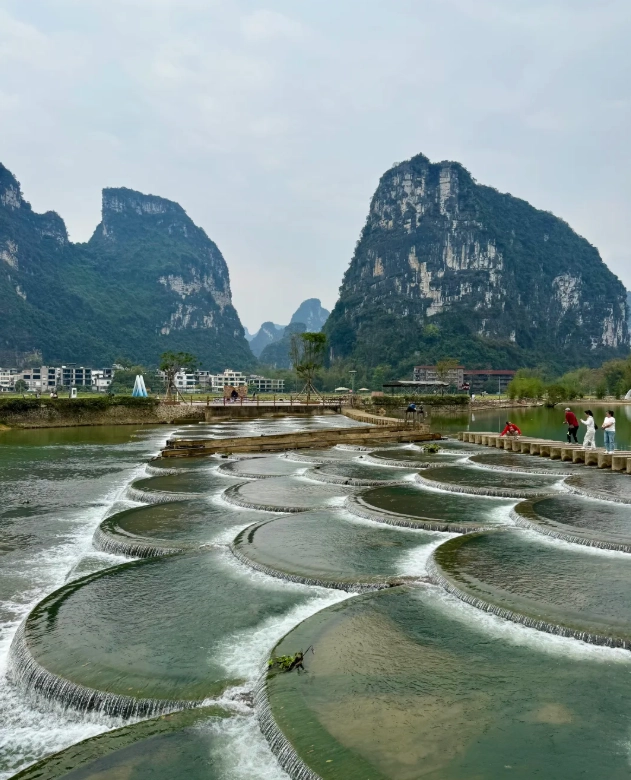
Why Mingshi Countryside Deserves a Spot on Your Guangxi Itinerary
Guilin grabs all the headlines, but Mingshi Countryside offers a similar karst fantasy with a fraction of the crowds. Tucked between Chongzuo and the Vietnamese border, this patchwork of emerald rice paddies and towering limestone peaks sits along the Guichun River. It's the kind of place where you can hear birdsong instead of bus horns.
I've seen tourists spill out of tour buses, take a few snaps, and leave within an hour. That's the wrong approach. Mingshi rewards slow travelers — those willing to cycle the narrow paths, chat with farmers, and watch the light shift across the mountains. If you're the type who likes to sit and absorb, you'll fall hard for this place.
During my last visit, an old farmer invited me into his courtyard for a cup of local tea. He didn't speak a word of English, but we managed with gestures and laughter. These are the moments that make Mingshi special — it's not just a photo spot, it's a living community.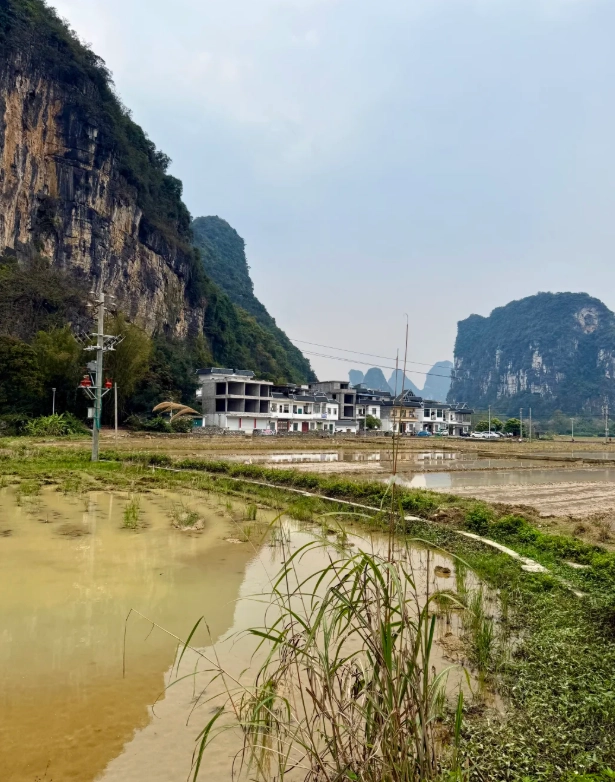
How to Get to Mingshi Countryside
Getting here requires a bit of planning, but it's not painful. The nearest major cities are Nanning and Chongzuo. From Nanning, you have three main options: long-distance bus, private car, or joining a tour.
Your most flexible choice is hiring a private car with a driver. It costs more, but you'll set your own schedule. For budget travelers, the bus route works well if you're not in a rush.
By Bus from Nanning
Go to Langdong Bus Station in Nanning and take a bus to Daxin County. The ride takes about three hours and costs around 60–80 yuan (confirm at the station). From Daxin, catch a local bus heading to Shuolong Town. Ask the driver to drop you at the Mingshi Village bridge. These local buses run until early evening, but frequencies are irregular — typically every 30 minutes during the day. Don't expect everything on Google Maps; head to the station and ask.
If you're coming by high-speed rail, the nearest stations are Nanning and Chongzuo. From Chongzuo station, budget another hour by taxi or bus. You can book train tickets on the official 12306.cn website or through Trip.com.
By Bus from Chongzuo
Chongzuo is even closer — roughly 1.5 hours away. Buses leave from Chongzuo Bus Station to Daxin, and you can follow the same connection. If you're coming from Detian Waterfall directly, shared minivans and taxis wait outside the main entrance. Agree on a price before driving off; expect around 50 yuan per person for the 30-minute ride.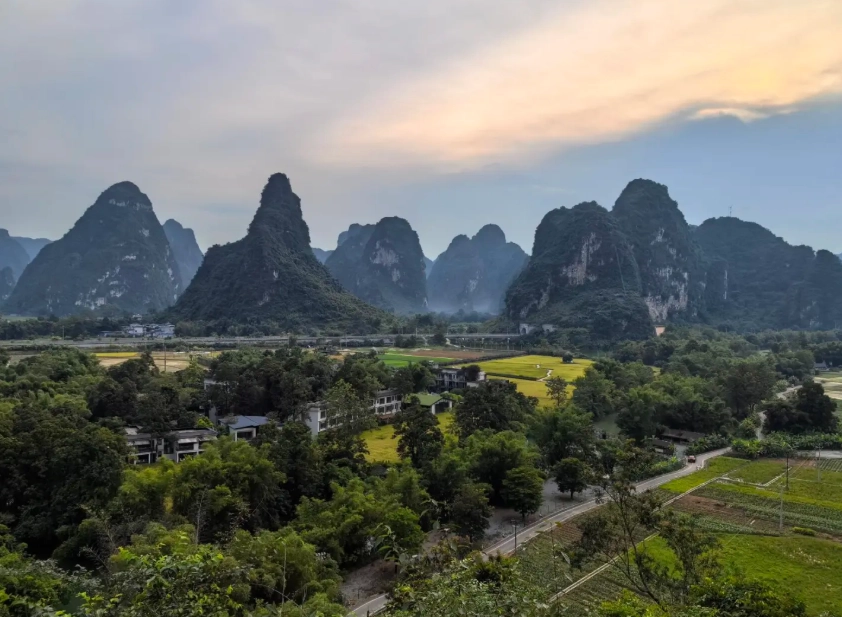
By Private Car or Taxi
The most direct way is to arrange a driver through your hotel or a ride-hailing app. From Nanning, a one-way private transfer costs about 400–500 yuan — negotiate before you go. From Chongzuo, it's roughly 200 yuan. The roads are good, and a Chinese driver with GPS will save you from the navigation headaches I'll describe later.
| Route | Time | Cost (Approx.) | Best For |
|---|---|---|---|
| Nanning → Daxin by bus | 3 hours | 60–80 yuan | Budget travelers |
| Daxin → Mingshi by local bus | 30 mins | 10 yuan | Flexible schedule |
| Chongzuo → Mingshi by bus | 1.5 hours | 30–40 yuan | Already in Chongzuo |
| Private transfer from Nanning | 3 hours | 400–500 yuan | Couples/families, convenience |
Prices are indicative and should be verified when you book. I always tell my clients to ask their hotel to write the destination in Chinese: 明仕田园. You'll show it to taxi drivers or bus conductors.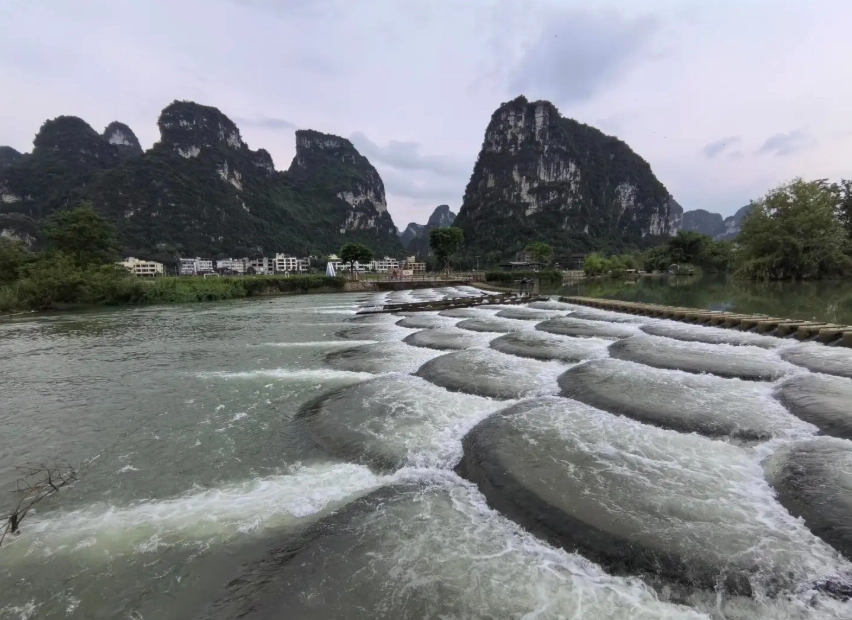
What to See and Do in Mingshi Countryside
Bamboo Raft Ride on the Guichun River
The most popular activity is a gentle bamboo raft float down the river. Rafts leave from a dock near the village bridge and drift about 40 minutes through the heart of the karst scenery. The boatman stands at the back with a pole, letting the river do the work. It's peaceful, but be aware it's a bit commercial — boats are decorated with red lanterns and occasionally follow a guide with a loudspeaker. Still, the scenery is magnificent, and you'll see water buffalo up close.
The ride costs extra and is payable at the dock — cash or Alipay. No need to book in advance on busy days; just show up. But if you're in a bigger group, your hotel can call ahead to reserve.
Cycling the Countryside Roads
My favorite way to explore is renting a bicycle (or e-bike) near the village entrance. You can rent from small shops for about 20–30 yuan per hour. Follow the main road that loops between the rice fields — there are no gates or barriers, so you're free to wander. Just be careful on the narrow dykes when other bikes come through.
One thing I always warn my groups: the paths get muddy when it rains, and the “shortcut” across the field might not be passable. Stick to the paved roads unless you're wearing proper shoes.
Walking the Riverbank Trail
If you're not into cycling, a walk along the riverbank gives you the same vibe. Start at the bridge near the Mingshi Village sign and follow the stone path upstream. You'll pass a few viewing platforms and tiny shrines. Allow an hour to reach the distant farmhouse, then turn back. The path is flat, perfect for all ages.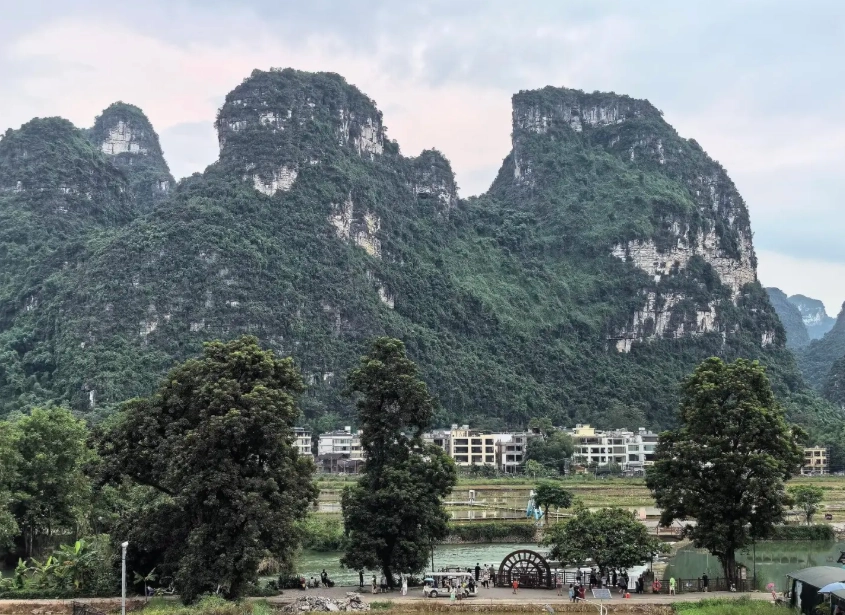
Chasing the Golden Hour Light
Mingshi glows at sunrise and just before sunset. I've brought photographers who skip the bright noon light altogether. The peaks cast longer shadows and the rice reflects the sky in muted colors. Arrive by 7 a.m. — you'll have the whole place virtually to yourself.
Pro Tip: The village bus stop area faces east, so it's ideal for sunrise. For sunset, walk towards the western edge near the bamboo dock.
Entrance Fees, Hours, and Booking
There is no entrance fee for the open countryside area. You can wander the village, fields, and riverside for free, 24 hours a day. The paid activities are the bamboo raft and the battery car (a tourist shuttle that follows the main road). Battery car rides cost around 30 yuan per ride, but you can easily walk or cycle instead.
Do you need to book in advance? Only if you're joining an organized tour or want the raft to start early. For independent travelers, just walk to the dock. However, if you're visiting during Chinese public holidays (May Day, National Day), the village swells with domestic tourists. Book a homestay well in advance and start your raft ride before 9 a.m. to beat the crowds.
Where to Stay Near Mingshi
For the full experience, stay overnight — even one night changes everything. In the evening, after the tour groups leave, the village returns to its rural rhythm. You'll hear frogs and see fireflies. There are dozens of family-run guesthouses (“nongjiale”) along the river. Most are basic but clean, with hot water and Wi-Fi.
I always stay in a room with a balcony facing the peaks. Prices for a standard double run 150–300 yuan per night, depending on season and amenities. Book through Trip.com or Agoda for English-friendly options. Look for the keyword “Mingshi” and sort by review score. If you prefer a more curated stay, some boutique hotels are hidden a bit outside the village, but they're pricier.
One warning: Village guesthouses often don't have elevators, and stairs can be steep. If you have mobility issues, request a ground-floor room. Wi-Fi is usually reliable, but sometimes dies in heavy rain.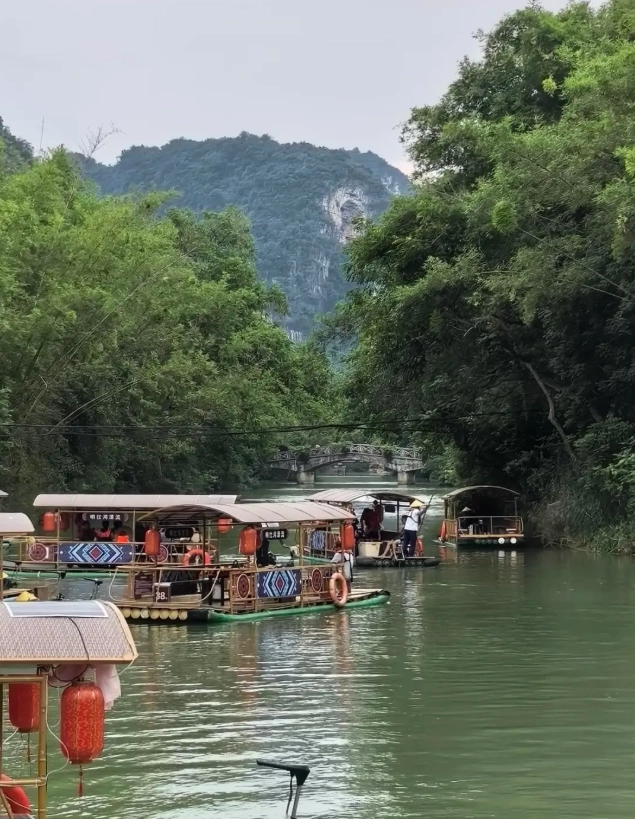
Where to Eat Around Mingshi
Eating is homestyle Chinese in the countryside. Every guesthouse runs a small restaurant, and the menu is practically the same everywhere: stir-fried farm chicken, river fish cooked with sour bamboo, green vegetables, and tomato eggs. Portions are large and cheap — a meal for two runs 60–100 yuan.
I recommend your homestay's own kitchen, because they cook with what's in the garden. Be prepared for bone-in fish and spicy dishes unless you specify otherwise. The locals use a lot of fresh chili; say “bu la” (not spicy) if you're sensitive.
Pro Tip: Try the local specialty “dark rice cake” (黑米粑) if you see it — it's a sticky, slightly savory cake made from black rice. It's only made in the village.
Practical Tips: Payment, Navigation, and Language
Payment here is almost exclusively mobile-based. Even the local vegetable stall on the roadside expects WeChat Pay or Alipay. Make sure your Alipay is linked to an international card before you arrive. Cash is accepted at most shops, but you might not get the best exchange rate, and small vendors may not have change for large bills. Your homestay will accept cash if you ask.
Forget Google Maps — it's not reliable in this area. Use Apple Maps for basic orientation, or better, download the AMap (Gaode) app which has an English section. Even with AMap, some village paths aren't marked. When in doubt, ask a local. A simple phrase like “Qing wen, ming shi yuan tian zai na li?” (excuse me, where is Mingshi Countryside?) works wonders.
Language is the biggest barrier. Few villagers speak English. I highly recommend having a translation app like Apple Translate or Baidu Translate pre-installed for offline use. And don't forget a VPN if you need to access Western websites and apps.
One thing that frustrates many visitors: booking tickets online in Chinese. For Mingshi, you don't need to book anything in advance, so skip the mini-programs. For Detian Waterfall, if you're also going there, search on Klook or Trip.com — they sell English tickets that include everything you need.
For connectivity, get a local SIM card at the airport or use an eSIM if your phone supports it. Chinese telecom operators offer tourist SIMs with data packages.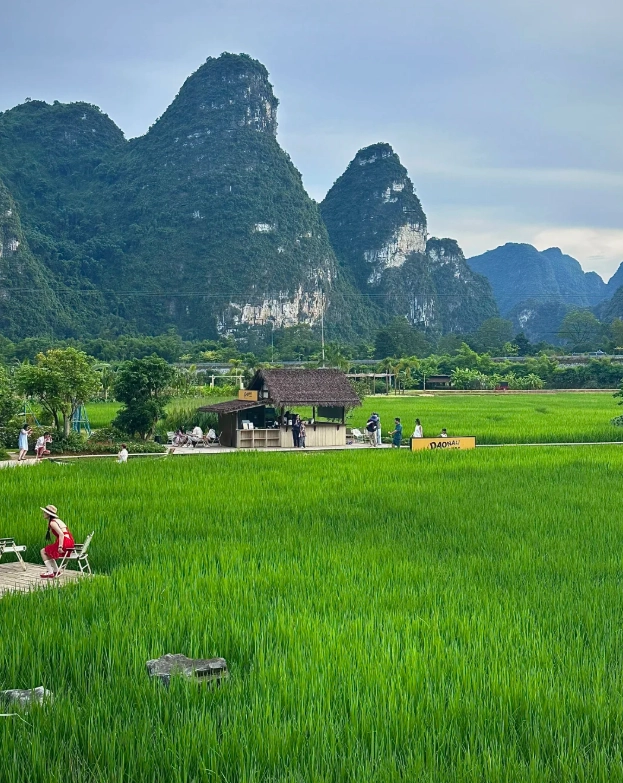
Sample Itinerary: Mingshi + Detian Waterfall
Mingshi and Detian Waterfall are only 30 minutes apart, so it makes sense to combine them. Here's how I'd spend a comfortable, well-paced day if you have your own wheels or a tour driver.
- 7:00 a.m. — Arrive in Mingshi and take a sunrise walk along the riverbank. No rush, just you and the farmers.
- 8:30 a.m. — Grab a quick breakfast at your guesthouse (noodle soup or baozi).
- 9:00 a.m. — Take the bamboo raft if you wish, or rent a bike for an hour to explore the fields.
- 10:30 a.m. — Head to Detian Waterfall (ask your driver to wait).
- 11:00 a.m. — Arrive at Detian. The waterfall is most spectacular in the morning when the light hits it straight on.
- 12:30 p.m. — Lunch at one of the restaurants near Detian's entrance. Try the Vietnamese-style spring rolls — you're right at the border.
- 1:30 p.m. — Explore the scenic area: viewpoints, the hiking trail, and maybe the boat ride at the base.
- 3:30 p.m. — Drive back to Mingshi if you want a second dose of the countryside, or continue to Chongzuo.
If you're on public transportation, leave Mingshi at 8:30 a.m., take a local bus to Shuolong, and connect to Detian's bus station. The last bus from Detian back to Daxin is around 5 p.m., so keep an eye on the clock.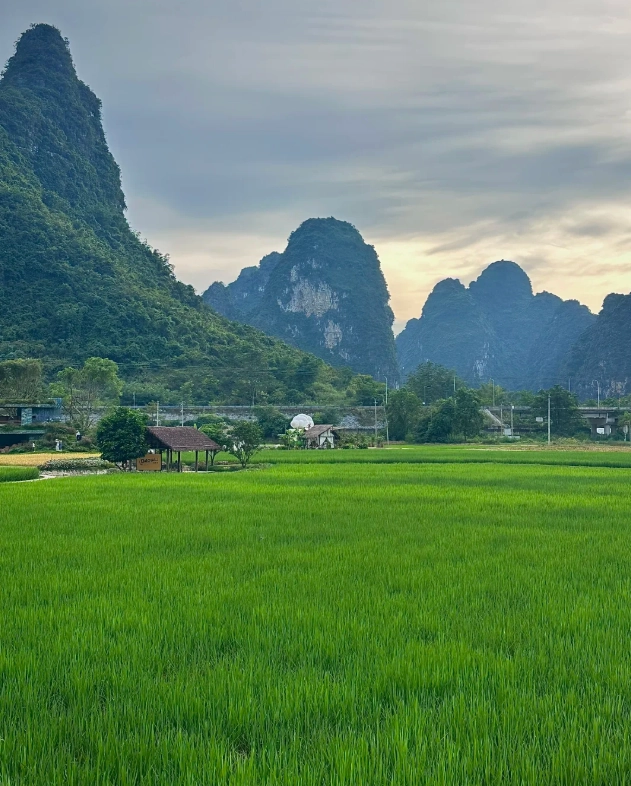
Frequently Asked Questions
1. Is Mingshi Countryside really free to enter?
Yes, the countryside itself is completely free — there's no gate or ticket booth at the village entrance. You only pay for optional activities like the bamboo raft or battery car. The free part is the open fields, paths, and most of the riverbank. If someone tries to sell you a ticket for “entering,” you're likely talking to a tout.
2. How much time should I spend at Mingshi Countryside?
If you're just passing through, an hour or two is enough for a quick look. But I strongly suggest staying overnight or at least half a day. The best experiences — sunset, sunrise, and the quiet farm life — come with time. A full day with cycling and a raft ride is ideal for photographers and nature lovers.
3. Can I use my credit card at Mingshi?
Don't rely on it. Small operators, even the dock for the raft, usually only accept WeChat Pay, Alipay, or cash. If you don't have mobile payment set up, withdraw cash in Daxin County or Chongzuo beforehand. Your guesthouse will also exchange if you ask.
4. What's the best time of year to visit Mingshi Countryside?
The scenery is beautiful year-round, but I recommend March to May and September to November. The rice paddies are green in these periods, and the weather is comfortable. Summer is hot and humid, while winter (December-February) can be chilly but clear. Avoid Chinese public holidays if you hate crowds.
5. Is it safe to cycle around Mingshi on my own?
Cycling is safe if you stick to the main paved roads. The paths around the rice fields are narrow but flat. Be alert for agricultural vehicles and motorbikes. The villagers are friendly and will give you a nod. Just remember to lock your bike when you stop for photos — even in the countryside, theft can happen.
Verified and fact-checked by the editorial team.





No comments yet.