 Tao Xu
📌 Quick Navigation — Jump to What Matters
- Why Chongzuo Deserves a Spot on Your China Itinerary
- Top Things to Do in Chongzuo – Detailed Breakdown
- How to Plan a Chongzuo Itinerary (1, 2 or 3 Days)
- Getting Around Chongzuo Without Tearing Your Hair Out
- Where to Stay in Chongzuo for Easy Access
- What to Eat in Chongzuo – Local Favorites
- Practical Tips for Foreign Visitors (Payments, VPN, Language)
- FAQs: Things to Do in Chongzuo – Your Questions Answered
Few foreign tourists make it to Chongzuo — and that's exactly why you should. I've been guiding travelers through China for over a decade, and every time I bring a group here, they ask the same thing: "Why isn't this place on every itinerary?" Located in Guangxi Province, right on the Vietnam border, Chongzuo is a hidden gem that packs a punch. But here's the catch: most travel guides skip it, and the ones that don't offer zero practical advice. That's why I've put together this guide based on countless trips — so you don't have to make the same rookie mistakes I did.
Now, let's save you some time. The single most important thing to know is this: don't try to see everything in one day. The distances are manageable, but the sun is brutal and the viewpoints get packed by midday tour groups. Instead, plan a 2-day itinerary (I'll give you one below) and focus on quality over quantity. And if you only have 24 hours, spend it at Detian Waterfall — it's the crown jewel.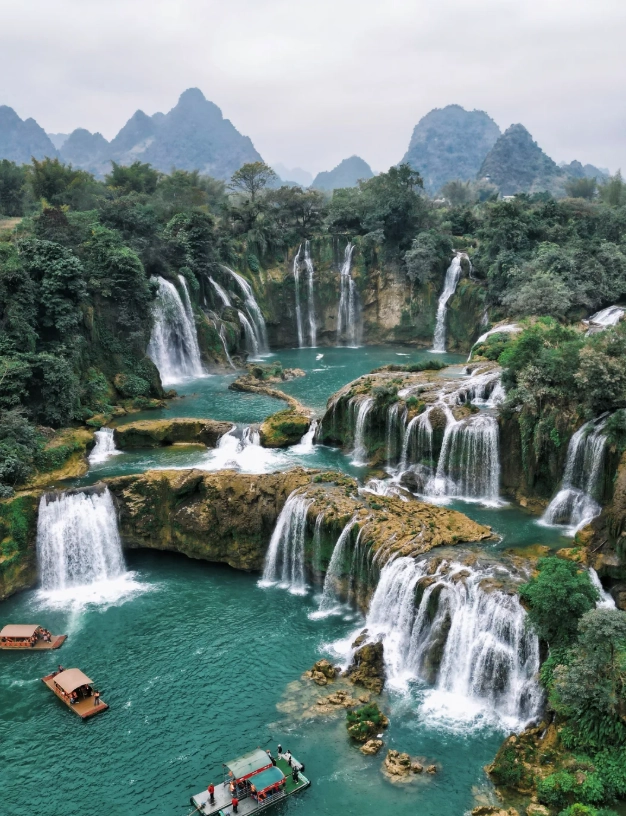
Before diving into the details, here's a quick overview of the top spots in a table for easy scanning:
| Attraction | Best For | Approx. Time Needed | Entry Fee (adult) |
|---|---|---|---|
| Detian Waterfall | Waterfall lovers, photographers | 3-4 hours | ~80-110 RMB |
| Mingshi Scenic Area | Karst landscapes, boating | 3-5 hours | ~120 RMB (incl. boat) |
| Friendship Pass | History buffs | 1-2 hours | ~50 RMB |
| Huashan Rock Art | Culture seekers | 3-4 hours (incl. boat) | ~90 RMB |
Prices change and different ticket combos exist, so always double-check on the official platforms or ask your hotel. Now let's get into the real details.
Why Chongzuo Deserves a Spot on Your China Itinerary
Chongzuo is often overlooked by two kinds of travelers: those heading straight to Yangshuo for karst scenery, and those doing the classic Guilin–Li River loop. What they miss is a quieter, more rugged version of the same beauty, with an added border-town vibe. The area is home to Vietnam's second-largest waterfall (Detian), the world-renowned Huashan rock paintings (a UNESCO site), and one of China's most important border gates. But the real charm is in the in-between: rice paddies, sugar cane fields, and limestone peaks that seem to rise from nowhere.
And unlike Yangshuo, you won't be fighting selfie sticks every five minutes. Even during Chinese national holidays, the crowds disperse because the sites are spread out. For foreign visitors, this means you can actually enjoy the scenery without a mob.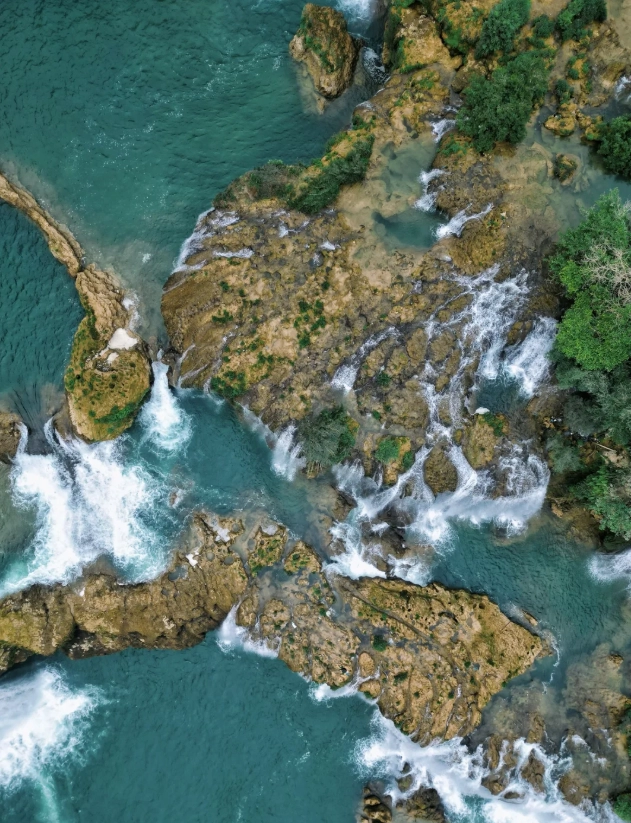
Top Things to Do in Chongzuo – Detailed Breakdown
Detian Waterfall – The Crown Jewel
Detian Waterfall is the most iconic attraction in Chongzuo and the largest transnational waterfall in Asia. It straddles the China-Vietnam border – the other half is called Ban Gioc Waterfall in Vietnam. The torrent of water cascades over multi-level limestone cliffs, and on sunny days you'll see rainbows. I always tell my clients to dress in quick-dry clothes because you'll get mist on the viewing platforms.
Here's the insider advice: arrive right at opening time (usually 8:30am) or after 3pm. The peak hours (10am-2pm) are when all the tour buses from Nanning unload. I've seen the boardwalk so packed that you can't even pause for a photo. Also, the afternoon often brings clearer skies, and the sunlight hits the waterfall's face better after 1pm.
Transportation: The waterfall is about 80km from Chongzuo city, roughly 1.5 hours by car. Public buses are confusing, so your best bet is to hire a private driver for the day (around 400-500 RMB). Most guesthouses and hotels can arrange this. Alternatively, there are direct buses from Nanning (around 3 hours), but you'll need to transfer at Daxin County.
Ticket notes: The entrance ticket costs around 80-110 RMB depending on season. You also need a shuttle bus (around 35 RMB) from the parking lot to the actual viewpoint, since the main entrance is surprisingly far. The whole experience takes 3-4 hours, including the viewpoint boardwalk and the short bamboo-raft ride (extra 30 RMB) that brings you close to the waterfall base. That raft ride is worth it – you'll feel the mist and hear the roar.
A word on border interactions: You'll see Vietnamese rowboats selling souvenirs on the river. It's a playful cultural exchange, but always negotiate in Vietnamese or use a calculator app. Don't buy counterfeit currency – it's fun to take a photo, but it's fake.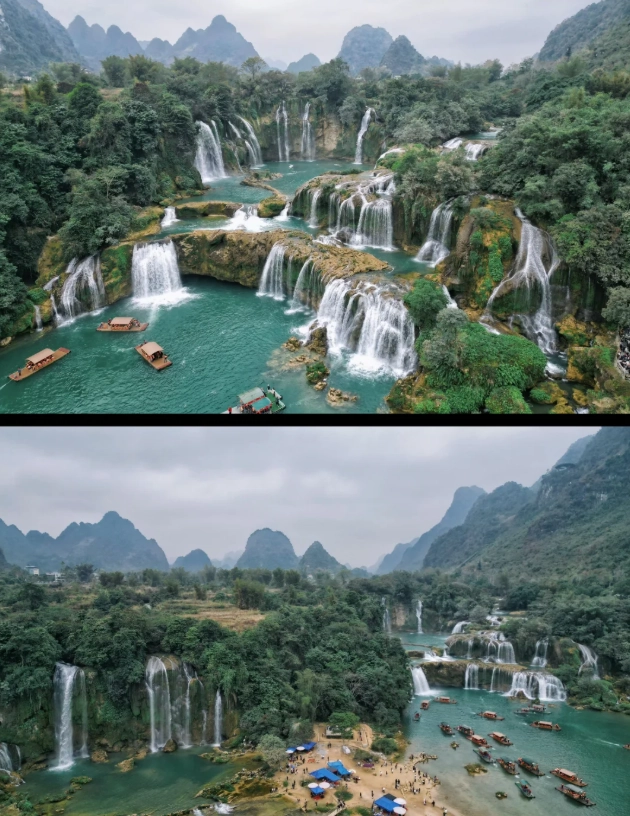
Pro Tip: Bring a waterproof bag for your phone. Even on the boardwalk, the spray can reach you. I've seen countless ruined phones.
Mingshi Scenic Area – Karst Landscapes Without the Yangshuo Crowds
Mingshi is often described as the quieter little sister of Yangshuo, and honestly, I prefer it. The scenic area stretches along the Mingxi River, surrounded by cone-shaped karst peaks that have been featured in countless Chinese TV dramas. The best way to experience it is by boat – a gentle, motorized bamboo raft that lolls for about an hour while you pass rice paddies, water buffalo, and fishermen throwing nets.
If you're into photography, the golden hours are sunset and sunrise. Many photographers base themselves in the Mingshi area for a night just to capture the morning fog over the river. The entrance fee is around 120 RMB, which includes the boat ticket. If you'd rather cycle along the river, there's a separate walking and cycling path (entry is cheaper, around 50 RMB).
Getting there: Mingshi is about 110km from Chongzuo city, around 1 hour 40 minutes by car. It's close to Detian Waterfall – only about 30 minutes between the two, which is why they're often combined into a one-day tour.
Travel tip: Check the weather before you go. The scenery is misty and beautiful on rainy days, but the boat can be cold. I always bring a light jacket even in summer.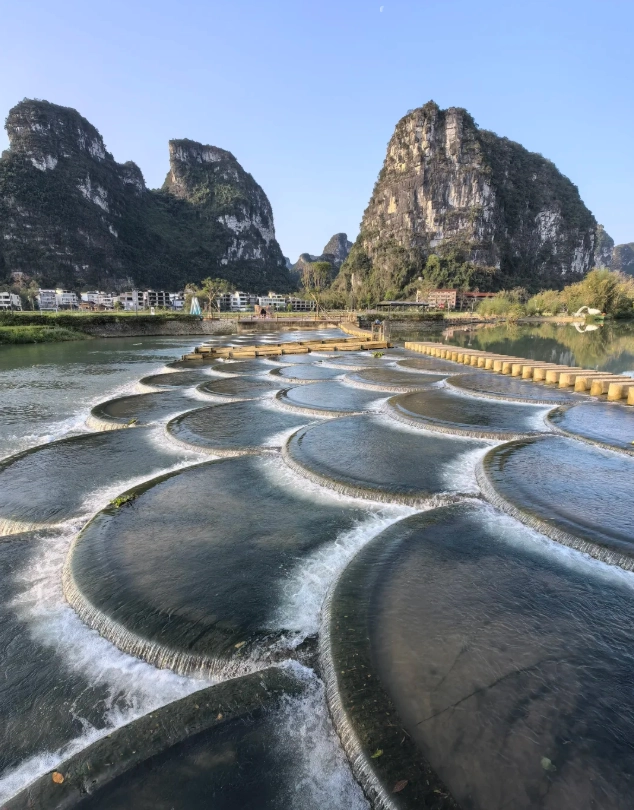
Friendship Pass – A Walk Through Border History
Friendship Pass, known as Youyi Guan in Chinese, is one of the nine ancient passes of China and a major border crossing with Vietnam. It has witnessed wars, trade, and cultural exchanges for centuries. Today, you can climb the ramparts, visit the gate, and look out over Vietnam from the watchtower. It's a surprisingly quiet place, and you might even see Vietnamese merchants crossing with goods on designated days.
But be warned: this is a working border crossing, so security is tight. You'll need your passport to enter the attraction area (Chinese visitors use their ID cards). Photography is restricted in certain zones – pay attention to signs. The ticket is around 50 RMB, and you can easily see everything in an hour or two.
Getting there: Friendship Pass is in Pingxiang city, about 100km southwest of Chongzuo, around 1.5 hours by car. It's often combined with a trip to the nearby Puzhai Port, a bustling market area where Vietnamese goods are sold.
Huashan Rock Art – Ancient Paintings Along the River
The Huashan Rock Art is a UNESCO World Heritage Site and one of the most enigmatic attractions in the area. These 2,000-year-old paintings, made with red pigment, are spread across the cliffs on the Zuojiang River. They depict stamping human figures, animals, and musical instruments – probably used in ancient sacrificial ceremonies. The only way to see them is by taking a boat ride from the Chongzuo pier, which takes about 3 hours round trip.
The boat passes several rock art panels, but the most impressive is the one on Huashan Mountain, a massive cliff with over 1,800 figures. The boat will stop at a viewing platform for you to get closer. There's an entry fee of about 90 RMB (including the boat trip). Reservations are usually required, and they may cap visitor numbers – so book ahead through your hotel or a booking platform like Trip.com.
Practical note: The boat is covered, but the platform is open, so again – bring sunscreen. Also, check that the river level is safe; during heavy rains, some tours might be cancelled.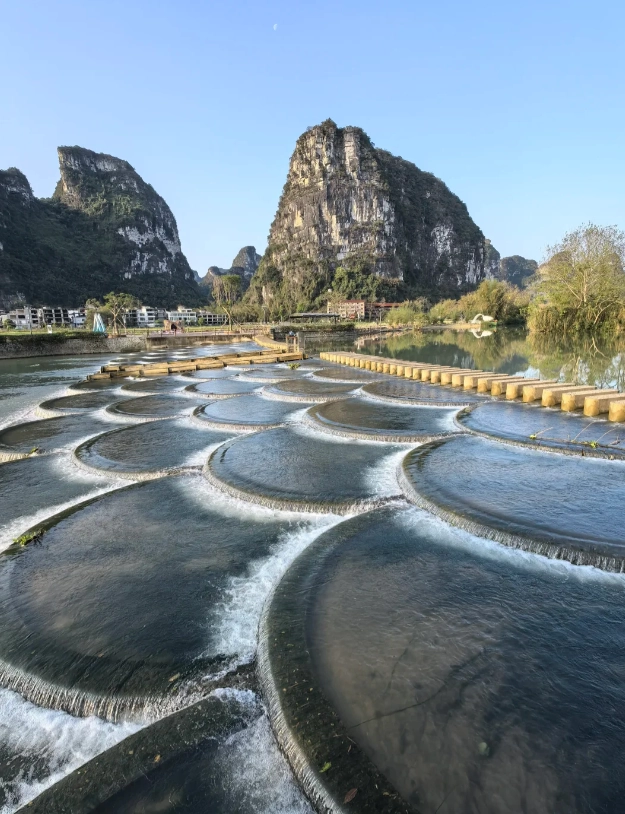
How to Plan a Chongzuo Itinerary (1, 2 or 3 Days)
I've organized countless trips to Chongzuo, and here's a realistic schedule that avoids the crowds and the brutal midday sun.
Option 1: Day Trip from Nanning (only if you're pressed for time)
This is rushed – you'll spend 6+ hours on transport. But if you have no choice, wake up at dawn, take the first high-speed train from Nanning to Chongzuo (around 1 hour), hire a driver directly at the station, and head straight to Detian. Spend 3 hours there, grab a late lunch in the nearby village, then decide between Friendship Pass (if you like history) or Mingshi (if you prefer scenery) for the remaining afternoon. You'll be back at the Chongzuo station by 8pm. It's doable but exhausting.
Option 2: The Classic 2-Day Chongzuo Loop (recommended)
- Day 1: Detian Waterfall + Mingshi – Leave Chongzuo city early (8am) to beat the tour buses at Detian. Spend the morning there. After lunch, drive 40 minutes to Mingshi and take the boat (last boats usually depart by 4pm, so don't dawdle). Even you can fit in a sunset bike ride. Stay overnight in Mingshi village or return to Chongzuo city (1.5 hours).
- Day 2: Huashan Rock Art + Friendship Pass – Take the morning boat to Huashan (departure times vary, but usually around 9am). After the boat, drive 1.5 hours to Friendship Pass and spend an hour there. If time allows, stop at Puzhai Port for duty-free shopping. Return to Chongzuo city for a late dinner.
Option 3: Slow Travel – 3 Days
- Day 1: Arrive in Chongzuo, relax, walk along the Zuojiang River in the city, and try the local rice noodles.
- Day 2: Full day at Detian Waterfall (go early, stay late) and Mingshi.
- Day 3: Huashan Rock Art in the morning, Friendship Pass in the afternoon. This allows for a more relaxed pace.
Whatever you choose, remember to schedule meals. Local restaurants at the scenic areas are hit-or-miss; I always bring snacks and a bottle of water.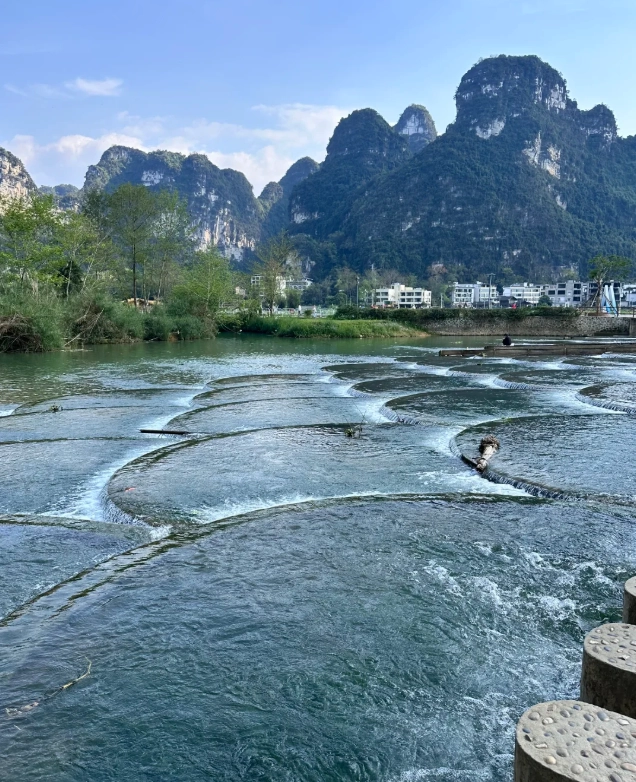
Getting Around Chongzuo Without Tearing Your Hair Out
Chongzuo is not a well-connected city for independent travelers relying on public transit. Here's what works and what doesn't.
The fastest way to reach Chongzuo is by high-speed train from Nanning (about 1 hour, 70 RMB). The Chongzuozhan railway station is actually in the city center? Not exactly, but close enough. From there, you'll need taxis or private cars to get to the main attractions. Didi (China's Uber) works but driver pickup may be slow in rural areas. I recommend arranging a private driver through your accommodation – they know the back roads and will wait for you, which saves headaches.
| Route | Distance from Chongzuo | Best Transport | Approx. Time |
|---|---|---|---|
| Chongzuo City → Detian Waterfall | 80km | Private car or bus from Daxin | 1.5 hours by car |
| Detian → Mingshi | 30km | Private car | 40min |
| Chongzuo City → Friendship Pass | 100km | High-speed train to Pingxiang or private car | 1.5 hours by car |
| Chongzuo City → Huashan Boat Pier | 10km | Taxi/Didi | 20 min |
Beware of “taxi scams” at the business station. Only use official taxis with meters, or better, use Didi and confirm the license plate. If you're not familiar with Chinese, always have your destination written in Chinese – I've provided the Chinese names below.
Attraction Chinese names:
- Detian Waterfall = 德天瀑布
- Mingshi Scenic Area = 明仕田园
- Friendship Pass = 友谊关
- Huashan Rock Art = 花山岩画
- Chongzuo city = 崇左市
Where to Stay in Chongzuo for Easy Access
You have two main options: base in Chongzuo city or stay near the scenic areas. For first-time visitors, I suggest staying in the city for the first night, then moving closer to the waterfalls for the second. But that's not always necessary – let me break it down.
Chongzuo city (you can stay near the Zuojiang River): This is the most convenient for arriving and departing by train. There are several decent international-style hotels, such as the Chongzuo Lijiang Hotel, with prices ranging from 250-400 RMB per night. English isn't widely spoken, but the front desk usually has one staff member who can help. Wi-Fi is generally stable, but always ask for a room with a strong signal. The city has a 24-hour supermarket you'll want to stock up on snacks.
Mingshi village (near the scenic area): This is the only place to stay if you want to catch the sunrise over the karst peaks. There are many guesthouses and boutique hotels, but be aware that some are quite basic. Prices range from 200-600 RMB. The best ones have balconies facing the river. Book ahead on Trip.com or booking.com because there aren't many options.
Detian waterfall area: Staying here is convenient for getting early access to the waterfall, but the village accommodation is basic and often overpriced. I'd only recommend it if you're exhausted and can't drive back. Most guesthouses cost 300-500 RMB and have view rooms, but don't expect high-end amenities.
When booking, look for these two words: “含早” (breakfast included) – not all do, and breakfast options are limited.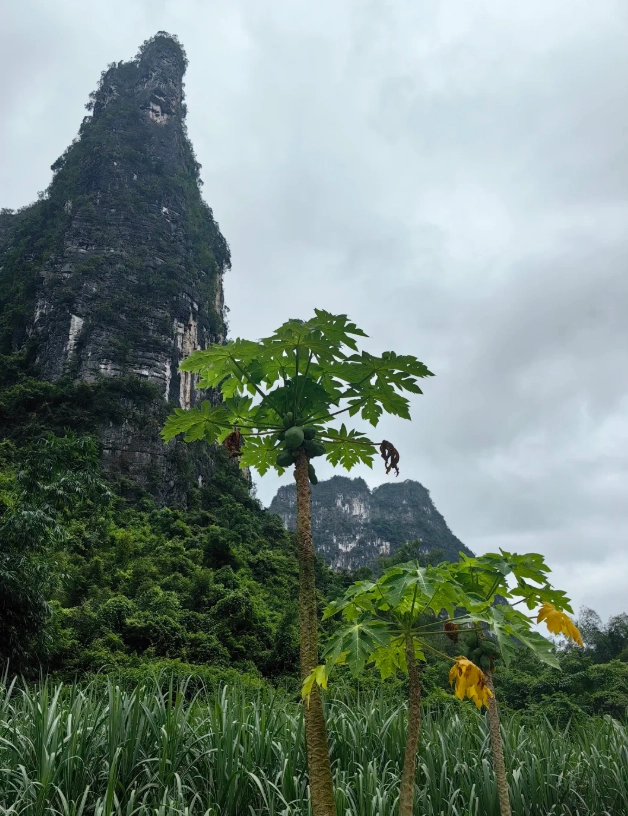
What to Eat in Chongzuo – Local Favorites
Chongzuo's food is a fusion of Guangxi’s sour and spicy style with a touch of Vietnamese influence. Here are the must-tries, plus where to find them.
- Guangxi rice noodles (Mifen): The breakfast staple. Ask for “老友粉” (Lao You Fen), a tangy soup with sour bamboo shoots, tomatoes, and pickled chili. It's sharp and addictive. I usually go to 周记老友粉 (Zhou Ji Lao You Fen) on Jiangbin Road – fresh, cheap (about 12 RMB), and open from 6am to 2pm.
- Baguette with pâté (Vietnamese style): Due to the border, you'll find Vietnamese-style baguettes in Pingxiang. They're best eaten warm with a dollop of pâté and pickled carrots. Head to Puzhai Port for a street stall version (about 10 RMB).
- Chongzuo Fried Rice Noodles (炒河粉): Different from the soup, this stir-fried noodle is smoky and oily. Most night-market stalls will serve it. Try the “崇左炒河粉” (Chongzuo Chao Hefen) at the night market next to the Zuojiang Bridge – it's a popular local haunt.
- Bai Le (百色) specialty – Roasted Pork: Actually, the area is known for a crispy-roasted suckling pig, but you can also order a smaller portion of “烧鸭” (roast duck). For authentic flavor, ask your hotel restaurant to prepare a “特色烧猪” – it's a local treat.
Most restaurants accept mobile payment (Alipay/WeChat), but cash is still fine in smaller places. International cards are almost never accepted outside major hotels, so keep cash or know how to ask someone to pay via Alipay for you.
Practical Tips for Foreign Visitors (Payments, VPN, Language)
Payment: You will not survive with only cash and credit cards. While cash is legally accepted, many small vendors and scenic area ticket counters prefer mobile payments, and some might not have change. Download Alipay or WeChat Pay before you arrive, and link your international credit/debit card. For emergency cash, ATMs are available in the city center, but they don't always accept foreign cards – so withdraw enough at Nanning Airport if you can.
VPN and internet: Google, Google Maps, and most Western services are blocked in China. You'll need a VPN installed before you land. For maps, I recommend Apple Maps (which works okay) or downloading the AMap Global app – it's bilingual and uses Baidu/Google tiles? Actually, it uses its own. You'll also need to download a translation app like Apple Translate or Baidu Translate – they work offline for Chinese, which is a lifesaver.
Language: In tourist areas, you'll find some English signs, but don't rely on them. Learn a few key phrases: “谢谢” (thank you), “多少钱?” (how much?), and especially “This is my passport, I need help” – write this down: “这是我的护照,我需要帮助”. Most younger staff in hotels can manage basic English.
Booking tickets: For all major scenic areas, you'll need your passport. Some sites allow you to book online via their WeChat mini-program, but these are usually Chinese-only and require a Chinese payment method. If you can't navigate that, use Trip.com or Klook – they have English support and will buy the tickets for you. Just be prepared to show your passport at the entrance.
Weather and clothing: Chongzuo is hot and humid from May to October. The sun is intense, so bring a lot of sunscreen, a hat, and a light rain jacket. The mountainous area can get sudden downpours. For the waterfall, a quick-dry shirt and sandals are better than walking shoes.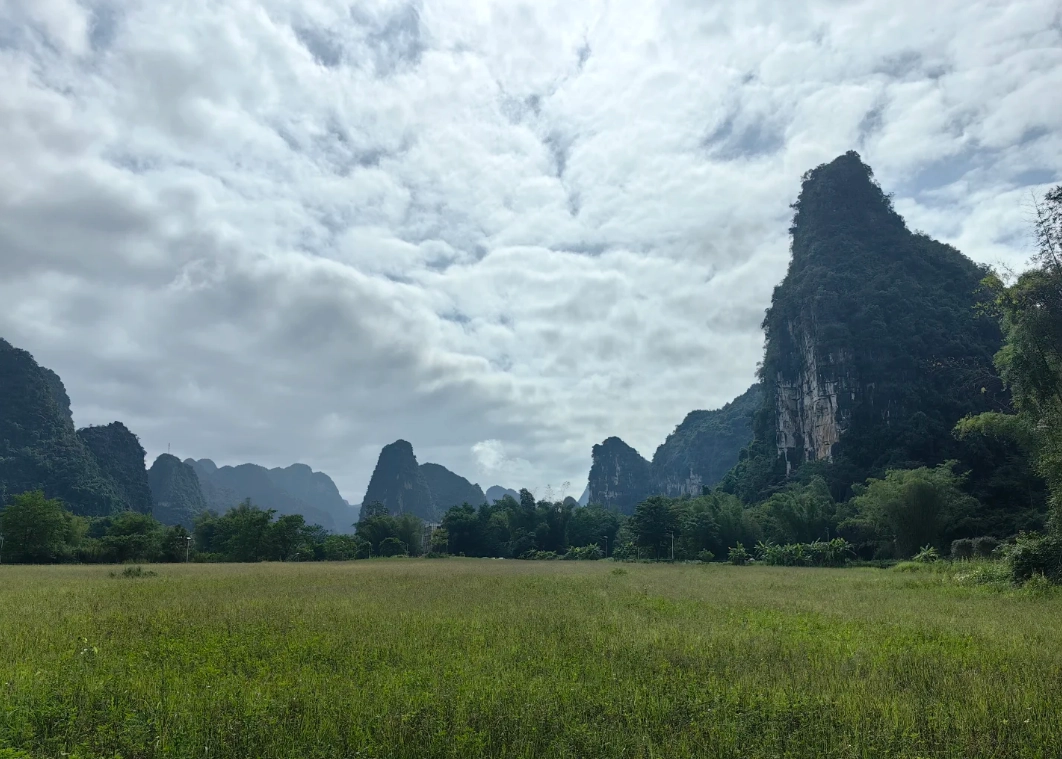
FAQs: Things to Do in Chongzuo – Your Questions Answered
1. Is it safe to travel to Chongzuo as a foreigner?
Absolutely. Chongzuo is very safe, with a visible police presence due to the border area. The biggest concern is not crime, but language and paying. Get a hotel that can write down your destination in Chinese, and you'll be fine. Also, respect the border rules – don't cross the border bollards accidentally, even if there seem to be no fences.
2. How much money do I need for a 2-day trip to Chongzuo?
Excluding accommodation and transport from Nanning, plan on at least 500-600 RMB per person for a comfortable 2-day trip. This covers entrance fees (around 300 RMB), private driver (200 RMB per person if you share), meals (100-150 RMB per day), and small purchases. If you use public transport, you can cut it down to 350 RMB, but you'll lose time.
3. Can I combine Chongzuo with a Vietnam border crossing?
Yes, there are daily border crossings at Friendship Pass that allow Chinese and Vietnamese citizens to cross. As a foreign tourist, you can technically cross if you have a valid visa for Vietnam, but it's not an international crossing for third-country nationals – you'll need to check if exits are allowed. Better to use the International Excursion Day-trip scheme if you just want a taste of Vietnam – ask at the border office. I'd recommend not attempting without professional guidance.
4. When is the best time to visit Detian Waterfall?
The water flow is highest in September and October after the rainy season. That's when the waterfall is at its thunderous best. However, the summer months (June-August) are also good, but the water may be cloudy. Winter water flow is thinner but still beautiful. If you can, avoid Chinese national holidays (early May, October 1-7). On a normal day, the best time is right after the gate opens at 8:30am or after 3pm to avoid the crowds.
Chongzuo has been my secret weapon for clients who want to see “real China” beyond the usual tourist trail. It's raw, unpolished, and genuinely beautiful. If you're willing to be flexible and patient, the memories will last forever. Start planning now – the waterfalls are calling.
Verified and fact-checked by the editorial team.





No comments yet.