 Fang Wang
At a Glance: Your Ningbo Visa-Free Game Plan
- What Is the Ningbo 240-Hour Visa-Free Policy?
- Why Ningbo for Your 10-Day China Stopover?
- How to Plan Your 10-Day Ningbo Itinerary
- Where to Stay in Ningbo: Best Areas for Every Budget
- How to Get Around Ningbo: Transportation Tips
- What to Eat in Ningbo: Local Dishes and Restaurants
- Essential Travel Tips for Foreigners Using Ningbo 240-Hour Visa-Free
- FAQ About the Ningbo 240-Hour Visa-Free
Let me be honest. I've shepherded dozens of confused travelers through Chinese visa rules. And the Ningbo 240-hour visa-free policy? It's a game-changer. Most foreigners still think you need a visa to linger in China. They're wrong. Here's the catch: the policy is confusing to navigate — especially when every official website speaks only Chinese.
So I'm writing this guide from my own experience guiding tours in Ningbo. I'll walk you through the exact requirements, the best 10-day itinerary, and the mistakes that can land you in trouble. Let's start with the good news: you can enter Ningbo and roam without a visa for ten full days. But only if you plan correctly.
What Is the Ningbo 240-Hour Visa-Free Policy?
China's 240-hour visa-free transit policy allows citizens of 53 countries to enter through designated ports and stay for up to ten days (240 hours) without applying for a visa in advance. Ningbo, as one of the newly added ports, lets you arrive by plane, ship, or train — though air entry is most common.
Who Can Use It?
To qualify, you must: hold a valid passport from an eligible country, have a confirmed onward ticket to a third country or region (not back home), and enter through Ningbo Lishe International Airport or other designated Ningbo ports. Your stay is limited to the administrative area specified in the policy — typically Zhejiang Province for Ningbo entry.
How to Qualify?
The procedure is simpler than you think: show your passport, onward ticket, and completed arrival card at the visa-free transit counter. Officials may ask for hotel bookings or proof of funds. Make sure you have an address in China ready. I've seen travelers denied entry because they couldn't name their first hotel.
Why Ningbo for Your 10-Day China Stopover?
Ningbo combines old-school charm with modern efficiency, without the overwhelming crowds of Shanghai or Beijing. It's a port city with a history stretching back 1,200 years, yet it's often overlooked by tourists. That means you'll get authentic temples, delicious seafood, and calm streets.
Top Reasons to Choose Ningbo
- Less crowd: Unlike Hangzhou's West Lake, Ningbo's scenic spots aren't shoulder-to-shoulder.
- Food paradise: Ningbo cuisine is famous for heavy seafood and pickled vegetables.
- Great base: High-speed rail puts Shanghai and Hangzhou within 1–2 hours.
- Rich culture: Visit the ancient Tianyi Pavilion library and the Bund-style Old Bund.

How to Get to Ningbo
By air: Ningbo Lishe International Airport (NGB) receives domestic and some international flights. If you're flying in directly under the visa-free policy, this is your main entry point.
By train: If you're already in China on a separate visa, Nanjing, Shanghai, and Hangzhou all have direct high-speed rail connections. For example, from Hangzhou East to Ningbo takes about 50 minutes.
How to Plan Your 10-Day Ningbo Itinerary
This sample itinerary balances must-see attractions with relaxing downtime. Use it as a framework — I'll show you how to adjust it for your energy levels and weather.
Day-by-Day Breakdown
- Day 1 – Arrival & Old Bund: Land at NGB, take Metro Line 2 to downtown (around 40 minutes). Check in, then stroll the Old Bund (老外滩). Don't miss the historical buildings and waterfront bars. Dinner: taste local Ningbo tangyuan (glutinous rice balls) at a nearby restaurant.
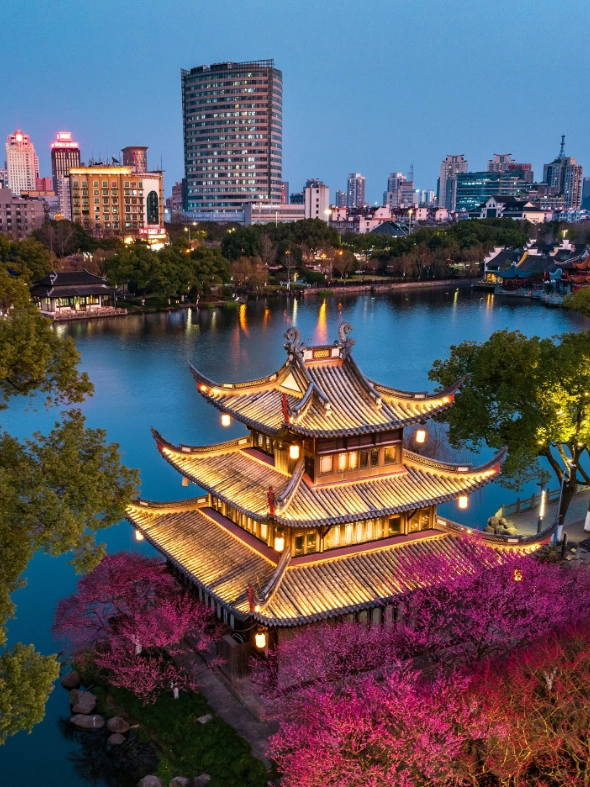
- Day 2 – Tianyi Pavilion & Moon Lake: Start early at Tianyi Pavilion (天一阁), China's oldest private library. Allow 3 hours. Then walk to nearby Moon Lake (月湖) for a picnic. In the afternoon, visit Ningbo Museum (宁波博物馆) to understand the city's maritime past.
- Day 3 – Dongqian Lake: Rent a bike and cycle around Dongqian Lake (东钱湖). It's a huge lake 30 minutes from downtown by taxi. Stop at the little temples and tea houses. This is my personal favorite for a slow day.
- Day 4 – Xikou (Chiang Kai-shek's hometown): Take a bus or drive 50 minutes to Xikou (溪口). Visit the Former Residence of Chiang Kai-shek and the scenic Xuedou Mountain. Allow a full day.
- Day 5 – Hangzhou Day Trip: Hop on the bullet train to Hangzhou (about 1 hour). Walk around West Lake, visit Lingyin Temple, and return to Ningbo by evening. Return late? That's okay – you'll have time to rest.
- Day 6 – Southern Song Stone Carvings: Spend a morning at the Southern Song Stone Carvings (南宋石刻) near Dongqian Lake. Afternoon: explore the old town of Cixi (慈城). It's a quiet, beautifully preserved ancient county town.
- Day 7 – Local Markets & Temples: Visit the bustling Tianyi Square and nearby Chenghuang Temple (城隍庙) area. Try street food like stinky tofu and rice cakes. In the evening, join a tea ceremony at a traditional teahouse.
- Day 8 – Cultural Immersion: Take a calligraphy or paper-cutting workshop in Ningbo's cultural district. If it's the weekend, check out the weekend street market in the Old Bund area.
- Day 9 – Museum Lovers' Day: Visit the Ningbo City Museum (different from the museum earlier) and the Tang Dynasty East Temple. Alternatively, head to the coast for a taste of Beilun (北仑) port.
- Day 10 – Departure: Enjoy a leisurely breakfast, buy last-minute souvenirs at a local supermarket, and head to the airport at least 3 hours early. Remember, exit from Ningbo is required.
Pro Tip: On rainy days, swap outdoor plans for the Ningbo Science & Technology Museum or the China Port Museum. I always keep a backup plan for stormy afternoons.
Alternative Itineraries for Short Stops
If you only have 3-5 days, focus on Ningbo city and a Dongqian Lake day trip. For 7 days, add Xikou and Cixi. This way, you can still see the highlights without rushing.
Where to Stay in Ningbo: Best Areas for Every Budget
Choose your base based on your style. I've grouped recommendations into budget, mid-range, and luxury. All are conveniently located for metro access.
| Hotel / Area | Type | Est. Price (USD/night) | Best For |
|---|---|---|---|
| Old Bund Area | Hostels & budget hotels | $20 – $50 | Backpackers, nightlife lovers |
| Tianyi Square | Mid-range chains | $50 – $100 | Families, first-time visitors |
| Eastern New Town | Business hotels & luxury | $100 – $200 | Business travelers, upscale stay |
Insider Advice: Book near Metro Line 1 or 2 — they connect the airport, train station, and major sights. Avoid places ending in “-zhan” (station) unless you want to hear trains all night.
How to Get Around Ningbo: Transportation Tips
Most tourists seriously underestimate how easy it is to get around. The metro system is clean, cheap, and English signs are everywhere. Taxis and ride-hailing are also straightforward.
Metro
Buy a single-ride ticket with cash at the machine, or use Apple Pay on your phone. It's that simple. The gate opens by scanning your phone or ticket.
Taxis and Ride-Hailing
Didi (like Uber) is the go-to. Set your pickup point in the app — it works with international cards if you've linked them. Taxis are also fine, but prepare to show your destination in Chinese.
Buses
Buses are cheap but may require a local transit card. Skip them unless you're on a budget — the metro is enough.
What to Eat in Ningbo: Local Dishes and Restaurants
Ningbo food is all about freshness and flavor. The city sits at the mouth of the Yong River, so seafood is king. Try these must-eats:
- Dongqian Lake fish head — a spicy and sour fish broth.
- Ningbo tangyuan — glutinous rice balls filled with black sesame.
- Drunken crab — crabs marinated in Chinese wine (go easy if you're not used to it).
- Smoked bamboo shoots — earthy and crunchy.
Where I always bring my clients:
| Restaurant | Specialty | Area | Price Range |
|---|---|---|---|
| Meiyuan (梅园) | Classic Ningbo dishes | Old Bund | $$ |
| Dongqian Lake Restaurant | Fish head casserole | Dongqian Lake | $$$ |
| Chenghuang Temple Snack Street | Street food | Downtown | $ |
Pro Tip: At popular restaurants, go at 11:30 AM or 6:30 PM to beat the rush. Always ask for the “English menu” – most places have one hiding somewhere.
Essential Travel Tips for Foreigners Using Ningbo 240-Hour Visa-Free
These are the practical details that make or break your trip. I'm covering payments, connectivity, language, and safety – the stuff no one tells you.
Payments
Cash is no longer king. Almost everything is mobile payment. I recommend you link your Visa/Mastercard to Alipay or WeChat Pay before arrival. Chengdu and Shanghai are way ahead – in Ningbo you'll find many small stalls that only take mobile payments.
Connectivity
Google Maps won't work in China. Download AMap (高德) and use its English features – it's the most accurate. Also, bring a VPN so you can access Google, WhatsApp, and other services that are blocked.
Language
While younger locals speak some English, don't rely on it. Download Apple Translate or Baidu Translate with offline packs. Show Chinese text for addresses – it helps drivers and street vendors.
Safety & Scams
Ningbo is incredibly safe. The only nuisances are a few taxi drivers overcharging at the airport. Always insist on the meter, or use Didi.
Insider Advice: If a driver refuses to use the meter, get out and find another. It's not worth the argument.
FAQ About the Ningbo 240-Hour Visa-Free
Verified and fact-checked by the editorial team. All policies mentioned are accurate at the time of writing. Official regulations may change – always double-check with the Chinese Embassy or the National Immigration Administration before traveling.






No comments yet.