 Lei Li
I've spent years dragging friends and guests through Tianjin's alleys, and let me tell you — the city's food scene is chaotic, glorious, and full of traps. But once you know the rhythm, it's like a street ballet. Most visitors end up in a tour bus restaurant, nibbling a cold and oily 'goubuli' that tastes nothing like the original. Then they go home thinking Tianjin food is overrated. That's a tragedy because the real thing is just a few turns away. So, what to eat in Tianjin? Let's break it down with zero fluff and plenty of insider secrets.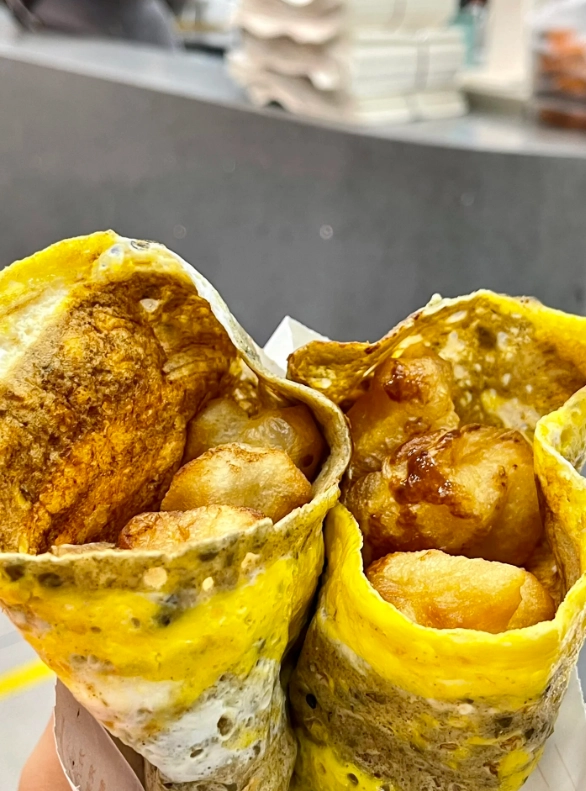
Tianjin Food Basics: The Flavor Profile You Need to Know
Tianjin cuisine is rooted in northern Chinese comfort food — salty, rich, and carb-forward, with a surprising sweet tooth. Located on the coast, it also gets a fresh seafood bump. Don't expect the fiery spice of Sichuan; instead, Tianjin flavors rely on garlic, bean paste, and the umami of fermented soy. Breakfast is the kingdom here: warm, portable, and built for the early riser. I always tell my guests: if you skip the morning street food, you've missed half the point. Be prepared to queue in your comfiest shoes.
Top 10 Dishes to Hunt Down in Tianjin
1. Jianbing Guozi (煎饼果子)
The unmistakable breakfast hero — a thin, crackling crepe wrapped around a golden fried youtiao, brushed with sweet bean sauce and stippled with sesame. Locals debate the exact ratio of batter and the proper filling; most agree that the best jianbing never includes lettuce or ham. That's a modern street food invention. I've eaten jianbing from a stall near Gulou Station that has no English name — just a red awning and a wobbly stool. You'll see a large metal griddle and a few plastic stools. That's the mark of authenticity. Price: ¥6–¥10. Best time: 6:00–9:00 AM. Bring your own patience — there's always a line.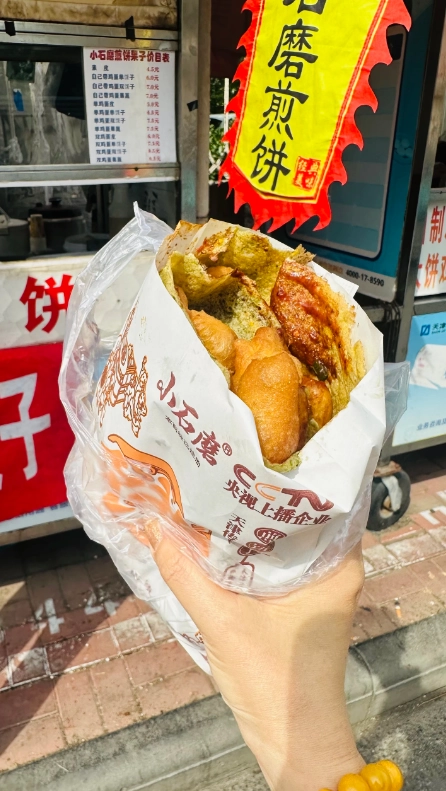
2. Goubuli Baozi (狗不理包子)
These notorious steamed buns have a history dating back over a century, but here's my honest take: the touristy branches can disappoint. The fillings are juicy, and the dough is springy, but you're paying extra for the name. I always recommend trying one at the original Shandong Road location (in He Ping District) just for the experience, not for the hype. A basket of 8 will cost around ¥30–60. If you're short on time, skip it and focus on the street food — your taste buds will thank you. But don't skip the chance to say you've tried it.
3. Erduoyan Zhagao (耳朵眼炸糕)
A deep-fried glutinous rice cake with a molten sweet red bean center — crispy on the outside, almost caramelized. The name translates to "Ear's Eye Fried Cake" because the shop used to sit on a tiny street named Erduoyan. It's a classic Tianjin afternoon snack. Find it on most snack streets, but the safest is the main branch at Dahu North Road. Each piece costs about ¥5–8. Best eaten steaming hot — the sugar inside will burn your tongue if you're greedy, so give it a second to cool.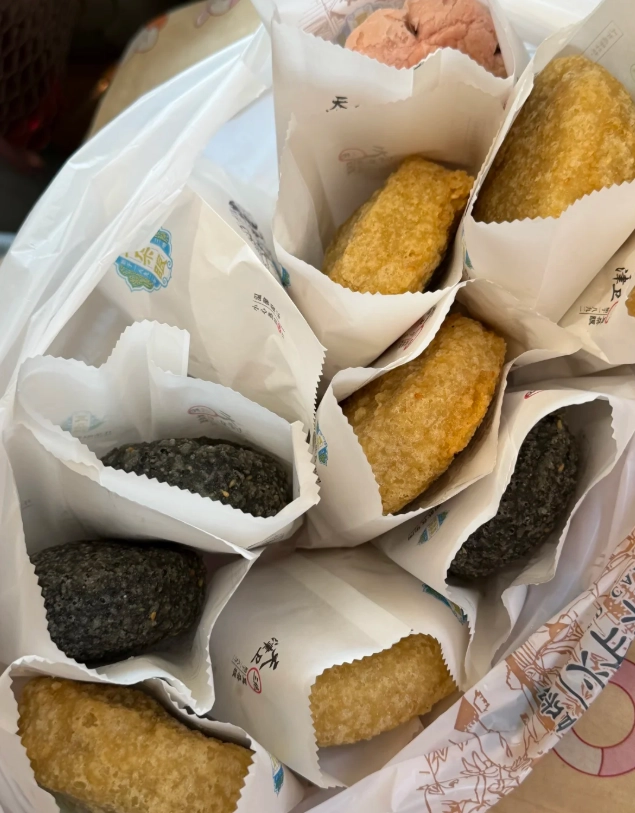
4. Shibachun Mahua (十八街麻花)
These are no ordinary twisted dough sticks — they're giant, brittle, sesame-coated ropes that snap with satisfying crunch. They come in boxes, making them the perfect souvenir. But beware: the glossy tourist shops near the railway station sell stale versions at triple price. Head to the official Shibachun shop on Jiefang Road or the one inside Nan Shi Food Street. A large box costs ¥30–100 depending on size. I always buy the small individual packs for snacking on the go.
5. Guobacai (锅巴菜)
A warm, thick, gravy-like soup made from mung bean sheets and topped with sesame, garlic, and fermented bean curd. It's not pretty to look at, but it's a Tianjin institution for breakfast. You'll often find it served alongside jianbing in the same stall. Spoon it up delicately — it's heavier than it looks. A bowl costs ¥5–10. Fair warning: cilantro appears in almost every bowl, so ask for "no cilantro" (bu yao xiang cai) if you're not a fan.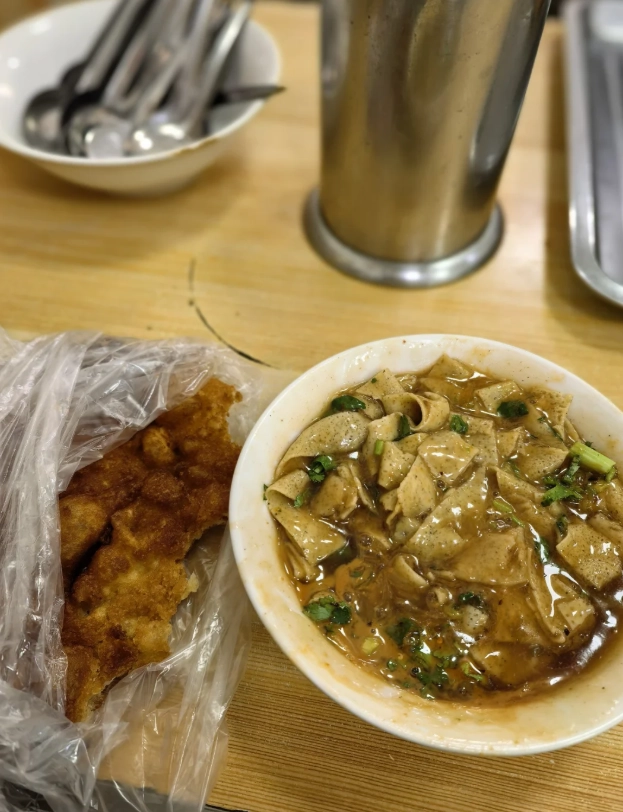
6. Cha Tang (茶汤)
A sweet, steaming elixir of glutinous millet, sugar, and a colorful assortment of red dates, raisins, and sesame. The vendor swirls high-arc tea from a copper kettle into a bowl of dry grains — it's as much theater as it is food. I always stop at the one near the northern entrance of Ancient Culture Street. A cup costs ¥10–15. It's perfect for those windy autumn afternoons. The texture is like porridge but lighter, with a deep smoky sweetness from the kettle.
7. Shu Li Gao (熟梨糕)
A delicate traditional pastry made from mashed pear mixed with glutinous rice flour, steamed until soft and moist. Often shaped into small oval cakes and sold at festivals or temple fairs. They're less sweet than you'd expect, with a subtle floral note. Look for vendors in the courtyards of Ancient Culture Street. A pack of 3 costs about ¥15. They're best eaten warm; once cold, they get dense and heavy.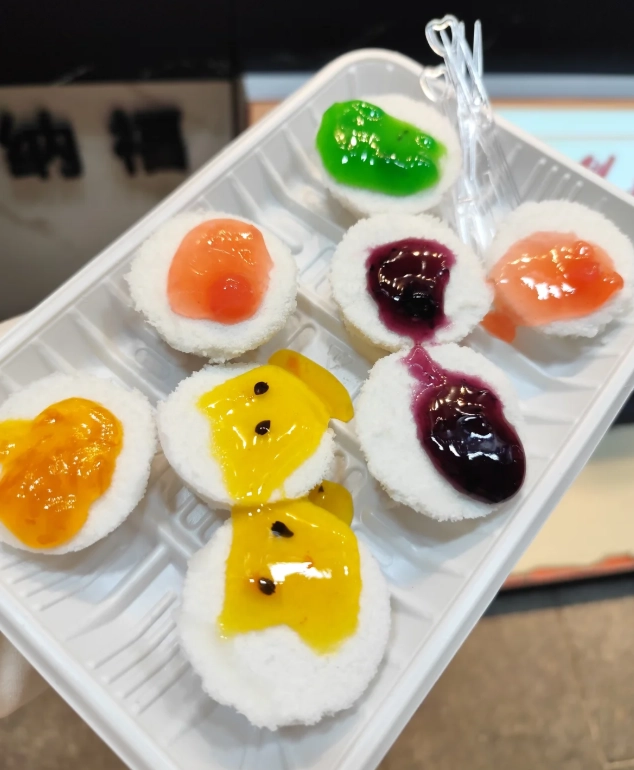
8. Tianjin Sanque (天津三绝) — But Let's Talk About the "Bang Chui" (棒槌)
Bang Chui is a chewy, tangy rice roll brushed with sweet brown sauce — it's the city's oldest fast food. You'll see it sold in small carts in the old city, often with a long plastic spoon for the sauce. The texture is unlike anything you've had — think of a savory rice pudding. I've seen tourists approach it with caution, but by the second bite they're hooked. One roll costs ¥8–12. It's a snack best devoured on a street corner, with the noise of the city as your soundtrack.
9. Jian Bing's Cousin: Laohuadu (老虎豆)
These fermented green beans are a polarizing side dish — they smell funky, taste salty, and the crunch will echo in your mouth for minutes. Locals adore them as a beer snack. You'll find them on most dinner tables alongside stir-fries and rice. If you're adventurous, grab a small cup from a deli; if not, just enjoy the spectacle of others crunching them. A cup is about ¥5. Don't say I didn't warn you about the smell.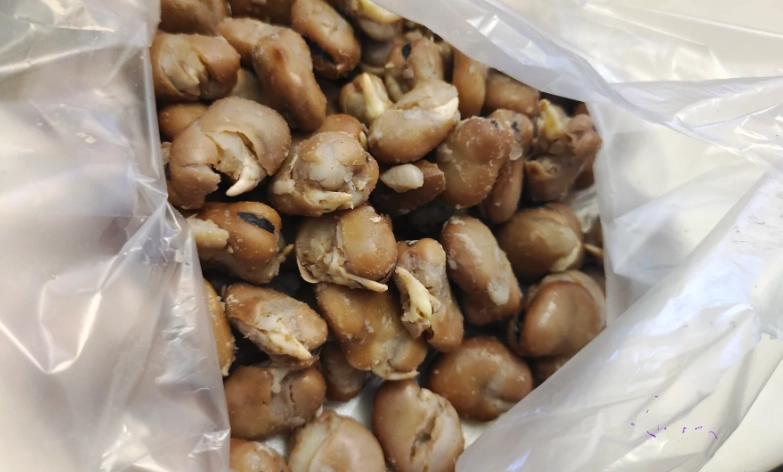
10. Tianjin's Seafood Surprise: Sea Quail Eggs (海鹌鹑蛋) and River Fish
Being a port city, Tianjin offers a bounty of seafood, but the real insider order is a plate of stir-fried sea quail eggs with chives — a local specialty you won't see in tourist menus. The tiny, coral-colored eggs have a popping texture and briny flavor. Pair them with a simple rice bowl. Prices vary, but a decent plate costs around ¥30–50. For the full experience, head to a neighborhood spot near the Haihe River, where the locals gather for simple seafood dinners. Ask for "bao zi" — that's the same buns you tried earlier, but these are a completely different beast.
Where to Eat: Streets, Markets & Hidden Corners
You're best to focus your culinary explorations around three main areas: Ancient Culture Street, Nan Shi Food Street, and the residential lanes off Binjiang Avenue. Each offers a different slice of Tianjin's food personality. Ancient Culture Street (Gu Wen Hua Jie) is a tourist-friendly pedestrian lane packed with snacks and small shops. Go early to avoid the midday crowds. Nan Shi Food Street (Nan Shi Shi Pin Jie) is a two-story indoor food court with everything from souvenirs to hot pots. It's convenient but occasionally overpriced. The real gems are tucked in the alleys west of the night market — look for the vendors without English signage; that's where I've found my favorite jianbing.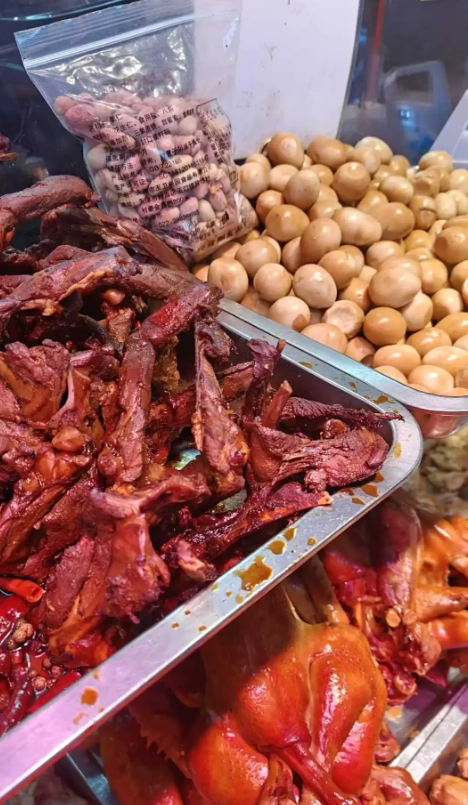
| Area | Highlight | Best Time to Visit | Crowd Level |
|---|---|---|---|
| Ancient Culture Street | Snacks, street theater, dessert | 9:00 AM – 12:00 PM | Moderate (high in afternoon) |
| Nan Shi Food Street | Indoor dining, cold weather safe | 5:00 PM – 8:00 PM | Heavy in evenings |
| Binjiang Ave. Residential Lanes | Breakfast stalls, local canteens | 6:00 AM – 10:00 AM | Local vibe, light |
I've watched travelers waste time hopping between those touristy main streets, but the magic often happens in the narrow hutongs where a simple cornstarch wok sizzles over an open flame. Good rule of thumb: if you see a line of aunties on their way to work, join that queue. They're not waiting for anything mediocre.
How to Order and Pay Without Frustration
Before you dive in, get your digital tools ready. Most small vendors only accept WeChat Pay or Alipay, so set up either app with your international card — the process takes about 10 minutes and will save you countless headaches. Don't assume your physical credit card will work; many stalls are cash-only, and carrying large amounts of cash is risky. For navigation, Apple Maps works adequately in Tianjin, but I recommend downloading the AMap app (English version) for the most accurate local directions. Tell your taxi driver the Chinese name — have it handwritten on a note. And for a translation tool, download Apple Translate or the app Baidu Translate to help with menus.
Booking a food tour or a cooking class? Trip.com often has well-curated options that include hotel pickup. Alternatively, Klook has street food tours that focus on the historical alleys. Both sites allow you to pay with PayPal, and you’ll get a mobile voucher instantly. For any ticketed attraction, always bring your passport — the entrance gate will ask for it, even if you booked online.
My 24-Hour Tianjin Food Itinerary
If you only have one day, here's how to maximize your stomach without burning out. Start at a local breakfast stall near the Binjiang Avenue residential lanes. Order a jianbing and a bowl of guobacai. Take your time — this is the calmest meal of the day.
By late morning, walk to Ancient Culture Street. Sample some cha tang and erduoyan zhagao. The street opens around 9:00 AM, so you’ll avoid the peak crowds. Grab a box of Shibachun mahua as a souvenir, but don’t buy the first one you see — compare a few shops for freshness.
For lunch, dine at a small dumpling shop in the alleys near the Italian Style Town (Yishi Fengqing Qu). The vibe is different from the old city, and the dumplings are genuinely hand-pleated. Try a plate of “jiazi” (pan-fried dumplings) for a unique texture.
Afternoon, take a break from eating and stroll along the Haihe River to work up an appetite. At around 4:00 PM, the street vendors start appearing near the eye of the city. This is your chance to taste the bang chui and every fried snack that crosses your path.
Dinner should be a proper seafood meal. Choose a restaurant near the river where the windows open to the breeze — not the flashy ones, but the places where the glass tanks are still in clean rows. A simple stir-fried sea quail egg dish and a bowl of rice will make you feel closer to the local soul of the city.
“I once tried to run this itinerary with a group of six travelers — by the afternoon, everyone was doing slow waddles like ducks. Pace yourself. The secret is to share every dish as a group so you can taste more without bursting.”
FAQ: Tianjin Food Questions, Answered
Verified and fact-checked by the editorial team.





No comments yet.