 Tao Xu
Quick Guide to Your Visit
- The Straight Answer: 2 to 3 Hours
- What Affects Your Visit Time?
- A Realistic Itinerary for a 2-3 Hour Visit
- Getting There: How to Reach the Site
- Tickets, Booking, and Payment Hacks
- Best Time to Visit: Beat the Crowds and Heat
- What to See: Highlights and Hidden Gems
- Practical Tips for Foreign Tourists
- FAQ: Your Burning Questions Answered
I’ve lost count of how many times a client has asked me, “Do we really need a full day for this?” when we pull up to the ferry pier. The short answer? No. But the honest answer is a bit more layered than that. Let me save you the confusion — you need about 2 to 3 hours at the rock art site itself, not counting travel time from your base in Guangxi.
After guiding dozens of trips to the Zuojiang Huashan Rock Art, I’ve learned that most visitors either rush through it and miss the best viewpoints, or they panic and over-schedule, wasting a precious day. So in this article, I’ll break down exactly how long you should spend at Zuojiang Huashan Rock Art, what to do with every minute, and how to dodge the pitfalls that catch even seasoned travelers off guard.
Here’s the takeaway: plan for 2 hours at the site, add an extra 30 minutes if you want to take the slow boat and soak in the karst scenery. And whatever you do, don’t skip the walk up to the viewpoint platforms — that’s where the magic happens. Now, let’s dive into the details.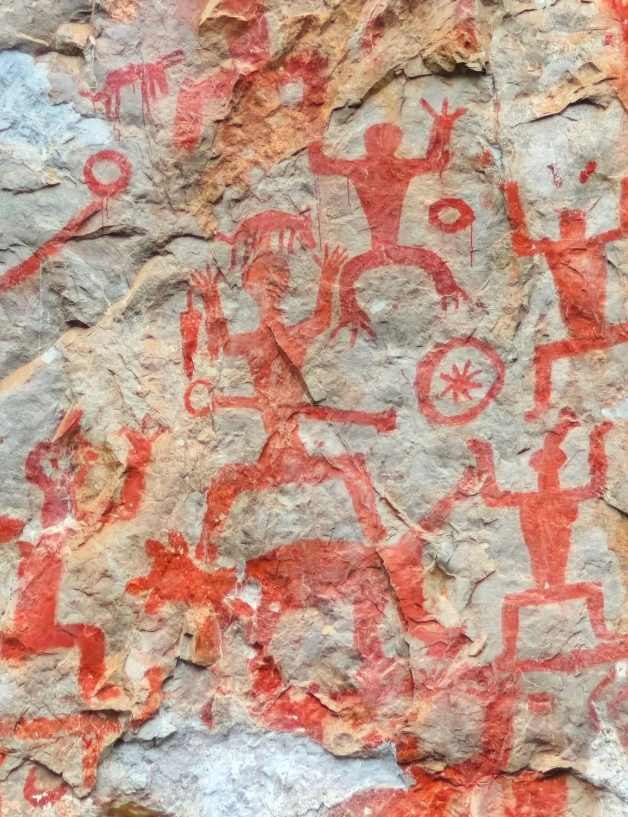
The Straight Answer: 2 to 3 Hours
Let me get straight to the point: most visitors need only 2 to 3 hours at the site itself. That includes the scenic boat ride (about 40 minutes each way), walking the trails, and climbing the steps to the main observation decks. If you’re on a tight schedule, you can even do it in 1.5 hours — but you’ll be rushing and missing out on the little details that make this UNESCO World Heritage Site so special.
Why the variance? It depends on how much time you want to spend photographing, how fast you walk, and whether you take the optional tram or walk the stairs. In my experience, a group with average fitness and a decent camera spends about 2 hours and 15 minutes. Add 30 minutes if you stop at the small museum near the entrance.
Now, if you’re asking me whether you need a full day — no, you don’t. But you do need to factor in travel time. From Nanning, the high-speed rail gets you to Ningming in about 1 hour, and then it’s a 20-minute taxi to the ferry dock. So realistically, a half-day trip is feasible if you plan well.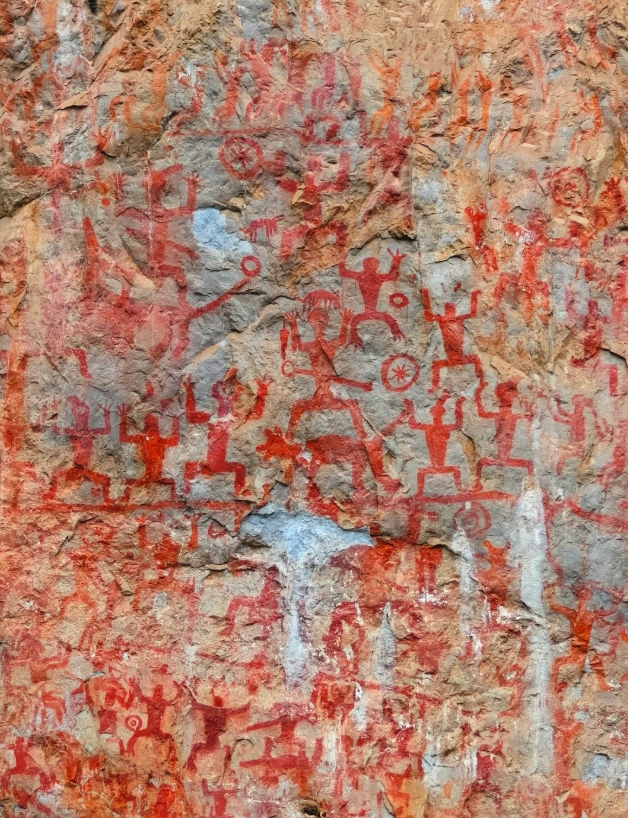
What Affects Your Visit Time?
Several variables can turn a quick visit into a marathon. Here’s what I’ve noticed after countless trips:
- Boat schedule: The ferry departs roughly every 30–40 minutes, but it’s not always punctual. If you catch one immediately, you’ll save 15–20 minutes. If you just missed one, you’ll be waiting.
- Crowd levels: On weekends and public holidays, the walkways can get congested, especially at the top platform. You might find yourself shuffling behind a tour group.
- Your physical pace: The climb from the dock to the main viewpoint involves about 200 steps. Some people breeze up in 10 minutes; others take 20 with breaks.
- Photo stops: Let’s be honest — the karst peaks and the massive red rock art are photo magnets. I always tell my clients to budget 15 minutes just for “one more shot.”
- Museum detour: The small museum at the entrance has some interesting exhibits about the ancient Zhuang culture. It’s worth 15–20 minutes if you’re into history.
Also, the river level affects how close your boat gets to the cliffs. During the dry season, the water is lower, and the boat may stop farther away — meaning more walking to reach the paths.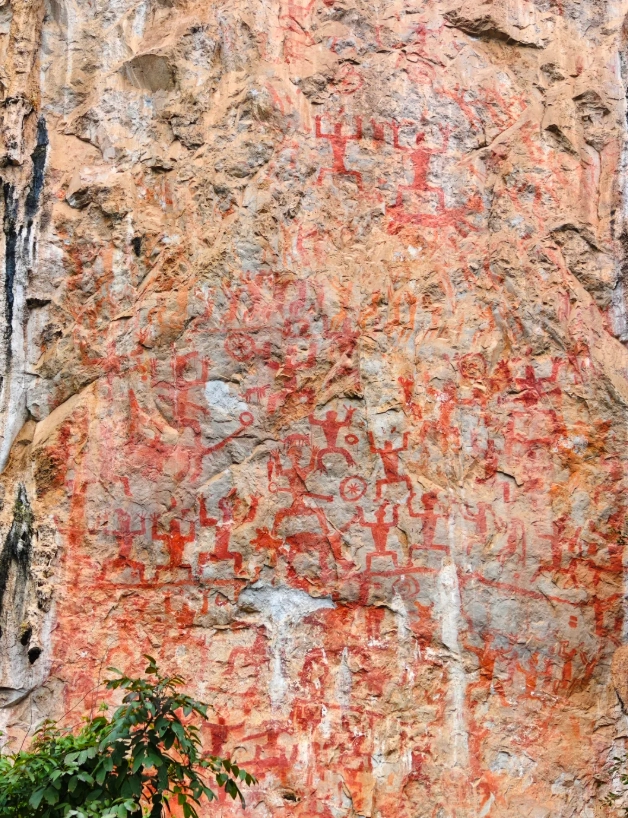
A Realistic Itinerary for a 2-3 Hour Visit
Here’s how a typical 2.5-hour visit breaks down. You can adjust based on your pace and interest.
- 0:00–0:30 – Arrival, Tickets, and Boarding
Arrive at the ferry terminal, show your passport, buy tickets, and walk to the dock. If you’ve pre-booked (which I strongly recommend), this takes only 10 minutes. Otherwise, expect a line. - 0:30–1:10 – The Scenic Boat Ride
The boat glides along the Ming River, passing cliffs with ancient paintings. You’ll see more rock art from the water, and the guide (usually Chinese-speaking) will point out the main panels. Grab a seat on the upper deck for the best view. - 1:10–1:40 – Walking the Cliff Path
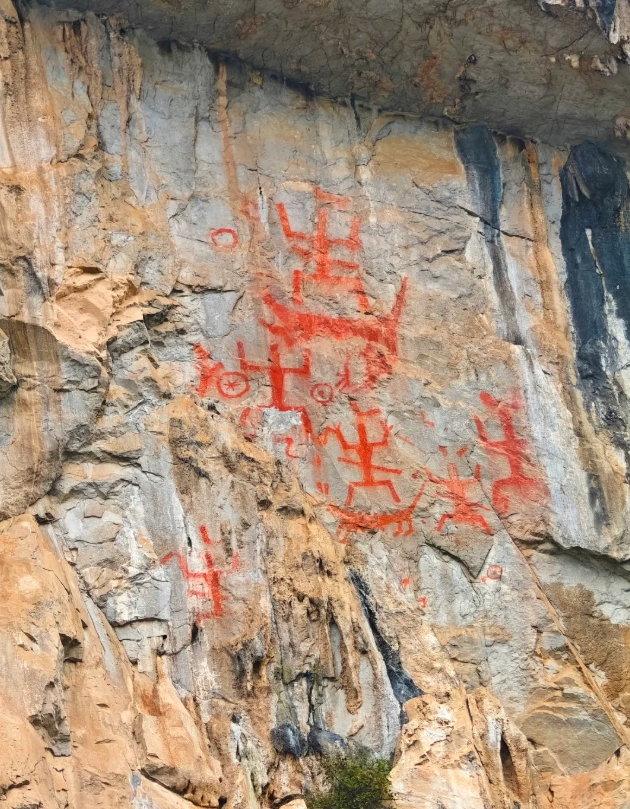
Disembark at the wooden walkway. Follow the trail to the first viewpoint. This is where you’ll see the famous figures — the bronze drum patterns, the dog-like animals, and the mysterious human shapes with their raised arms. - 1:40–2:00 – Climbing to the Upper Deck
A short but steep climb brings you to an elevated platform that looks over the river valley. Worth it for the panoramic shot. - 2:00–2:30 – Loitering and Photo Time
Use this flexibility to double back to a spot you missed or just sit on a bench and absorb the scene. I always say this is when you really feel the magic of this ancient place. - 2:30–3:00 – Return Boat and Exit
Head back to the dock, catch the return boat, and you’re done.
If you want to include the museum, add 20–30 minutes before boarding the return boat.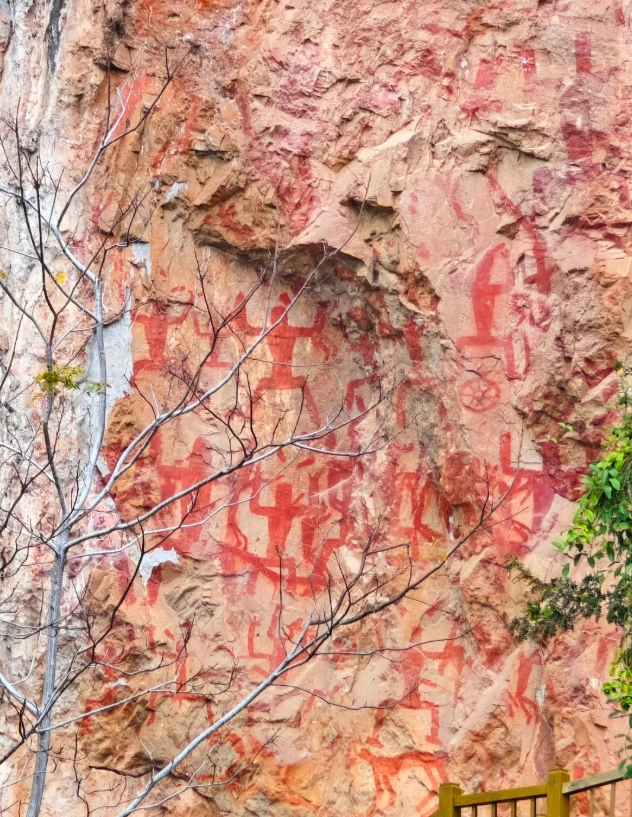
Getting There: How to Reach the Site
From Nanning (the capital)
High-speed rail is your best bet. Catch a train from Nanning Railway Station (or Nanning East) to Ningming East Station. The journey takes about 1 hour. From the station, a taxi to the Zuojiang Huashan Ferry Terminal costs around 30–50 RMB and takes about 20 minutes. Make sure the driver knows it’s “Huashan Wharf” — I always show the Chinese address below.
Chinese address: 广西壮族自治区崇左市宁明县花山码头
Alternatively, you can take a long-distance bus from Nanning’s Langdong Bus Station to Ningming County, but the high-speed rail is faster and more comfortable.
From Chongzuo City
Chongzuo is closer, but the high-speed rail connection may require a transfer in Nanning. A direct taxi from Chongzuo to the site takes about 1 hour and costs around 150 RMB.
Guided tours as a stress-free option
I know many of my clients prefer not to deal with logistics in a foreign country. That’s why I often recommend booking a day tour through Trip.com or Klook. They handle everything — pickup, tickets, and often include lunch. It costs more, but if you’re short on time or patience, it’s worth every penny.
For independent travelers, I suggest downloading AMap (高德地图) or Apple Maps before you go. Google Maps barely works here, and you’ll get hopelessly lost.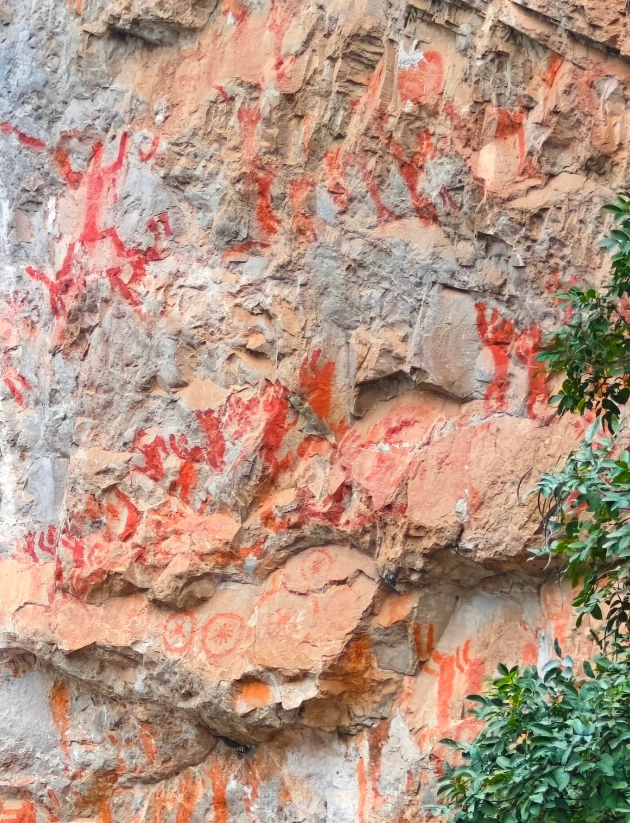
Tickets, Booking, and Payment Hacks
Ticket prices and what they include
Admission information is often tricky for foreigners. Here’s the deal: you need to purchase a combined ticket that includes the ferry ride. As of my last visit, the price was about 90 RMB per person. Children under 1.2m get in free, and students with a valid ID get a discount. But prices may change, so always double-check on official channels.
I always advise my clients to book in advance. The easiest way for foreigners is to book via Trip.com or Klook using your passport details. The system will generate a QR code that you’ll scan at the entrance. You might also be able to book through the official WeChat mini-program, but that’s in Chinese and requires a Chinese phone number — a real headache. So stick to the international platforms.
Payment and cash
At the site, there are no ATM machines. Most shops and ticket counters accept Alipay and WeChat Pay, but credit cards are rarely accepted. If you have Alipay set up with an international card, you’re fine. Otherwise, bring enough cash to cover admission and any snacks. I’ve seen travelers stuck when they couldn’t pay for a bottle of water.
Passport requirement
You will need to present your passport to purchase tickets and to enter the site. This is a mandatory security and reservation rule. Don’t forget it — you won’t be allowed in without one.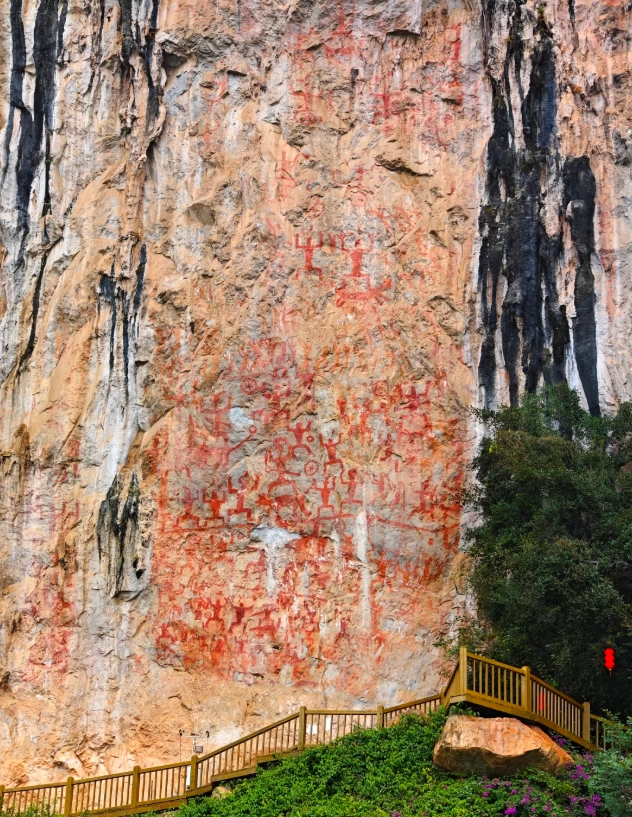
Best Time to Visit: Beat the Crowds and Heat
The ideal season
The best months are March to May and September to November, when the weather is mild. Summers are scorching — temperatures can hit 35°C (95°F) with high humidity, making the climb uncomfortable. Winters are mild but occasionally misty, which actually adds a mystical feel to the rock art.
The best hour of the day
Get there early. The site opens at 8:30 a.m. and the first boats leave shortly after. I always tell my groups to aim for the 9:00 a.m. sailing. At that hour, you’ll have the place almost to yourself. By 10:30, the tour buses start rolling in, and you’ll be queuing for photos.
Avoid midday — the sun is brutal, and the light on the rock art is flat. The golden hour at around 4 p.m. is gorgeous for photography, but if you’re on a day tour, you might not have that flexibility.
What to See: Highlights and Hidden Gems
This UNESCO site is not just one viewing point. The journey starts with a boat ride, but the real magic is up close.
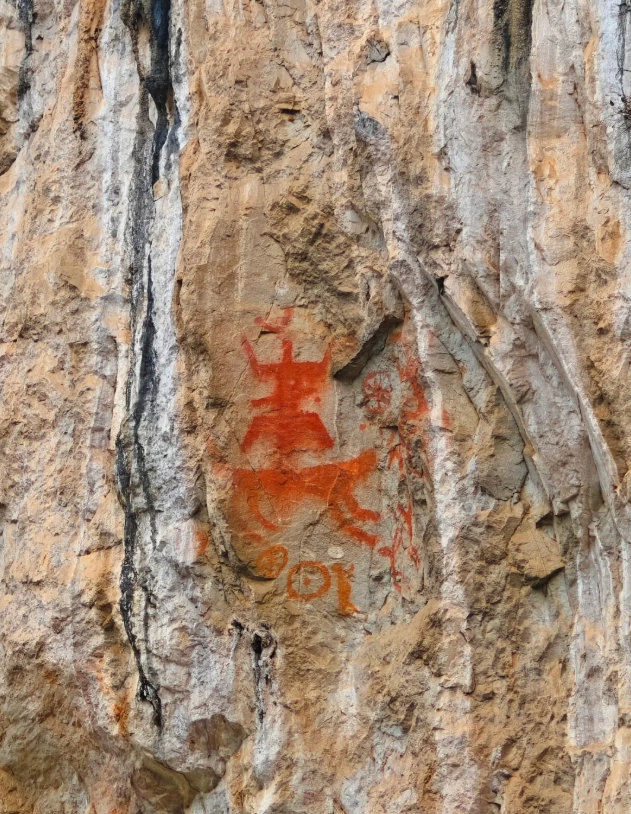
- The Giant Panel: The most famous panel is over 170 meters wide and contains more than 800 recognizable figures. Don’t just glance — look for the largest human figure, which stands about 2.4 meters tall. It’s thought to be a shaman or a god.
- The “Dog” Motifs: You’ll see countless small animals that look like dogs. They’re believed to be clan totems. I love pointing these out to visitors who might otherwise walk past them.
- The Birth of a Legend: Locals say the rock art was created by the famous Zhuang hero, Meng Yi. Whether you believe it or not, the anthropologist in you will appreciate the mystery.
- Hidden rock art: As you walk the trail, look back at the cliff faces across the river. There are more paintings tucked into crevices that the boat doesn’t show. A guide might point them out if you ask.
The viewpoint triangle
Don’t just stay at the main deck. Climb the stairs to the upper viewpoint — it frames the rock art against the karst peaks, arguably the best photo spot. There’s also a lower platform near the water that offers a different perspective.
| Mode | From | Travel Time | Cost (est.) | Best For |
|---|---|---|---|---|
| High-speed rail + taxi | Nanning | 1h 20m | 80–130 RMB | Budget travelers |
| Direct taxi | Chongzuo | 1h | 150 RMB | Couples or small groups |
| Private day tour | Nanning | 3h (door-to-door) | 500–700 RMB | First-timers |
Practical Tips for Foreign Tourists
Here are the things I wish every tourist knew before coming:
- VPN is essential. China’s internet blocks many Western sites. Install a reliable VPN before you arrive, or you’ll be stuck without Google, Gmail, or any social media.
- Translation apps are your lifeline. The site has limited English signage. Download an offline translation app like Apple Translate or Baidu Translate. I always carry a screenshot of key phrases: “Where is the ferry?” and “How much is the ticket?”
- Wear shoes with good grip. The walkways can be slippery, especially after rain. I’ve seen people in flip-flops struggle badly.
- Bring mosquito repellent. The area is lush and near the river. Dengue fever is a risk in Guangdong and Guangxi, so lather up.
- Carry water. The small shop at the dock sells bottled water, but it can sell out in peak season. Better to bring your own.
- Know your emergency numbers. The national emergency line is 110 for police and 120 for ambulance. The tourist hotline for complaints is 12301.
FAQ: Your Burning Questions Answered
This article has been fact-checked by the editorial team to ensure informational precision. While details like ticket prices and schedules can change, the strategic advice here is based on years of guiding experience. Always confirm current opening hours and ticket availability on the official website or through your hotel before visiting.





Honestly, I was a little underwhelmed. We visited on a hot July day and the boat had no shade on the top deck, which made the 40-minute ride to the rock art pretty draining. When you arrive, the boats wait in a line and you get somewhere between 15 and 20 minutes looking at the cliff before being herded on. The art is cool—the style is unlike anything I've seen—but the 'viewing platform' is crowded and noisy, and you're not allowed to get very close. If you must go, take the first boat, bring a hat, and don't expect a peaceful, close encounter. Probably 2 hours is enough.
Solid experience, but I wouldn't say you need half a day. We did the standard boat tour and were back at the visitor center in about two and a half hours. The paintings are genuinely impressive and the red figures on the grey cliff are a sight, but the boat ride itself gets a bit long and there's not much interpretation unless you hire a guide (worth doing). If you're on a tight trip, budget 3 hours max. It's worth a visit, just not an all-day thing.
This blew my mind. It's not just one cliff face, it's a whole gallery stretching along the limestone—over 1,500 pictures? The boat slows down so you can scan them, but honestly you need more than one pass. We went with a private tour that included lunch and maybe 4.5 hours on/off the water. Our skipper knew exactly where to stop for photos. The highlight for me was seeing the animal motifs hidden among the human figures. Go early to avoid haze and bring a long lens. I left feeling like I'd seen a true wonder of the ancient world.
I wasn't sure how long we'd need, so we booked the afternoon ferry and stayed until the last departure. Spent 4 hours total including the boat ride and walking around the museum path before boarding. The rock art appears at a bend in the river, and the whole scene is magical when the low sun hits the reddish pigments. We saw two other boats, but it never felt crowded. If you're into archaeology or just huge ancient art, give it at least half a day and don't rush. One of the best spots in Guangxi.
Took the morning boat from the dock and spent about three hours round trip. Even though the actual viewing time is maybe 30-45 minutes, the boat ride and scenery make it worth every minute. The red figures are much bigger in person than I expected—one giant figure has to be 3m tall. Our guide pointed out bronze drum patterns and the little people/crowd scenes. Bring binoculars if you want to see the details from the water. I could have stared at the cliff all day. Absolutely unforgettable.
We combined Huashan with a late afternoon visit and did everything in under four hours without feeling rushed. The light at around 3pm made the ochre pigments pop beautifully. Our kid loved counting the mysterious figures and the top deck of the boat. Even the winding road through the sugarcane fields to get there was part of the adventure. If you love ancient history or just weird rock art, this is a solid 5-star outing. Don't skip the viewing platform at the far end.
Maybe my expectations were too high. The boat ride is scenic and the cliff face is impressive, but you can't get very close unless you pay for the extra motorboat? And on a hazy day the red figures are quite faint. We spent 2.5 hours and felt that was enough. The museum is small and the escalators were out of order. It's an okay half-day activity, but not the mind-blowing experience some photos suggest.
Beautiful site and the boat cruise is comfortable. We spent around 3 hours including the shuttle and museum. The paintings are fascinating but a lot of the boat commentary was only in Chinese, so I missed a lot. Also the clearer viewing platforms close earlier than the official closing time, so check that before booking. Still worth a visit, just plan ahead and don't assume you can linger at the very end of the day.
I was told 2 hours was enough, but I ended up staying closer to 4. The boat ride to the main panel is quick, but the boardwalk lets you get much closer and you need time to let your eyes adjust to the faded red figures. There are still exhibitions in the museum that are easy to skip but actually help you understand the swirling patterns. Bring water, hat, and binoculars if you have them. Recommend combining with a relaxed lunch in Chongzuo after.
Took the boat from the visitor center and spent about 3.5 hours total. The rock art is massive and surprisingly clear even from the water. Our guide pointed out the bronze drums and the little dog, which made the boat trip feel like a proper tour. I'd definitely budget half a day if you want to walk the boardwalk and not rush. The karst hills behind the cliffs are unreal. One of the most unique cultural spots in China absolutely worth the trip.