 Qiang Huang
Jellyfish. Not a cliff fall. Not a scooter crash.
A jellyfish off Qingdao's No. 2 Bathing Beach on a Tuesday afternoon — and my client's so-called comprehensive policy paid out exactly zero, because the exclusion list quietly filed it under marine organism injury.
She handed over 1,180 RMB in cash at the clinic counter, because the card reader did not like her Visa and her Alipay top-up had not cleared. Two weeks later her insurer asked for a stamped diagnosis certificate she had never collected. That claim is still open. I have watched this movie more times than I care to count.
So before you book Shandong travel insurance — or after you have already clicked buy and forgotten about it — understand one thing. On this peninsula, the policy that saves you is not the one with the biggest medical limit. It is the one that survives a Chinese hospital cashier at eleven at night.
Here is the short version. You want three things: domestic medical evacuation, direct billing at a top-tier public hospital, and adventure cover that explicitly names hiking and e-bikes. Everything else is decoration. Public hospitals in Shandong take Alipay, WeChat Pay, or cash at the counter, and they will not swipe your international credit card. And the single document that decides whether your claim gets paid is the fapiao, the official tax invoice — not the little thermal receipt they hand you first.
Below is how I would plan it, section by section.
Jump Straight to What You Need
Why Shandong Has Its Own Risk Profile
Shandong is not Tibet. There is no altitude sickness here, no five-thousand-meter passes, no oxygen canisters. What you get instead is a 1,545-meter granite mountain with roughly six thousand stone steps that turn slick the moment it rains, a coastline that takes direct hits from typhoons between July and September, and cities where e-bikes outnumber taxis by a wide margin.
What Is Actually Risky in Shandong?
The real risks here are coastal and vertical, not high-altitude — and that single fact should change which policy you buy. Most generic Asia plans are built around tropical disease and motorbike crashes in Southeast Asia. They are not built around a wet granite staircase at four in the morning on Mount Tai.
These are the things I have personally dealt with while guiding groups through the province:
- Wet steps on Mount Tai after summer rain. People fall on the descent, not the climb. It usually happens around hour five, when the legs are done and the concentration is gone.
- Jellyfish in Qingdao and Weihai. Late July through September is the window. Shallow, warm beaches get hit hardest.
- Rip currents. Qingdao's beaches are patrolled in season, but the flags mean something. A red flag is not a suggestion.
- E-bike and scooter collisions. Renting an e-bike without the correct Chinese license category is the fastest way to void your coverage entirely.
- Traveler's diarrhea. Shandong cooking leans hard on salt, oil, and raw seafood. This is the most common minor claim I see, and the least glamorous.
Mount Tai carries a UNESCO World Heritage listing as a mixed cultural and natural site, which is exactly why the paths are paved, lit, and packed with people. It is also why a twisted ankle at two in the morning is far more likely than an epic mountaineering accident.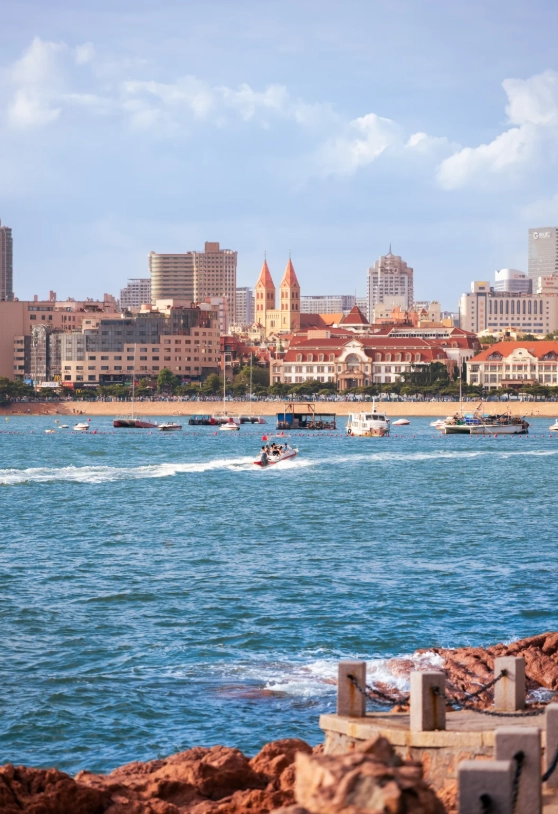
The Three Shandong Scenarios That Generate Most Claims
Almost every claim I have seen from this province falls into one of three buckets. Knowing which bucket you are likely to land in tells you what to buy.
- A fall on the Mount Tai steps, most often between the Eighteenth Curve and Midway Gate to Heaven.
- A jellyfish or sea urchin sting on a beach where no English-speaking lifeguard is on duty.
- A road accident on an e-bike or in a taxi, usually at a junction where the driver was confident and wrong.
What Your Policy Should Cover, and What It Won't
Here is the coverage map I walk my clients through before every Shandong trip. Read the right-hand column twice.
| Coverage Line | Why It Matters in Shandong | Typical Exclusion to Watch |
|---|---|---|
| Emergency medical treatment | ER visits, X-rays, and CT scans at a tertiary public hospital | Outpatient follow-up once you are back home |
| Domestic medical evacuation | Taian and Weihai have limited trauma capacity, so serious cases move to Jinan or Qingdao | Evacuation defined as international repatriation only |
| Adventure and sports cover | Mount Tai hiking, kitesurfing in Weihai, e-bike riding | Unlicensed motor vehicles, activities closed by local authorities |
| Trip delay and missed departure | Typhoon-season flight and ferry cancellations along the coast | Weather delays covered on the outbound leg only |
| Baggage and electronics | Phones and cameras vanish on crowded overnight trains | Unattended items, electronics packed in checked luggage |
| Personal liability | You knock a cyclist over and they want compensation | Liability arising from a vehicle you were operating |
| Direct billing | Lets the hospital invoice your insurer instead of you | Rarely offered outside major city hospitals |
The Adventure Clause That Kills Mount Tai Claims
Everyone worries about the altitude clause. That is the wrong worry. Mount Tai tops out around 1,545 meters, so the trekking-above-three-thousand-meters exclusion never triggers.
The clause that actually bites is the one about activities that breach local regulations or require a license. If you slip through a closed section at night, or ride an e-bike that legally counts as a motorcycle without the matching license, an insurer can and will decline the whole claim. I have seen it happen twice. Both travelers were fit, careful, and completely blindsided.
The Pre-Existing Condition Trap Nobody Reads About
If you have asthma, a heart condition, or surgery in the past year, assume nothing is covered unless the policy says pre-existing conditions included in writing. Marketing pages love the phrase peace of mind. Claims departments love the phrase not medically stable to travel.
Get a short fit-to-travel letter from your own doctor before you fly. It costs almost nothing, and it is the difference between a paid claim and a polite rejection email. I now ask every client over sixty for one.
How Do You Buy Insurance That Works in Shandong?
Buying Before You Fly vs. Buying After You Land
Buy before departure, because nothing in this industry is retroactive. No insurer will cover an injury that already happened, and Chinese domestic policies typically start the day after purchase.
One thing worth checking first: China's visa-free and transit policies shift constantly, and the current rules are published by the National Immigration Administration. Most tourist entries do not require proof of insurance. That is not a reason to skip it — it is exactly why so many people arrive uncovered and discover the problem in an emergency room.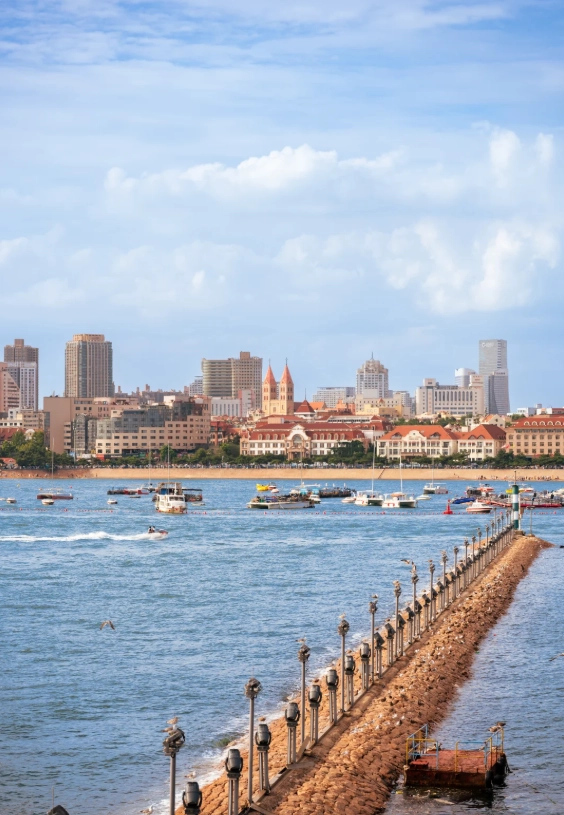
International Insurers vs. Chinese Insurers: Which One Pays Faster?
Chinese insurers pay faster at the counter. International insurers pay better on the paperwork. Your choice depends on how long you are staying and whether you can read a Chinese claim form.
| Policy Type | Typical Cost for Two Weeks | Direct Billing in Shandong | Best For |
|---|---|---|---|
| International insurer, such as Allianz or AXA | USD 80 to 150 | Sometimes, at selected hospitals | Families, hikers, anyone who wants an English claims process |
| Chinese insurer, such as Ping An or PICC | RMB 100 to 400 | Yes, at partner hospitals | Long stays and repeat visitors |
| Complimentary credit card cover | Included with the card | Rarely | Short city trips with no hiking |
| Domestic travel accident policy | RMB 30 to 150 | Yes | Trips inside China only, no inbound flight cover |
Pro Tip: The gap between a forty-dollar policy and a hundred-and-twenty-dollar policy is almost never the medical limit. It is whether the insurer has a Chinese-language claims partner who can read a fapiao. Ask that question directly, in writing, before you pay.
One practical snag: some Chinese insurers sell travel accident policies online to foreign passport holders, and some still demand a Chinese ID number. Do not fight the website. Ask your hotel front desk or a local agency to buy it for you.
Which Shandong Hospitals Actually Treat Foreigners?
Go to a tertiary public hospital, not a private international clinic, for anything involving imaging or a fracture. This is where I part ways with most English-language guides. The private clinics have better English and softer lighting, but they do not have a CT scanner running at midnight. The public sanjia hospitals are faster, cheaper, and far better equipped.
| City | Hospital | English Support | Direct Billing Typical | Best For |
|---|---|---|---|---|
| Jinan | Qilu Hospital of Shandong University | Limited, ask for the international department | Sometimes | Trauma, CT and MRI, complex cases |
| Jinan | Shandong Provincial Hospital | Limited, VIP clinic available | Sometimes | General emergency care |
| Qingdao | Qingdao Municipal Hospital, East Campus | Moderate | Sometimes | Fractures, ER, X-rays |
| Qingdao | Private international clinics | Good | Often | Minor illness, English consultation, stitches |
| Tai'an | Second Affiliated Hospital of Shandong First Medical University | Rare | Rare | Stabilization before transfer to Jinan |
| Yantai | Yantai Yuhuangding Hospital | Limited | Rare | Coastal injuries, general ER |
| Weihai | Weihai Municipal Hospital | Limited | Rare | General emergency care |
Screenshot the Chinese names before you leave your hotel, because taxi drivers will not recognize the English ones: 齐鲁医院 in Jinan, 青岛市市立医院东院 in Qingdao, and 山东第一医科大学第二附属医院 in Tai'an. Showing a driver a screenshot beats pronouncing anything.
What Happens at the Cashier: A Walkthrough
Chinese public hospitals run on a register, pay, then treat loop, and the cashier is the bottleneck. Understanding the sequence removes ninety percent of the panic.
- Register first, at the registration window, with your passport. No passport, no patient number, no exceptions.
- Pay a small registration fee, then wait for your turn with the doctor.
- The doctor writes orders for tests or treatment. You return to the cashier and pay before anything happens. This is the part that shocks Western travelers — money first, treatment second.
- Payment is Alipay, WeChat Pay, or cash. International credit cards usually fail, and there is rarely anyone to argue with about it.
- After treatment, go to the medical records office, the binganshi, and request the official record. Do not leave without it.

Insider Advice: Yes, pre-registering on a WeChat mini-program written entirely in Chinese is a nightmare even for me, and I have been doing this for years. Do not fight it. Hand your passport to the hotel front desk and ask them to book the appointment, or just use the on-site registration window. It always works and it takes about ten minutes.
If You Have 24 Hours in Qingdao and Something Goes Wrong
Assume you roll an ankle on the Badaguan loop at nine in the morning and you fly out the next day. Here is the timeline I would actually run.
- 09:00, injury. Sit down, do not test the ankle by walking on it.
- 09:15, taxi to Qingdao Municipal Hospital East Campus. Roughly twenty to twenty-five minutes from Badaguan in normal traffic — double it between 07:30 and 09:00, and again between 17:00 and 18:30.
- 09:45, registration and X-ray. Bring your passport and a payment balance on Alipay.
- 11:00, the doctor confirms a sprain rather than a fracture. You pay, then collect the fapiao from the cashier before you walk out.
- 12:30, lunch near the hospital, then a slow afternoon on flat ground along the waterfront.
Wet-weather Plan B, because Qingdao in summer alternates between sunburn and downpour: the Tsingtao Beer Museum, the Old Town streets around the former German concession, or any of the small coffee shops tucked into the hills above the harbour. All indoors, all walkable at a limp.
And a blunt note. For a simple sprain, most insurers will not reimburse outpatient care at all. If that is your situation, you are paying out of pocket and the claim is not worth the paperwork.
The Fapiao: The One Piece of Paper Your Insurer Will Demand
The fapiao is the official tax invoice, and without it your claim is dead on arrival. It is not the thermal slip the payment window prints for you.
Ask for it at the cashier or the finance office. It is printed on official paper, carries a red seal and a serial number, and in some hospitals takes twenty minutes to produce. Also collect the diagnosis certificate with the hospital's red stamp, plus the itemized fee list. If you fly home without these, getting them later means somebody physically walking back into that hospital on your behalf.
Here is the part nobody warns you about. If your insurer wants an English-language medical record, the hospital's records office can usually produce a bilingual version for a fee, and it takes one to three working days. That may mean rebooking a flight. Budget for it mentally before you need it.
How to File a Claim Without Losing Your Mind
Claims are lost on missing paper, not on medical merit. Build the file before you leave the hospital, not after you get home.
- Photograph every single document with your phone while you are still standing at the counter.
- Keep the original fapiao. Most insurers want the physical original, not a scan.
- Get the treating doctor's name and department written onto the diagnosis certificate.
- Keep your boarding pass and your passport entry stamp — insurers use them to prove the trip happened.
- If a vehicle was involved, get the police report number on the spot.
- Write down the date, time, and location in your own words within an hour, while the details are sharp.
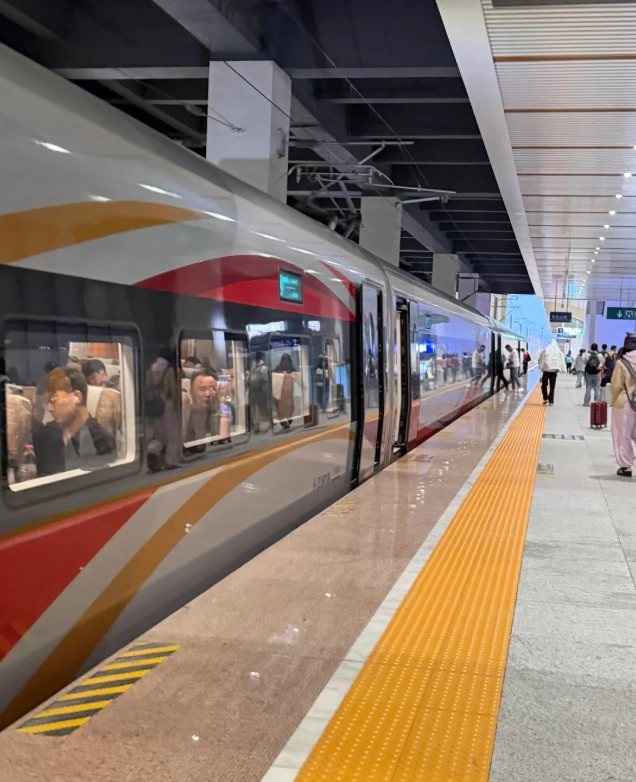
If a train is involved, book through 12306.cn using your passport number. Should a medical emergency make you miss a departure, keep the hospital note and take it to the station — staff can process a change or refund with documentation, though it is never automatic and you will need to ask clearly.
The Receipts Nobody Keeps
The receipts people throw away are the small ones: taxi fares to the hospital, pharmacy purchases, and supplies bought at a convenience store. Plenty of policies reimburse these up to a modest cap, and they add up faster than you would expect over a two-week trip.
One more thing worth knowing. Rabies post-exposure treatment is available at city CDC clinics across Shandong and is genuinely inexpensive by Western standards. If a dog bites you, start the series the same day and keep every slip — insurers treat rabies as urgent, but only if the timeline is documented.
Straight Answers to the Questions I Get Most
I am in Shandong for only four days. Is travel insurance genuinely worth the money?
Four days is exactly the window where people get hurt. You are jet-lagged, you are rushing, and you are walking more than you have in months. The realistic worst case is not even the hospital bill — it is a missed flight home after a typhoon shuts down connections along the coast. A basic policy costs less than one dinner in Qingdao's Old Town.
Does the free travel insurance on my credit card cover me in China?
Read the trigger, not the headline. Most card policies only activate when the entire trip was paid for with that card, and many exclude hiking and anything involving a rented vehicle. I have watched three claims get declined on that basis alone. Call the card's benefits line and ask two specific questions: does this cover a hospital in Jinan, and does it cover a fall on a mountain staircase.
Will a Chinese public hospital bill my foreign insurer directly?
Sometimes, and only at larger city hospitals with an international department. Walk in assuming you will pay and claim it back. That means keeping enough balance on Alipay or WeChat Pay to cover a deposit in the 2,000 to 5,000 RMB range for anything serious. Running out of mobile payment balance at a hospital cashier is the single most common way travelers get stuck in Shandong.
What happens if I get injured on Mount Tai after the cable car stops running?
You get carried down. That is not a figure of speech — there are stretcher teams and small first-aid points around Midway Gate to Heaven and near the summit, and they will move you to the base. What they cannot do is definitively treat a fracture, so Taian's hospitals stabilize and refer onward to Jinan. Make sure your policy covers domestic transfer, not just international repatriation. They are different line items, and the domestic one is the one you will actually use.
Can I buy Shandong travel insurance after I arrive in China?
Chinese domestic travel accident policies can sometimes be purchased online with a passport, but coverage rarely begins before the next day and nothing is retroactive. International policies generally must be bought before departure. If you have already landed without cover, buy a Chinese policy the same day. It is better than nothing, and it will at least cover part of a hospital deposit.
This content has been fact-checked to ensure informational precision.



No comments yet.