 Chen Liu
- Why Ride the Mingshi Countryside Bamboo Raft?
- How to Get to Mingshi Countryside Bamboo Raft from Nanning
- What to Expect on the Mingshi Bamboo Raft Ride
- Mingshi Countryside Bamboo Raft Tickets: Price and Booking
- The Quietest Time to Ride the Bamboo Raft at Mingshi
- Photography Tips for the Mingshi Bamboo Raft
- Where to Stay Near the Mingshi Bamboo Raft Pier
- Is the Mingshi Countryside Bamboo Raft Worth It?
- FAQ: Mingshi Countryside Bamboo Raft, Reservation, Payment, and More
Brutally honest: most bamboo raft tours in China feel like a theme park. But Mingshi Countryside? It's the real deal — karst peaks rising straight out of rice paddies, and the bamboo raft float is the only way to truly see it. I've brought dozens of groups here, and every single time, the moment we drift into the silence, someone says "wow".
Yet, so many foreign visitors get stuck negotiating with touts at the entrance or paying triple for a "private raft" that departs 10 minutes later. The Mingshi Countryside bamboo raft experience can be simple, cheap, and crowd-free if you know three things: the correct ticket window, the quietest sailing window, and how to book with your passport.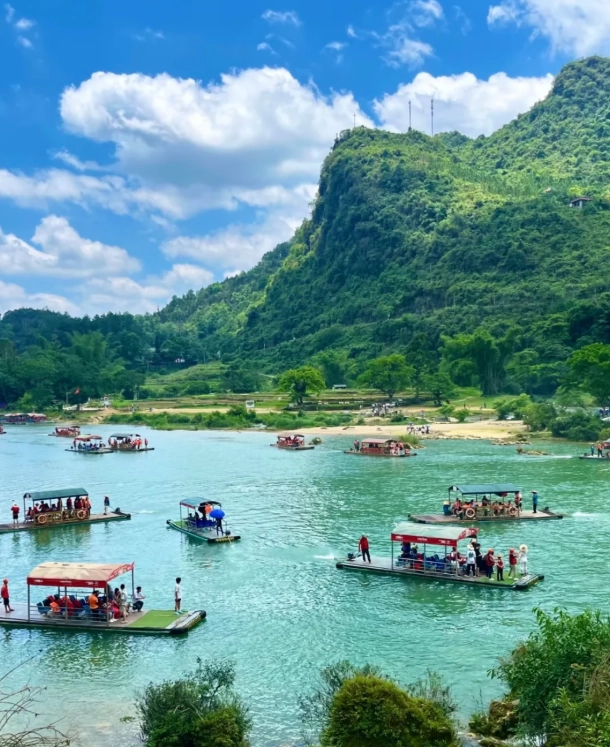
I'll break it all down in this guide — including the exact time I arrived to have the whole river almost to myself (hint: it's not noon). Let's get into it.
Why Ride the Mingshi Countryside Bamboo Raft?
Mingshi Countryside, located in Daxin County near the Vietnam border, often plays second fiddle to the famous Detian Waterfall. But honestly, the bamboo raft ride here gives you a closer, more serene look at the same karst scenery that makes Guilin famous — without the crowds. The ride lasts about 40 minutes, drifting along the Guichun River, passing by water buffalo, fishermen, and terraced fields. If you're looking for a taste of rural Guangxi that's both beautiful and laid-back, this is it.
Unlike the Li River in Guilin, Mingshi is not packed with selfie sticks and loudspeaker-guided tour groups. It’s a quieter, more intimate version of the same landscape. And because the site is still relatively undiscovered by international tourists, you'll feel like you've stumbled onto a hidden gem. The raft trip is short but sweet — just enough to get that classic karst-and-river shot without spending a full day on the water.
How to Get to Mingshi Countryside Bamboo Raft from Nanning
The most direct route starts in Nanning, the capital of Guangxi. You have two practical options: public buses or a private car. Both take about 3–4 hours, so plan for a full day. Here’s a breakdown of your choices.
| Mode | Duration | Cost (pp) | Best For |
|---|---|---|---|
| Long-distance bus | 3.5–4 hrs | 90–120 RMB | Budget travelers |
| Private transfer / Didi | 3–3.5 hrs | 300–400 RMB | Small groups |
| Self-drive | 3 hrs | Fuel + tolls | Families / adventure seekers |
From Nanning by Bus (Budget-Friendly)
The easiest budget option is a bus from Nanning Langdong Bus Station to Daxin County, then a short local bus or taxi to Mingshi. Buses leave roughly every hour from Langdong Station. Direct buses to Daxin don't stop at Mingshi, so you'll need to transfer at Daxin Bus Station to a local bus heading to Shuolong or a taxi (about 50–80 RMB). The total cost is around 90–120 RMB per person. Once you arrive at the Mingshi ticket entrance, the raft pier is about a 10-minute walk.
From Daxin County by Taxi or Private Driver
If you're already in Daxin after visiting Detian Waterfall, hire a taxi or use Didi (China's Uber) for the 45-minute ride to Mingshi. Agree on a price before you get in — typically 100–150 RMB one way. Or, if you're part of a group, a small van rental for the day might cost 300–400 RMB and is worth it for the flexibility.
Flying into Nanning Wuxu Airport
If you're arriving by air, take the airport bus to Langdong Bus Station (about 40 minutes) and then follow the bus instructions above. For a more seamless trip, you can arrange a private pick-up directly to Mingshi for around 350–500 RMB. This can be done through Trip.com or your hotel.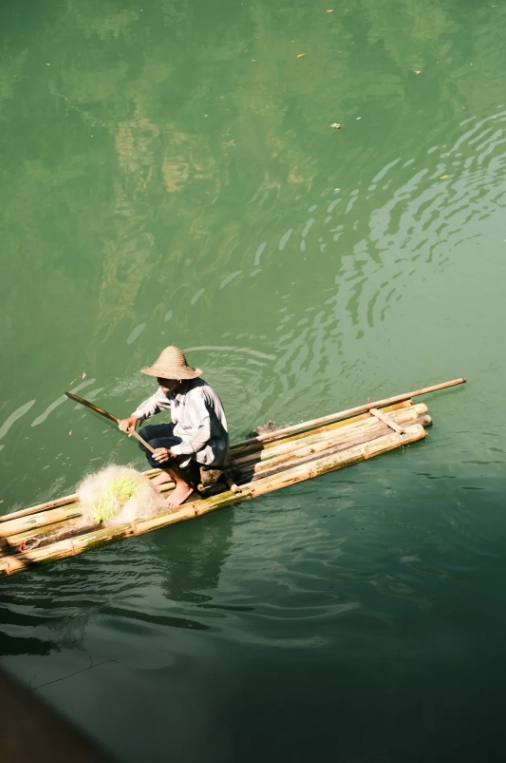
What to Expect on the Mingshi Bamboo Raft Ride
First, you'll be handed a bright orange life jacket — no exceptions. The bamboo rafts are actually wide and flat, with benches on either side, and they seat about 6–8 people. A local boatman stands at the back using a long pole to move the craft. The floor can be a bit slippery, so hold onto the bench when you board, and don't stand up while the boat is moving.
The Scenery and Pace
The raft moves slowly — barely a walk — which is perfect for soaking in the landscape. You'll pass by fields of sugarcane, traditional Zhuang minority villages, and without a doubt, you'll see water buffalo cooling off in the river. The entire loop takes about 40 minutes, and the boatman usually points out interesting rock formations (though only in Chinese). If you want a more interpretive experience, just ask questions; many boatmen understand simple English or you can use a translation app.
Safety First
The current is gentle, and the raft is stable, so it's safe for kids and grandparents. The boatman will slow down at the two designated photo spots. There's a slight step to get on, but they always offer a hand. Just be careful with your phone — a dry bag is a wise investment.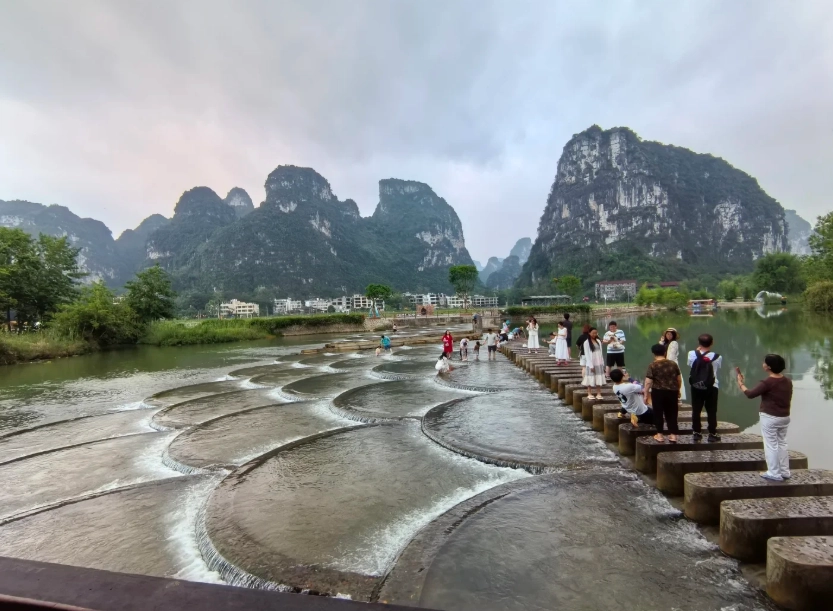
Mingshi Countryside Bamboo Raft Tickets: Price and Booking
Ticket prices at Mingshi are reasonable, but they're not always clear for foreigners. Here's what you need to know.
Ticket Price
The combined admission + raft ticket typically costs around 110 RMB per adult, but prices can change seasonally. Always check the current rate on the official Trip.com page or inside the scenic area before buying. There's no separate charge for children under 1.2 meters (about half price), but older children pay full price. Unfortunately, there's no consistent senior discount, so ask at the ticket office.
How to Book
The easiest way to book for foreigners is through an English-friendly app like Trip.com or Klook. You simply select the date, enter your passport number, and pay with your international card. Alternatively, you can buy a ticket on-site at the ticket office using cash (RMB) or Alipay/WeChat Pay. Bring your passport — they will ask for it to match the booking.
Don't bother with the WeChat mini-program unless you're fluent in Chinese; it's a nightmare to navigate even for me. If you're already in the area, the on-site ticket office is quick and efficient, especially on weekdays.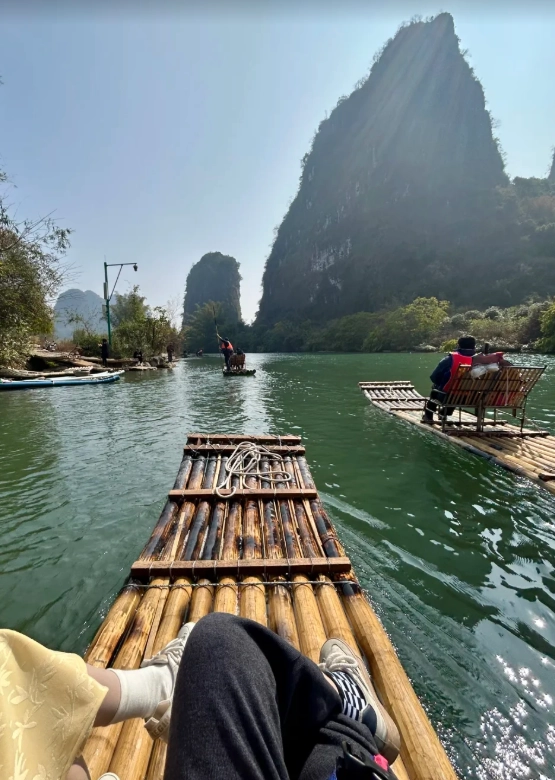
Skips the Touts
At the entrance, you'll see hawkers offering "fast track" or "cheap tickets." Ignore them. They're usually just middlemen who will charge you double for the same ride. Buy only at the official ticket gate or from a recognized online platform.
The Quietest Time to Ride the Bamboo Raft at Mingshi
Let's talk timing, because it's the difference between a spiritual float and a crowded causeway.
Morning Wins
I always schedule my groups for the first departure at 8:00 AM — that's when the water is still, the air is crisp, and you'll only share the river with a few fishermen. By 10 AM, tour buses start arriving from Detian Waterfall, and by noon, the small pier becomes a waiting line. If you can't make the morning, aim for after 3:00 PM. The light turns golden, but be aware the last raft usually departs by 5:00 PM.
My Personal Anecdote
Last fall, I took a small group to Mingshi and we arrived at the pier at 8:10 AM. The mist was just lifting off the river. We had the entire raft to ourselves — literally. The only sounds were the pole hitting the water and birds chirping. An hour later, we passed the same spot and already counted four tour boats behind us. The difference in experience was staggering.
Crowd Avoidance Cheat Sheet
- Peak weeks: Chinese New Year (late Jan/Feb), May Day (May 1), and National Day (Oct 1–7) see massive crowds. If your dates align, book tickets days in advance.
- Best months: October to April — cooler weather, less rain, and the rice paddies are either golden or flooded (dramatic reflections).
- Worst hours: 11:00 AM to 2:00 PM — scorching sun and maximum tour group overlap.
Photography Tips for the Mingshi Bamboo Raft
Bring a camera with a zoom lens (or at least a dual-lens phone). Your phone might not survive a splash, so a dry bag is essential.
Where to Point Your Lens
The most iconic shot is looking upstream toward the arch of the karst peaks as the raft turns a corner. You'll see this shot on every travel blog. To get it without other rafts in the frame, be the first boat to depart or the last.
Pro Tip: The best reflections happen in the 30 minutes after sunrise, not at sunset. The water gets choppy later in the day from evening breeze.
Insider Advice: Sit on the left side of the raft during the return leg. That’s where the classic postcard view of the Mingshi silhouette appears.
Where to Stay Near the Mingshi Bamboo Raft Pier
If you want to experience the quiet after the last raft leaves, stay overnight in the village nearby.
Mingshi Village Homestays
The most immersive option is a family-run guesthouse in Mingshi Village, a 5-minute walk from the pier. Most cost 200–400 RMB per night for a simple double room. They often include breakfast of local rice noodles. The Wi-Fi is usually fine, but the walls can be thin — pack earplugs if you're sensitive.
Detian Waterfall Area Hotels
If you want more comfort, stay near Detian Waterfall (about 20 minutes away) and take a half-day trip to Mingshi. Prices range from 400–800 RMB for mid-range hotels. The benefit is air conditioning and more services.
What I Recommend
For almost all my guests, I suggest staying at a village homestay near Mingshi. The early morning views from the village are worth the slight lack of amenities. Plus, you can walk directly onto the pier before the tour buses arrive.
Is the Mingshi Countryside Bamboo Raft Worth It?
Short answer: yes — if you come with the right expectations. It's not a thrilling white-water ride; it's a slow, floating meditation. If you've just spent hours at Detian Waterfall and you're looking for a completely different atmosphere, Mingshi is worth the detour. However, if you're on a tight schedule and have seen Guilin's Li River, you could skip it. But for the price and accessibility, especially for foreigners, it's a delightful add-on to any Guangxi itinerary.





Came here specifically for the golden hour float and it did not disappoint. The light hitting the limestone peaks was gorgeous, and our captain paused when he saw me taking photos. We saw egrets flying low across the river and even a big brown water buffalo wading right beside the raft. For photographers this is a dream—quiet, slow, and full of natural life. Strong recommend.
Honestly the most peaceful hour of my two weeks in China. No WiFi, no shops, just you on a bamboo raft with karst mountains everywhere. Our boatman used a bamboo pole and only smiled, letting the landscape speak. The reflections on the water were insane. If you sit at the front and just breathe, you won't forget it.
Maybe I had too high expectations. The scenery is pretty, but our float felt rushed—the guide said it would be about 50 minutes and we were back in 35. Also the queue for tickets was disorganized and no one explained where to board. It's scenic, sure, but for the price I'd expect a more relaxing pace. Not terrible, but I wouldn't call it the quietest time.
Really peaceful and beautiful scenery. We took the raft in late afternoon and saw farmers harvesting rice nearby. The bamboo raft was clean and life jackets were provided. Only reason not giving 5 is the motorboat kept passing us with loudspeakers at one point, which ruined the vibe for 10 minutes. Otherwise exactly what the name promises.
We went at sunrise and had the whole river to ourselves. The mist hanging over the karst peaks, water buffalo grazing along the bank, the only sounds were the pole dipping and birds. Our raftsman didn't chatter, just pointed at a kingfisher. It felt like floating through a Chinese painting. Definitely the quietest hour of our entire trip. Worth every yuan.
This is called 'The Quietest Time to Float' and it really delivers. We went after a light rain, so the river was almost empty. Our raft drifted along while tiny droplets fell from the bamboo leaves and the only thing I could hear was my own breathing. At one point we just stopped and floated in the middle, no other rafts in sight. I didn't want it to end. It felt less like a tourist activity and more like a meditation. If you're on the fence, go—especially at a quiet hour. Bring a hat and just soak it in.
What a wonderful experience. We booked through our hotel and everything was smooth—driver picked us up on time, waited for us, and the rafting crew was friendly and professional. The safety vests were in good condition and the raft felt steady even with our 4-year-old onboard. The guide let us stop for photos under the big banyan tree and even pointed out a kingfisher. The whole area is spotless, unlike some other spots we visited. Worth every yuan. We'll remember this forever.
Honestly one of the most peaceful hours of my entire trip. We arrived right at sunrise—mist was sitting on the river, and the only sounds were the paddle dipping and birds waking up. Our raftsman didn't talk much, which I appreciated; he just let the landscape speak. We saw water buffalo cooling off on the bank and an old man washing vegetables at a stone stair. No crowds, no engine noise, just green mountains and silence. If you're debating whether to book this, do it. Just pick the earliest slot.
A solid four stars. We went around 4pm and the river was much calmer, which helped with the 'quietest time' vibe. The raft itself is simple and clean, and the water is crystal clear. I did get eaten alive by mosquitoes, so bring repellent. Also the bamboo seats get hard after a while. Still, drifting past the villages and seeing fishermen with cormorants made it feel genuinely special. Just go prepared and maybe bring a cushion.
I really wanted to love this. The scenery is beautiful, no question—karst peaks and green water everywhere. But our raft ride felt rushed. We booked the 'quietest time' morning slot, yet there were already dozens of rafts ahead of us, and ours had a small motor that hummed the whole way. It lasted barely 40 minutes, not the advertised hour and a half. The guide's commentary was also quite scripted. If you just want a quick photo op, fine, but at this price I left a little flat.
This was exactly what I needed after days of busy train stations and cities. The quietest half-hour of my life, no joke. We did the late afternoon float when the light softened and the water reflected every peak. I sat with my hands in the cool water while the raft glided past water buffalo and egrets. Not a single car horn. It felt like the world was holding its breath. Best money I spent in China.
Solid experience overall. We booked the first slot of the day and caught a soft fog over the river—gorgeous. The raft was comfortable and the current too gentle to feel scary. My only tiny gripe: the boatman turned us around pretty quickly, around 35 minutes, and I felt we could have floated longer. Still, for the price and the views, it beats most boat tours I’ve done.
Pretty spot, but I left slightly disappointed. We arrived around 11am and it was much busier than expected—several rafts clustered together and our boatman seemed rushed to finish. The scenery is beautiful, but the 'quiet' part only lasted maybe 10 minutes at the very start. If you can go at true sunrise or off-peak, I think it’s worth it. At midday, it’s just an average tourist ride.
I came here hoping for the 'quietest time' experience and honestly, late afternoon delivered. The rice fields were glowing golden and the raft drifted so slowly I felt like I was in a painting. No loudspeakers, no vendors by the water. It’s not an exciting ride, but that’s the point. If you want serenity and those unreal limestone views, this is it. I would absolutely do it again.
We went at 8am before the tour buses arrived and it was pure magic. The water was glassy, and the only sounds were the pole dipping and birds along the karsts. Sitting low on the bamboo raft made the cliffs feel enormous. Our boatman let us just sit in silence for a few minutes, which I appreciated more than any guide chatter. This was the calmest part of our whole Yangshuo trip.