 Ling Wu
What’s Inside This Guide
- Why Visit Ban Gioc-Detian Waterfall
- How to Get There from Nanning or Chongzuo
- Tickets, Opening Hours & What to Bring
- The Best Time to Go (My Insider Advice)
- What to Do at the Waterfall Viewing Areas
- Where to Eat and Stay Near the Falls
- Essential Tips for Foreign Travelers
- FAQs About the Ban Gioc-Detian Day Trip
I’ve stood at this viewpoint over a dozen times — and it still hits me every time. The roar, the mist, the sheer white curtain crashing where two countries meet. But without a solid plan, getting here can turn magic into a headache. Foreign tourists usually struggle with three things: booking the right ticket, sorting out transport, and paying for stuff. Let me save you the pain. This guide gives you everything I tell my own clients before leading a Ban Gioc-Detian Transnational Waterfall day trip.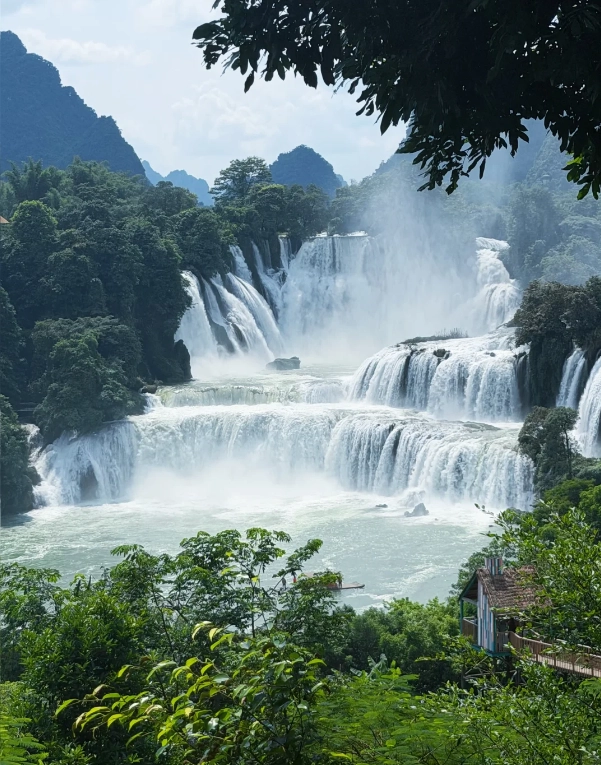
Why Visit Ban Gioc-Detian Waterfall
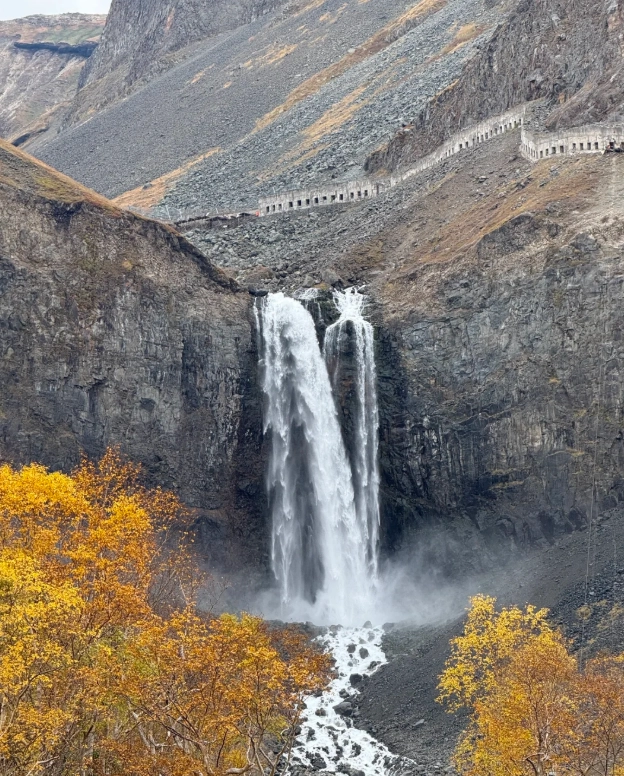
This is one of the few places on Earth where a waterfall straddles an international border. Also known as Detian Falls on the Chinese side and Ban Gioc Falls in Vietnam, it stretches over 300 meters wide and drops about 30 meters. It’s often called the “mini Niagara” of Southeast Asia — and honestly, the layered limestone cliffs and jade-green pools make it way more dramatic than Niagara.
But the real kicker? You can stand on a bamboo raft in the middle of the river, with Vietnam on your left and China on your right. Where else can you do that? I’ve watched grown travelers get goosebumps when the mist hits their face right at the border line.
How to Get There from Nanning or Chongzuo
No direct public buses run from Nanning to the waterfall, so a private car is your best bet. That’s the honest truth. The closest city hub is Chongzuo, about a 2-hour drive. Nanning, the capital of Guangxi, is 3.5 to 4 hours away. I always tell my guests: book a private driver or a small group tour. You can find both on trip.com or klook.cn, and the price usually works out cheaper than trying to piece together local buses.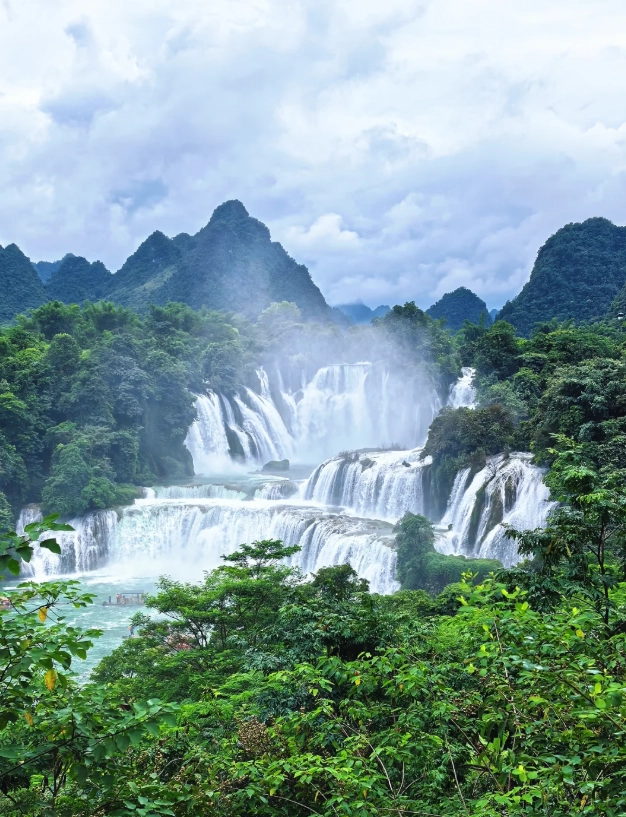
| From | Driving Time | Typical Cost (Private Car) | Best Option |
|---|---|---|---|
| Nanning | 3.5 – 4 h | 500 – 700 RMB | Private day tour, or split with other travelers |
| Chongzuo | 2 – 2.5 h | 300 – 450 RMB | Private car or taxi negotiated with driver |
| Daxin County | 1 – 1.5 h | 150 – 250 RMB | Taxi or local minibus to access |
If you’re nostalgic for public transport, there’s a convoluted route via Chongzuo’s bus station followed by a minibus to Daxin, then another shuttle to Shuolong Town. It can take up to 6 hours one-way, and you’ll be fighting for seats. I personally wouldn’t do it — my rule is: if it takes longer than your flight was, hire a car. You’ll save your energy for the actual waterfall.
Here’s a tip I swear by: ask your hotel in Nanning or Chongzuo to call a local driver. It’s usually cheaper than online packages because you cut out the middleman. Just make sure the driver knows the phrase “Detian Waterfall parking lot” — dà xīn dé tiān pù bù. Even with a GPS, show the driver this pin: the official Detian Waterfall Scenic Area’s drop-off point.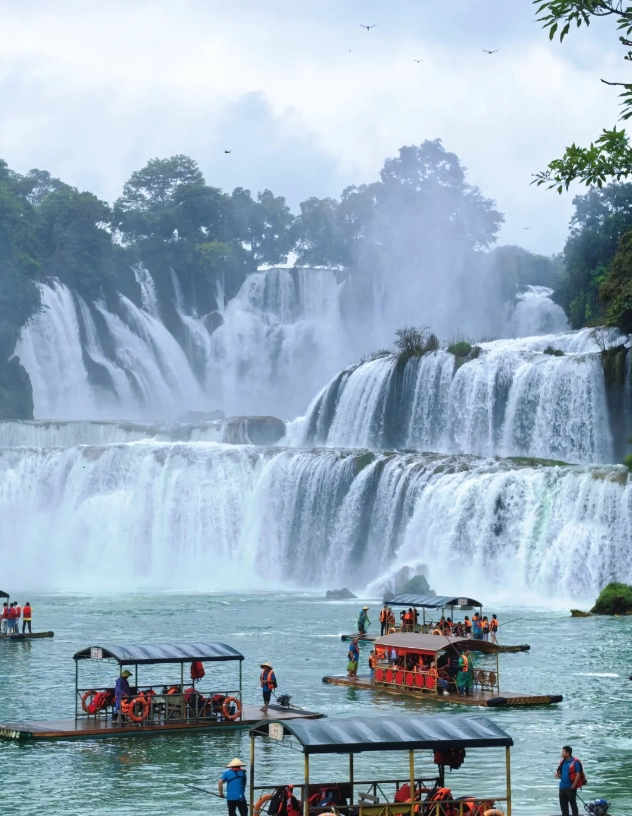
Insider Advice: If you hate negotiating, book through Trip.com’s “Detian Waterfall One-Day Tour” with hotel pickup. It costs about 400–600 RMB per person, including tickets and shuttle service. That’s the stress-free way I recommend to solo travelers.
Tickets, Opening Hours & What to Bring
Your passport is mandatory to buy the entrance ticket — Chinese residents’ ID cards won’t work for you. The ticket office accepts cash and WeChat/Alipay, but international credit cards almost never swipe. So carry some cash as a backup, or ask a Chinese friend to help you pay via WeChat.
As of my last visits, the combined ticket (entrance + shuttle bus) runs about 115 RMB per adult. That shuttle bus is not optional — the viewing area is 4 km from the gate, and walking on the road in the heat is a bad idea. Kids under 1.2 meters get in free, and seniors over 60 get a discount with their passport.
| Item | Price | Notes |
|---|---|---|
| Entrance + shuttle | ~115 RMB | Adult (1.2m+). Under 1.2m free. |
| Bamboo raft on the river | ~30 RMB | Optional but 100% worth it. |
| Parking for private car | ~10–20 RMB | At the main gate. |
| English audio guide | ~20 RMB | Small handheld device, handy. |
Opening hours: normally 8:00–17:30 in peak season (April–October) and 8:00–17:00 in winter (November–March). Last admission is usually 90 minutes before closing, so don’t roll in at 4:30 PM hoping to catch the raft — you won’t.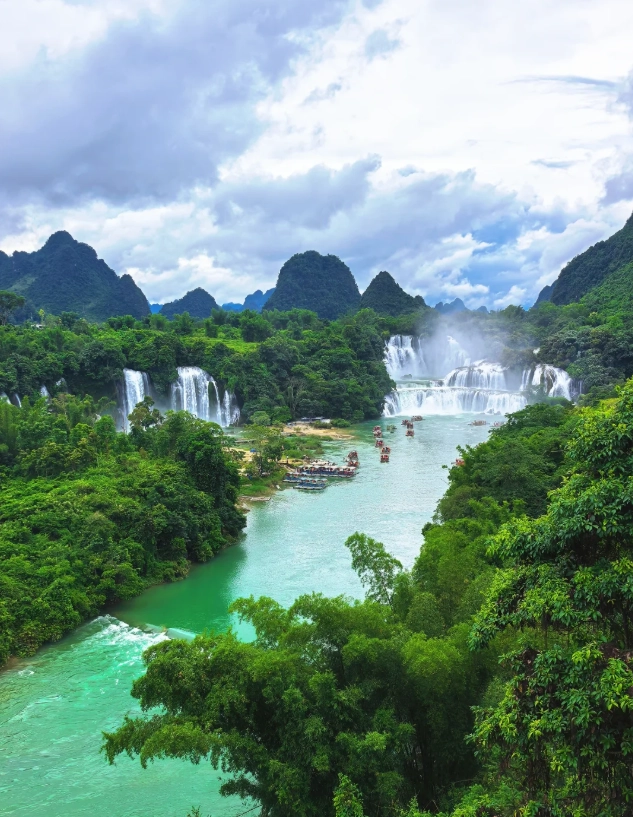
The Best Time to Go (My Insider Advice)
Everyone tells you to arrive at opening time — I actually prefer arriving around 2:00 PM. Here’s why: the big tour buses dump hundreds of visitors in the morning, and the raft dock gets a chaotic queue. By early afternoon, those groups are heading out. You’ll still catch lovely light, and the crowds thin dramatically. Yes, the morning has better angles for the main viewpoint, but if you want that classic raft photo without 30 people in the background, 2 PM is the sweet spot. Just make sure you’re on a raft by 3:30 PM and at the top viewpoint before 4:30 PM.
Season matters more than time of day. After heavy summer rains (June–September), the waterfall thunders in brown fury — dramatic but muddy. In the dry season (December–April), it shrinks, and the water can look like a trickle. I’ve had clients disappointed in March, yet stunned in October. My sweet spot: late September to early November. The flow is strong, the foliage is green, and it’s less steamy.
What to Do at the Waterfall Viewing Areas
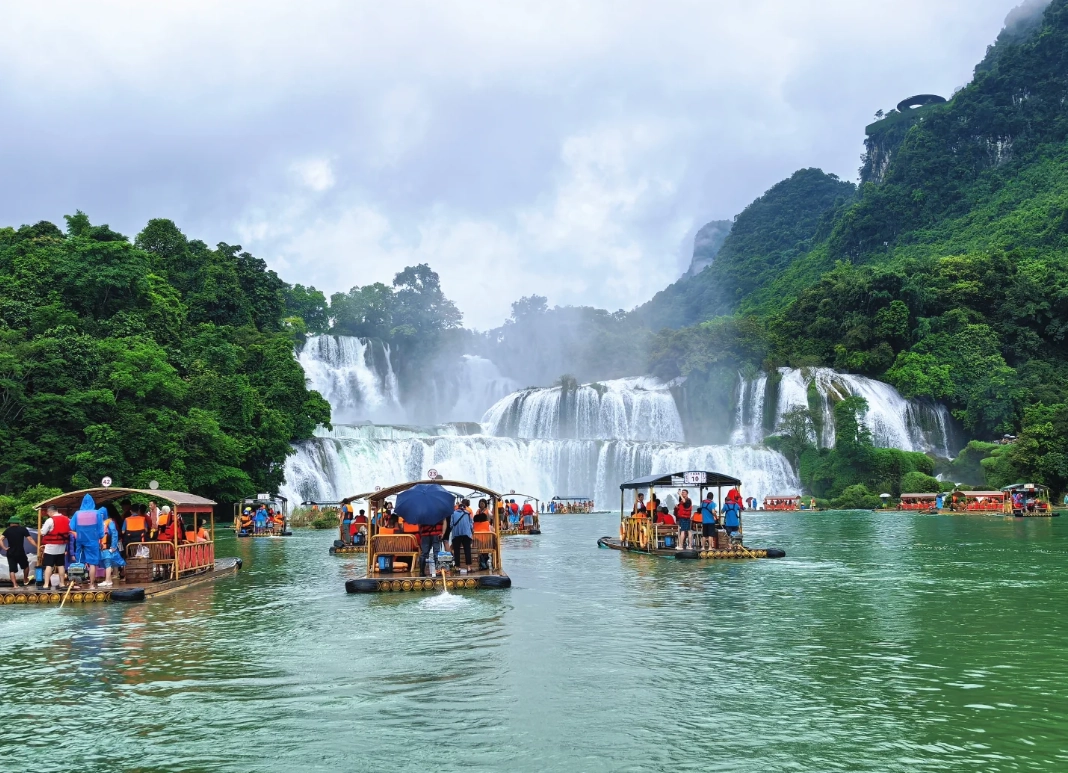
Don’t rush straight to the viewpoint. Start with the bamboo raft — it’s the whole point. You’ll be poled right to the base of the main falls, where the spray soaks your camera lens. The boatman will literally stop at the border marker. That’s when you see Vietnamese boats selling snacks — you can buy banh mi and coffee from them if you wave them over. It’s perfectly legal, so I say go for it. That’s the closest you’ll get to a transnational street food experience.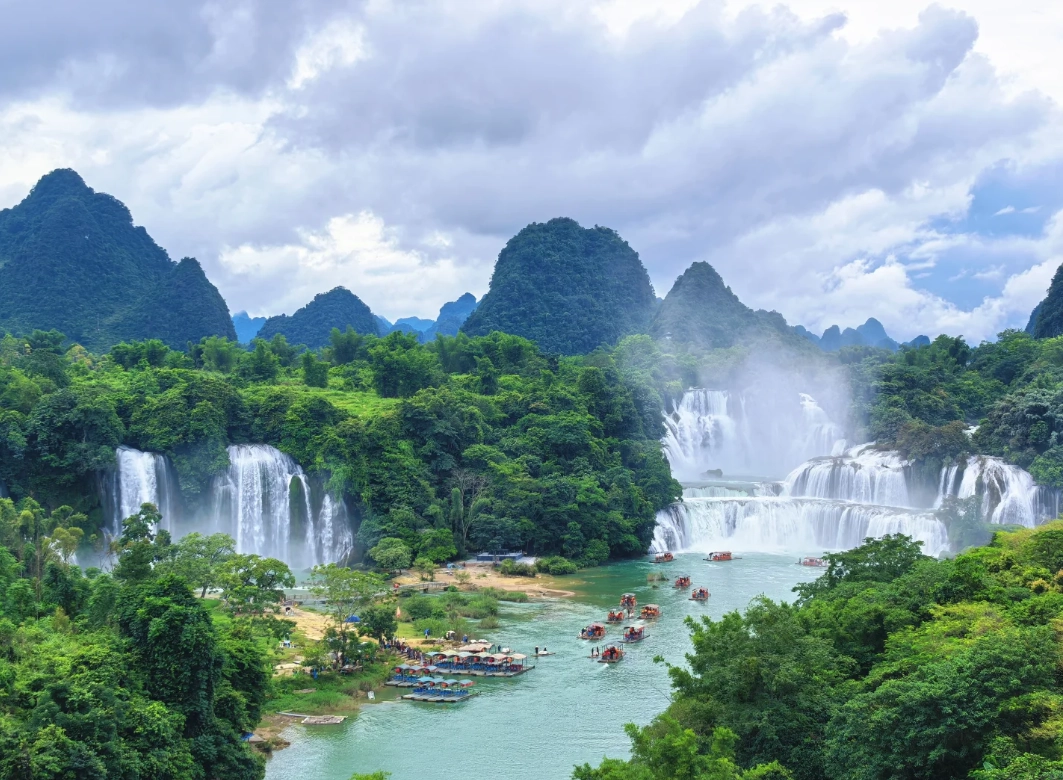
A 2–3 Hour Walkthrough (My Exact Route)
- Take the shuttle to the first stop, then walk downhill to the riverbank. You’ll see the raft dock.
- Ride the raft to the falls (30 minutes round trip). Hold your phone tight — the spray is real.
- Walk up the wooden plank walkway along the cliff. About 20 minutes of gentle uphill.
- Stop at the second viewpoint (“Gold Valley” viewpoint) — the best low-angle shot right against the waterfall.
- Continue to the glass bridge (extra 20 RMB) if you enjoy a heart flutter. The glass platform juts out over the cliff. I skip it because the cheap shoes cover gets worn, but it’s a classic for thrill-seekers.
- Finish at the top-tier viewpoint right below the border ridge. Then catch the shuttle back.
You can add a 30-minute side visit to the Detian Panorama Museum near the gate — it’s included in your ticket and shows how the border was decided. I usually give it a pass, but if it’s blistering hot outside, it’s a solid spot to enjoy air-conditioning.
Where to Eat and Stay Near the Falls
Inside the scenic area, you’ll find a small food court with snacks; don’t expect gourmet dining. The local specialty is “Detian sour bamboo” soup and grilled river fish. Prices are standard for a scenic buffer (about 25–40 RMB per dish). If you’re picky, pack a sandwich. I always bring a few baozi from my hotel and some trail mix.
For a full meal, head to Shuolong Town, 10 minutes from the gate. Family restaurants line the main road; look for the ones with English menus — the owner at “Green Bamboo Restaurant” speaks basic English and serves an incredible wild boar claypot. Most of these places accept cash and WeChat/Alipay, but not cards.
If you’re doing the day trip without an overnight stay, your options are to return to Chongzuo or Nanning after dinner. But honestly, staying one night in Shuolong makes the day much more relaxed. Guesthouses like Detian Farm Stay offer rooms around 150–250 RMB with clean sheets and decent Wi-Fi. The real perk? You can visit the waterfall at sunset and sunrise on the same admission — though re-entry might require a quick chat with the staff. I’ve done it with guests, and they’ve never stopped me.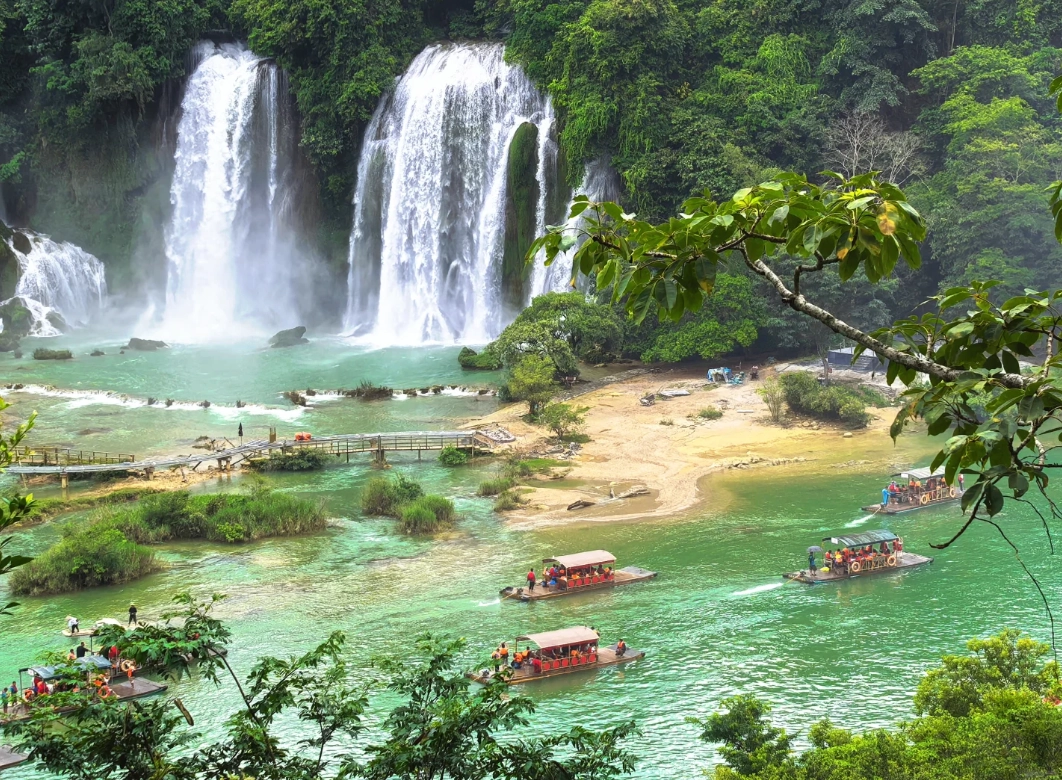
Essential Tips for Foreign Travelers
First, forget international credit cards unless you’re at an international hotel. Alipay and WeChat Pay are saviors here. Link your foreign card to Alipay before you arrive — it works at 90% of stalls. For small vendors, cash is still king. Keep 100 RMB in small bills.
Second, don’t rely on Google Maps. It’s banned and inaccurate in China. Download Apple Maps or use Alipay’s built-in Amap (GaoDe) in English mode. If you get lost, don’t be afraid to show the Chinese characters to a local — I’ve printed out the name “德天跨国瀑布” and it’s saved me countless times.
Third, buy a local SIM card or eSIM with a VPN pre-installed. Hotel Wi-Fi is good, but you’ll need your phone at the falls. I recommend a tourist eSIM from Holafly or use a VPN like ExpressVPN — test it before you leave your hotel. Also, get a translation app like Apple Translate or Baidu Translate. You’ll need it for the border market banter.
- Pack a rain jacket even on clear days — the mist at the raft is unrelenting.
- Wear non-slip shoes — the plank walkway gets slippery when wet.
- Bring your passport — not a copy; the ticket booth specifically requires the physical one.
- Charge your phone — you’ll be taking more photos than expected.
FAQs About the Ban Gioc-Detian Day Trip
Verified and fact-checked by the editorial team.





We almost skipped Ban Gioc because it's far from everything, but our driver from Cao Bang convinced us to go. So glad he did. The road there winds through limestone mountains and rice fields, and the falls appear suddenly around a bend — we both gasped. Instead of doing the standard boat first, we walked to the top viewpoint, then took the boat at the end. That order made a big difference because the crowds were lighter. The boat captain was an old local who didn't speak English but laughed with us when we got soaked. We also used the 'insider tips' advice to bring a waterproof phone pouch and extra dry socks — both saved us. In my opinion this is the most spectacular waterfall in Vietnam, and the day trip felt like an adventure, not a tourist trap.
What a hidden gem near the border. The local driver arranged by our homestay in Cao Bang was the best 'insider tip' of all. We arrived before the main tour buses and had breakfast of sticky rice with grilled pork at a tiny vendor near the parking lot. Then we walked the entire path from the Vietnam entrance out to the border marker and back. The waterfall is actually three separate cascades with different characters, and each viewpoint gives a different sound and spray. At noon we ate a simple but delicious fried river fish and vegetables at a local restaurant by the entrance; the owner even cut us fresh mango. This was the highlight of our Cao Bang trip — I'd recommend it to anyone.
This absolutely exceeded my expectations. Got there for opening, around 8 am, and had the main viewpoint almost to myself. The sound of the water was a low thunder you could feel in your chest, and the mist turned the morning light into a soft rainbow over the lower tiers. I took the bamboo raft out for 15-20 minutes and it was worth every dong — up close you can feel the spray and see the karst cliffs behind the curtain of water. I also walked along the riverside path to the border marker; surreal to have Vietnam on one side and China on the other. Bring waterproof shoes and a dry bag. This is one of the most beautiful places I've seen in Southeast Asia.
Solid day trip, though not perfect. The waterfall is jaw-dropping from the main area, but be prepared for the extra costs. After paying the entrance fee, you still need to pay separately for the bamboo boat and for parking. The 'insider tips' mentioned bringing a raincoat, which I appreciated because the mist soaked us. We skipped the paid boat and walked along the path to the border marker instead — that was the best part. It wasn't too crowded on a Thursday morning. The only reason I'm not giving 5 is the trash near the picnic tables and the pushy vendors selling the exact same keychain five times. The falls themselves deserve five stars, but the experience around them is a strong four.
I really wanted to love this place, and the scenery is undeniably stunning. But the day trip felt more managed than magical. We left Cao Bang at 7:30 and didn't get to the waterfall overlook until almost 11 because of two police checkpoints and a slow ticket line. The main viewing platform was packed, and the 'insider tip' about going to the bamboo raft dock just got us into a muddy queue. Once on the water, the boatman rushed us straight across and back in 15 minutes for 100k dong; didn't even circle near the cave. The falls themselves are massive, but the constant honking from souvenir boats and loudspeakers at the border killed the nature vibe. If you have time, maybe crossing to the Chinese side is better, but I didn't. I'm glad I saw it, but I wouldn't do this trip again.
Ban Gioc is one of those places that stays with you long after you leave. I’ve been chasing waterfalls for years and this is easily one of the most spectacular. The sheer width, the roaring sound, the way the sunlight catches the spray—it’s pure magic. We got lucky with clear skies after a rainy morning, and a double rainbow appeared right over the falls. The boat ride is absolutely worth the money; you get a feeling of how powerful the water is. Insider tip: wear sandals and don’t wear white. I left completely soaked and grinning like a kid. Five stars isn’t enough.
We almost skipped this because of the long journey, but it ended up being the best decision of our trip. Yes, the road is bumpy and it takes a while, but the mountains and farmland around are part of the experience. We arrived around noon, which was apparently the right time because it wasn’t crazy busy. The waterfall is massive, and you can see the Chinese side and Vietnamese side both falling together. We did the small trail up to the upper viewpoint—definitely worth it. The high view makes you appreciate how wide and green the whole area is. Our guide brought a rain poncho and it saved my phone. This place is magical, plain and simple.
This was hands-down the highlight of my entire trip to northern Vietnam. I had no idea a border waterfall could be this dramatic. We arrived early and had the atmosphere to ourselves for a few minutes before the crowds came. The mist from the falls hit my face, and I could see both Vietnam and China from the viewpoint. Another traveller told me to do the bamboo boat ride, so I did, and I have zero regrets: you get soaked but being right beside the crashing water is unforgettable. Even the walk through the little market stalls afterwards was fun. If you’re in Cao Bang, do not skip this. Absolute natural wonder.
A solid 4-star experience. The waterfall itself is genuinely jaw-dropping, especially the wide cascades right at the border. The water color is unreal—that turquoise green you see in photos is real. We went as part of a day tour and the guide gave us good insider tips on where to stand for the best shots. Only reason I’m not giving 5 stars is the boat experience is a little chaotic; if you don’t want to do the boat, the walking path is quite short and you can’t see the falls from the true middle. But honestly, standing at the edge and hearing that roar was worth the bumpy ride. Bring snacks and a rain jacket, and you’ll have a great time.
I really wanted to love this place, and it is beautiful, but the day trip left me a bit underwhelmed. The scenery is stunning and the rice fields on the drive from Cao Bang are gorgeous, but by the time we got there it was packed. The main viewpoint is fenced off pretty far from the falls, and you end up jostling with other tourists for a photo spot. The bamboo boat ride sounded fun, but the boatmen were too pushy, and the current kept us from getting as close as I expected. It’s a lovely natural sight, but for the long drive and chaotic experience, I was expecting more. Maybe go early or on a weekday if you can, because the crowds really take away from the vibe.
This was our second attempt to see Ban Gioc — our first trip got washed out by rain — and it was 100% worth the wait. Clear skies, green karst mountains, and the waterfall fanning out over three tiers. Our driver was super careful on the mountain roads, and the little boat ride to the cliff base is essential. The insider tips were accurate: go early, wear quick-dry clothes, and carry cash for the raft. Unforgettable experience.
We booked this on a whim and it turned out to be the highlight of our whole trip. The logistics were smooth, and we got plenty of time to explore both the Vietnamese and Chinese sides of the viewing area. The waterfall changes every few steps — one minute you’re in a lush jungle, the next you’re face-to-face with rainbows in the spray. Pack snacks and water, and don’t skip the local coffee afterward. Absolutely magical.
Honestly one of the best days I’ve had in Vietnam. The drive was long but beautiful, all misty limestone mountains and farmers in conical hats. Then you hear the waterfall before you see it — this deep, rumbling roar. Standing at the top platform while the water thundered down was unreal. Bring a rain poncho for the walk up, you WILL get soaked. Completely worth it.
Overall a really good day, just not perfect. Ban Gioc is stunning and our guide knew exactly where to stand to catch the best views without the crowds. The bamboo raft ride is worth the extra money — you get right into the spray and feel the power of the water. Reason for not giving 5 stars: the included lunch was pretty bland and the souvenir sellers were persistent at the main platform. Still recommend it as a highlight in Cao Bang.
Bit of a mixed bag. The waterfall itself is gorgeous, no question, but the day trip felt way more rushed than I expected. We lost almost an hour at the border paperwork, and once we got to the main viewpoint, the spray was so heavy we could barely get a clear photo. We only had about 40 minutes at the falls before being herded back to the bus. If you can, go independently or choose a tour that gives you more free time.