 Chen Liu
What's Inside This Guide
I remember the first time I heard a white-headed langur call. It echoed off the karst towers—I nearly tripped on a root watching for it. Then my local guide laughed: "You need to stop looking and start listening."
That's the moment I realized visiting the White-Headed Langur National Nature Reserve isn't like entering a city park. The reserve is a serious conservation area, and the biggest challenge isn't finding the monkey—it's getting an authorised entry. After booking through three different agencies in my first year, I've got the process down.
Here's the short version: you almost always need to book a guided visit in advance. Walk-ins are usually turned away at the guard post. In the sections below, I'll show you how to arrange your trip, get permits as a foreigner, and pick the right hours to see these rare primates.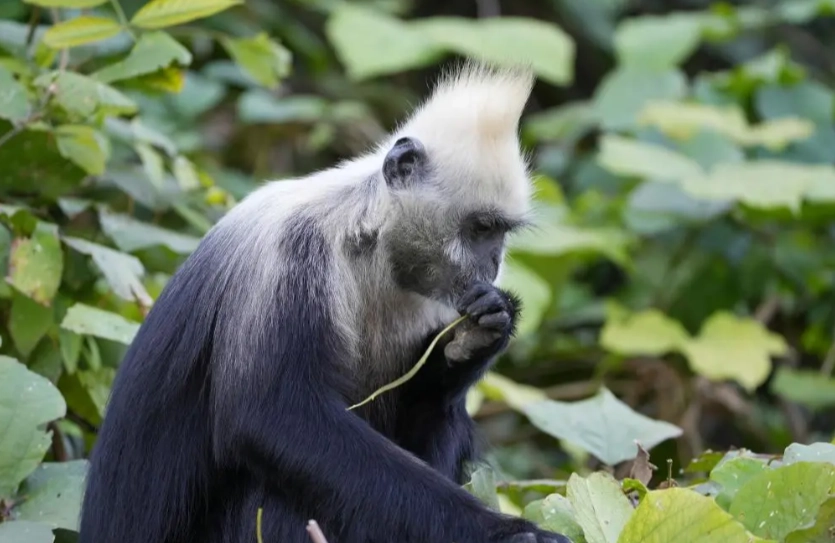
How to Get to the White-Headed Langur National Nature Reserve
The reserve sits about 30 kilometers from downtown Chongzuo in Guangxi. The main tourist approach is through the village of Banli (板利乡) in Jiangzhou District, but there's no official signpost that says "tourist entrance." Don't rely on Google Maps here—it's notoriously out of date. Instead, use Apple Maps or AMap Global (the international version of Gao De), and search for "White-Headed Langur National Nature Reserve" or the Chinese name 广西崇左白头叶猴国家级自然保护区.
From Chongzuo City
The most reliable way is to hire a taxi or private car from Chongzuo city for the day. It'll cost around 300–400 RMB for the round trip, including waiting time. The drive takes 40–50 minutes. Before you set off, agree on the price and show the driver this Chinese address: 广西崇左市江州区板利乡白头叶猴保护区. Driver may not accept cards—make sure you have WeChat Pay or Alipay set up. Cash with small bills might work, but don't be surprised if they say "no change."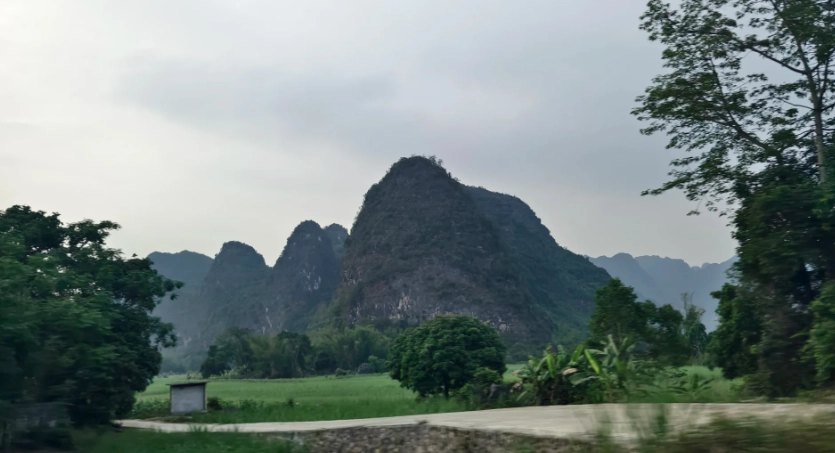
From Nanning
If you're arriving from Nanning, take the high-speed train to Chongzuo Railway Station (about 1.5 hours) and then follow the same taxi option. Driving from Nanning by rental car is possible—it's about 150 kilometers on the G7211 expressway—but you'll need to factor in a local GPS. Also, be aware that the last few kilometers to the reserve are narrow countryside roads where a sedan works fine in dry weather, but a SUV is better after rain.
Insider Advice: Don't plan to visit the reserve on the same day you land in Nanning. The border crossing process (if you fly in) plus the train ride will eat up too much time. I always tell my clients to stay overnight in Chongzuo first.
How to Book a Visit and Get a Permit
Entry to the White-Headed Langur National Nature Reserve is not like buying a normal tourist ticket. The reserve operates as a research and protection area, so they control the number of visitors each day. You need to be registered in advance. As a foreigner, the easiest path is through a licensed tour operator.
Below are steps that worked for me:
- Contact a reputable local tour operator. Look for agencies in Chongzuo that specialize in eco-tours. Many hotels have a front desk that can arrange a day trip for you. I usually book through a local guide named Mr. Wei, but you can also search Trip.com for "White-Headed Langur tour Chongzuo" and read the 4-star reviews.
- Send your passport details. The reserve requires real-name registration, so you'll need to give the operator your full name, nationality, and passport number. This is for government record-keeping, not a personal scam.
- Pay in advance or in person. If you book via Trip.com or Klook, you can often pay with an international credit card. Local agencies might ask for a 50% deposit via Alipay/WeChat. I've never seen a card machine at the reserve itself.
- Confirm the exact pick-up time. Most tours leave Chongzuo at 6:00–6:30 AM. Late morning tours happen, but you'll miss the prime sighting window.
If you're traveling independently and can't get permission, try asking your hotel receptionist to call the local forestry office. In my experience, the staff are cooperative, but they rarely speak English. Offering a small donation to the conservation fund sometimes helps—though it's not officially required.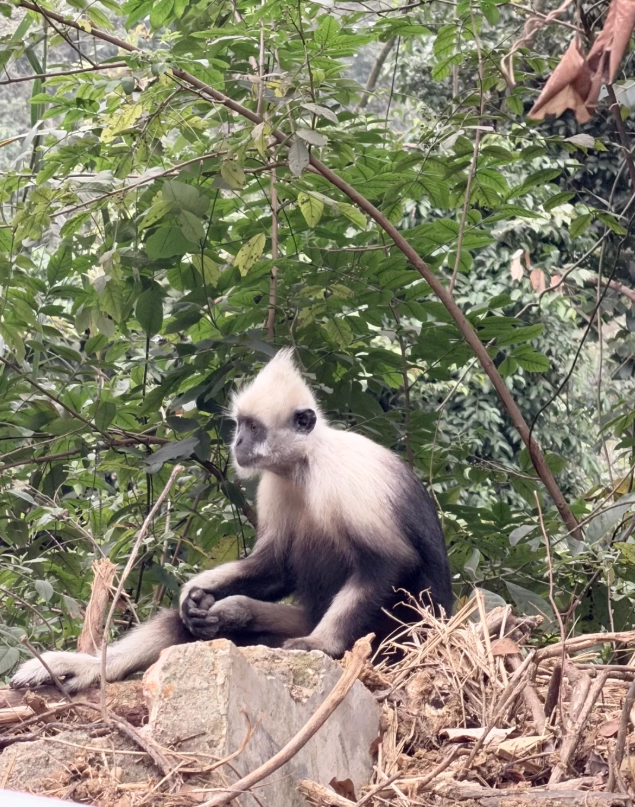
What to Expect Onsite: Trails, Viewing Points, and Facilities
The terrain here is classic Guangxi karst—steep limestone towers covered in thorny shrubs and citrus orchards. The main walking loop is about 2.5 kilometers and takes 2–3 hours at a slow pace. You'll walk on a mix of paved paths and dirt stairs. There are a few elevated observation platforms where the langurs often come close—they're used to human presence, but they won't approach if you're loud.
At the visitor center (a modest building at the entrance), you can see a few specimens and photo panels explaining the langur's life history. There's also a basic restroom. Don't expect any food stalls inside, so bring your own water and snacks. I always carry a thermos of hot water—useful if you're there on a cold morning.
One thing that surprised me: the reserve is not fenced along the entire boundary. You'll occasionally see a langur on a rock right next to the path. Maintain at least 10 meters' distance. Not just for safety—the reserve uses "langur watching etiquette" to keep the animals from becoming too habituated to humans.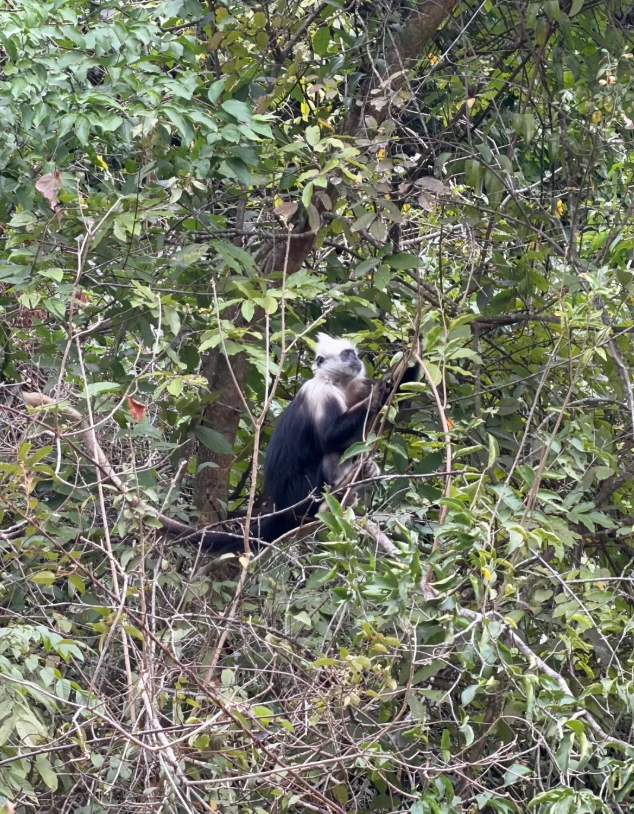
Best Time to See the Langurs: Seasons and Daily Timing
Early morning and late afternoon are your golden windows. White-headed langurs sleep in high cliffs at night. They move down to feed between 6:30–8:30 AM, then rest during the hot midday hours. They become active again around 4:00–6:00 PM as the sun softens.
In terms of seasons, October to April is the most comfortable time. From May to August, temperatures often exceed 35°C, and the afternoon heat makes you wish you'd stayed home. I've also noticed the langurs stay higher in summer—the leaves at the field level get too dry.
- Spring (March–April): Good visibility, but watch for rain and stubborn fog. Bring a poncho.
- Summer (May–August): Hot and humid; the langurs are less active. Avoid if you hate heat.
- Autumn (September–November): Clear skies and comfortable temperatures; my favorite season.
- Winter (December–February): Cold at dawn (5–10°C), but langurs are active and you'll have fewer crowds.
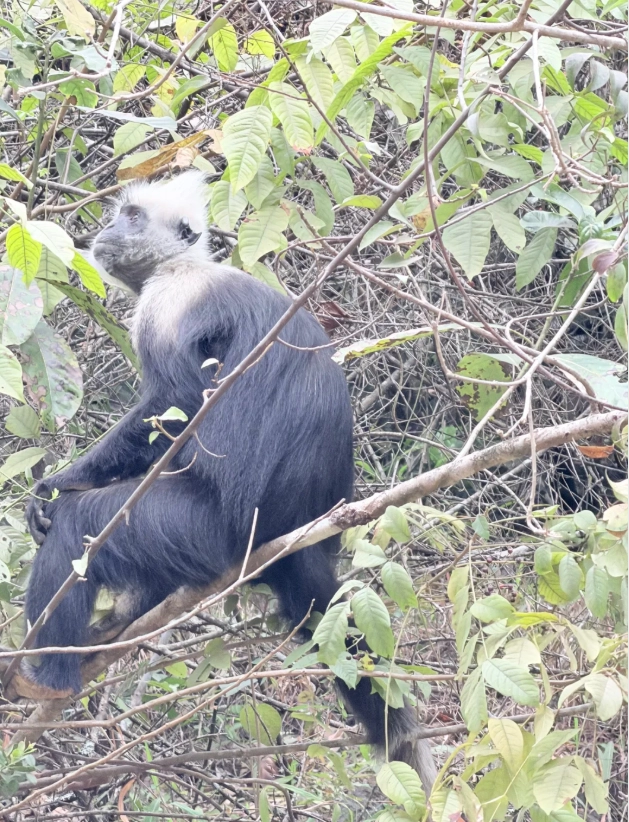
Insider Advice: If you're a photographer, skip the morning tour on weekends. The observation platforms get crowded, and the langurs keep their heads down. I've had the best shots on a Wednesday morning in November.
Essential Info: Tickets, Hours, and Rules
Below is a quick-reference table based on my last few visits. The figures can change, so always double-check with your tour operator before committing.
| Item | Details |
|---|---|
| Opening Hours | Usually 7:30 AM – 5:30 PM, but you'll enter with a guided tour. Early tours may start at 6:30 AM. |
| Entry Fee | Included in your tour package. Typical guided tours range from 150–300 RMB per person, depending on whether transport from Chongzuo is included. |
| Permit Requirement | Mandatory. Apply through a licensed organ or hotel. Passport required. |
| Payment | WeChat Pay or Alipay. No card machine at the reserve. Bring a few small bills for emergency. |
| Onsite Facilities | Basic toilets, small visitor center, no restaurant. Binoculars are not provided. |
| Disabled Access | Limited. The trail includes steep sections and stairs; the visitor center and first viewing platform are wheelchair-accessible. |
I've seen a few travelers get caught out with no cash and no food. Consider this table your packing checklist.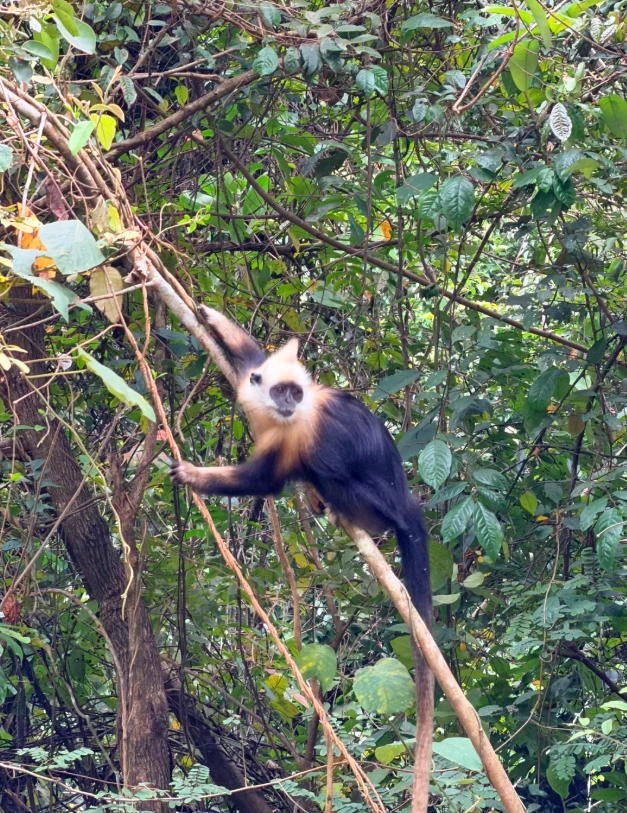
White-Headed Langur Etiquette: How Not to Ruin the Trip
Stay quiet, stay low, and don't feed them. Feeding wildlife is illegal in Chinese nature reserves, and it makes the animals sick. Also, avoid wearing bright yellow or orange—those colors resemble the fruit they eat, and I've seen curious langurs approach in a way that startled people.
- Keep your voice down on the trails.
- Do not use flash photography; it stresses the animals.
- Do not litter; pack out all snacks.
- No drones. The reserve strictly prohibits UAVs, and the local police have taken them away.
- Stay at least 10 meters from the langurs.
- Sit down if the guide signals you to—this makes you less intimidating.
Pro Tip: A pair of binoculars is worth their weight in gold here. The langurs might be visible from a distance, and you won't want to rely on your phone's zoom.
Where to Stay: Base Yourself in Chongzuo or Near the Reserve
I recommend staying in Chongzuo city. It has better restaurants, more reliable Wi-Fi, and a wider range of hotels. The reserve's nearby Banli village has a couple of simple guesthouses, but they're really aimed at researchers, and the village itself is quiet. Unless you're on a tight budget, the city is more comfortable.
For hotels, look for properties near Jiangzhou District. A good middle-range choice is the Chongzuo International Hotel (崇左国际大酒店) or the Lavender Hotel (薰衣草酒店) near the new city center. Prices are usually 300–500 RMB per night. Both have elevators, stable Wi-Fi, and front desk staff who can book a taxi or print your reservation. If you stay further out in the old town, ask if they have an elevator—many walk-up buildings don't.
When checking in, make sure the receptionist copies your passport and confirms your visa. As a foreigner, you're required to register with the local police, and the hotel does that for you. If you're staying in a guesthouse, they might not handle it properly—insist on getting a registration slip for the police.
Payment at hotels: Most mid-range chains accept international credit cards, but small ones don't. It's safer to use an online booking app like Trip.com with your card, then pay cash at the hotel if needed.
Sample Itinerary: 2 Days Combining the Reserve with Chongzuo
Day 1: Arrive and settle in.
- Morning: Arrive at Chongzuo by train from Nanning. Drop your bags at the hotel.
- Afternoon: Explore the city—go to Chongzuo Stone Forest (崇左石景林) or just a casual stroll by the Zuo River.
- Night: Try local snacks at the night market near the Friendship Square. I always order the sour fish soup and a bowl of 卷筒粉 (rice rolls).
Day 2: The reserve morning.
- 5:45 AM: Meet your guide outside the hotel and drive to the reserve.
- 6:45 AM: Register at the visitor center with your passport. Use the toilet before the walk.
- 7:00 AM – 10:30 AM: Hike the main loop, stopping at the two viewing platforms. This is prime time for langur sightings.
- 10:45 AM: Return to Chongzuo. Ask your guide to drop you near the bus station or a restaurant.
- Afternoon: If the weather's bad, visit the Chongzuo Museum (崇左市博物馆) instead of the outdoor spots. There's a small exhibition about the local karst ecosystem.
If you have an extra day, consider a side trip to Detian Waterfall (德天瀑布) on the Vietnam border. It's about a 3-hour drive, but renowned as one of the largest transnational waterfalls in Asia.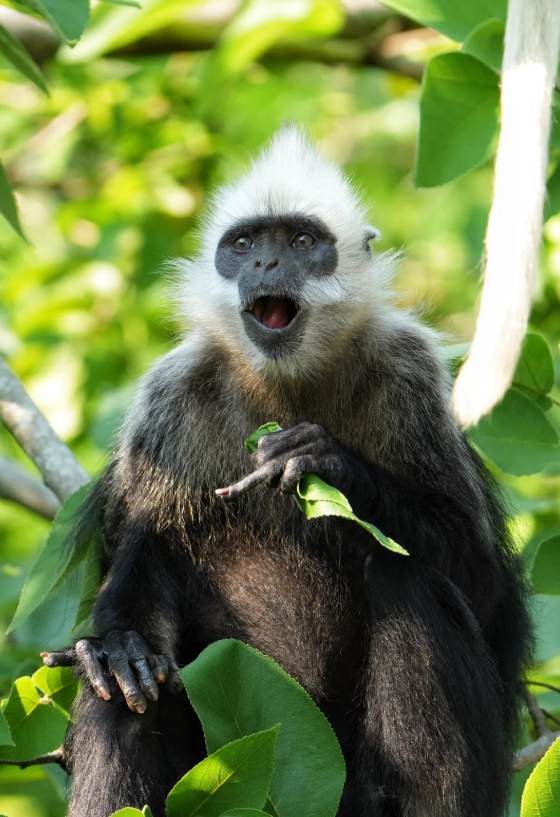
FAQ: Your Questions About Visiting the White-Headed Langur Reserve
Verified and fact-checked by the editorial team. This content has been fact-checked to ensure informational precision.





Not gonna lie, the drive to get here is a bit of an adventure—winding roads through small villages, but that's part of the charm. Once inside, the silence hits you in the best way. We didn't see any langurs until the very end, right as we were about to leave. A whole troop appeared near the visitor center, maybe 20 of them, jumping from branch to branch. The staff said they come down for fruit trees around this time. It felt like a private show. I also loved the little botanical signs along the path—really helped me appreciate the local plants. If you want to escape the noise and just breathe, this is the place. I'd give it more stars if I could.
Came here with my wife and two kids as part of our road trip. Honestly, this place exceeded our expectations. The entrance area is simple but clean, and the staff at the ticket window were patient despite our broken Chinese. The walk itself is not too hard, even for our 7-year-old. We saw a group of langurs lounging on a rocky ledge—they looked like little old men with white mohawks, so funny. The scenery is just breathtaking, especially the viewpoint at the end of the loop. We spent about three hours and felt like it was exactly the right amount of time. Great value for the ticket price. Would highly recommend if you're in the Chongzuo area.
Absolutely loved this place! We arrived right at opening time and pretty much had the whole reserve to ourselves for the first hour. The mist was rolling over the cliffs and the birdsong was incredible. Then we got lucky—a family of langurs with two bright white-headed babies appeared right above the trail. The ranger told us their names and habits, which made the whole experience feel personal. The boardwalk is well-maintained and there's a nice lookout tower near the end. If you're into wildlife photography, bring a telephoto lens. I could have stayed all day. Genuinely one of the most peaceful and beautiful nature reserves I've visited in Guangxi.
A solid 4 stars because the setting is stunning—a lush valley surrounded by enormous limestone cliffs that look like they belong in a fantasy novel. The paved path is easy to walk, and the small museum at the entrance gives you some good background on the white-headed langur conservation efforts. We were lucky enough to see a small group of them about 200 meters up the hillside, mostly just moving through the trees. The downside is that there's little shade on the open trail, and the ticketing process felt a bit disorganized with two different queues. Still, for the price and the chance to see such a rare primate, I'd say it's worthwhile.
We drove up on a weekday morning and honestly the scenery alone was worth the trip. The karst peaks rising out of the mist felt like something out of a Chinese painting. But the reserve itself is a bit tricky to navigate—there are no clear trail markers once you get past the boardwalk, and we ended up backtracking a few times. We didn't spot any langurs, which was the main reason we came. The ranger at the entrance was helpful, but the viewing points felt a little neglected. If you're patient and not expecting guaranteed sightings, it's a pleasant half-day trip. Just bring your own binoculars and water.
As a primatology student, this place was a dream. The white-headed langur is one of the rarest primates, and seeing them in their natural limestone habitat gave me goosebumps. The reserve's research team was open to answering questions and let us use their spotting scope. Morning is definitely the best time — we arrived at 6:30 and saw several troops moving across the cliffs. It felt very respectful to the animals; no feeding or loud crowds. Just pure nature. If you care about conservation, don't miss this place.
We drove here from Nanning and spent a full morning exploring. The limestone peaks are stunning and the reserve feels wild and untouched. We saw at least five white-headed langurs, including a mother with a tiny baby. One even sat on a rock just across the gully for a good ten minutes — we could hear it making soft grunts. The lone ranger on site was super friendly and explained the conservation efforts. Bring light snacks and a good zoom lens if you can. Highly recommend for patient wildlife lovers.
Went here on a weekend with my family. Maybe it was just bad luck, but we walked for nearly three hours and only glimpsed one langur high up in the trees — too far for photos. The path was also quite muddy after the rain and the signage was poor. I understand it's a nature reserve, not a zoo, but I expected a bit more help from the staff. They seemed more interested in chatting among themselves than pointing us to good viewing spots. The scenery was pretty, but I wouldn't rush back.
Stunning landscape and the langurs are incredible, no doubt. But I felt the reserve could do more for independent visitors — there were no clear marked paths and the visitor center was basically empty when we arrived. We ended up joining a tour group that happened to pass by. If you're not with an organized trip, arranging transport is tricky too. Worth it for the wildlife, but be prepared to be flexible and bring your own food and water.
We hired a local guide from Chongzuo to take us into the reserve early in the morning. The mist over the karst hills was beautiful, and after about an hour of quiet walking we spotted a small group of white-headed langurs jumping between the cliffs. Seeing their golden babies clinging to the mothers was unforgettable. The guide was knowledgeable but the trail was a bit rugged — not for anyone with mobility issues. Binoculars are a must! Honestly one of the best wildlife experiences I've had in China.
There are few places where you can see a critically endangered species in its natural habitat without fighting crowds, and this is one of them. We arrived at opening time and had the main trail almost to ourselves. The ranger stationed at the upper lookout pointed out a group of langurs that were resting on a steep rocky face—about 12 individuals, including at least two babies. Just watching them leap between the cliffs was unforgettable. The landscape itself feels prehistoric, with the karst mountains rising out of the mist. I'm so grateful that this reserve exists and that the staff work so hard to protect these animals. If you care about conservation, please visit responsibly: keep quiet, stay on the trails, and don't feed the wildlife. This was the most meaningful wildlife experience of my trip.
Definitely a highlight of our trip to Guangxi, but be ready for a bit of a workout and some planning. We didn't hire a guide and initially missed the turnoff for the main viewing area because there's almost no signage in English. Once we figured it out, though, we had a great two hours. We saw about ten langurs, including a few big males with that striking black-and-white fur—they really do look like they're wearing capes. The observation point gives you a decent view across the valley, but the animals are far, so don't expect National Geographic shots with your phone. Bring water, a hat, and patience. I'd rate it a solid four because the park's heart is in the right place and the animals are fantastic, but the infrastructure could be friendlier for international visitors.
I've been following the conservation story of the white-headed langur for years, so visiting the reserve in person was a bit of a pilgrimage for me. The staff at the entrance were friendly and gave us a good map, though I'd advise booking ahead if you want an English-speaking ranger. We took our time along the lower forest path and were rewarded with sightings of a mother carrying her baby—just amazing. The sense of peace here is rare: no souvenir stalls, no loudspeakers, just the sound of wind through the bamboo and the occasional whooping call. It's not a polished tourist attraction, and that's exactly why I loved it. My tip: come early morning, and slow down. The langurs are shy but this is one of the best places on earth to see them.
This is a special place, no doubt, but I have to be honest—the experience depends a lot on the day and your expectations. We went on a hazy afternoon and only saw one group of langurs way off in the distance, mostly sleeping. The information center is small, and there isn't much interpretation in English. The hiking trail is steep and not super well marked in parts, so I'd recommend going with a guide unless you're confident on rough paths. That said, the landscape alone is stunning, and knowing you're in one of the last refuges for these monkeys makes it feel important. If you're a dedicated primate person, you'll still appreciate it, but maybe manage your hopes for close-up views.
We hired a local guide to take us to the White-Headed Langur reserve, and honestly, the drive up the mountain roads was almost as memorable as the monkeys themselves. The fog was rolling through the karst peaks when we arrived, and you could hear the langurs before you saw them—those loud, echoing calls bouncing off the cliffs. We spotted three or four family groups lounging on the limestone ledges, including a bright orange baby, which was just incredible. The rangers really know their stuff and clearly care about the animals. Bring binoculars and a telephoto lens; the viewing points are quite far back for the animals' safety. Not a place for a rushed visit, but if you love wildlife and quiet, wild places, it's totally worth it.