 Lei Li
Two weeks ago, a client of mine—let's call him Mark—got his visa application rejected at the Beijing embassy. Not because of his bank statements. Not because of his flight bookings. Because the invitation letter from his Chinese friend had a missing passport number. One tiny field, two weeks of delay. I've seen this happen more times than I can count.
So let me save you that headache.
I've been guiding foreigners through China's visa maze for over eight years. I've personally filled out, reviewed, and corrected more invitation letters than I can remember. This isn't a generic template you'll find on some embassy website—it's the exact structure that works, field by field, with the mistakes that trigger red flags highlighted.
The good news? Once you have the right format, the invitation letter is the easiest part of your China tourist visa application. The bad news? Most templates online miss critical details that embassy officers actually check.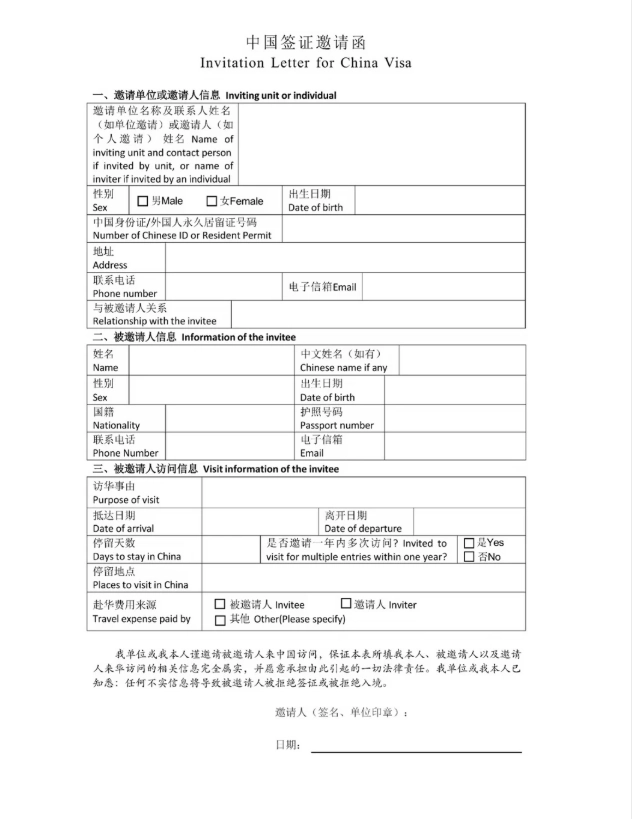
What's Inside This Guide
What Is a China Tourist Visa Invitation Letter, Really?
Most guides call it a "letter from your Chinese friend." That's not wrong, but it's dangerously incomplete.
The invitation letter for a Chinese visa is a formal document that transfers a level of responsibility from the applicant to the inviting party. For a tourist visa (L visa), it's not always mandatory—but if you're staying with a friend or family rather than a hotel, or if the visa officer doubts your itinerary, it becomes your strongest supporting document.
Here's what most people don't realize: the letter needs to come with a copy of the inviter's Chinese ID card or residence permit. Without that attachment, the letter is just paper. The embassy in Washington D.C. receives thousands of letters weekly that are technically "complete" but missing the inviter's ID copy—they go straight to the rejection pile.
I always tell my clients: the invitation letter is not just about you. It's about proving that someone in China knows you and will be your contact point. The format needs to be clean, specific, and verifiable.
Why Invitation Letters Get Rejected: 5 Mistakes I See Weekly
Mistake #1: Missing passport number and date of birth. I know it sounds obvious. But you'd be shocked how many people write their name and nationality and skip the passport details. The invitation letter must cross-reference your passport exactly—same spelling, same order of names, same passport number. One character off? Rejected.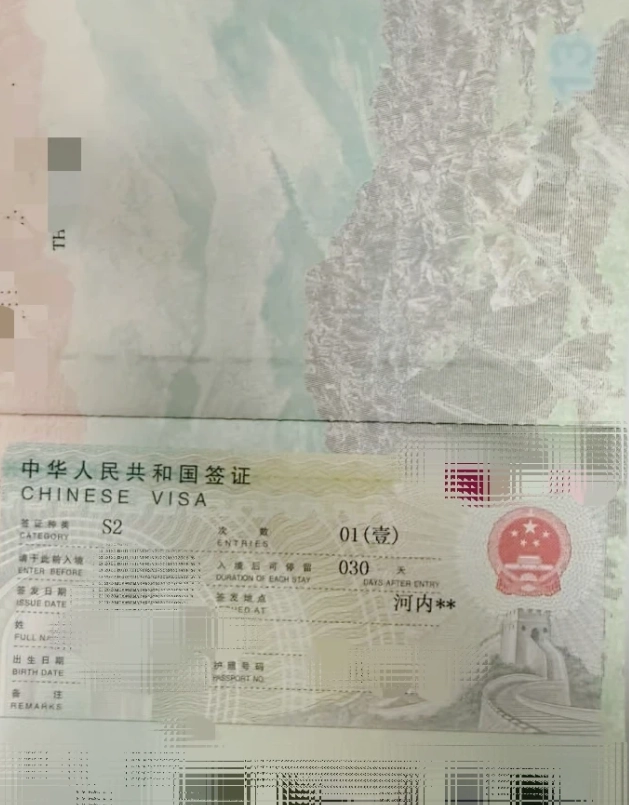
Mistake #2: Vague relationship description. "Friend" is not enough. Embassy officers want to see "friend from university," "former colleague," or "family friend for 12 years." A relationship with context feels real. A relationship without context feels fabricated.
Mistake #3: No duration or schedule specifics. "Visiting China" is dangerously vague. The letter must state your intended dates of arrival and departure, however approximately. Something like "from March 15 to March 28" is infinitely better than "in spring."
Mistake #4: Wrong inviter credentials. If your inviter is a Chinese citizen, they must provide a copy of their Chinese ID card (front and back). If they're a foreigner living in China, they need a copy of their residence permit and passport. Using the wrong document type is a common mistake, especially for expat hosts.
Mistake #5: No contact information for the inviter. The embassy may call or email your host to verify. If the phone number is disconnected or the email bounces, your application raises suspicion.
Pro Tip: I always tell my clients to put the inviter's phone number in both mobile format (+86 138...) and landline format if available. Embassy officers in different countries have varying preferences for how they verify contacts. Give them options.
The Exact Invitation Letter Template I Use
This is the format I've refined over eight years. Follow it field by field. Bold fields are the ones people most often get wrong—I've marked them clearly.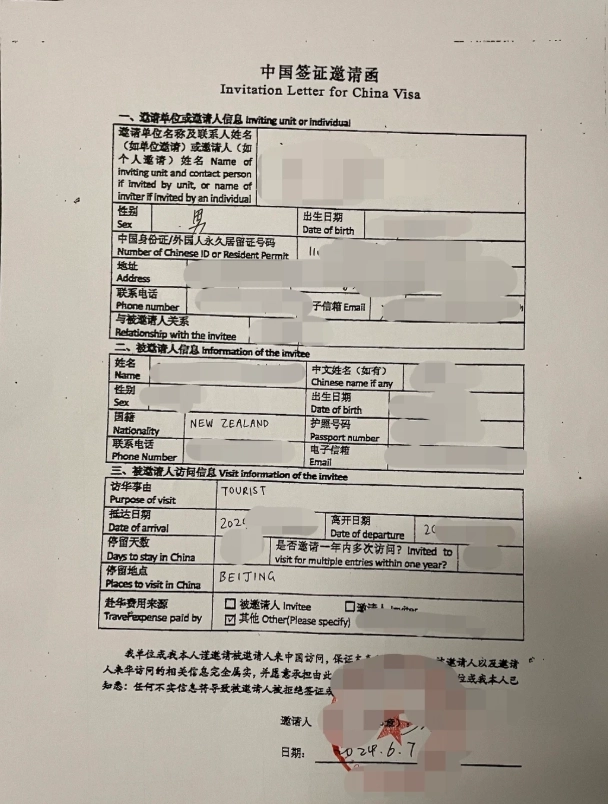
| Field | What to Write | Example |
|---|---|---|
| Inviter's Full Name | Same as on Chinese ID or passport | Zhang Wei |
| Inviter's Address in China | Full residential address | No. 15, Lane 200, Xizhimen Street, Xicheng District, Beijing |
| Inviter's Phone | Include country code | +86 138 0013 8000 |
| Inviter's Email | An address they actually check | zhangwei.beijing@email.com |
| Applicant's Full Name | Exactly as on passport | Mark Allen Johnson |
| Applicant's Passport Number | Double-check this one | AB1234567 |
| Applicant's Date of Birth | DD/MM/YYYY format | 12/04/1985 |
| Applicant's Nationality | As on passport | United States |
| Relationship to Inviter | Specific, with context | Friend from university since 2010 |
| Purpose of Visit | Tourism only | Tourism and sightseeing |
| Arrival & Departure Dates | Approximate is fine | 15 March to 28 March |
| Places to Visit | List cities, not just "China" | Beijing, Xi'an, Shanghai |
| Who Covers Costs | Be explicit | Applicant covers all expenses |
| Inviter's Signature & Date | Wet signature or digital signature | Signed: Zhang Wei, 10 January |
The template itself is straightforward—about 20 to 25 lines. But here's what the table doesn't tell you: the tone matters. Write in complete sentences, not just bullet points. The letter should read like a real person wrote it, not like a form. Embassy officers read hundreds of these daily; a robotic, fragmented letter signals "template download."
Here's the exact opening paragraph I recommend to my clients:
"I am writing to confirm that I have invited my friend, [Full Name], to visit me in China for tourism purposes. I have known [First Name] since [Year] and I am happy to provide this invitation letter in support of their visa application."
That first sentence—"I have invited"—establishes the relationship. The second sentence confirms the duration. The third implies ongoing contact. Three lines, three pieces of information that embassy officers scan for.
Now, about the attachment. The letter alone is not enough. You must include a photocopy of the inviter's Chinese ID card (front and back on one page) or their residence permit and passport bio page. The embassy in New York has a specific note on their website about this—if the ID copy is missing, the letter is considered incomplete. I've had two clients in the past year who ignored this and had to reapply.
What If You Don't Have a Chinese Host?
You don't always need an invitation letter. This is the part most guides bury at the bottom. If you're booking hotels and tours through a travel agency, the agency can issue a "confirmation letter" or "hotel booking confirmation" that serves the same purpose. But here's the catch: the letter's weight depends on the visa officer's discretion.
In my experience, the invitation letter carries the most weight when:
- You're staying at a private residence rather than a hotel
- You have a personal connection to China that explains your visit
- Your travel history is thin and you need extra credibility
If none of these apply, a hotel booking confirmation plus a detailed itinerary is usually sufficient for a tourist visa. But if you have a Chinese friend or family member willing to write the letter, include it. The redundancy helps.
One more thing: the invitation letter does not need to be notarized in most cases. I've had clients pay $50 to notarize letters at FedEx Office—completely unnecessary for a tourist visa. Save that money for your actual trip. Only notarize if the specific embassy or consulate's website explicitly says so. Each Chinese embassy has slightly different requirements, so check the website of the embassy where you'll submit your application, not a generic third-party site.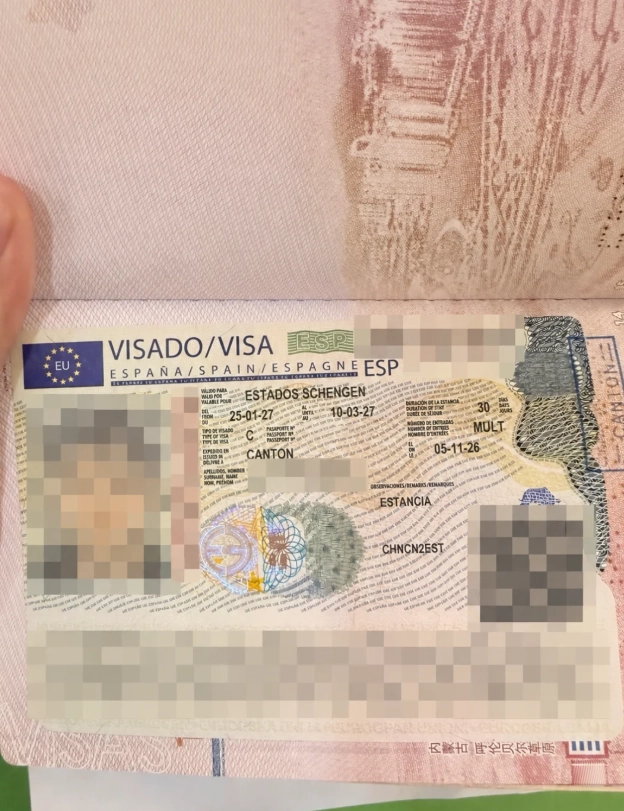
FAQ: Real Questions From Real Applicants
Verified and fact-checked by the editorial team. This content has been fact-checked to ensure informational precision.






No comments yet.