 Ting Chen
Your Quick Roadmap to the Roof of the World
Got your heart set on Lhasa? I’ve seen travelers burst into tears at the airport. They had a passport, a dream, and a printed “Tibet visa” they found online. The airline check-in agent took one look and said, “No permit, no boarding.”
Here’s the brutal truth: you cannot apply for the Tibet Travel Permit application on your own. Ever. Almost every foreigner I meet thinks they can just fill out a form. You can’t. It requires a licensed Tibetan travel agency to act as your sponsor. You send them your documents, they navigate the labyrinth of Chinese bureaucracy, and they hand you the physical paper you need to board the plane or train.
The most valuable secret? Book your tour agency at least 20 days before you plan to enter Tibet. The official processing time is 15 working days, but I’ve seen “express” requests get stuck for two weeks because of a single blurry passport scan. The permit itself is free, but the agency service fee will run you anywhere from 150 to 500 USD depending on the group size and itinerary. Don’t let the price shock you—it’s your only ticket in. Now, let me walk you through the exact steps I give every client.
What Is the Tibet Travel Permit and Why Is It Mandatory?
The Tibet Travel Permit (officially called the Tibet Tourism Bureau Permit) is a separate A4-sized piece of paper, usually issued by the Tibet Tourism Bureau in Lhasa. It’s completely distinct from your Chinese visa. Without it, you cannot enter the Tibet Autonomous Region by air, train, or road. No exceptions.
You’ll present this permit at the check-in counter before your flight to Lhasa. The airline staff will check the permit against your passport. If the name or passport number is even slightly off—say a middle name is missing—you will be denied boarding. I once had a client whose agency misspelled “Christopher” as “Christoper.” He missed his flight and had to rebook everything. So double-check the scan before it’s printed.
For details on Chinese visa regulations that interact with the Tibet permit, the National Immigration Administration provides authoritative updates. Always carry a printed copy of your permit—electronic versions on your phone are not accepted anywhere.
Who Needs It & The Group Tour Myth
Every foreign passport holder—including tourists, business travelers, and digital nomads—needs a Tibet Travel Permit. There is no visa-free exemption for Tibet. And here’s the non-negotiable rule that trips up so many: you cannot travel independently. The permit is only issued when you are part of a pre-arranged guided tour.
“But I hate group tours!” I hear you. Good news: you don’t have to join a big bus full of strangers. You can book a fully private tour for just your family or partner. The agency will assign a private guide and driver. The cost is higher, but you’ll experience the Potala Palace without a crowd behind you. I always recommend a private tour if your budget allows—the guide can shift the schedule to avoid the worst midday tourist surge.
Here’s the catch: the permit is tied to both your passport and the specific itinerary your agency submitted. If you decide to change your route mid-trip—say, from Shigatse to Nyingchi—your agency must apply for a change. That takes time. Stick to the plan.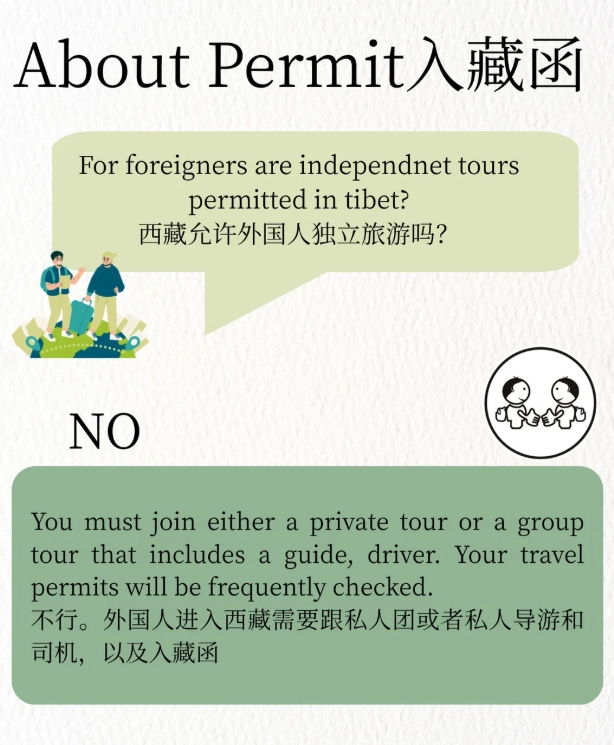
Step-by-Step Application Process for Foreigners
The process isn’t a single form. It’s a sequence of hand-offs. Here’s the exact flow I’ve refined after helping dozens of travelers avoid rejection:
1. Choose a Licensed Tibetan Travel Agency
You must book through a Tibet-based travel agency with official government certification. Search for agencies registered in Lhasa, not just any Chinese tour operator. Ask for a scan of their official license and check they are a member of the Tibet Tourism Association. I recommend agencies that respond within 24 hours and provide a dedicated contact person. Avoid any agency that asks for payment in full before you receive a draft itinerary—that’s a major red flag.
2. Provide Your Documents
Your agency will request a clear color scan of your passport photo page and your Chinese visa. The scan must be sharp enough to read the MRZ code at the bottom. Photos taken with a phone are usually fine if the lighting is even and the page is flat. Send these at least 20 days before your intended arrival date in Lhasa. If you’re traveling on a Group Visa from Nepal, your agency will tell you the specific requirements for a group visa application—this often involves a physical trip to the Chinese Embassy in Kathmandu.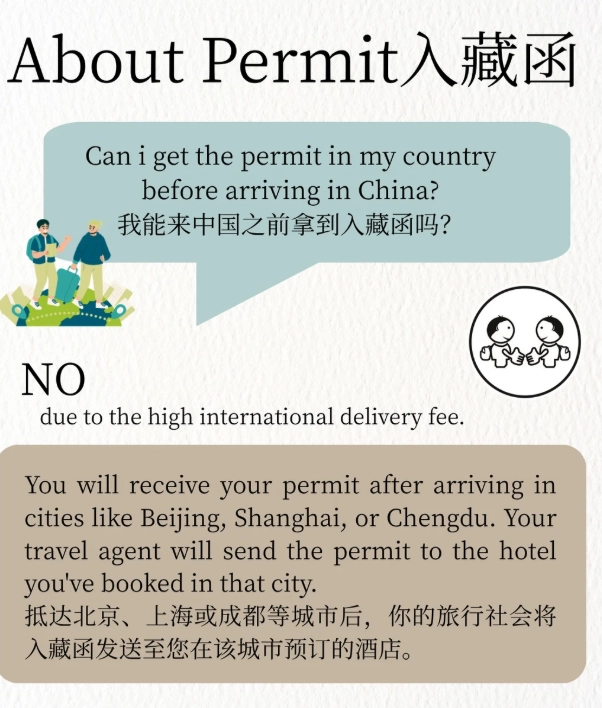
3. Confirm Your Itinerary and Pay the Tour Deposit
Your permit is tied to your itinerary. Once you agree on an itinerary—including cities, hotels, and travel dates—your agency will submit it to the Tibetan authorities. You’ll pay a deposit, usually 30% of the tour cost. The remaining balance is due before you arrive in Lhasa. Pay with a credit card or a bank transfer; Alipay and WeChat Pay with international cards are increasingly accepted by agencies, but confirm first.
4. Wait for the Permit to Be Issued
The agency handles the back-and-forth with the Tourism Bureau. This normally takes 10-15 working days. During peak season (July to August, and the first week of October), it can take longer. The agency will then send you a clear scanned copy of the permit—this is your proof to book flights. But remember: the physical copy won’t be in your hands until you meet your guide, usually at your hotel in Lhasa or at the airport arrival hall.
Timeline, Costs & Hidden Fees
Processing time can vary. Here’s a realistic comparison based on my agency contacts in Lhasa, but you should always confirm with your chosen agency.
| Service Type | Est. Processing Time | Cost Range (USD) | Best For |
|---|---|---|---|
| Standard Group Tour Permit | 15-20 working days | $150 - $300 | Budget travelers, flexible dates |
| Private Tour Permit | 10-15 working days | $250 - $500 | Families, couples, photographers |
| Urgent Processing (with surcharge) | 5-7 working days | $400 - $700 | Last-minute travelers only |
The permit itself is free, but the tour package is the actual cost. Most agencies bundle the permit fee into the tour price. Hidden fees? Airport transfers in Lhasa (often $20-$30 each way), mandatory Tibetan guide fees (already included in the tour price), and a possible “permit change” fee if you alter your itinerary mid-trip. Always ask for a line-item breakdown before you pay.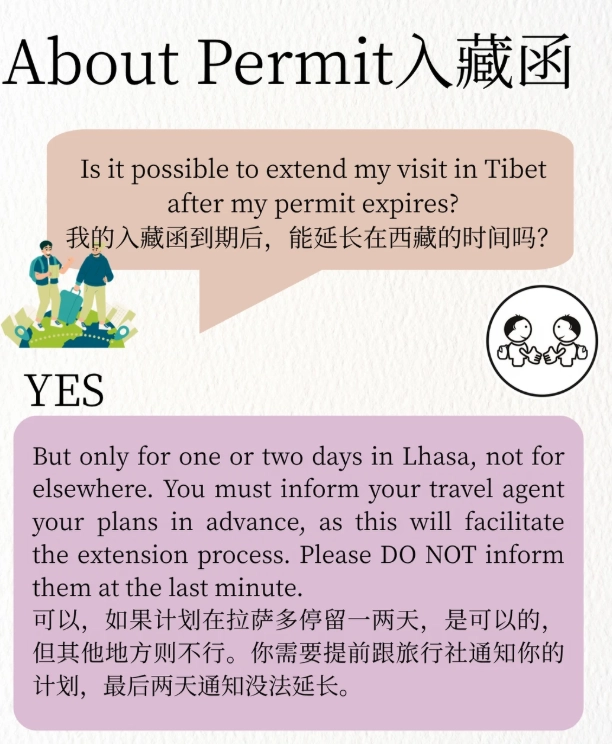
Brutally Honest FAQ
Verified and fact-checked by the editorial team. This content has been fact-checked to ensure informational precision.
No comments yet.