 Qiang Huang
Three buses. One pier. Zero shade. I watched a group of twelve wilt under the Qingdao sun at 11 a.m. because their guide refused to break the printed schedule. That was the week I stopped selling standard Shandong tours.
Hiring a Shandong local tour guide is not about having someone recite Confucius dates at you. It is about knowing which gate the crowd has not found, which noodle shop can process a foreign card, and how to keep a family of four from melting between two sights.
Most visitors book through a hotel concierge or an Instagram DM and end up with a friendly person who has never actually set foot in Qufu. Others go solo and slam into the real wall — attraction slots that vanish three days out, WeChat mini-programs in pure Chinese, and Google Maps quietly pointing at a demolished metro entrance.
If you remember one thing from this page, make it this: hire a guide for Qufu, Mount Tai, and anything rural, and skip the guide for downtown Qingdao, which you can walk in a single morning. That one split saves most travelers several hundred yuan and one wasted day.
Here is the short version I hand to clients. Tap a section and get moving.
My quick map of this page
What a Shandong Local Tour Guide Actually Does for You
A good Shandong guide is a logistics fixer who happens to know history — not a walking encyclopedia. If your guide spends the first hour talking and never touches a phone, something is off. The real work happens on a screen and on foot.
Here is what you are genuinely paying for:
- Snapping up timed-entry slots the moment they open, using your passport number and a Chinese booking system that most foreigners cannot navigate alone.
- Standing between you and a taxi driver who has never heard of your hotel's English name, then handing over a Chinese address on their own screen.
- Reading a menu that has no pictures and steering you away from the 168 yuan sea cucumber toward the 38 yuan mackerel dumplings.
- Watching the clock. Not the tour clock — the light clock and the crowd clock.
That last one is worth more than any lecture. I have walked clients past the Zhanqiao Pier at 7:40 a.m. when the boardwalk is empty and the water is glass. Same spot at 11 a.m. is a wall of selfie sticks and tour flags. No guidebook tells you that, because guidebooks are written at a desk.
Pro Tip: Ask your guide which district they actually live in. I have met plenty of "Qingdao guides" who live in Jinan and drive in for the weekend. That is fine for a city walk. It is a disaster for a food tour, because they will take you to the same three tourist restaurants every agency uses.
How Do You Hire a Shandong Local Tour Guide Without Getting Burned?
Licensed, Freelance, and "Driver Who Speaks a Little English"
China issues a national tour guide certificate after a written and oral exam, and any legitimate guide can show you that card on request. It carries a photo and a QR code. Ask to see it before you get in the car. Not because unlicensed guides are criminals, but because the licensed ones have passed a language test and carry legal accountability if something goes wrong on a mountain.
The gap that catches people is the word "guide" itself. On several booking platforms, a listing labeled "English-speaking guide" for a Laoshan day trip is really a driver with twenty useful phrases. He will get you there safely. He will not explain a single stele.
My honest read after years of this: for a full day of history in Qufu or a summit push on Mount Tai, pay for the licensed guide. For a transfer from the airport to your hotel, save your money and use DiDi through Alipay.
Where I Actually Send People to Find a Guide
Book your first day through a platform with a review system, then extend directly with the same person if you click. That structure protects your deposit and gives you a real out.
- Trip.com and Klook private tour listings — the most foreigner-friendly interface, prices in your currency, card payment accepted, and reviews you can actually read.
- Your hotel concierge — convenient, but expect a 20 to 40 percent markup, and the guide assigned may be whoever is free that morning.
- Established agencies with English-facing websites — slower to respond, but strong on multi-day provincial routes and licensed guides.
- Xiaohongshu and WeChat travel groups — where the best freelancers live, but the entire search flow is in Chinese. Realistically, ask a Chinese-speaking friend or your hotel receptionist to help.
Before you send a single yuan of deposit, get straight answers to these five questions. Vague answers are your signal to walk.
- Do you hold a national tour guide certificate, and can I see it on day one?
- Is the price per group or per person, and does it include tickets, shuttle buses, and cable cars?
- Will you book the timed-entry slots with my passport number, or do I do that myself?
- What happens if it rains hard on our Mount Tai day?
- How do I pay you — platform payment, Alipay, or cash?
Insider Advice: Never wire a deposit to a personal bank account, and never pay the full amount before the day starts. Use the platform's payment button even if the guide offers a discount for going around it. That discount is exactly how people lose 800 yuan and a morning.
What Does a Shandong Local Tour Guide Cost?
Rates move with the calendar, and Shandong is unusually seasonal. The first week of May and the first week of October are the two spikes. Qingdao in August is its own category of expensive.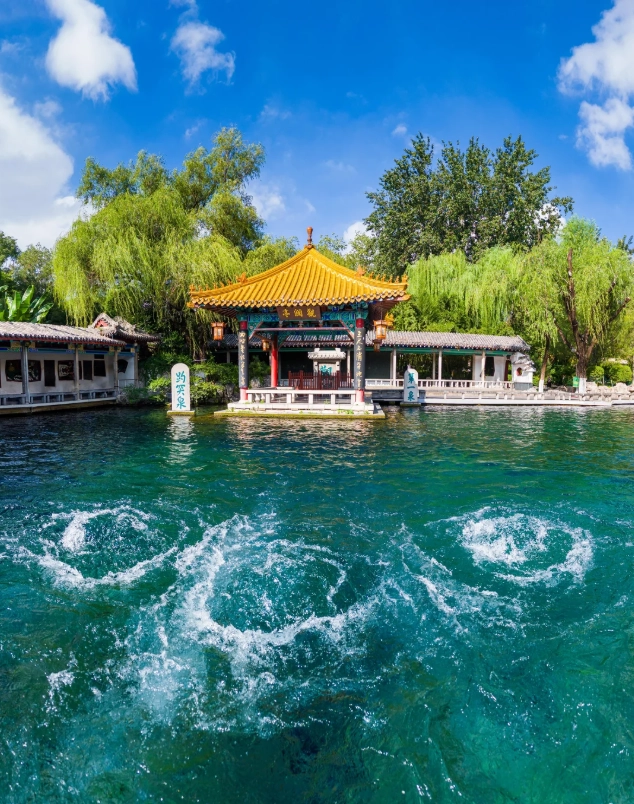
| Guide Type | Typical Day Rate | What Is Included | Best For |
|---|---|---|---|
| Group day tour, English-speaking | 300 to 600 RMB per person | Bus, fixed route, sometimes tickets | Solo travelers on a budget, first-day orientation |
| Private licensed guide, English | 800 to 1,500 RMB per day | Guide only, your transport and tickets extra | Couples, families, food and history focus |
| Guide plus private car and driver | 1,600 to 2,800 RMB per day | Vehicle, fuel, driver, guide, tickets extra | Groups of three to six, Laoshan, rural routes, older travelers |
| Multi-day package, three to five days | 10 to 15 percent below daily rate | Same as above plus itinerary planning | Anyone combining Jinan, Tai'an, and Qufu |
| Specialist guide, calligraphy or tea | 1,200 to 2,000 RMB per day | Subject expert plus interpreter | Hobbyists and repeat visitors |
Treat those numbers as a planning range, not a quote. Confirm the current rate directly, and be suspicious of any private English guide offering a full day under 500 RMB — that is usually a driver with a translation app and a loose plan.
One thing nobody tells you: the guide fee is often the smallest line. On a Laoshan day, tickets, the mandatory shuttle, and a cable car can add 200 to 300 RMB per person on top. Ask for a total, in writing, before you agree.
Shandong by Region: Where a Guide Is Worth It and Where It Isn't
Shandong is roughly the size of England, but the tourist infrastructure is wildly uneven. The old coastal cities are easy. The interior is not.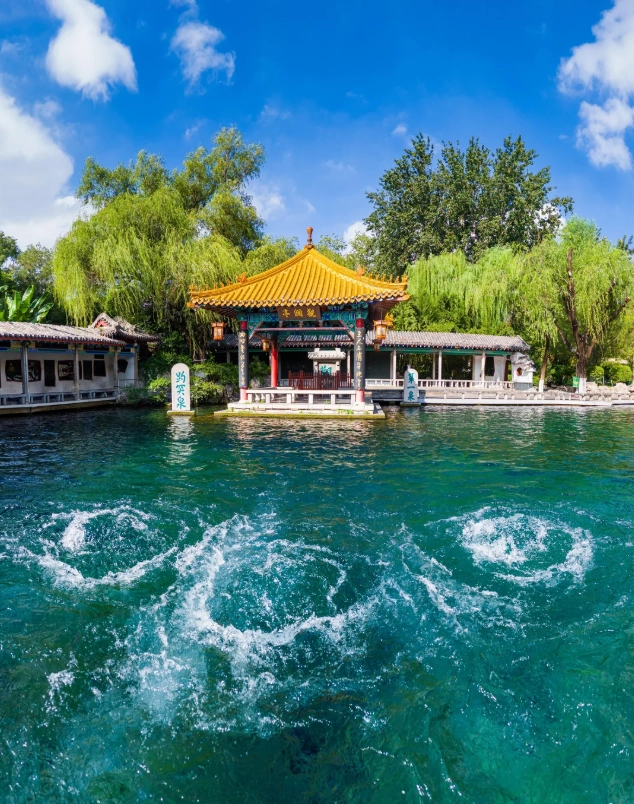
Qingdao — Walkable, So Use Your Guide Differently
Downtown Qingdao is the one place in Shandong where a full-day guide is mostly wasted money. The old town is compact, the signage has English, and the Metro Line 3 stop drops you almost at the pier.
Walk it yourself: Zhanqiao Pier and its pavilion, free and best before 8 a.m. Then the old town lanes, St. Michael's Cathedral with a small entry fee around 10 RMB, and Badaguan's tree-lined avenues, which are free and gorgeous but go flat in the camera by late morning. Go before 9.
Where a guide earns their fee here is the Tsingtao Beer Museum on Dengzhou Road, roughly 60 RMB with a couple of tastings included. The exhibits are almost entirely in Chinese, and the tasting room etiquette — how the pouring works, what the free snacks are — is genuinely confusing without help.
The other exception is Laoshan. Tickets run roughly 90 to 130 RMB depending on which route you pick, plus a shuttle in some sections, and the English-language information online is thin and often outdated. Do the Beijiushui route on a weekday if you want a gorge and a stream instead of a queue. The Taiqing Palace route is where the buses go.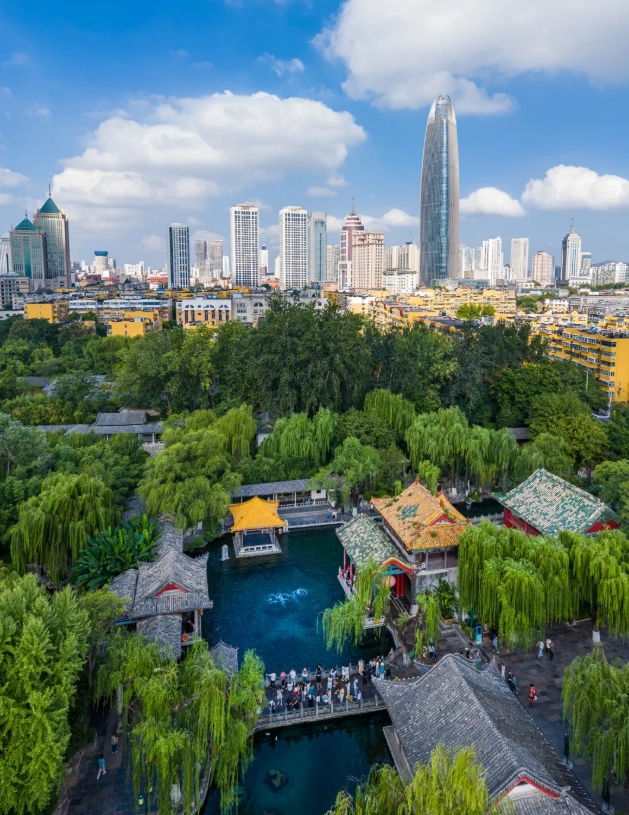
Getting around Qingdao: from Jiaodong International Airport, Metro Line 8 runs to Qingdao North Railway Station, then you transfer to Line 3 for the old town. If you land after 10 p.m., take a DiDi instead — the metro stops earlier than you expect.
Jinan — Springs, Snack Streets, and the Rail Hub
Jinan is guide-light too, but it is the city where you should spend your money on food, not history. Baotu Spring costs around 40 RMB, Daming Lake's main park is free to enter, and Qianfo Mountain is around 30 RMB. They sit within a comfortable walk of each other.
Skip Furong Street if you want real food. It is a photo op with squid skewers. Walk to Kuanhouli near Baotu Spring instead, and order tianmo, a savory corn-flour porridge whose name literally sounds like "sweet foam" but tastes salty — the single most confusing menu item in the city. Add youxuan, a flaky scallion pastry, and bazirou, braised pork belly over rice.
Jinan's real value is as a base. Jinan West and Jinan East are both high-speed rail hubs, putting Tai'an about 20 minutes away and Qufu East about 40.
Qufu — The One Stop I Never Send People to Alone
Qufu is the one Shandong destination where I refuse to send clients without a guide, and it is not close. The Temple, the Kong Family Mansion, and the Confucius Cemetery are three separate sites spread over a few kilometers, connected by a shuttle and a lot of context that simply does not exist in English on-site.
The combined ticket for all three sites runs around 140 RMB. The Cemetery sits roughly 1.5 kilometers north of the temple complex, and the electric cart is worth the small fee. If you walk it in July, you will regret it.
The timing trick: the temple corridor gets crushed between 9 and 11 a.m. by school groups. Arrive at opening, or come back after 3 p.m. when the light turns gold on the yellow tiles and the courtyards empty out.
The whole ensemble is inscribed on the UNESCO World Heritage Centre list, which is a useful benchmark — that listing is why the site is worth the effort, and also why you should expect crowds.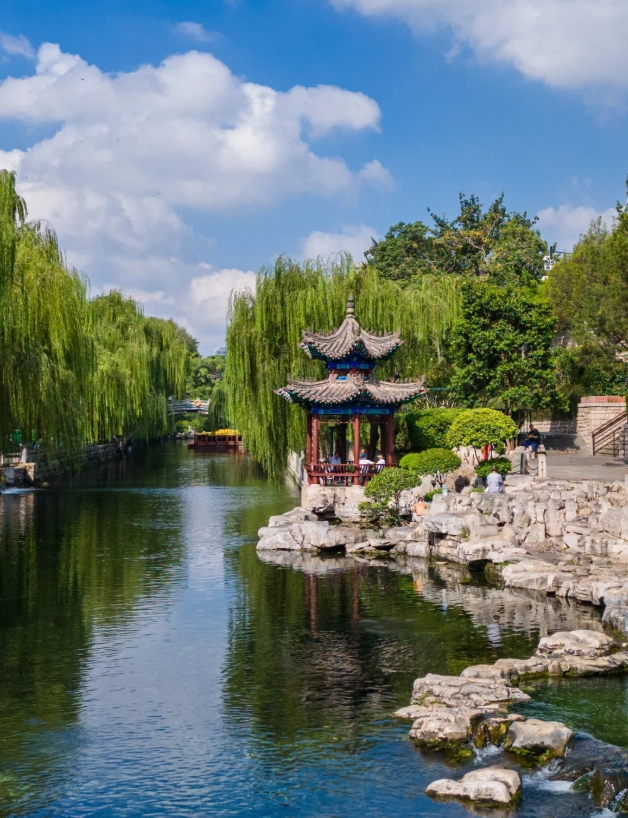
Mount Tai — The Overnight Climb Mistake Everyone Makes
The overnight climb that every English blog recommends is the single biggest mistake I see in Shandong. Here is the detail they leave out: the cableway does not run overnight. So an "overnight climb" means walking somewhere in the region of 6,000 stone steps in the dark, four to six hours, with a headlamp, on uneven stairs, arriving frozen and exhausted for sunrise.
There is a smarter version. Take the high-speed train to Tai'an — about 20 minutes from Jinan — then the shuttle bus to Zhongtianmen, then the cableway up. Sleep at a summit hotel. They are basic and overpriced, and I book them anyway, because waking up ten minutes from the sunrise viewpoint beats waking up at 1 a.m. on a staircase.
Approximate costs: mountain entry around 115 RMB in peak season, cableway around 100 RMB each way, shuttle bus extra. Prices shift with the season, so confirm at the gate or ask your hotel to check the official account.
Two things I always tell people. First, the summit is brutally cold and windy even in midsummer — rent a padded coat up top for a few dozen yuan rather than packing your own. Second, Riguan Peak at sunrise fills up; get there 40 minutes early and stake a spot, because the crowd arrives in a wave.
The Dai Temple at the foot of the mountain is often covered by the same ticket. Check at the gate, then go — most tour groups skip it entirely, and it is quieter and more beautiful than half the summit.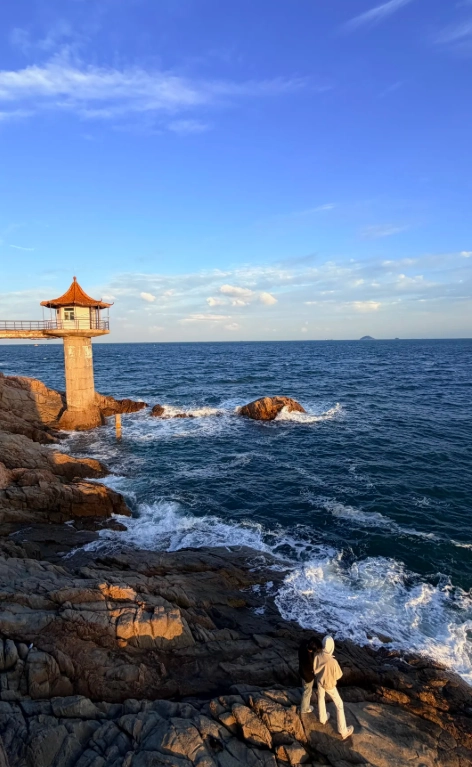
Yantai, Weihai, and Zibo — Where Guides Really Earn Their Fee
These three are where a local guide stops being a luxury and starts being basic transport infrastructure. Yantai's Penglai Pavilion, the legendary spot tied to the Eight Immortals stories, sits well outside the city with sparse English signage and taxis that are hard to flag. Weihai's Liugong Island needs a ferry and a half-day. Zibo's famous barbecue is a participatory ritual — a small charcoal grill at your table, tiny pancakes, scallions, and a dipping powder — that is genuinely difficult to decode from a Chinese-only menu on your first attempt.
Zibo is about 40 minutes by high-speed rail from Jinan. Go for dinner, stay one night, come back. It is the best value add-on in the province right now.
Two Shandong Itineraries I Actually Run
The Three-Day Qingdao Route
Day one is a walking day, and you do not need a guide for it. Start at Zhanqiao Pier at 7:30 a.m. while it is empty. Breakfast on wonton soup nearby. Walk to St. Michael's Cathedral, roughly 15 minutes on foot, then take a DiDi to Badaguan, about 15 yuan and 20 minutes. Lunch in the old town, then the Tsingtao Beer Museum at 3 p.m. once the tour buses have left. Dinner: spicy stir-fried clams and mackerel dumplings, ideally somewhere your hotel recommends rather than the beer street itself.
Day two is the day you hire a guide and a car. Leave at 7:30 a.m. for Laoshan, roughly 45 to 60 minutes of driving. Take the Beijiushui route if it is a weekday. You will be back by late afternoon.
Day three is flexible. May Fourth Square and the Olympic Sailing Center for the modern city, or a beach morning at Shilaoren. If it rains, pivot indoors to the Qingdao Museum or the former German Governor's residence, which is now a museum and handles wet weather far better than a mountain.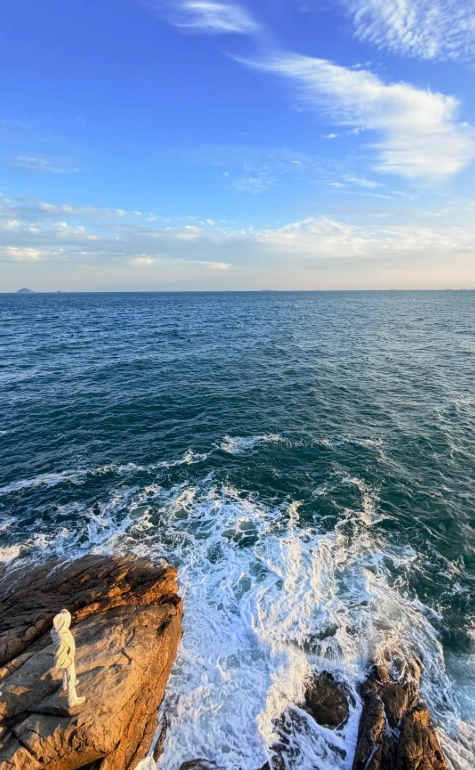
The Five-Day Jinan, Tai'an, Qufu, Qingdao Loop
This is the route I run for clients who want the province in one pass. Day one in Jinan for the springs and a snack-street dinner. Day two, morning train to Tai'an, up Mount Tai, sleep at the summit. Day three, sunrise, descend, afternoon train to Qufu. Day four, the three Confucius sites with a guide, then an evening train toward Qingdao. Day five in Qingdao.
If your legs are done after Mount Tai, drop Qufu and add a second Qingdao day. Nobody has ever regretted that trade.
Passports, Payments, and Trains: The Stuff That Sinks Trips
Your passport is your ticket, your ID, and your hotel registration document all at once — carry it everywhere, and keep a photo of the data page on your phone. Hotels register foreign guests with the local police, which is standard procedure, not suspicion.
On entry rules, do not trust forum posts from two years ago. The National Immigration Administration publishes the current visa-free transit and entry policies, and Qingdao is a participating port for several of them.
For trains, book on China Railway's 12306 platform, which has an English interface and accepts passports as the ID document. Arrive 30 to 40 minutes before departure for security and the walk to your platform. No paper ticket is needed — your passport is scanned at the gate.
| Payment Method | Where It Works | Watch Out For |
|---|---|---|
| Alipay or WeChat Pay linked to a foreign card | Almost everywhere, including street stalls and taxis | Some small vendors still only accept balance from a Chinese bank account |
| Cash in RMB | Legally accepted everywhere | Small shops may struggle to make change for a 100 yuan note |
| Foreign credit card | International hotels, airports, large chain stores | Rarely accepted at restaurants, taxis, or scenic area ticket windows |
| DiDi booked inside the Alipay app | Most cities in Shandong | Pin your location carefully, since the map may not match the street |
Two more practical notes that save real headaches. Google Maps is unreliable in mainland China, so use Apple Maps or Amap, and ask your hotel to write your destination in Chinese characters to show a driver. And download a VPN before you land plus a translation app such as Apple Translate or Baidu Translate — you will need both on day one.
Questions I Get Asked in the Van
If I only speak English, can I manage Qingdao without hiring a Shandong local tour guide?
Easily, for the old town and the coastal strip. The friction shows up in three specific places: ordering at seafood restaurants with no English menu, buying Laoshan tickets on a Chinese-only booking system, and explaining your destination to a taxi driver. Handle those with a translation app and a hotel receptionist who writes addresses for you, and you can skip the guide entirely for two of your three days.
How far ahead should I book a guide for the May or October holiday weeks?
Six to eight weeks out for those two windows, and I am not exaggerating. Good English-speaking guides in Qingdao and Qufu get locked into multi-day family bookings, and the decent ones are gone before the hotels sell out. For an ordinary week in April or September, three to four weeks is comfortable. Calling a week ahead works only if you are flexible about who you get.
Can a guide book my train tickets and attraction slots with my passport?
Attraction slots, usually yes, and it is the single most useful thing they do. Train tickets are trickier — most guides will book through their own 12306 account and add you as a passenger, which works but means the ticket is tied to their account. If your itinerary might change, book the trains yourself on the English 12306 site and let the guide handle everything else.
What if the guide's English turns out to be weaker than advertised?
It happens, and the fix is to reset expectations rather than argue. Tell them plainly that you want shorter sentences and that you are fine with silence between explanations. Most guides relax immediately and become far more useful. If the gap is genuinely unworkable on day one, contact the booking platform that evening — they will usually reassign you, but only if you raise it before the trip ends.
Is tipping expected for guides in Shandong?
Not expected, and never assumed, which surprises most Western visitors. That said, a guide who solved a real problem for you — rebooking a train, getting a sick kid to a clinic, finding the one vegetarian restaurant in Qufu — will remember a 100 to 200 yuan thank-you for years. Hand it over privately at the end, not in front of the driver.
Verified and fact-checked by the editorial team. Prices, opening hours, and booking policies in China change frequently — confirm current details through official channels or your hotel before you travel.







No comments yet.