 Gang Zheng
Quick Navigation
I'll be honest — the first time I helped a tourist get a Chinese SIM card with just a passport, we spent an hour at three different shops. The staff kept shaking their heads. "System no work," they said. Turns out, it wasn’t the system. It was the plan.
Here’s the thing: registering a Chinese SIM card with a passport is possible. But if you walk into any random store without knowing the tricks, you’ll waste half a day. Let me save you that trouble.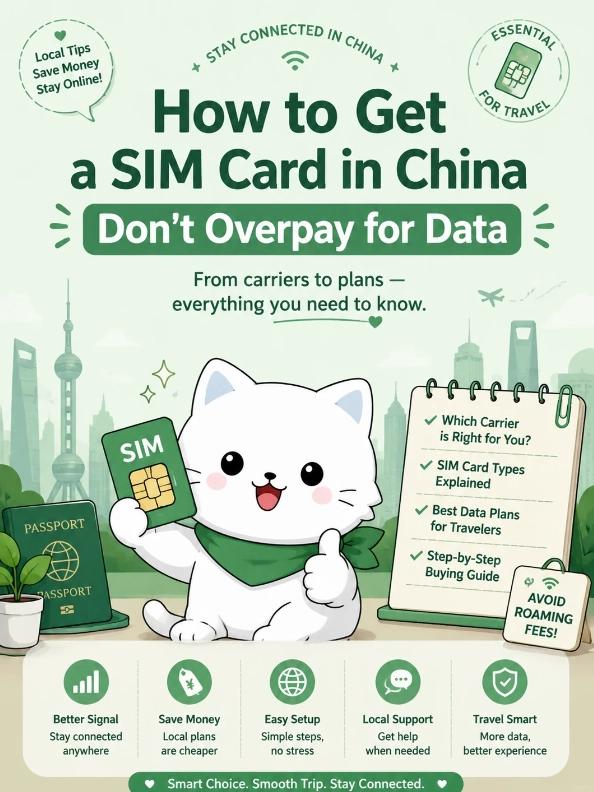
The Pain Point: International Credit Cards Rejected
You land in Beijing or Shanghai, tired, and just want mobile data. You have a passport and a Visa card. But guess what? Most Chinese SIM card stores don’t accept international credit cards. They want Alipay, WeChat Pay, or cash (in Chinese yuan). And forget about Google Maps — it’s blocked. You’ll need to use Apple Maps or Baidu Maps to even find the store.
Another shocker: the registration system is real-time, tied to China’s public security database. If your passport has a smudge or the visa page is wrinkled, the scanner might fail. I’ve seen it happen.
Which Carrier Should You Pick?
Three major carriers: China Mobile, China Unicom, China Telecom. My personal pick for tourists? China Unicom. Why? Their English app support is better, and they have a specific prepaid plan called the "Tourist SIM" (sometimes labeled "Foreigners’ SIM"). China Mobile has the widest coverage (including remote mountains), but their registration process is more strict.
| Carrier | Coverage | English Support | Best For |
|---|---|---|---|
| China Unicom | Good in cities, spotty in rural | English app + store staff sometimes | Short-term tourists (7-30 days) |
| China Mobile | Excellent nationwide | Limited English, but bigger stores have help | Long-term stays or travel to remote areas |
| China Telecom | Good in cities, weaker in north | Minimal English | If Unicom/Mobile not available |
Pro tip: go to a flagship store (not a tiny kiosk). Look for signs like "营业厅" with a big logo. In Beijing, the China Unicom store on Wangfujing Street has handled hundreds of foreigner registrations. They know the drill.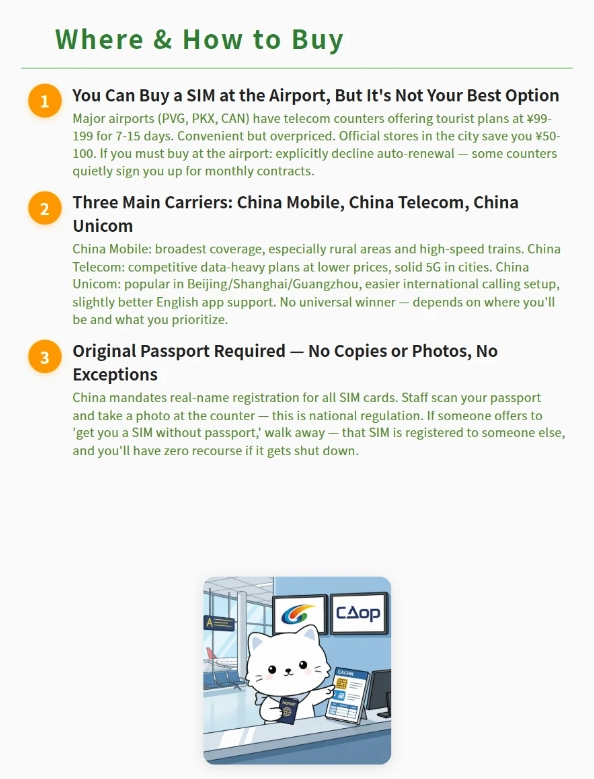
Documents You Actually Need
You only need your original passport with a valid Chinese visa. But here’s a non-obvious detail: the visa must be of type L (tourist), M (business), or Q (family). If you’re on a transit visa (24/72/144-hour), most stores will refuse because the registration system requires a registered address in China (like a hotel).
And yes, you need a hotel address. If you’re crashing at a friend’s place, you’ll need their rental contract (good luck). So book at least one night at a hotel — even a cheap hostel — and use that address. The clerk will type it into the system.
Step-by-Step at the Store
1. Choose Your Plan
Usually the clerk will show you a laminated sheet with prices in Chinese. Point to the one that says "短期套餐" (short-term package). A common one is: 30 days, 20GB, 100 minutes, for about 100-150 RMB ($14-21). Don’t overpay — the tourist plans are fixed.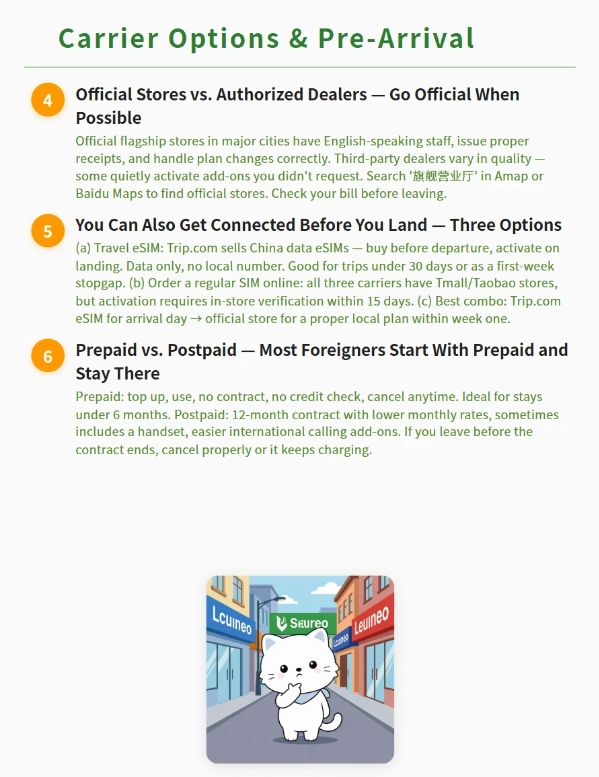
2. Hand Over Your Passport
The clerk will scan your passport’s photo page and visa page. Sometimes they also take your photo with their phone. Don’t smile — it’s not a selfie. It’s for the government database.
3. Wait for the Text Message
After they submit, the system sends a confirmation to your new number. But wait — you don’t have the SIM yet! So they’ll put the SIM in a demonstration phone to receive the SMS. The whole process takes about 10 minutes. If it fails, it’s usually because of a system timeout or a misspelled name. Politely ask them to try again.
4. Payment
Cash accepted almost always. If you want to use Apple Pay or international credit card (rare), stick with a big store. China Unicom at Shanghai Pudong Airport accepts Visa/Mastercard at their customer service counter.
5. Activate and Test
They’ll hand you the SIM. Insert it — your phone should pick up the network within a minute. Test by visiting a website (not Google — use baidu.com). If it works, you’re set.
Money-Saving Tips That Most Guides Skip
- Don’t buy from the airport arrival hall. The counters there charge 200-300 RMB for the same plan you can get in the city for 100. Take the metro to your hotel, then find a store.
- Register at a carrier-run store, not a third-party reseller. Resellers often add a service fee. Look for the official logo.
- Bring a phone with a SIM tray. If you have an iPhone with eSIM-only (like US models), you can’t use a physical Chinese SIM. You’ll need to buy an eSIM plan from a Chinese carrier (China Unicom supports eSIM for foreigners, but it’s a hassle to set up).
- Keep your passport handy for the first week. Sometimes the network will ask for a re-registration (it’s rare, but I’ve seen it). You’ll need to scan your passport again via a WeChat mini-program.
Oh, one more thing: Google Fi and other international roaming plans often get throttled in China. A local SIM is always faster and cheaper.








No comments yet.