 Fang Wang
In this Fujian travel guide
Most travelers land in Xiamen and never leave. They queue for Gulangyu's ferry, snap a few photos, and fly home — missing almost everything that makes Fujian extraordinary. I've been guiding trips here for a decade, and I've seen the same pattern repeat.
You'll find the real Fujian in the fog-filled valleys of Wuyi Mountain, in the earthen fortresses of the Hakka people, and in old towns where tea is more important than time. If you only have a week, here's the honest truth: skip the tourist-packed hotspots and go for the unusual.
After years of trial and error, I've narrowed down the top things to do in Fujian to seven experiences that actually deliver. This is not a lazy listicle — every stop includes exact ticket prices, transport details, and the exact time of day to beat the crowds.
The Top 7 Things to Do in Fujian (Actually Worth Your Time)
Here's the truth: after years of leading trips through Fujian, I've boiled the province down to seven experiences that consistently blow visitors' minds. They're not all obvious — some require an early start or a bit of detour, but every single one is worth it.
| Experience | Best Base | Ticket Price | Ideal Visit Duration | Key Tip |
|---|---|---|---|---|
| Mount Wuyi hiking | Wuyishan | ~RMB 140 (incl. shuttle), bamboo raft ~RMB 130 | Full day | Book raft online 3 days ahead |
| Tulou villages | Yongding / Nanjing | RMB 50–90 per cluster | 3–4 hours | Hire a private driver for easier access |
| Gulangyu Island | Xiamen | Ferry ~RMB 50 round-trip | Half day | Buy ferry tickets 3 days in advance |
| Three Lanes & Seven Alleys | Fuzhou | Free (some museums entrance) | 2–3 hours | Go at dusk to avoid heat |
| Pingtan Island | Pingtan County | Free | 1–2 days | Bring your own e-bike or hire locally |
| Quanzhou old town | Quanzhou | Free (temple entry ~RMB 10) | 4–5 hours | Wear comfortable shoes |
| Huandao Road cycling | Xiamen | Free (bike rental ~RMB 30/day) | 2–3 hours | Start from White Castle at 6am |
1. Hike the Misty Tea Terraces at Mount Wuyi
The best way to experience Mount Wuyi is a sunrise loop through the tea terraces. Mount Wuyi is a UNESCO World Heritage site (see the UNESCO World Heritage Centre) and the soul of Fujian's oolong tea culture. Start at Tianyou Peak (天游峰) at 6:30 AM, when the valley is still shrouded in mist and you'll have the stone stairway almost to yourself.
Here's the catch: the bamboo raft ride (九曲溪竹筏) is the highlight, but it sells out fast. Book it online at least 3 days ahead via the official WeChat mini-program — never rely on walk-up tickets. The raft costs around RMB 130 per person and takes about 90 minutes. If you're afraid of humidity, choose the 8:00 AM slot; after 10 AM the sun bakes your legs.
For the shuttle bus, the main gate at Wuyishan is a 15-minute taxi ride from Wuyishan North Railway Station (武夷山北站), which is connected by high-speed rail from Xiamen (about 3.5 hours) and from Fuzhou (about 2 hours). Carry your passport — the ticket office scans it for entry. Entrance fee is around RMB 140 including the shuttle; you'll need the same passport for the raft boarding.
My tip: skip the summit of Tianyou Peak if it's cloudy — the view disappears and you're just climbing steps. Head straight for the Nine-Bend River instead.
2. Step Back in Time at the Tulou Earth Buildings
These earthen fortresses are Fujian's most dramatic cultural heritage, and you can sleep inside them. The Hakka people built circular communal homes starting in the 12th century. Go to Yongding County (永定) — specifically the Hongkeng (洪坑) cluster. It's the most developed for visitors, with clear English signage and a ticket office that takes cash or mobile payment. Admission is about RMB 90 for the cluster; a combo ticket with the Gaobei cluster is around RMB 140.
Getting there is the pain point. There's no direct train. From Xiamen, it's a 1.5-hour bus to Longyan, then another 1-hour bus. But honestly, the easiest way is to hire a private driver for the day — expect to pay RMB 300–400 one-way from Xiamen. Ask your hotel to arrange it; they'll know a trusted driver.
Most tours arrive late morning, so the courtyards are packed from 10 AM to 1 PM. Skip that time. Instead, stay overnight in a family-run guesthouse inside the old town. The next morning, wake up at 6 AM and have the entire place to yourself — that's when the light turns golden and the smoke from breakfast rises. I always tell my clients that this is the memory that stays with them.
3. Stroll Through Gulangyu Island's Piano Lanes
Gulangyu is a car-free island that rewards early risers. Famous for its colonial villas and — yes, pianos. But here's a secret: the island is overrun by day-trippers, so do what I do: take the first ferry from Xiamen at 7:00 AM. The ticket is around RMB 50 round-trip, and you must book it online (again, through the official WeChat mini-program). Walk-ups are rarely honored during peak season.
Spend your first hour on the Sunlight Rock (日光岩) — it's the highest point and gives a 360-degree view. Then wander down to the quiet Shuzhuang Garden (菽庄花园). Don't bother with the piano museum if you're not a music geek — the collection is small and the queue is long.
Pro Tip: The ferry for visitors leaves from Xiamen's Dongdu Terminal (东渡码头), not the one at Zhongshan Road. Show a taxi driver the Chinese name to avoid a wasted trip.
The ride from the airport costs about RMB 40. And remember — you'll need your passport to purchase the ferry ticket.
4. Sip Minnan Tea in Fuzhou's Three Lanes and Seven Alleys
Fuzhou's old quarter is a living museum of Ming and Qing architecture — and it's free to enter. The lanes are free to walk, and you can duck into any number of traditional tea houses. My go-to is any spot where the owner pours tea from a long-spout copper kettle. Expect to pay around RMB 30–50 for a pot of rock tea (wulong), and they'll let you sit for hours.
Halfway through the lanes, you'll find the former residence of Lin Zexu, a hero of the Opium Wars — entry is free but registration at the gate is required. Carry your passport.
This area gets busy from 11 AM to 3 PM. Arrive at 4 PM, when the heat drops and the golden light turns the white walls into a photo masterpiece. The nearby Nanhou Street is a short walk away and has a brilliant cluster of food stalls — try the oyster omelet (海蛎煎) and the local fish balls.
5. Chase Blue Tears on Pingtan Island
Pingtan is China's best spot to see glowing bioluminescent plankton. They appear on warm nights between May and August, but only when the water is calm. Predicting them is a gamble; use Weibo hashtags or ask your hotel staff.
To explore the island, rent an e-bike or a scooter from the town center. Prices start at RMB 50 per day. The most dramatic coastline is at Jinsha Beach (金沙湾) — empty, wild, and backed by wind turbines. Sunset there is unreal.
Getting to Pingtan requires a bit of effort: high-speed train from Xiamen to Fuzhou South (about 1.5 hours), then a connecting train to Pingtan Station (about 45 minutes). From the station, take a taxi to the county town (around RMB 30).
The island isn't polished for international tourists — expect few English signs. Download an offline map and have your hotel write out key destinations in Chinese.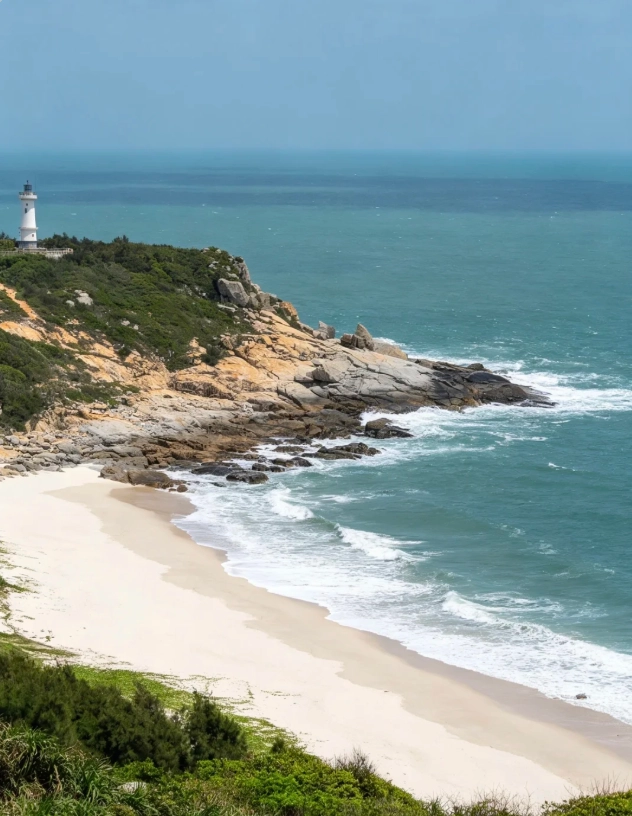
6. Eat Your Way Through Quanzhou's Old Quarter
Quanzhou is the food capital of Fujian, period. Start at West Street (西街) and work your way to the Qingjing Mosque. You'll find giant oysters, gluten snack 'beitang,' and the city's famous satay beef soup.
A specific dish you must try: rou zong (肉粽) — the gluey rice dumplings stuffed with pork and chestnuts. Street vendors along West Street sell them all day — my favorite is the one served with a smear of sweet chili paste.
The old town is now a UNESCO World Heritage site, but the real show is the night scene. At 7 PM, the streets fill with families eating outside, and the temperature drops to perfect strolling weather.
7. Cycle Along Xiamen's Scenic Huandao Road
This 43-kilometer coastal path is the best free activity in Xiamen. Rent a bike from any of the stalls near Xiamen University — around RMB 30 per day. The best section is from White Castle (白石炮台) to the International Forest Garden — about 12 kilometers of almost traffic-free riding with sea views and gentle breezes.
Start at 6 AM to catch the local joggers and avoid the midday sun. Bring your own water — the official rental shops are few and far between. Note: the road is flat, so even casual riders will find it easy.
How to Avoid Crowds at Fujian's Top Attractions?
Every spot in Fujian has a magic window when the tour buses disappear. Here's the cheat sheet:
- Mount Wuyi: arrive at the gate by 6:30 AM; the Tianyou Peak trail is empty until 9 AM.
- Tulou villages: stay overnight and explore at dawn — by 9 AM, groups flood in.
- Gulangyu: take the first ferry (7:00 AM) and rush to Sunlight Rock.
- Three Lanes and Seven Alleys: visit after 4 PM; the golden light and thinner crowds make it worthwhile.
- Pingtan: weekdays are dramatically quieter; weekends bring local tourists.
- Quanzhou Old Town: early morning (7–9 AM) for food markets, after 5 PM for temple visits.
- Huandao Road: sunrise is non-negotiable for a peaceful ride.
Lesser-Known Spots That Deserve More Time
If you have extra days, branch out to Xiapu for surreal mudflat photography, or Ningde's forest parks for authentic mountain villages. These are places I bring repeat clients who've already seen the main sights.
What's the Best Way to Get Around Fujian?
High-speed rail is the backbone of Fujian travel. It connects Xiamen, Fuzhou, Wuyishan, and Quanzhou efficiently. You can book tickets on the official China Railway (12306.cn) website — it has an English interface and works with international credit cards.
Buses and Ride-Hailing for the Gaps
For routes without rail (like Pingtan), long-distance buses are comfortable and cheap. Use the China Bus Guide app or ask your hotel to book the ticket. In cities, use Didi (like Uber) — it's popular and inexpensive. Show the driver an address in Chinese; you can get your hotel to write it down.
Surviving Payment and Wi-Fi in Fujian
China is nearly cashless, but a little preparation goes a long way. You'll need Alipay or WeChat Pay linked to your international credit card. Major tourist shops accept cards, but small restaurants and buses often require mobile payment. Always carry about RMB 200 in cash as backup.
For connectivity, Google Maps is blocked and doesn't work reliably. Download Apple Maps or AMap (Gaode) before you arrive. Use a reliable VPN to access blocked services, and install the Baidu Translate app for quick translations.
One more thing: ensure your passport is valid and check your visa requirements well ahead of time — the National Immigration Administration has the latest official info. Many visitors assume a Chinese visa is simple, but rules change. Verify early.
FAQ: Your Burning Questions About Fujian
Verified and fact-checked by the editorial team to ensure informational precision.







No comments yet.