 Ting Chen
What's Inside
Wet shoes. Cold spray. A roar that swallows your words. That's how I first met Huangguoshu Waterfall, and the memory still gives me goose bumps. After years of guiding travelers through Guizhou, I've learned that a weekend here isn't about cramming in every sight. It's about picking one epic moment and soaking it in.
Most tourists panic and try to see Huangguoshu, plus Maling River Canyon, plus the ancient city of Zhenyuan, plus... what? It's madness. I always tell my clients: base yourself in Guiyang, focus on one natural wonder, and let the rest go. You'll come home with memories, not motion sickness.
Here's the deal: the perfect Guizhou weekend is two half-day adventures in Guiyang and one full day at Huangguoshu. Trust me, you'll thank me later.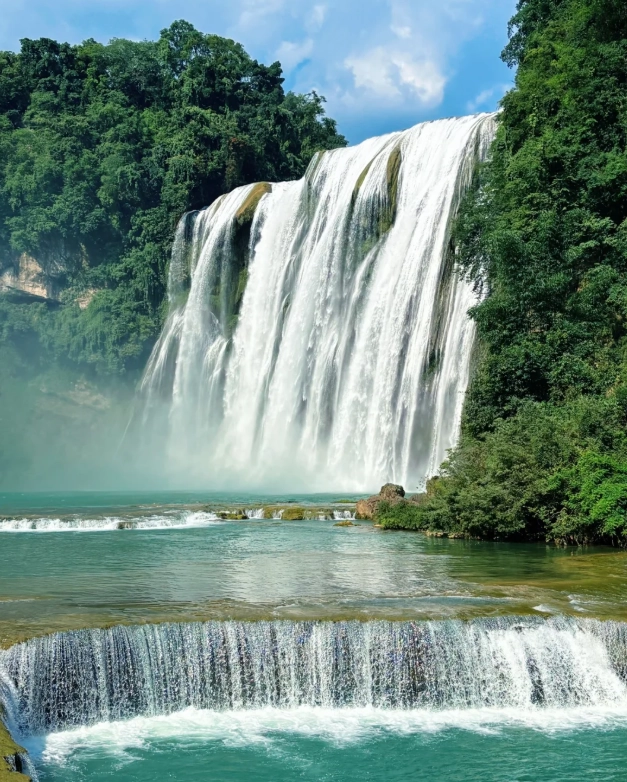
Why Spend a Weekend in Guizhou?
Guizhou, tucked away in southwest China, is often overlooked by travelers rushing between Shanghai and Chengdu. But those who stop here get rewarded with dramatic karst mountains, 49 million people from 49 ethnic minority groups, and a food scene that hits your palate like fireworks.
It's compact, too. You can have a meaningful trip in two full days, especially if you make Guiyang your hub. In fact, I often say that spending a weekend in Guizhou is like ordering a tasting menu—you get the essence without sacrificing quality.
Here's why this weekend escape works:
- Direct high-speed rail access from most major cities. From Guangzhou, it's only about 4 hours; from Chengdu, 3 hours.
- World-class scenery without the crowds of Yunnan or Sichuan.
- A culinary identity built around sour and spicy—unlike anywhere in China.
One thing I've learned the hard way: don't try to be a superhero. I once took a group to Guizhou for a "weekend" that included Zhenyuan, Huangguoshu, and Guiyang. We spent half our time in a car, not seeing the sights. If you really want to squeeze in more, the UNESCO-listed South China Karst in Libo is a spectacular extension, but it's better for a longer trip. For a weekend, stick to one focal point.
How to Plan a 48-Hour Guizhou Itinerary
Here's the skeleton. Adjust times based on your energy level.
| Time | Activity | Details |
|---|---|---|
| Day 1, 7:00 | High-speed train to Anshun | From Guiyang North Station, ~1 hr, ~50 RMB |
| Day 1, 8:30 | Tourist bus to Huangguoshu | From Anshun West Station, ~40 min, 22 RMB |
| Day 1, 9:30 | Explore the waterfall | 3–4 hrs, entrance ~180 RMB |
| Day 1, 14:00 | Return to Guiyang | Reverse journey, arrive ~4 PM |
| Day 2, 9:00 | Qingyan Ancient Town | 10 RMB, 1 hr from downtown |
| Day 2, 13:00 | Qianling Park | 5 RMB, monkeys, hike |
| Day 2, 17:00 | Jiaxiu Tower | Free, sunset/night views |
Day 1: Huangguoshu Waterfall & Beyond
Let's talk about the star of the show. Huangguoshu is the largest waterfall in Asia, and standing near it feels like being in a hurricane made of water. My biggest advice: start your day at 7:00 AM, no later. By 10 AM, tour groups swarm the boardwalks and selfie sticks turn into weapons.
Getting there is straightforward. Take the high-speed train from Guiyang North Station to Anshun West Station—it's about 50 minutes and you'll have a seat. From Anshun West, hop on the dedicated tourist bus (22 RMB, 40 minutes) that drops you directly at the scenic area gate. If you're feeling splurgy, a taxi is about 100 RMB and saves you 20 minutes.
At the entrance, you'll need your passport. Advance booking is mandatory. You can reserve through Trip.com or the official WeChat mini-program, but honestly, just ask your hotel to book it for you—the mini-program is entirely in Chinese, and even I get lost sometimes. (Yes, I said it.) For official entry requirements, the National Immigration Administration provides clear guidelines on required travel documents—check before you go.
Once inside, don't just head to the main viewpoint. Walk the boardwalk behind the waterfall—you'll get drenched, but it's an experience you'll never forget. Bring a lightweight raincoat; the mist won't miss you.
Afterwards, take the scenic shuttle to the nearby Doupotang Waterfall and Tianxingqiao. Most tourists skip these, but they're hidden gems with fewer people.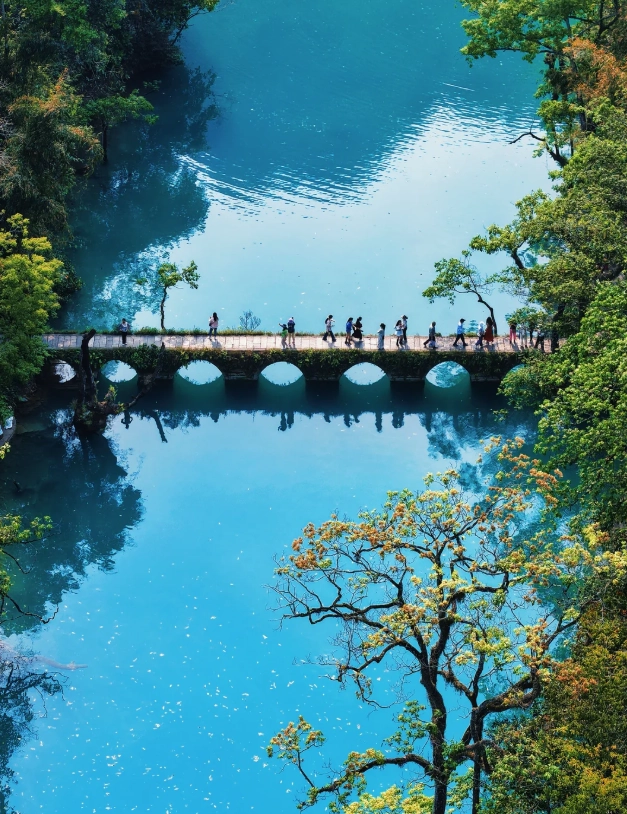
Day 2: Guiyang's Cultural Treasures
Today opens at Qingyan Ancient Town, a Ming-dynasty fort town with cobblestone streets and an impressive ancient wall. Arrive before 10 AM to beat the tour groups. The entrance fee is just 10 RMB, and you can wander for two hours. Don't miss the stately Confucian temple in the center.
Back in the city, make a beeline for Empress Hill Park—locally known as Qianling Park. It's 5 RMB entry, and the resident monkeys are the real stars. Here's the catch: they will snatch any plastic bag or water bottle they see. Keep your stuff zipped in your backpack. The 90-minute climb up to Hongfu Temple is worth it for a sweeping view of the city.
In the late afternoon, head to Jiaxiu Tower on the Nanming River. It's free, and the stone bridge at sunset is postcard-perfect. Most travelers forget it, but there's a small museum inside with exhibits about Guizhou's ethnic minorities. It's a great place to warm up when the weather dips.
What to Eat in Guizhou – Must-Try Dishes
Guizhou food is the definition of "acquired taste." It's aggressively sour and spicy, thanks to the region's preserved pickles and fresh chilis. If you only try one thing, make it Sour Fish Soup (suantangyu). It's a bubbling pot of fish in a citrusy, chili-laced broth with herbs.
For a quick meal, head to Xiangke Kao Nao Hua (肠旺面) on Provincial Street. It's a noodle shop that's been frying up intestines and blood sausage for decades. Odd ingredients, I know, but the spicy oil and springy noodles are addictive. A bowl costs 12 RMB, and yes, you're eating inside a place that's seen better days—that's the charm.
Vegetarians, don't fret. Seek out "miandoufu" —grilled tofu cubes served with a vinegary dip. My guilty pleasure is buying them from street carts near Anyun Road after 6 PM.
For a sit-down meal, try Erwan Paigu (二万排骨) on Hequn Road—their braised ribs are tender enough to carve with a spoon. Budget about 40 RMB per person for a feast.
Remember: not all spicy is the same. The heat here builds slowly, so don't go overboard with the chili flakes on your first try.
Where to Stay in Guizhou – Best Areas
For a weekend in Guizhou, you'll be based in Guiyang. Choose your base based on your priority: if you want to be around food and nightlife, stay near Hequan Street. If you prefer a quieter start, look at Wudang District.
| Area | Pros | Cons | Est. Price (per night) | Best For |
|---|---|---|---|---|
| Hequan Street | Central, street food heaven | Noisy till midnight | 200–400 RMB | Foodies |
| Qingyan town | Ancient charm, quiet | 40 min from city | 150–300 RMB | Couples |
| Near Jiaxiu Tower | Scenic riverside | Limited metro access | 300–500 RMB | First-timers |
| Airport area | Convenient for early flight | No nightlife | 150–250 RMB | Transit travelers |
Most budget hotels accept foreigners, but always confirm before booking.
How to Get Around Guizhou for a Weekend
Navigating Guizhou's public transport is easier than you think, but you need the right tools.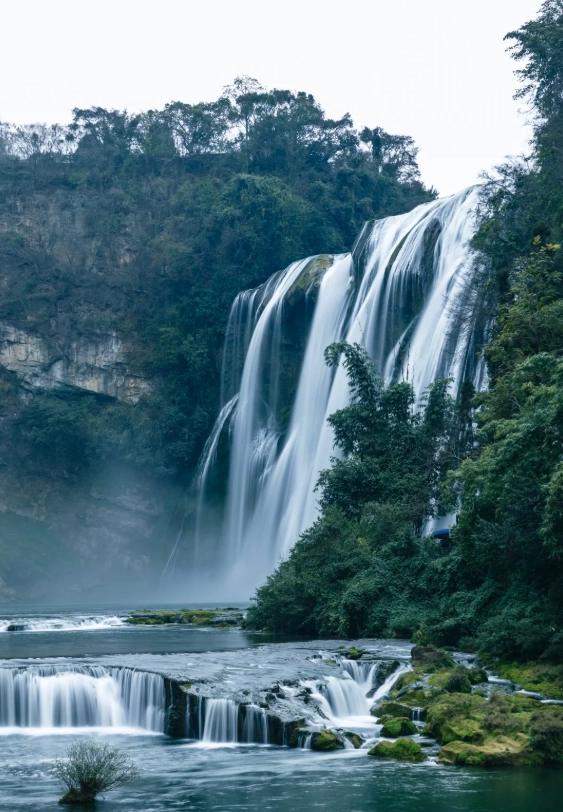
Payment
You won't get far with cash or credit cards. Set up Alipay or WeChat Pay before you arrive—you can link your international Visa or Mastercard to both apps. Almost every vendor, from shrines to sunset cruises, accepts one of them. For metro tickets, just scan your phone at the gate.
If you're stuck, some hotels handle payments for you, but it's a pain. Download the apps and test them with a small transaction at a convenience store.
Navigation
Google Maps is useless in China—it's blocked and inaccurate. Use Apple Maps for walking directions, or better, download Amap (AMap Global) and switch it to English. It gives you accurate bus times and even lets you book ride-hailing from the app.
For long-distance trains, you have to book through the official China Railway system (12306.cn). The English version of the app works, but it sometimes rejects international cards—call the office or use Trip.com instead.
FAQ – Answers to Your Guizhou Weekend Questions
This content has been fact-checked to ensure informational precision.





No comments yet.