 Qiang Huang
📌 Quick Guide
- Why Shanghai Hongqiao Railway Station Is Different
- How to Get to Shanghai Hongqiao Railway Station
- What to Expect Inside the Station
- How to Buy Train Tickets at Shanghai Hongqiao
- Step-by-Step: From Arrival to Boarding
- Transferring Between the Railway Station and the Airport
- Insider Tips to Save Time and Stress
- Frequently Asked Questions
Stepping out of the metro at Shanghai Hongqiao Railway Station feels like being swallowed by a concrete whale. Overwhelming. Exhausting. Yet completely conquerable. I have guided hundreds of foreign tourists through this massive transit hub, and I can tell you this: the chaos is manageable if you know exactly what to expect. In this guide, I'll walk you through every critical step — from buying your train ticket to racing to your gate — with the exact tips I give my own clients.
Let me save you the panic: the biggest mistake most foreigners make is arriving without a plan. You need your passport, a pre-booked ticket (or a strategy to buy one quickly), and the knowledge that Google Maps will not work here. Yes, you heard me right. But don't worry — I've got your back.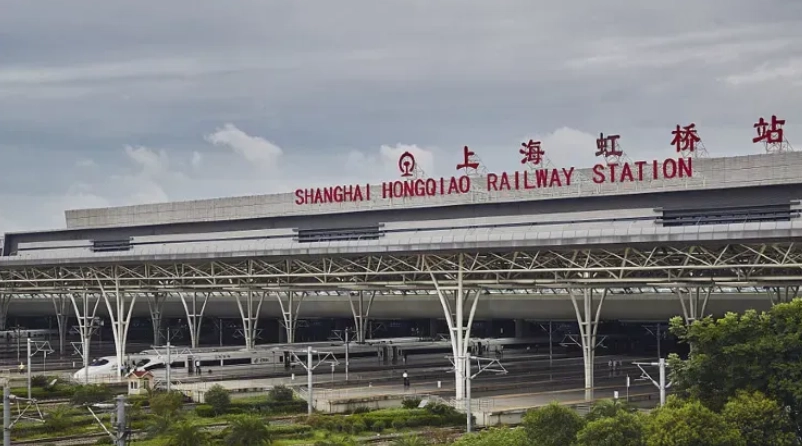
Why Shanghai Hongqiao Railway Station Is Different
Shanghai Hongqiao Railway Station is not just a station; it's a city within a city. Opened in 2010, it's one of China's largest railway hubs, serving millions of passengers annually. Unlike older stations in Shanghai, Hongqiao was designed for high-speed rail and integrated with the airport, Metro, and long-distance bus services.
The station is divided into two main levels:
- Departure level (2F): Where you go through security and wait for your train.
- Arrival level (1F): Where you exit if you're arriving, and where taxis and buses pick up.
There's also an underground level with Metro lines and parking. Understanding this layout is key to moving quickly. Many foreigners get lost because they confuse the arrival and departure levels — a common mistake.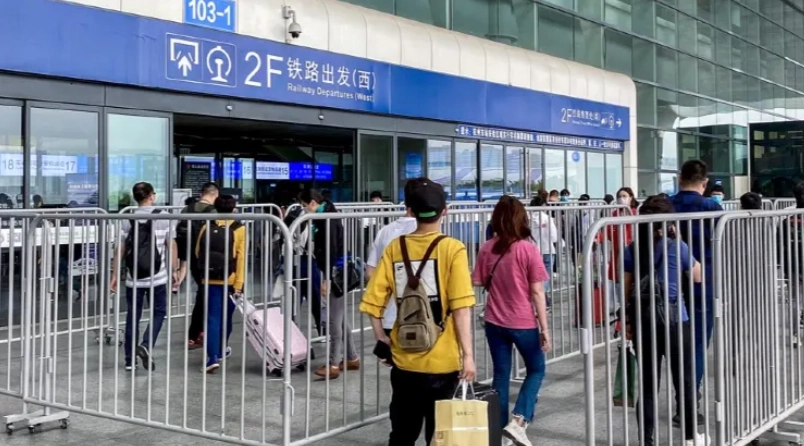
How to Get to Shanghai Hongqiao Railway Station
Getting to the station is straightforward, but the best method depends on where you're starting.
By Metro
The metro is the most reliable and affordable option. Lines 2, 10, and 17 all serve the station.
- Line 2 connects from the city center (People's Square) — roughly 30 minutes.
- Line 10 runs from Yuyuan Garden, Nanjing East Road, and other central spots.
- Line 17 connects to Qingpu District and Zhujiajiao water town.
All lines stop at "Hongqiao Railway Station." Once you exit, follow the signs to "Exit to Railway Station." You'll emerge directly into the station's arrival level.
Metro fare: 3–5 RMB depending on distance. Trains run from about 5:30 AM to 11:00 PM.
By Taxi or Ride-hailing
Taxis are convenient but can be slow during rush hour. If you use a ride-hailing app like DiDi (the local equivalent of Uber), note that drivers will ask you to meet them at a specific parking area. The most common pickup spots are:
- P9 Parking Lot (for arrival level pickup)
- South Departure Gate (if you're being dropped off)
I always tell my clients: avoid the taxi drivers who approach you inside the station with hand-written signs. They often charge three times the standard rate. Instead, use DiDi or follow the official taxi queue outside — it's entirely safe.
For a typical ride from People's Square, expect to pay 40–60 RMB and take about 20 minutes without traffic.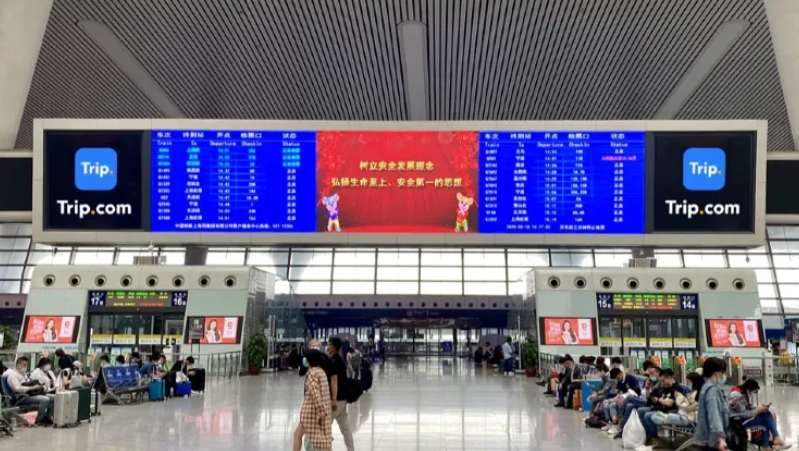
By Bus
Several airport express buses and city buses stop at the station, but they're less frequent. Unless you're coming from a long distance, Metro is more reliable.
| Transport Mode | Travel Time from City Center | Estimated Cost | Best For |
|---|---|---|---|
| Metro Line 2 | 30–40 min | 3–5 RMB | Budget travelers |
| Taxi | 20–30 min | 40–60 RMB | Those with heavy luggage |
| Ride-hailing (DiDi) | 20–30 min | 35–60 RMB | Tech-savvy travelers |
| Bus | 45–60 min | 2–4 RMB | Those near bus routes |
What to Expect Inside the Station
The station is well-organized once you know your way. On the departure level (2F), you'll find:
- Security check area: Everyone entering the departure hall must pass through security. This includes your bags and a body scan. It usually takes 5–10 minutes, but during holidays, it can stretch to 20 minutes.
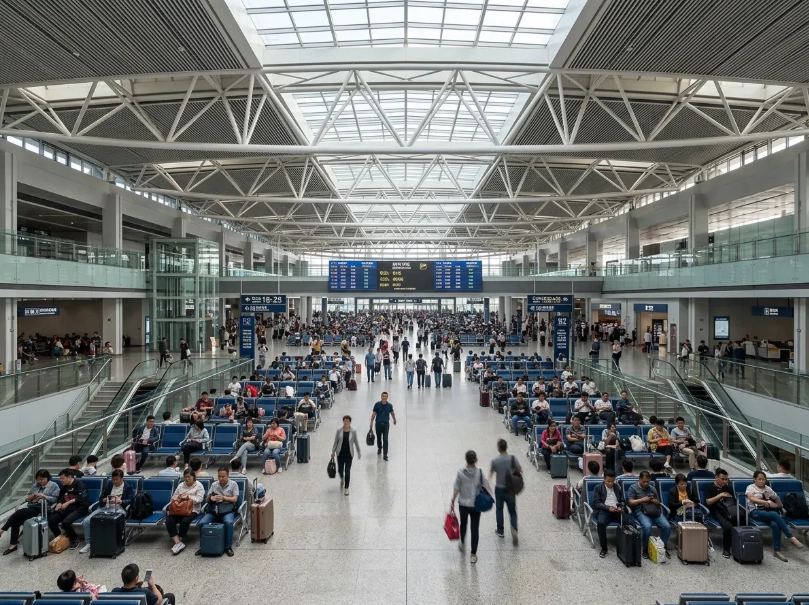
- Waiting halls: There are several waiting areas, each with seats and electronic boards showing train departures. Look for your train number and corresponding waiting area.
- Shops and restaurants: You'll find convenience stores like FamilyMart and 7-Eleven, plus fast-food chains like KFC and McDonald's. Prices are slightly higher than outside, so I recommend picking up snacks before you arrive.
- Charging stations: You'll find USB ports and electrical outlets near some seats. But these fill up quickly — bring a power bank just in case.
One insider tip: the restrooms near the main entrance are often extremely crowded. Walk further into the station, and you'll find quieter ones with shorter lines. Trust me, I've been embarrassed too many times to lead my group into the first one.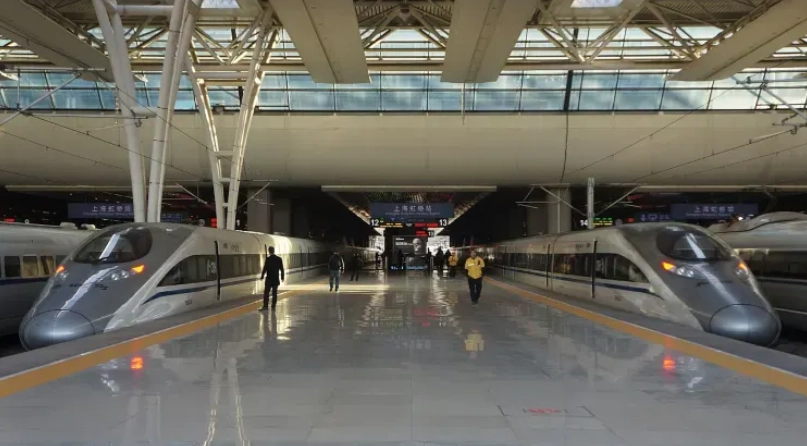
How to Buy Train Tickets at Shanghai Hongqiao
Buying tickets can be the most confusing part for foreigners. Here are your options:
Option 1: Book Online Ahead of Time (Recommended)
The official railway website, 12306.cn, is the only direct source, but it's entirely in Chinese and requires a Chinese phone number to register. That's a pain for tourists.
The easiest way is to use an international booking platform like Trip.com or Klook. These sites offer English interfaces, accept international credit cards, and deliver e-tickets that you can scan directly from your phone. I always book for my clients this way — it saves so much hassle.
When booking, you'll need your passport number and full name. Keep your passport handy; you'll need it at the station.
Option 2: Buy at the Station
If you don't have a ticket, you can head to the ticket hall on the arrival level (1F). There are both staffed windows and self-service machines.
This is where the catch appears: the self-service machines are usually set to Chinese only. Let me save you the trouble: do not wait in line for the machines. Go directly to a staffed window. Many of the staff speak basic English, and even if they don't, they are used to helping foreigners. Just show your passport and say your destination.
Payment: The machines and counters accept cash, but exact change is preferred. International credit cards are often not accepted at the station counters — only Chinese bank cards or mobile payments. So if you're paying on-site, have cash on hand.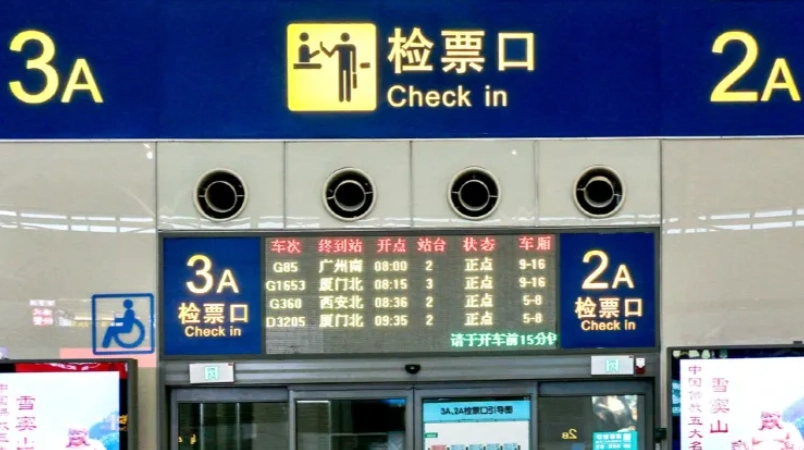
Important: Paper Tickets vs. E-Tickets
Chinese railways are moving toward paperless travel. With an e-ticket, you get a QR code on your phone. To use it at the gate, simply scan your passport and the QR code. You don't need to collect a paper ticket. However, if you buy at the station, you'll likely get a paper ticket — that works as well.
Step-by-Step: From Arrival to Boarding
Let me walk you through the entire process so you're not fumbling at the door.
- Arrive at the correct level: If you're being dropped off, ask to be taken to the "South Departure Gate" or simply "Departure Level 2F." If you arrive by Metro, follow the signs to "Ticket Climbing" or "Departure."
- Pass security: Keep your passport and ticket (or QR code) ready. You'll go through a metal detector, and your bags will be scanned. Remove any liquids? Actually, China allows small amounts of liquids, but avoid carrying large bottles. Place your phone and keys in the tray.
- Find your waiting area: Look at the big electronic boards. They show train numbers, departure times, and waiting areas. These are usually marked "Waiting Room 1," "2," etc. Cross-check your train number.
- Wait for the boarding announcement: About 10–15 minutes before departure, the boards will update with the "Gate" or "Platform" number. Follow the signs to the gate. There might be a second security check at the gate? Usually no, just scan your passport and QR code at the turnstile.
- Board the train: Once you pass the turnstile, you'll drop down to the platform. Find your carriage number marked on the platform floor, and board.
Pro tip: The station is huge, and your gate might be a 10-minute walk away. If you have less than 15 minutes before departure, don't stop for snacks — head straight to the gate.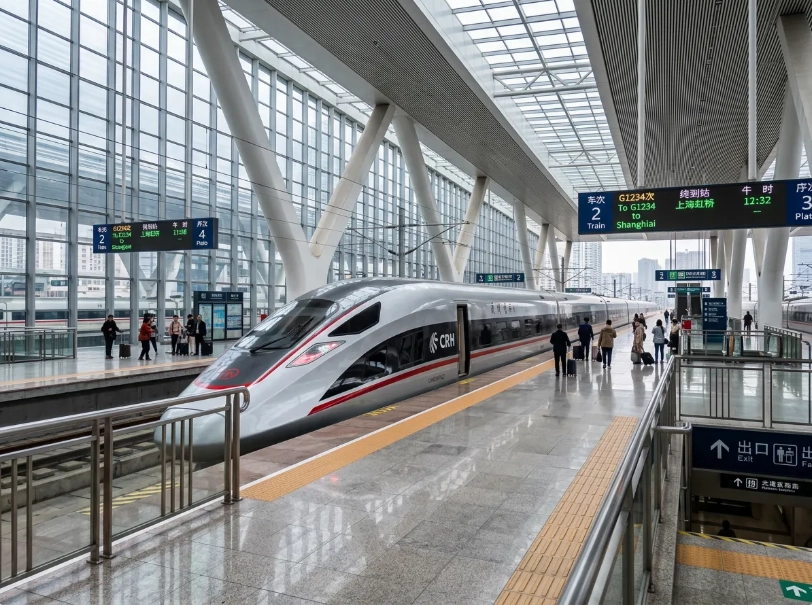
Transferring Between the Railway Station and the Airport
Hongqiao Airport is about a 15-minute indoor walk from the railway station. The airport has two terminals:
- T2 (domestic flights) is directly connected to the railway station via a pedestrian corridor.
- T1 (mostly international flights like some regional routes) is farther away. You'll need to take a free shuttle bus or a short taxi ride (about 10 minutes).
For international flights, remember that Shanghai's main international airport is Pudong (PVG), not Hongqiao. Hongqiao mainly handles domestic flights and a few flights to Tokyo, Seoul, and Singapore. If you have an international connection, you might need to transfer to Pudong — that's a 45-minute Maglev ride or 1-hour taxi. Plan accordingly.
To get to T2 from the railway station, follow the signs for "Hongqiao Airport Terminal 2." The walkway is indoor and air-conditioned. If you have heavy luggage, there are moving walkways for part of the route.
Insider Tips to Save Time and Stress
- Leave early: The station can be chaotic on Fridays and Sundays evening, when everyone travels. If your train departs before 8 AM or after 5 PM, arrive at least 90 minutes in advance.
- Use the right exit when leaving: When you arrive at the station, if you need to take a taxi or DiDi, go to the arrival level and look for designated ride-hailing pickup areas. Avoid the crowded main exits; go toward the "P6" or "P9" parking areas where drivers commonly pick up.
- Don't rely on Google Maps: It's unreliable in China. Instead, use Apple Maps or download the AMap app (use international version). For the station itself, the physical signs are bilingual, so you can follow them.
- Keep your passport with you: You'll need it for every ticket check. Never leave it in a suitcase in the overhead rack — you might need to show it again on the train.
- Watch your luggage: The station is busy, and unattended bags are a risk. Absolutely do not leave your bag with a stranger. Use the official luggage storage service if you have a long layover (located near the arrival level, ask any staff member).
Frequently Asked Questions
Now, let me wrap up. Shanghai Hongqiao Railway Station might look intimidating at first, but with this guide and a positive attitude, you'll navigate it like a pro. The key is to book your ticket in advance, carry your passport everywhere, and leave a little extra time. I've brought countless tourists through this station without a single meltdown — and you can be one of them.
Safe travels! If you found this helpful, share it with a friend who's planning a trip to China.
Verified and fact-checked by the editorial team.






No comments yet.