 Bo Wu
Bo Wu
Quick Guide
I've been dragging groups through Chinese airports, train stations, and temple complexes for over a decade. And let me tell you — the rules on China travel restrictions have changed more times than I've changed shirts on a humid Beijing afternoon. You might have Googled “is China open for tourism?” and gotten a mess of contradictory updates. Here is the unfiltered truth.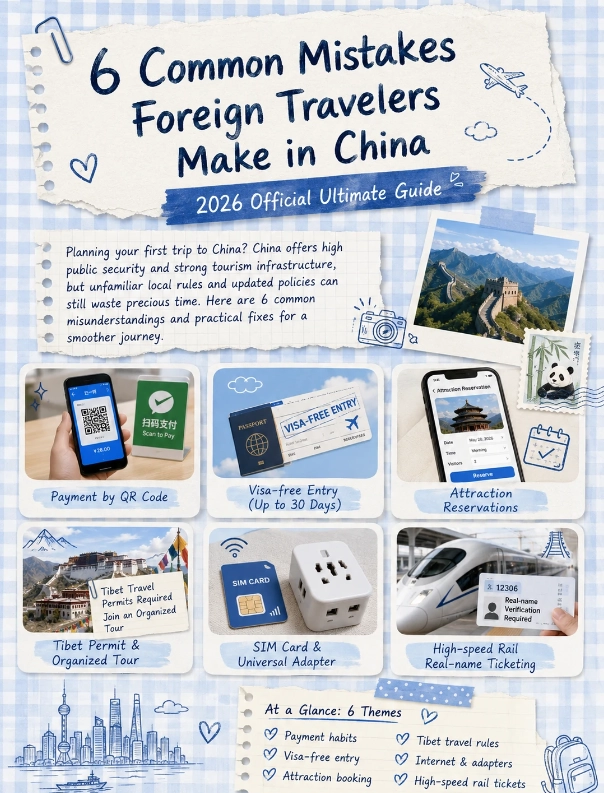
Is China Actually Open for Tourism?
Short answer: yes. China resumed issuing all types of visas for foreigners in early 2023, and direct international flights are slowly coming back. But don't expect the pre-2020 ease. Every foreigner entering must have a valid visa or meet one of the few visa-exemption conditions (transit, APEC card, etc.).
One thing that drives me crazy: many travel blogs say “China is fully open!” — they forget to mention that you still need a visa for most nationalities, and the visa application process can be a bureaucratic circus. I've had clients show up at the embassy without a confirmed flight itinerary (required). Don't be that person.
Visa-Free Transit: The Golden Loophole
If you're just passing through, you might qualify for 144-hour visa-free transit. Available at major ports like Beijing, Shanghai, Guangzhou, and Chengdu. You can stay up to 6 days, but you cannot leave the designated region (e.g., Beijing & Hebei, or Jiangsu-Zhejiang-Shanghai). I've used this myself when leading a short layover tour. It works, but you must have a confirmed onward ticket to a third country (not back to your origin) and stay within the allowed zone.
Check the official National Immigration Administration website for the latest list of eligible ports and regions.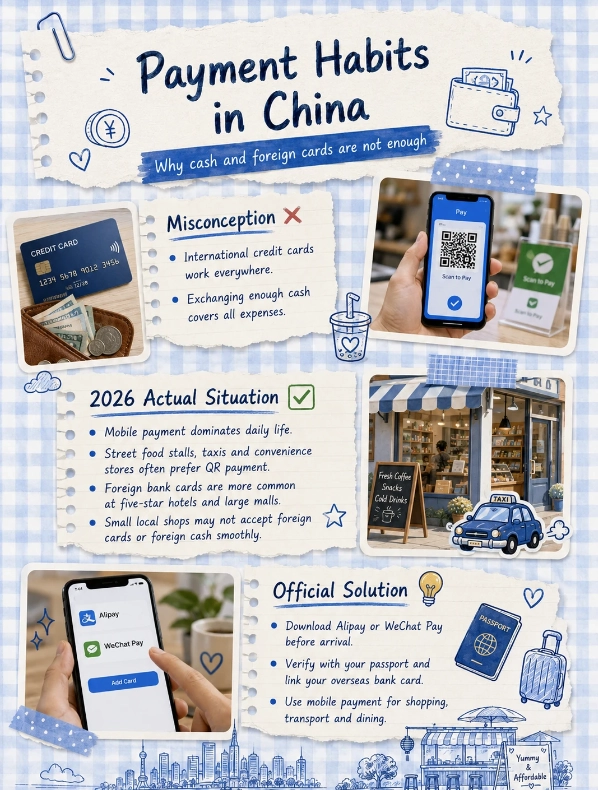
The Visa Maze: Which One Do You Need?
Unless you qualify for visa-free transit, you'll need a visa. The most common types are:
| Visa Type | Best For | Stay Duration | Entry |
|---|---|---|---|
| L (Tourist) | General tourism | Up to 60 days | Single/double/multiple |
| M (Business) | Meetings, trade | Up to 90 days | Single/double/multiple |
| Q2 (Family visit) | Visiting relatives | Up to 120 days | Multiple entries |
| G (Transit) | Visa-free transit extension | 144 hours max | Single |
A common mistake: assuming a 10-year US visa can get you in. No, you still need a Chinese visa (except for a few nationalities under bilateral agreements). Always verify with the closest Chinese embassy or consulate.
Processing time: about 4-7 business days, but I've seen it stretch to 10 during peak seasons. Don't book non-refundable flights before you hold the visa in hand.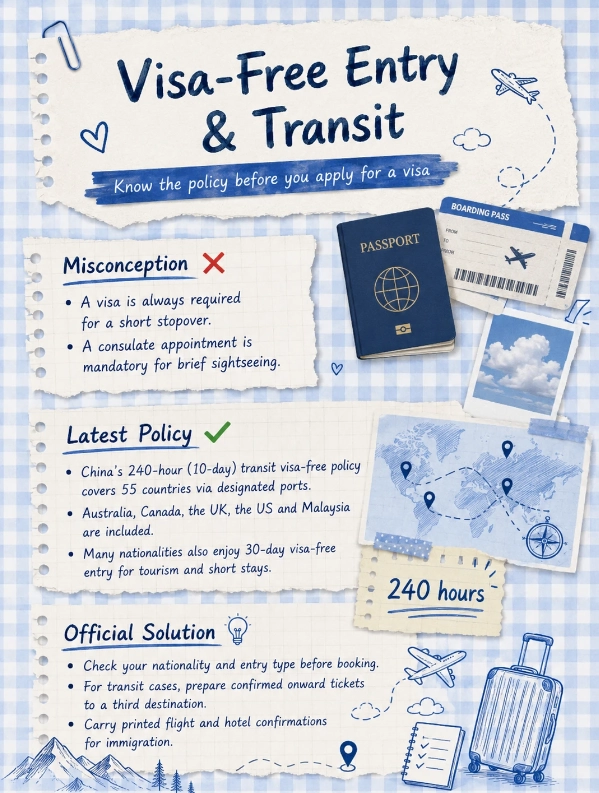
Digital Payment: The Real Gatekeeper
Here is the single biggest frustration I see with first-time travelers. China is basically a cashless society. Even street food vendors accept only QR codes. Your Visa/Mastercard is useless in 90% of daily scenarios.
You must set up Alipay or WeChat Pay before arrival. Since 2023, both allow linking foreign credit cards (Visa, Mastercard, Amex). But the setup process is finicky. Do it at home with a stable internet connection. Download the app, register with your passport, add your card. Note: some merchants only accept Chinese bank accounts, but with the international card option you'll cover maybe 80% of places.
Cash: Still Accepted (Kind Of)
You can still use cash in large hotels, some restaurants, and taxis. But expect to get annoyed looks, and you won't receive change in small denominations. I always tell my clients: carry about 500 RMB in small bills for emergencies (like paying a random farmer for directions), but rely on AliPay for almost everything.
Also, Google Maps is useless in China. It doesn't provide accurate walking directions. Use Apple Maps (surprisingly good for English speakers) or Baidu Maps with a translation app. When taking a taxi, always show the Chinese address on your phone. I've prepped a screenshot of the hotel's Chinese name — saves so much hassle.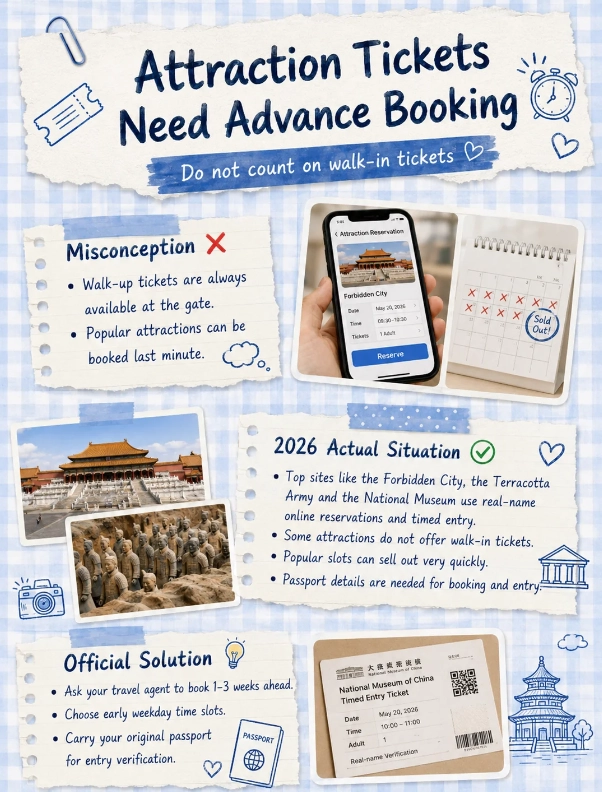
VPN & Connectivity: Staying Online
Another unspoken restriction: the Great Firewall blocks Google, Facebook, Instagram, WhatsApp, Twitter, and many news sites. To access them, you need a reliable VPN installed before you leave home. Download and test it in your home country. Many VPNs are blocked or slowed inside China. I personally use ExpressVPN and Astrill — they work most of the time, but even those can go down.
For translation: Apple Translate works offline and is more accurate than Google Translate. Also, Baidu Translate app is fantastic for menu scanning.
Booking Attractions: Hidden Hurdles
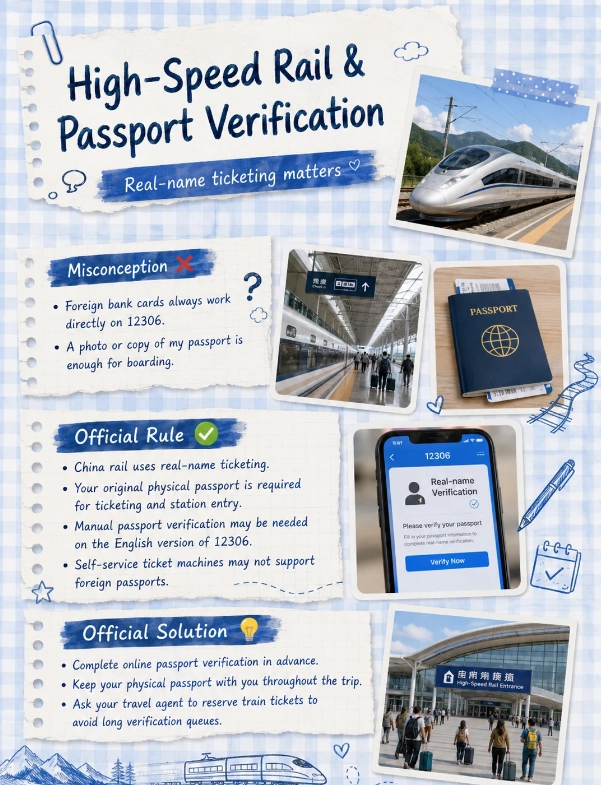
Almost all major attractions in China require advance reservation with your passport number. The Forbidden City, Great Wall (certain sections), Zhangjiajie, etc. The official booking systems are usually in Chinese (WeChat mini-programs). For foreign tourists, I recommend using Trip.com or Klook — they handle the booking for you, often at the same price. You'll still need to bring your physical passport to enter.
What many articles don't tell you: even if you book through a platform, the ticket is linked to your passport. If you lose your passport, you lose your tickets. Happened to a guy in my group. We had to waste half a day at the embassy to get a temporary travel document.
Also be aware of time slots. The Forbidden City, for example, only allows entry during your designated window (e.g., 8:30-10:00). Arrive late? You're denied.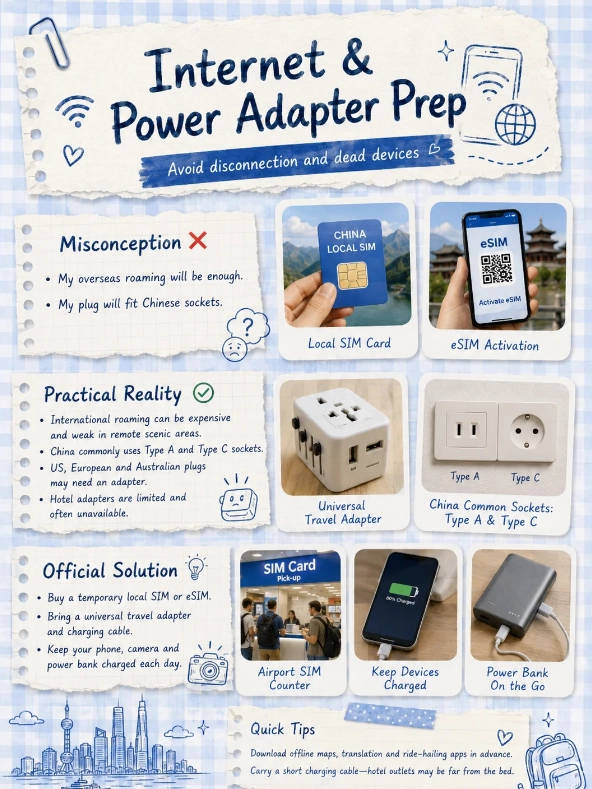
| Attraction | Booking Needed? | Platform for Foreigners | Passport Required? |
|---|---|---|---|
| Forbidden City | Yes, 7 days ahead | Trip.com / WeChat | Yes |
| Great Wall (Badaling) | Yes, 1-5 days ahead | Official site / Klook | Yes |
| Terracotta Warriors | Yes, 3 days ahead | Trip.com / WeChat | Yes |
Practical Tips from a Tired Guide
Over the years, I've compiled a short list of things that save my clients from meltdowns:
- Download Alipay and WeChat before you fly. Link your foreign credit card at home. If you wait until arrival, the slow airport Wi-Fi and lack of patience will haunt you.
- Bring a physical credit card that works at ATMs. Sometimes you need to withdraw cash for rickshaws or small stalls. Use a bank that doesn't charge foreign transaction fees.
- Have a backup of your passport (scanned and printed). Many hotels need it for check-in. Keep a color copy separate.
- Learn basic phrases: “where is the bathroom” (厕所在哪里), “thank you” (谢谢), and “I don't eat spicy” (我不吃辣). Your phone can translate, but a little effort goes a long way.
- Avoid national holidays like Golden Week (Oct 1-7) and Chinese New Year (January/February). Everything is packed and prices skyrocket. If you must travel then, book everything months ahead.








No comments yet.