 Chen Liu
Quick Navigation
You just booked a flight with an 18-hour layover in Shanghai. Your heart says “Visit the Bund,” but your brain screams “Visa nightmare!” Relax – I’ve guided hundreds of transit passengers through China’s visa‑free policy, and I’m here to walk you through it. No fluff, just real-world steps.
The first time I saw a passenger get turned away at immigration because his return ticket was to the same country, I knew this system is full of traps. Let me save you that headache.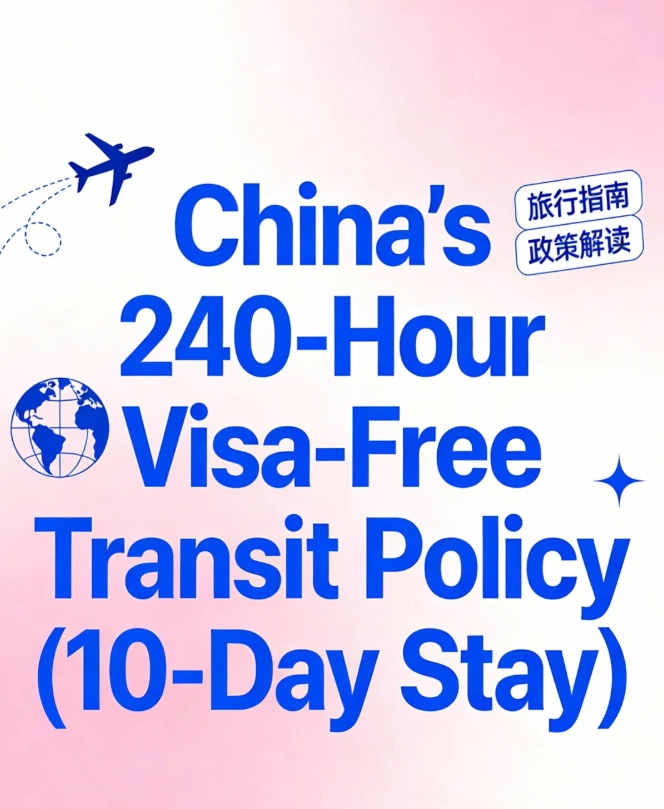
What Is China Visa-Free Transit?
China offers a temporary visa exemption for international travelers who are transiting through the country to a third destination. Depending on your port of entry and nationality, you can stay 24, 72, or 144 hours without applying for a tourist visa. You basically get a free city tour during your layover.
But here's the catch: you cannot leave the designated administrative zone (usually a city or a province), and you absolutely must have a confirmed onward ticket to a third country or region (Hong Kong, Macau, Taiwan count).
Who Qualifies? The 3 Golden Rules
Over the years, I've seen three conditions that get people stuck. Memorize them.
2. You must have a confirmed ticket to a third country. If your itinerary is Home→China→Home, you do NOT qualify. It must be Home→China→Another Country.
3. You must enter and exit through designated ports. Not all airports or seaports offer this policy. See the table below.
One thing most blogs won't tell you: even if your passport is eligible, some airlines might refuse to board you if they think you'll be denied entry. Always carry a printout of the official visa‑free transit policy from the Chinese embassy website.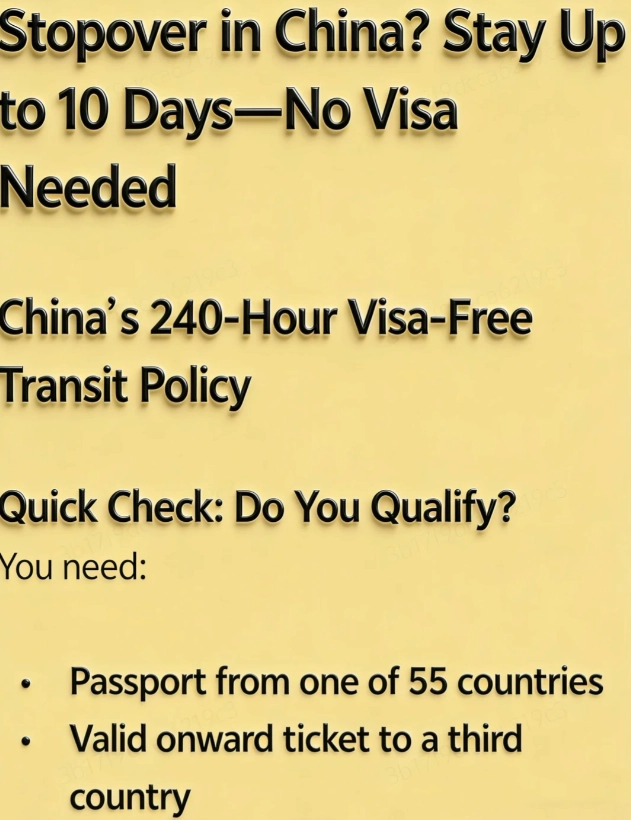
Eligible Cities & Zones (Table)
Not all cities allow 144-hour transit. Some only give you 72 or 24. I've compiled the most popular ones so you can plan your layover.
| City / Port | Granted Stay | Allowed Area | Entry/Exit Port |
|---|---|---|---|
| Beijing (Capital Airport) | 144 hours | Beijing, Tianjin, Hebei | Capital Airport only. Exit must be from same port or Tianjin/Shijiazhuang |
| Shanghai (Pudong + Hongqiao) | 144 hours | Shanghai, Jiangsu, Zhejiang | Any of the three provinces/seaport/airport |
| Guangzhou (Baiyun Airport) | 144 hours | Guangdong Province | Any Guangdong port (air/sea/land) |
| Chengdu (Shuangliu/Tianfu) | 144 hours | Chengdu, Leshan, Deyang, Mianyang, etc. (11 cities) | Must exit from Chengdu |
| Xi'an (Xianyang) | 72 hours | Xi'an city only | Xi'an Xianyang Airport |
| Chongqing (Jiangbei) | 72 hours | Chongqing municipality | Chongqing Jiangbei Airport |
Pro tip: If you're flying into Shanghai but your connecting flight is from Beijing, you can't use visa‑free transit. Both entry and exit must be within the same designated region (e.g., entry Shanghai → exit Shanghai or Nanjing).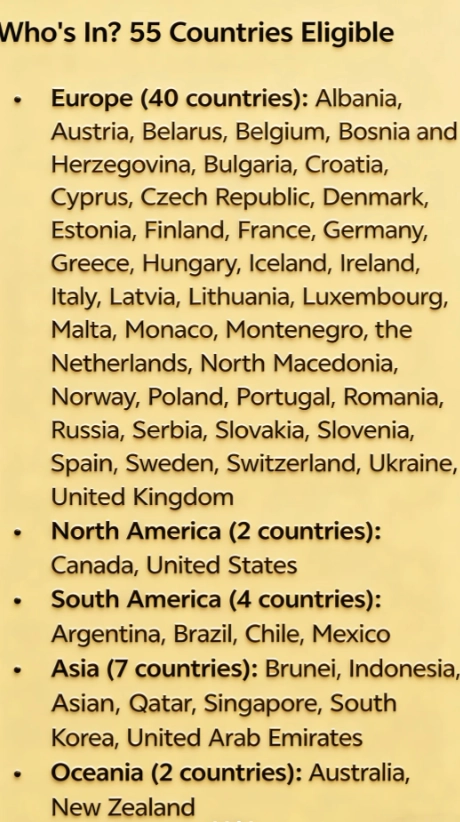
Step-by-Step Application at the Airport
Walk with me through a real scenario: you land at Shanghai Pudong (PVG).
1. Follow the “Transit Without Visa” signs
Ignore the horde heading to immigration for tourist visas. You're looking for a separate counter usually labeled “24/72/144-Hour Visa-Free Transit.” Sometimes it's not obvious – ask an airport staff member holding a tablet. I've seen passengers queue for 30 minutes in the wrong line because they assumed it was all the same.
2. Have these documents ready
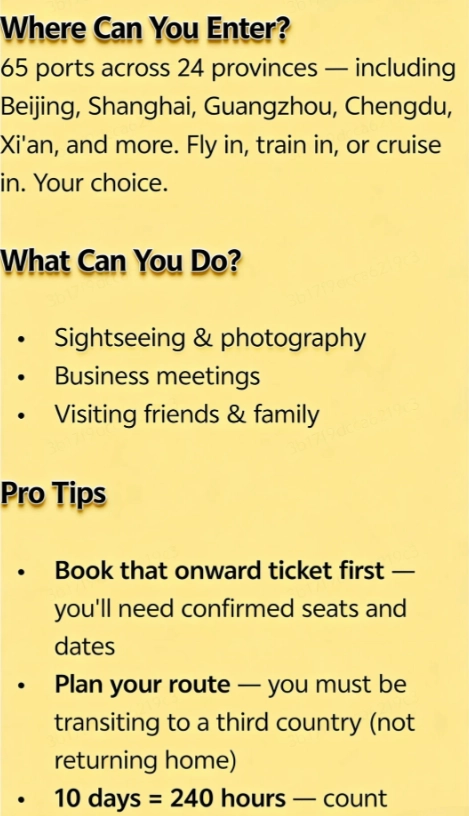
- Passport (valid for at least 3 months beyond your stay).
- Printed or digital copy of your onward flight itinerary (must show your name, flight number, and destination).
- Completed Arrival Card (you can fill it on the plane or in the queue).
- If you're staying overnight, a hotel reservation that covers the full period – immigration may ask for it (but rarely do in my experience).
3. Answer the officer's questions
They'll usually ask: “Where are you from? Where are you going? How long will you stay?” Keep it brief. They might also verify your flight to a third country. I always tell my clients to point to the flight number on the printed itinerary.
4. Get the temporary entry stamp
Once approved, you'll receive a small entry stamp with the exact exit deadline (e.g., “144 hours from 15:00 Nov 2”). Note: the clock starts ticking from midnight of the day you enter, not from the exact arrival time. So if you land at 10 PM on Monday, your 144 hours start at 00:00 Tuesday. That's an extra 2 hours of free time!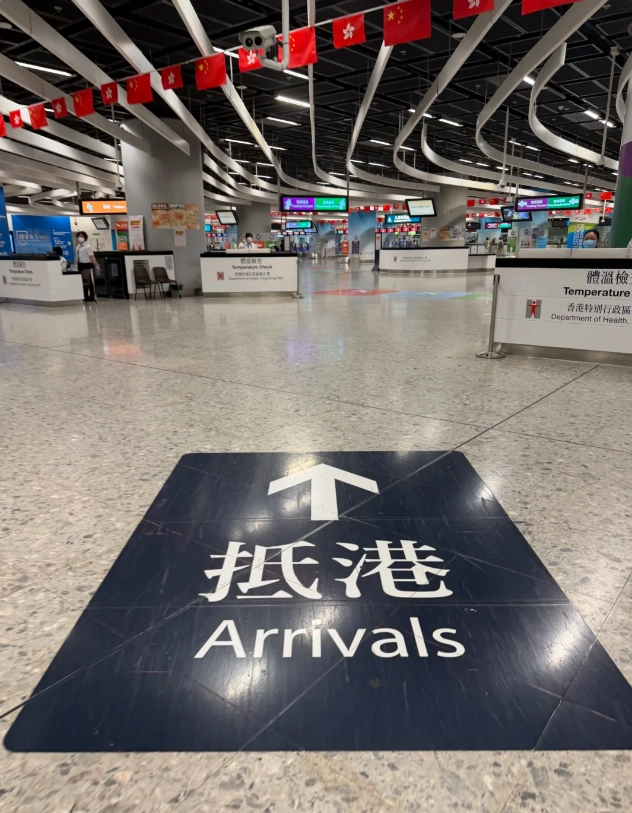
Insider Tips to Avoid Disaster
Here are things I've learned the hard way:.
- Never assume you can travel to another city outside the allowed zone. I had a passenger miss his flight because he took a train from Shanghai to Hangzhou (allowed) but then tried to go to Suzhou (also allowed within the zone – actually Suzhou is in Jiangsu, which is included). The rule is: stay within the boundary of the designated region. For Shanghai 144h, you can move freely within Shanghai, Jiangsu, and Zhejiang. But leaving to Beijing would be illegal.
- Check your airline's policy. Some budget carriers, especially Chinese ones, require you to have a visa even if transit policy covers you. Always call ahead. I've seen Spring Airlines deny boarding to a Russian passenger because their internal system flagged “no visa.” Show them the official policy.
- Have a backup plan if your connecting flight gets canceled. If your flight is delayed and you exceed the 144 hours due to airline fault, the airline usually arranges an extension. But if you voluntarily extend your stay, you'll be fined 500 RMB per day and might get a black mark.
- Money matters: You need cash. Most hotels accept foreign credit cards, but the airport taxi, street food, and even some metro stations only take Alipay or cash. Withdraw Chinese Yuan at the airport ATM using your international debit card. I recommend getting 300-500 RMB for a 24-hour layover.








No comments yet.