 Tao Xu
Let's be real — Chongzuo is not the first place most visitors think of when planning a trip to China. But that's exactly why you should go. I've been escorting travelers through this border region for years, and honestly, the 4 days in Chongzuo I'm about to share with you will beat any crowded super-city itinerary. From the thunderous Detian Waterfall to the quiet fields of Ming Shi, this trip is a sensory overload in the best way. — and if you're smart about it, you can dodge the crowds and the tourist traps that plague other routes.
You might have seen photos of Detian Waterfall on Instagram — but what the captions don't tell you is that your international credit card won't work at the ticket booth, and the local maps app might lead you to a dead-end dirt road. That's why I've built this guide around real, walkable logistics. Here's the secret: 90% of visitors come on weekend tours and all get funneled to the main viewing platform. If you arrive before 9 am or after 3 pm, you'll have the place almost to yourself. Save this advice — it'll save your trip.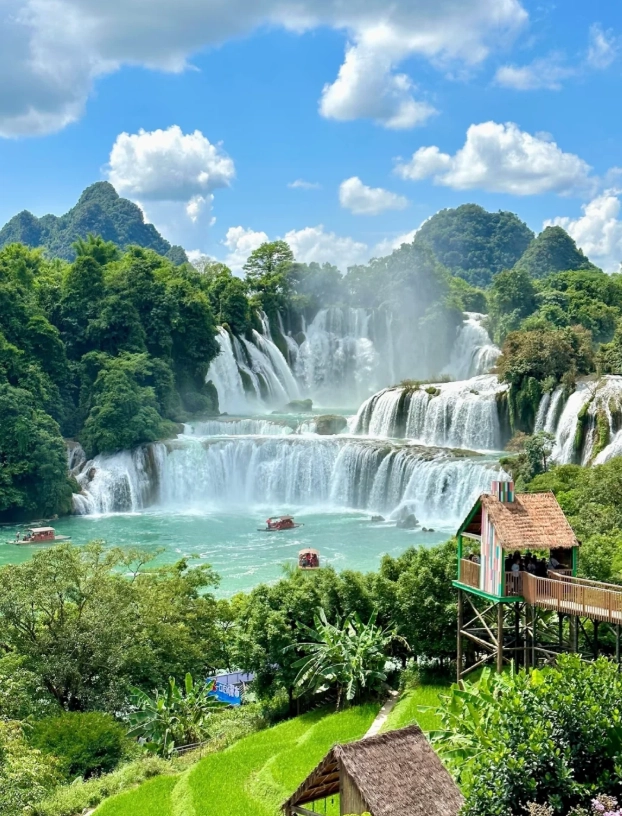
Why Spend 4 Days in Chongzuo?
Chongzuo is a border city that rewards slow travelers. Unlike the crowded Guilin or Yangshuo, this area offers raw karst mountains, tiered waterfalls, and Vietnamese-flavored culture — without the selfie-stick armies. I've lost count of how many times my clients tell me it's the highlight of their entire trip to China. In just 4 days, you can see the highest transnational waterfall in Asia, cruise through rice paddies that rival Yunnan, and stand where the Vietnam border literally cuts through the street. The region is also a natural birding hotspot — I once spotted 26 different species in a single morning on Ming Shi river.
But be prepared: the infrastructure is less polished than the east coast. You'll encounter broken English, payment hiccups, and roads that look shorter on the map than they actually are. That's exactly why I'm putting together this no-BS prep list.
How to Get to Chongzuo and Get Around
Your most efficient gateway is Nanning Wuxu Airport. From there, take the high-speed train to Chongzuo station — it's about 1 hour and costs around 60-80 RMB. Direct flights to Chongzuo exist but are scarce, so I always fly into Nanning and connect.
- Book your high-speed train ticket on 12306.cn or via Trip.com. Avoid buying at the station — the queue is unpredictable.
- Once you arrive at Chongzuo Station, use Didi (Chinese Uber) to reach your hotel. The taxi queue outside is overpriced — I've seen them charge double during rain.
- For rural areas like Detian or Ming Shi, rent a car with a driver through your hotel or Klook. It's the only reliable way.
Also, navigation: Google Maps is useless in this part of China. Download AMap (高德地图) and switch the language to English if possible — you'll need to show the Chinese characters to your driver anyway. And always carry the Chinese address of your accommodation; no one will recognize the English name.
The Perfect 4-Day Chongzuo Itinerary
I have fine-tuned this loop after leading over 20 groups. It's paced to avoid the biggest crowds, and includes my favorite backroad shortcuts.
Day 1: Detian Waterfall & Ming Shi Garden
Start early — as in 7 am early. Detian Waterfall opens around 8:30, and the parking lot is chaotic by 10. The entrance fee is around 80 RMB (kids under 6 free, seniors 60+ get discounts — bring your passport for any age verification). You must book tickets through the official WeChat mini-program; it's a nightmare to do on the spot. If you can't navigate the Chinese app, ask your hotel front desk to book for you — I've done it for dozens of clients. Or you can book through Trip.com or Klook, which are more foreigner-friendly.
The best photo spot is the third observation platform, not the main one. Follow the path left after the entrance and walk 15 minutes — you'll get the classic three-tier view without 100 people photobombing you. Insider nugget: bring a rain jacket. The spray from the falls is relentless, and you'll be soaked faster than you think. I once saw a guy with a $2,000 camera get blasted — he wasn't happy.
After Detian, drive to Ming Shi Garden (about 30 minutes). The entrance is around 80-100 RMB depending on season, and includes a bamboo raft ride through the rice paddies. Book your raft online in advance too — the offline ticket window is notoriously slow. The ride takes 40 minutes, and sunset light turns the karst peaks a soft gold. This is where you should have dinner. Most tour groups leave by 6 pm, so you'll have the river views to yourself. Try the local roasted duck with bamboo shoots — it's a regional specialty. I always ask for a table by the window.
Stay overnight at a village homestay near Ming Shi Garden — more on that in the accommodation section.
Day 2: Karst Countryside & Huashan Rock Art
Option A (my favorite): Rent an e-bike and explore the back roads. Many homestays rent e-bikes for 30-50 RMB per day. Head north toward Longming Village — the karst peaks here are untouched by tourist development. You'll pass water buffalo, cornfields, and local women washing clothes in the river. This is the real Guangxi, not the postcard one. I tell everyone to download the offline map before heading out — the signal disappears in the valleys.
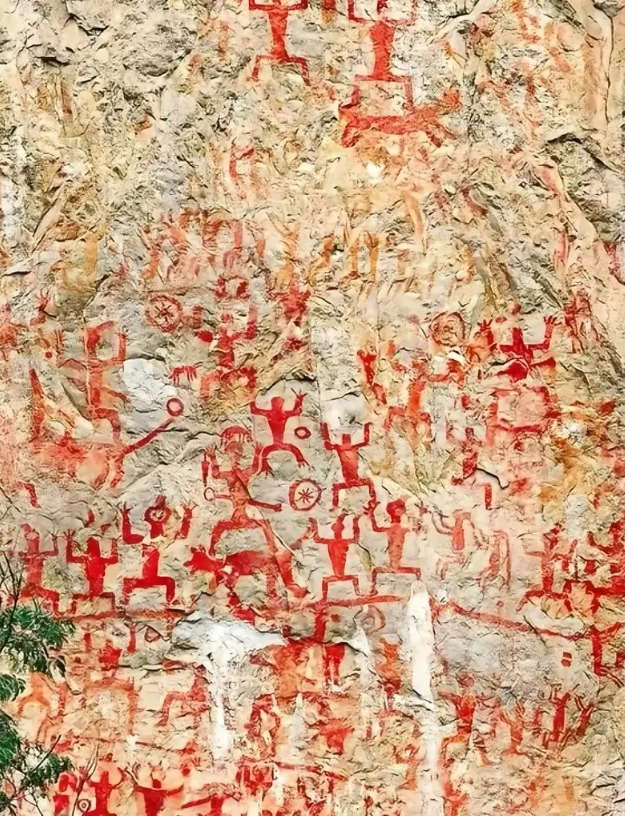
Option B for history buffs: Huashan Rock Art. This UNESCO World Heritage site has ancient paintings on sheer cliffs, reached by boat. The boat ride itself is 2 hours, and the paintings are mind-boggling — but the on-site interpretation is almost entirely in Chinese. If you're not into archaeology, skip it. If you go, bring a flashlight and mosquito repellent; the boat pier has zero shade.
In the afternoon, drive to Pingxiang (about 1.5 hours). The border town feels completely different — French-influenced colonial buildings mix with Vietnamese markets. Walk along the Friendship Street where cross-border vendors sell everything from coffee to plush toys. For dinner, don't miss the Vietnamese spring rolls and pho — you won't get fresher ones outside Vietnam. There's a small food court right next to the border crossing; the signage is in Chinese and Vietnamese, and prices are wildly cheap.
Day 3: Friendship Pass (Youyi Guan) and Border Culture
Friendship Pass is the most important land border between China and Vietnam. It was already a frontier in the Han Dynasty. The admission fee is around 50 RMB, and you need to bring your passport — they will check it. The pass itself is a ornate gatehouse with watchtowers, and you can see into Vietnam from the observation point. Go early — tour buses arrive from 10 am. I always tell my group to climb to the top of the left tower first: it gives the best view of the surrounding mountains.
After lunch, visit the Banguan Market in Pingxiang — it's a sensory overload of dried seafood, spices, and Vietnamese sweets. It's a great place to buy snacks for the road. I once bought a jar of Vietnamese purple rice and it survived the flight home.
In the afternoon, return to Chongzuo city and the Chongzuo Museum (free but need passport). The museum has a surprisingly well-curated exhibition on the Zhuang ethnic culture, with English captions on some panels. It's small — you'll finish in an hour — but it's a good way to understand the area's minority heritage before you leave.
For dinner, go to the old town area near the railway station. Xiao Lao Xiang (a local restaurant chain) serves excellent stir-fried river snails and smoked beef. I'm not going to pretend it's fine dining — it's a fluorescent-lit local joint, but the flavors are bold and the prices are honest.
Day 4: Chongzuo City: Parks and Shopping
If you have a morning in Chongzuo, head to the Longevity Park (南疆长寿公园). It might sound like a tourist trap, but it's actually a local green space along the left river. There's a morning tai chi class at 7:30, moving to 8:30 on weekends — a real slice of everyday Chinese life. The park is free and open all day.
Next, visit the Chongzuo Pedestrian Street for souvenirs. You'll find traditional Zhuang embroidered bags, rice paper, and handmade bamboo crafts. Bargaining is expected — start at 50% of the sticker price and negotiate nicely. Most vendors accept WeChat Pay and Alipay; cash is technically legal but rare.
If you're flying out from Nanning, take the high-speed train in the afternoon. I usually recommend the 3:37 pm train that gets you to Nanning at 4:50 pm — there's a direct airport bus from the train station. But always check the schedule on 12306.cn.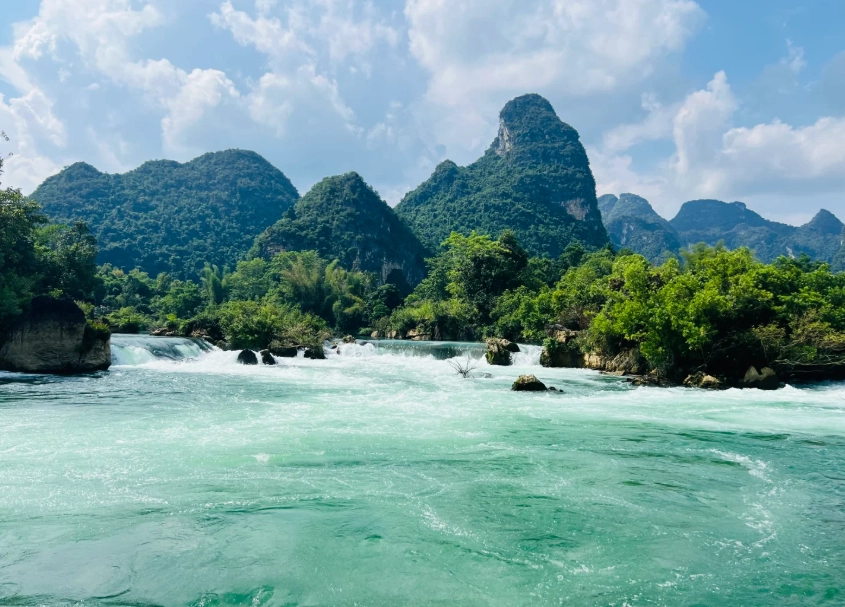
Where to Stay in Chongzuo: Best Areas and Hotels
Your accommodation choice has a huge impact on your experience. Here's where I base my groups and why:
| Area | Vibe | Best For | Est. Price Range (per night) |
|---|---|---|---|
| Ming Shi Garden | Rural, idyllic | Couples, photographers | $50 - $150 |
| Pingxiang Border | Bustling, exotic | History buffs, foodies | $30 - $80 |
| Chongzuo City Center | Convenient, urban | First-timers, public transit | $40 - $120 |
For the village stay, I personally love the 'Stone House' homestay in Ming Shi Village — it has thick stone walls that keep the rooms cool in summer, and the owner's mother makes an incredible breakfast with home-pickled vegetables. The Wi-Fi is limited to the lobby, but honestly, you don't want to spend your evenings scrolling.
In Chongzuo city, the Chongzuo Hotel (崇左大酒店) is a safe bet with clean rooms and a good buffet breakfast. The staff speaks a little English, and there's a helpful travel desk that can book your Detian tickets for a small fee. If you're on a budget, the 'Zhuang Holiday Hostel' is a backpacker favorite — it's about 20 RMB per bunk and has a rooftop view over the city.
In Pingxiang, I'd skip the fancy places (there aren't many) and stay near the border crossing for the convenience. Hotel Khanh Van is a Vietnamese-run place with surprisingly comfortable beds and a tiny balcony overlooking the market.
What to Eat in Chongzuo: Local Dishes and Restaurants
Chongzuo food is a hybrid of Southern Chinese and Vietnamese flavors. Here's what I always recommend to my travelers:
- Detian Waterfall area: Try the 'cooked rice with bamboo shoots' (竹筒饭) sold in the village. The bamboo gives the rice a subtle smoky flavor. It's usually 15-20 RMB per portion.
- Pingxiang: Don't leave without tasting the Vietnamese beef pho (phở). The broth is slow-cooked with star anise and cinnamon, and it's heavenly. I like the shop at 33 Qilin Street — it has a yellow awning and always has a line of locals around lunch.
- Chongzuo city: Look for 'Sour Bamboo Fish' (酸竹笋鱼) at local restaurants. It's a stew with pickled bamboo, chili, and river fish — sour, spicy, and addictive. My favorite is at a family-run place called 'Anan Restaurant' near the old train station. Prices are around 50 RMB per person.
One tip: most places accept Alipay and WeChat Pay, but cash is rarely used. I always carry a few hundred RMB in small bills for emergencies when the network fails (which happens in the mountains). International credit cards? Forget it — they won't work at small eateries. So set up your mobile payment before you leave the city.
Essential Travel Tips for Foreigners in Chongzuo
This is the part I wish I'd had when I first came here.
- VPN and offline maps: Install a reliable VPN on your phone BEFORE entering China — this region has spotty 4G but no exceptions. Download AMap for offline navigation, and also download an offline translation pack in Google Translate. I use Apple Maps as a backup; it's more accurate for English place names than Google.
- Payment: Set up Alipay or WeChat Pay with your international card. Even if you can get by with cash in major cities, rural Chongzuo vendors will visibly freeze when you hand them a 100 RMB note. I've seen it happen too many times — they genuinely don't have change.
- Booking tickets: For Detian, Hua Shan, and any major attraction, book through Trip.com or Klook if you can't handle the WeChat mini-programs. You'll pay a small markup, but you skip the frustration.
- Language: Learn a few key Chinese phrases: 'zhè shì wǒ de hùzhào' (this is my passport), 'duōshǎo qián' (how much), 'zhǎo qián' (change). Download the Chinese language pack for offline translation — the local accent is thick, and even my Mandarin often fails here.
- Sensitive border areas: Don't take photos of military installations or checkpoints. I tell all my clients to keep their cameras down when crossing through Friendship Pass. The guards will ask you to delete photos, and in rare cases, you might be fined.
Pro Tip: In small towns, the taxi drivers are unregulated. Always agree on the fare before getting in, and use rideshare (Didi) when possible. I've seen drivers quote triple the price to tourists who can't speak Chinese.
FAQ: 4 Days in Chongzuo — Your Questions Answered
Verified and fact-checked by the editorial team. This content has been fact-checked to ensure informational precision.





No comments yet.