 Ting Chen
Your Route Cheat Sheet
- Lijiang to Dali by High-Speed Train
- Lijiang to Dali by Long-Distance Bus
- Lijiang to Dali by Private Transfer or Rental Car
- What's the Best Way to Get to Dali from Lijiang?
- How to Book Your Lijiang-Dali Tickets: Passports, Payments, and Apps
- Insider Tips for a Smooth Lijiang to Dali Journey
- FAQ: Lijiang to Dali Travel Questions Answered
There's no single 'right' way to get to Dali from Lijiang — but there's definitely a wrong way: trusting an outdated blog post. I've guided countless foreign visitors along this 180-kilometer stretch. The bus is often the most direct, the train is faster but requires extra transfers, and the private transfer offers door-to-door comfort. The catch? Each option has its own quirks that can trip up first-timers. Let me save you the headaches.
In the sections below, I'll cover realistic timings, what tickets actually cost, and how to book without speaking Chinese. I'll also share the mistakes I've seen travelers make — so you don't repeat them.
Lijiang to Dali by High-Speed Train
The high-speed rail isn't just fast — it's also the most comfortable way to cover the distance. I've taken it many times with clients, and the scenery is a bonus. But the stations aren't in the ancient towns, so plan your transfers carefully.
Stations and Transfer Time
The train from Lijiang Station to Dali Station usually takes 2 to 2.5 hours. Lijiang Station is about 10 kilometers east of the old town — a 30-minute taxi ride. Dali Station sits in the Xiaguan district, roughly 15 kilometers south of Dali Ancient Town, also about a 30-minute drive. Don't expect to walk anywhere; you'll need to factor in these transfers.
To get to the station in Lijiang, I recommend using the DiDi ride-hailing app or asking your hotel receptionist to call a taxi. The fare should be around 30–40 yuan.
At Dali Station, ignore the drivers waving signs. Walk to the official taxi queue or use the ride-hailing pickup zone. I've seen tourists get charged double for not knowing this. A taxi to the ancient city will cost around 40 yuan.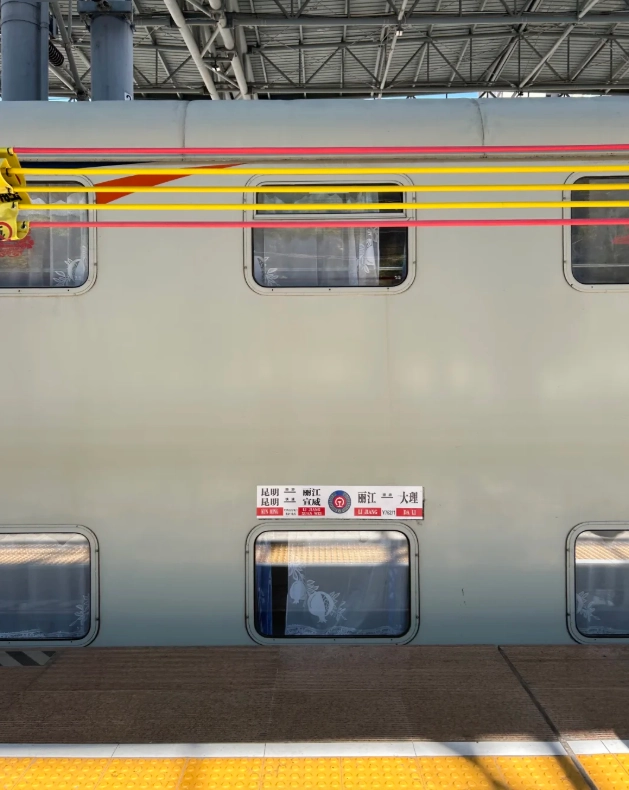
Tickets and Booking
You must book your train ticket with your passport number. The easiest way for foreigners is through Trip.com or the official 12306 China Railway website. The 12306 site is in Chinese, so I always tell my guests to use Trip.com's English interface. Fares for a second-class seat are typically between 60 and 100 yuan, but they can change with demand.
Pro Tip: If you miss the early morning rush, you'll spend less time in security lines. I always aim for a train leaving after 10 am.
Lijiang to Dali by Long-Distance Bus
The bus is the most budget-friendly and surprisingly direct option. It's not as fancy as the train, but it gets you closer to the action. The main depot in Lijiang is the Lijiang Passenger Transport Station. Buses leave regularly for Dali, usually taking 3 to 3.5 hours. Fares range from 70 to 90 yuan.
Some long-distance buses drop you right at the edge of Dali Ancient Town, while others end at the Dali Bus Station in Xiaguan. Make sure to ask when booking, or check the route details on Trip.com. If you end up at the bus station, you can take bus line 8 or a taxi to the ancient city — the taxi is about 20 yuan.
How to Buy Bus Tickets
Bus tickets can be bought at the station counter, but to be safe, I recommend booking online. Trip.com offers bus tickets in English. You'll need to enter your passport details exactly as they appear. Arrive at the station at least 30 minutes early to find the right platform.
Insider Advice: Bring a light jacket. The air conditioning on these buses can be aggressive, and the mountain roads make sudden weather changes feel even more extreme.
Lijiang to Dali by Private Transfer or Rental Car
If you're traveling with family, or simply want zero hassle, a private car is the way to go. I've arranged these for many clients — the cost is between 300 and 500 yuan for a standard sedan. The driver will pick you up from your hotel in Lijiang and drop you at your hotel in Dali. The journey takes about 2.5 hours, depending on traffic.
For self-driving, you'll need a valid Chinese driver's license or an International Driving Permit recognized by China. Honestly, most foreign visitors don't have this, so I recommend hiring a car with a driver instead. You can book through your hotel, or platforms like Trip.com and Klook.
When to Consider a Private Transfer
If you have more than one suitcase, or you're traveling with kids, the private transfer saves you from wrestling luggage on buses and trains. It also gives you flexibility to stop for photos or a quick bathroom break. I always tell my drivers to pull over at one of the highway rest areas.
What's the Best Way to Get to Dali from Lijiang?
The answer depends on your priorities. If you want the shortest total travel time from door to door, the bus often wins because you can find direct services to the ancient city area. If you hate sitting still, the train is faster but you'll spend extra time getting to and from stations. For groups, a private transfer is worth the splurge.
Here's my honest take: I usually tell my guests to take the bus. It's cheaper, simpler, and you don't have to deal with the overloaded taxi queues at the train station. But if you're prone to motion sickness, the train is more stable.
| Method | Duration | Cost (Approx.) | Door-to-Door | Best For |
|---|---|---|---|---|
| High-speed train | 2–2.5 h | 60–100 RMB | Needs transfers at both ends | Travelers who want speed and comfort |
| Long-distance bus | 3–3.5 h | 70–90 RMB | Can be direct to city area | Budget travelers seeking simplicity |
| Private transfer | ~2.5 h | 300–500 RMB | Yes, hotel to hotel | Families, groups, or those with lots of luggage |
Remember, these are estimates from my recent trips. Always double-check live prices on your booking app.
How to Book Your Lijiang-Dali Tickets: Passports, Payments, and Apps
Booking might feel intimidating if you don't read Chinese, but it's manageable. Here's the step-by-step process I walk my clients through.
- Choose your transport — train or bus. For train, use Trip.com or 12306.cn. For bus, Trip.com also works, or buy at the station.
- Have your passport ready. You'll need the exact name and number for the ticket.
- Pay with Alipay or WeChat Pay — both accept international cards. If you don't have them set up, Trip.com accepts Visa/Mastercard directly.
- Arrive at the station at least 45 minutes early for trains, 30 minutes for buses.
- Keep your passport handy — you'll need it for the ticket check.
If you don't have a Chinese phone number, don't panic. Alipay and WeChat Pay can be linked to an international number and card. It takes about 10 minutes to set up. And always carry some cash as a backup — a few coffee shops along the route still prefer cash.
One thing that trips people up: Google Maps is unreliable in China. Use Apple Maps or the AMap global version for navigation. You'll also need a functioning VPN on your phone before you land, as most western apps are blocked.
Insider Tips for a Smooth Lijiang to Dali Journey
After dozens of trips, here are the things I wish every traveler knew.
- Avoid the 8–9 am rush at Lijiang Railway Station. The security line can be brutally long. Aim for a midday train if possible.
- At Dali Station, ignore the drivers waving signs. Walk to the official taxi stand or use the ride-hailing pickup area. I've seen tourists get charged double.
- Pack snacks. The bus and even the train may not have a food cart with English menus.
- The weather changes quickly. Bring a light jacket even in summer — the rain comes out of nowhere.
- If you're prone to altitude issues, hydrate well before the trip. The passes between Lijiang and Dali sit over 2,000 meters.
- Download a VPN before you arrive. Google, Instagram, and many western services are blocked, and you'll need it for maps and messaging.
One more thing: don't forget to confirm your hotel's exact English name when asking for a transfer. Drivers often know the Chinese name better.
FAQ: Lijiang to Dali Travel Questions Answered
This content has been fact-checked to ensure informational precision.






No comments yet.