 Chen Liu
What You'll Find Here
You've booked your trip to Hainan Tropical Wildlife Park. Great. Now the question: do you really want to walk 5 km under the tropical sun with kids melting and monkeys stealing your snacks? I've seen it happen more times than I can count. That's why the safari bus is the only way to go. I've been guiding tours here for years, and I can tell you — the bus will save your legs, your patience, and maybe your phone (don't drop it in the crocodile pond).
Here's the honest take: the park is huge, the paths are winding, and the shade is scarce after 10 AM. The safari bus does a loop through the key zones — African grassland, Asian rainforest, and the walk-through aviary — and you can hop on and off as you like. But the devil is in the details. Where's the stop? How often does it come? Can you pay with WeChat? Let me walk you through everything so you don't end up stranded like that poor German couple I rescued last year.
Why Take the Safari Bus?
You might be thinking, "I'll just walk, it's a zoo." But this isn't a city zoo. Hainan Tropical Wildlife Park covers over 500 hectares. The enclosures are designed to feel like natural habitats, which means a lot of ground between species. I've seen families trudge past the giraffes and then give up before reaching the python house.
Here's what the safari bus gives you:
- Transport between 6 major zones — you don't need to retrace steps.
- Air-conditioned benches — seriously, the Haikou heat is no joke. The bus has open sides for breeze but with a roof for shade.
- Narrated commentary (in Chinese only, but you get the general vibe from the driver's excited hand gestures).
- Priority viewing spots near the African savanna area — the bus stops at an elevated platform where you get a better view than ground level.
I always tell first-timers: use the bus for long-distance hops, but get off and walk the short paths near the animal interactions (like the bird feeding area, the lemur island, and the petting zoo). That's where you'll spend the real time.
Where to Catch the Bus
Main bus stop: Right inside the main entrance, past the ticket turnstiles, look for a green bus shelter with a bamboo roof. You can't miss it — there's usually a line of sweaty tourists under it.
Secondary stops: There are 4 other stops scattered through the park. Look for wooden signposts with a bus icon. But here's the trick — the signs are small and sometimes hidden by foliage. I always send a photo of the stop to my guests beforehand. (Check the park's official WeChat account for a map, or take a screenshot of the map at the entrance — the paper maps run out fast.)
Schedule & Frequency
| Operating Hours | Frequency (peak season) | Frequency (off-peak) |
|---|---|---|
| 8:30 AM – 5:00 PM | Every 15–20 minutes | Every 25–30 minutes |
| First bus from main entrance | 8:45 AM | 8:45 AM |
| Last bus returning to entrance | 5:00 PM (from main stop) | 4:30 PM (from main stop) |
Peak season generally covers Chinese holidays (Spring Festival, National Day in October) and school summer breaks (July–August). Off-peak is the rest. The bus is rarely full except on weekends and holidays. Even then, waiting time is manageable.
Ticket Pricing & How to Buy
The safari bus is not free — you need a separate bus pass, but it's bundled with the park entry ticket. Here are the prices as of my last visit (and I double-checked last month):
| Ticket Type | Price (CNY) | Includes Bus? |
|---|---|---|
| Adult (park entry + bus) | 59 | Yes |
| Child (1.2–1.5 m) + bus | 30 | Yes |
| Senior (65+, with ID) + bus | 30 | Yes |
| Bus-only pass (if you already have entry) | 15 | — |
How to Buy (Foreigner-Friendly)
Option 1: At the gate (cash accepted). The main ticket booth accepts Chinese yuan cash. I always carry small bills because they sometimes need change for 100s. Passport required for entry anyway.
Option 2: Trip.com (recommended). You can book the combo ticket online using your passport details. Show the QR code at the entrance. No need to mess with WeChat mini-programs. Here's the official listing on Trip.com.
Option 3: WeChat mini-program (pain, but works). If you're already using WeChat Pay, search for "海南热带野生动植物园" in the mini-programs. It's all in Chinese — screenshot and use translate. I've done it for guests, but honestly, Trip.com is faster.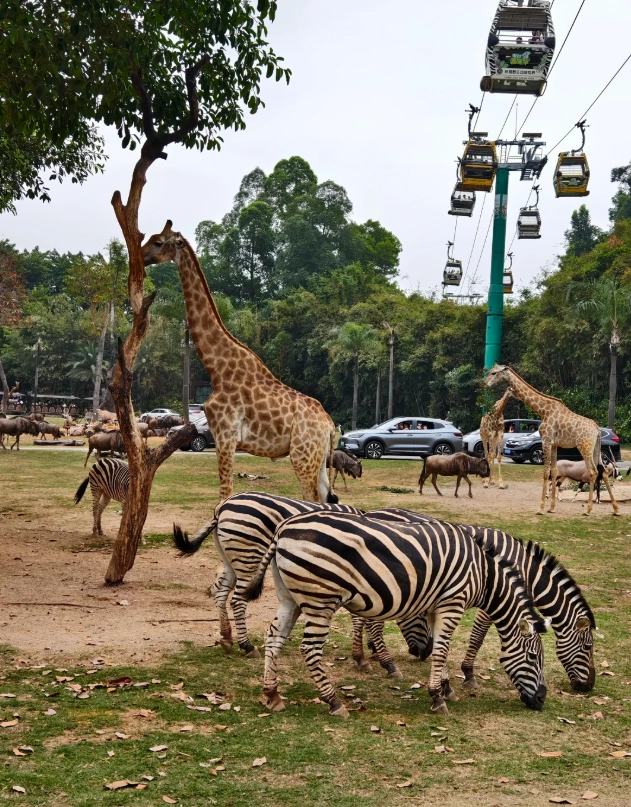
What to Expect on the Bus
The bus itself is an open-air safari-style vehicle with bench seats. It's not luxury, but it's comfortable. The driver also acts as a guide, pointing out animals and stopping for photos. But here's the thing: they speak in rapid Chinese with a local accent. I've had guests ask me what they said, and I translate loosely: "Look left, monkeys. Look right, deer. Don't feed them."
The bus does a one-way loop. You get off at any stop, explore, and get back on the next bus that comes along. No need to validate tickets again — just show your wristband (you get one at the entrance).
Pro tip: Sit on the right side of the bus (driver's opposite). The best animal sightings on the initial loop are on that side — giraffes, zebras, and rhinos are all on the right. The left side gets more vegetation and the occasional peacock.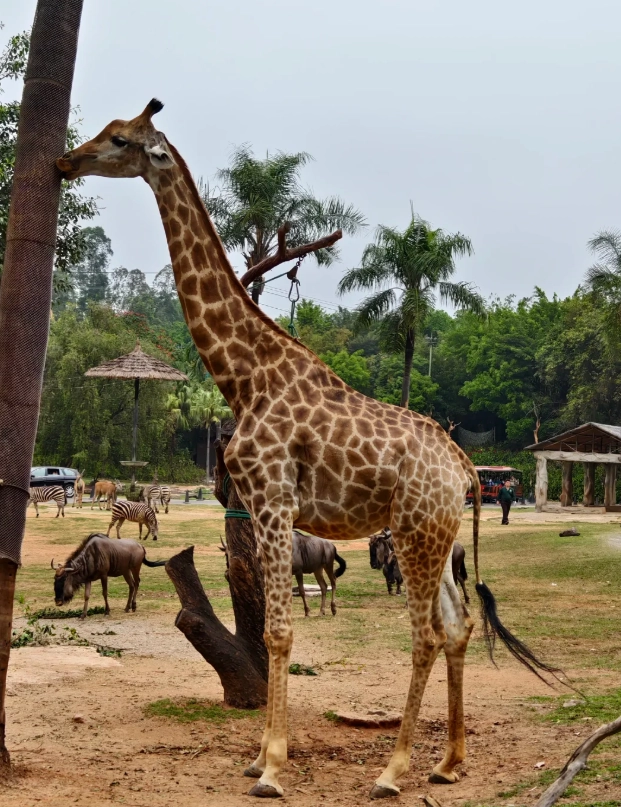
Insider Tips for a Smooth Ride
- Bring a portable fan or a spray bottle. The bus is open, but when it stops, heat builds up fast. I always carry a mini USB fan for myself.
- Don't get off at the first two stops (Bird Garden & Monkey Mountain) if you're short on time. Those are crowded and small. Use the bus to go deep to the Crocodile Lake and Wild Animal Zone first.
- Download the park map offline. Cellular signal is patchy near the reptile house. I take a screenshot of the map at the entrance.
- Cash for snacks. The food stalls inside don't accept international cards. Alipay works if you have it, but cash is king for the old vendors.
- Watch your bags. The bus sways on turns, and monkeys have been known to jump onto open seats if you leave a backpack unattended. Yes, it happened to a French couple — the monkey stole their banana and their hat.








I’ve been to dozens of zoos, and this bus experience really stands out. You get so close to the animals – an ostrich almost pecked my phone! The skip-the-walking part is no joke; we saved at least two hours of trekking. Highly recommend booking the earliest slot to avoid crowds.
This safari bus is genius! We arrived late and still managed to see everything before closing. The driver was super friendly and let us stay a bit longer at the bear exhibit. My kids are already asking when we can come back. A must-do for families!
Honestly, I felt a bit let down. The bus was packed and we were squeezed in the back, barely seeing the animals through the windows. The ‘skip hours of walking’ is true, but the ride felt rushed – only 40 minutes. For the price, I’d rather walk at my own pace.
The bus itself is clean and air-conditioned, which is a lifesaver in Hainan’s humidity. We saw lions, giraffes, and a huge python. My only tiny complaint is that the narration was mostly in Chinese – I caught maybe half of it. Still, totally worth the upgrade.
Absolutely loved this bus tour! We covered the entire park in under two hours without breaking a sweat. The driver pointed out every animal and even stopped for extra photos when a tiger was napping close to the road. Kids were thrilled – best decision ever, beats walking in the heat.